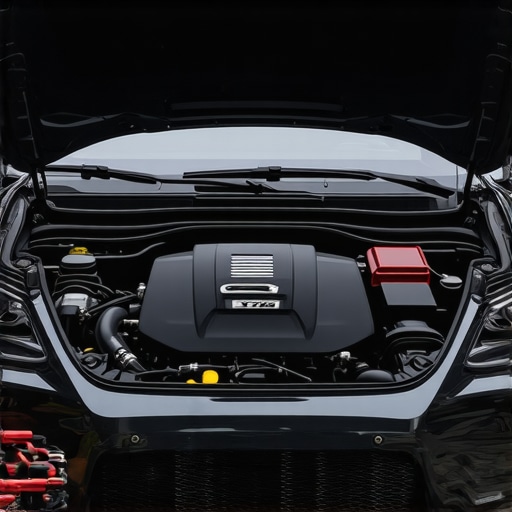
Reevaluating Brake System Reliability: The Critical Role of Sophisticated Sensor Diagnostics
As automotive technology advances, the complexity of brake systems demands an equally sophisticated diagnostic approach. While traditional inspections focus on pads, rotors, and hydraulic fluid, an often underestimated component—the sensor array—holds the key to preemptive failure detection. Especially in the context of 2026 models, where electronic integration becomes ubiquitous, understanding and testing these sensors can drastically reduce costly repairs and enhance safety.
How Subtle Sensor Anomalies Cause Major Brake Failures
The hidden danger lies in the incremental degradation of sensor signals. Small impairments, such as a marginally failing ABS sensor or a deteriorated wheel speed sensor, may not trigger warning lights immediately but can compromise the entire brake control system. With the evolution of brake-by-wire technology, reliance on sensor integrity is paramount. Expert analyses show that neglecting a routine sensor checkup increases the risk of sudden brake loss, especially during emergency maneuvers.
The $30 Sensor That Can Save You Thousands
Amidst the sea of diagnostic options, a particular sensor—a simple $30 component—remains critical yet routinely overlooked. This sensor, integral to the anti-lock braking system (ABS), measures wheel rotational speed and must function flawlessly. An expert-based qualified mechanic emphasizes that a mere visual inspection is insufficient; instead, real-time sensor testing with advanced scanners can reveal subtle faults before they cascade into full system failure.
What Tests Actually Confirm Sensor Diagnostic Integrity in Modern Brake Systems?
Determining sensor health requires more than a quick scan. Precise tests include waveform analysis, resistance checks, and calibration verification—especially vital for 2026 models with enhanced electronic controls. Such testing protocols help distinguish sensor degradation from wiring issues, ensuring targeted repairs and avoiding unnecessary component replacements.
Professionals should also consider environmental factors—corrosion, debris, and temperature fluctuations—that accelerate sensor wear. Emphasizing routine preventive diagnostics aligns with industry standards and prolongs brake system efficacy.
The Complexity of Sensor Calibration and Its Impact on Brake System Symbiosis
Calibration intricacies involve aligning sensor output with the vehicle’s electronic control units (ECUs). An improperly calibrated sensor can lead to false ABS activations or, worse, a complete disengagement of anti-lock functions, risking accidents. Therefore, understanding the interdependence between sensors and ECUs becomes essential for seasoned technicians aiming to optimize brake performance and safety margins.
How can car owners ensure their brake systems aren’t compromised by overlooked sensors?
Maintaining awareness about the importance of sensor diagnostics, especially in the technologically advanced models of 2026, requires proactive engagement with expert resources. Regular questions to ask your mechanic about sensor testing procedures and calibration routines can vastly improve diagnostic outcomes and prevent catastrophic failures.
For those seeking further knowledge, consulting authoritative industry guidelines such as the SAE International standards on electronic brake components or subscribing to trusted automotive repair forums ensures access to up-to-date diagnostic techniques and the latest sensor technology insights.
Why Relying Solely on Visual Inspection Isn’t Enough for Modern Brake Sensor Care
As vehicles evolve, especially in 2026 models with integrated electronic systems, the reliance on superficial checks diminishes in importance. Visual inspections—once the cornerstone of brake sensor diagnostics—often fail to uncover the subtle electrical or calibration issues lurking within these components. Advanced diagnostic tools that analyze sensor waveforms, resistance values, and calibration statuses have become essential for accurate assessments. Understanding the depth and limitations of basic inspections can prevent overlooking critical faults that lead to brake failure, thereby safeguarding driver safety and vehicle integrity. For a comprehensive approach, consider reviewing expert industry insights on diagnostic best practices.
Can Modern Calibration Techniques Prevent Brake System Disasters in 2026?
Accurate calibration of sensors isn’t just a routine maintenance step; it’s a vital process that ensures the harmonious operation of increasingly complex brake systems. Techniques such as dynamic calibration, performed with high-precision scanners, allow technicians to adjust sensor outputs to exact specifications, accounting for new technological standards mandated in 2026. Improper calibration can distort sensor signals, trigger false warnings, or disable critical safety features like ABS and electronic stability control. By staying informed about calibration protocols aligned with industry standards, technicians can substantially reduce risk profiles, maintaining optimal vehicle responsiveness and safety.
What Role Do Environmental Factors Play in Sensor Degradation and How Can They Be Mitigated?
External influences such as moisture, road debris, salt, and temperature fluctuations accelerate sensor wear, leading to inaccuracies over time. For example, corrosion can cause resistive changes, affecting resistance checks during diagnostics. Employing protective coatings, regular sensor cleaning, and environmental sealing are proactive steps in extending sensor life. Implementing a routine sensor maintenance schedule that considers local climate conditions can significantly enhance the longevity and reliability of brake systems.
Interested in mastering advanced sensor diagnostics? Engage with industry-standard question prompts for your mechanic to ensure comprehensive assessments and safeguard your vehicle’s braking performance.
Embracing AI-Driven Sensor Diagnostics for Next-Generation Braking Systems
The integration of artificial intelligence (AI) into automotive diagnostics heralds a new era in brake sensor maintenance and troubleshooting. By deploying machine learning algorithms that analyze vast datasets from sensor outputs, predictive maintenance becomes remarkably precise. This technological leap enables technicians to identify subtle anomalies—such as micro-resistance shifts or waveform distortions—that precede overt failures. In the context of 2026 models, where electronic systems are deeply embedded, AI-powered diagnostic tools can adapt to individual vehicle patterns, thereby fine-tuning calibration and reducing false alarms.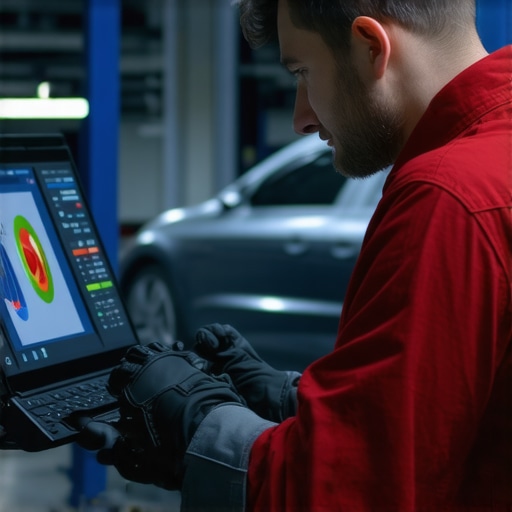
The Physics Behind Sensor Signal Transmission: A Deep Dive into Electromagnetic Compatibility
At the core of sensor reliability lies the complex interplay of electromagnetic signals amidst a vehicle’s myriad electronic components. External electromagnetic interference (EMI) can corrupt sensor signals, leading to false readings or intermittent failures. Advanced diagnostic procedures now account for EMI shielding efficacy, which includes analyzing signal-to-noise ratios and grounding integrity.
The challenge is in distinguishing between genuine sensor faults and external electromagnetic disruptions. Industry experts recommend employing spectrum analyzers during calibration to monitor for anomalies, especially when vehicle environments feature high EMI levels, such as urban centers with dense radio frequency emissions. Integrating EMI mitigation strategies—like twisted-pair wiring and ferrite bead usage—further enhances sensor resilience, ensuring diagnostic accuracy even under challenging conditions.
How to Decipher Complex Sensor Data: A Technologist’s Guide to Multivariate Analysis
Modern brake sensors generate multivariate data streams that, when correctly interpreted, yield invaluable insights into system health. Advanced data analytics, including multivariate statistical process control (MSPC) and principal component analysis (PCA), allow technicians to detect patterns indicating early degradation. For instance, a gradual but consistent drift in resistance combined with waveform shape changes can predict imminent sensor failure.
Implementing such analytical techniques requires specialized training, but the payoff is profound—preventing brake failures before warning signs appear. Software solutions equipped with these analytical capabilities are becoming standard in high-end diagnostic scanners, pushing the industry toward a predictive rather than reactive approach to brake system maintenance.
Could Sensor Fusion Techniques Revolutionize Brake System Safety?
Sensor fusion—the method of integrating data from multiple sensor types to produce a more accurate and reliable output—offers promising avenues for improving brake safety. In the 2026 landscape, fusion of wheel speed sensors, acceleration sensors, and even optical or lidar-based measurements forms a multi-layered safety net against individual sensor faults.
For example, if a wheel speed sensor provides inconsistent data due to dirt or corrosion, the system can cross-reference readings from accelerometers or optical sensors to maintain accurate vehicle behavior modeling. This redundancy not only cushions against sensor failure but also enhances vehicle responsiveness in complex scenarios such as poor road conditions or adverse weather.
Advanced algorithms managing sensor fusion must be meticulously calibrated and tested, emphasizing the importance of comprehensive diagnostics that evaluate each sensor modality’s integrity and interplay.
Real-World Application: Conducting a Complete Sensor Health Audit in a Modern Workshop
Implementing a robust sensor health audit demands a systematic approach, combining hardware testing with software diagnostics. Begin with visual inspections complemented by resistance and continuity tests; then, employ high-precision oscilloscopes to analyze waveform characteristics under simulated operational conditions.
Next, utilize diagnostic scans that specifically target sensor calibration status and signal integrity, referencing industry standards such as SAE J1698 for electronic brake system testing. Incorporating environmental assessments—evaluating exposure to salt, moisture, and temperature extremes—ensures comprehensive coverage.
Finally, documenting each step establishes a baseline for future diagnostics and helps identify patterns indicative of systemic issues, fostering a proactive maintenance culture that aligns with the technological sophistication of 2026 vehicles.
Partnering with Experts: Developing a Protocol for Ongoing Sensor System Optimization
To stay ahead in brake sensor technology, ongoing education and collaboration with industry leaders and research institutions are vital. Establishing partnerships with engineering labs focusing on electromagnetic compatibility and sensor materials science can provide early insights into emerging vulnerabilities and innovations.
Furthermore, participating in professional development programs emphasizing the latest diagnostic methodologies ensures technicians are equipped with cutting-edge skills. Regularly updating diagnostic protocols based on industry standards and real-world data enhances reliability and safety.
Interested professionals should explore collaborations with organizations like SAE International and attend industry workshops that focus on electronic brake system advancements—keeping their expertise aligned with the rapid innovations defining 2026 and beyond.
Beyond the Surface: Deepening Your Insights into Brake Sensor Diagnostics
As vehicle electronic architectures grow increasingly intricate, the diagnostic landscape must evolve correspondingly. Merely relying on basic resistance checks or waveform inspections no longer suffices; instead, leveraging high-fidelity data analysis and real-time monitoring systems offers a strategic advantage. Expert technicians are adopting multichannel data loggers coupled with machine learning algorithms to identify subtle patterns indicating impending sensor failures, thus enabling preemptive maintenance interventions.
What Makes High-Resolution Data Capture a Game Changer for Brake Systems?
High-resolution sensor data capture facilitates granular analysis of signal integrity, revealing micro-level inconsistencies often missed by conventional diagnostic tools. This precision supports micro-calibration efforts, ensuring sensors operate within optimal parameters despite environmental disturbances or component aging. According to SAE International’s standards on electronic brake controls, integrating such advanced diagnostics enhances system robustness by allowing fault prediction rather than mere fault detection.
How Does Sensor Fusion Transform Brake System Safety Paradigms?
Sensor fusion amalgamates inputs from diverse sensor types—such as wheel speed sensors, accelerometers, and optical detectors—to create a cohesive, redundant safety network. This layered approach mitigates risks associated with individual sensor faults, offering vehicles an adaptive safety net. For instance, if wheel sensors are contaminated or damaged, corroborative data from accelerometers can uphold braking precision, thereby maintaining maneuverability under adverse conditions.
Prioritizing Electromagnetic Compatibility to Shield Critical Brake Electronics
Electromagnetic interference presents a stealthy adversary to sensor integrity. Advances in shielding techniques—like braided wiring, ferrite beads, and optimized chassis grounding—are vital. Implementing spectrum analyzers during calibration audits can preemptively identify EMI hotspots, guiding targeted mitigation strategies. The Effectiveness of EMI suppression not only preserves sensor fidelity but also aligns with the increasing electromagnetic environment complexity of modern vehicular landscapes.
Developing Predictive Maintenance Frameworks Using Multivariate Analysis Techniques
Harnessing multivariate statistical tools, such as principal component analysis (PCA), empowers technicians to interpret combined sensor data streams systematically. This multidimensional perspective uncovers early degradation signals, enabling intervention before faults manifest. Training technicians in these analytical methods, supported by industry-standard diagnostic software, can substantially lower the incidence of sudden brake failures, thus enhancing driver safety and operational efficiency.
Why Investment in AI-Guided Diagnostics Outpaces Traditional Approaches
Artificial Intelligence-driven diagnostic platforms offer unparalleled predictive capabilities. By continuously learning from vehicle-specific data patterns, AI algorithms refine fault detection accuracy, customize calibration routines, and predict sensor lifespan. Embracing AI tools positions repair facilities at the forefront of automotive safety innovation, especially as OEMs integrate more complex electronic systems into their 2026 models, demanding such advanced diagnostic acumen.
What Are the Practical Steps for Conducting a Robust Sensor Health Audit?
A comprehensive audit intertwines hardware inspection, software diagnostics, environmental evaluation, and environmental resilience testing. Utilizing spectrum analyzers, high-precision oscilloscopes, and environmental chambers enables holistic assessment. Establishing a standardized protocol, inclusive of each step’s documentation, ensures ongoing reliability and facilitates trending analysis to detect systemic deterioration over time.
How Collaborating with Industry Leaders Amplifies Diagnostic Precision
Engaging with research institutions and standards organizations like SAE International accelerates adoption of emerging diagnostic techniques. Participating in symposiums, pilot programs, and collaborative research fosters knowledge exchange, unlocking innovative sensor testing methodologies and calibration standards. Such partnerships cultivate a culture of continuous improvement, essential for maintaining diagnostic excellence amidst rapid technological advancements.
Expert Insights & Advanced Considerations
Precision Testing Is Non-Negotiable
Modern brake systems demand diagnostic methods that go beyond basic resistance checks. Implementing waveform analysis and real-time calibration verification ensures that sensors operate within optimal parameters, preventing subtle faults from escalating into critical failures.
Environmental Resilience Is Crucial
External factors like corrosion, debris, and temperature swings accelerate sensor degradation. Incorporating protective measures and routine environmental assessments can significantly extend sensor lifespan, maintaining system reliability in diverse conditions.
Harnessing Machine Learning Enhances Accuracy
Integrating AI-driven diagnostic tools allows for pattern recognition and predictive maintenance. By analyzing multivariate sensor data, technicians can identify early warning signs, shifting from reactive to proactive brake system management.
Sensor Fusion Could Save Lives
Combining data from multiple sensor sources creates a more resilient safety net. Sensor fusion techniques help compensate for individual sensor faults, ensuring consistent brake performance even when faced with environmental or mechanical challenges.
Calibration Is a Continuous Process
In 2026, static calibration suffices no longer. Dynamic calibration protocols adapt sensor outputs to real-world driving conditions, ensuring that electronic brake controls respond accurately, reducing false warnings and enhancing safety.
Curated Expert Resources
- SAE J1939 and SAE J1698 Standards: Providing robust benchmarks for electronic brake system diagnostics and calibration techniques, these standards guide industry best practices.
- SAE International’s Vehicle Electronics Publications: Offering in-depth research and guidelines on sensor integration, electromagnetic compatibility, and advanced diagnostics.
- Automotive Diagnostic Software Platforms: Tools like OBD-II analyzers and AI-enabled diagnostic suites furnish real-time data analysis, essential for modern brake sensor maintenance.
- Industry Whitepapers on Sensor Fusion: Exploring the integration of diverse sensor inputs to improve safety and fault tolerance, these documents inform cutting-edge system design.
- Technical Journals on Electromagnetic Interference Mitigation: Detailing shielding and grounding innovations that safeguard sensor signals from environmental interference.
Revisiting the Road Ahead for Brake Sensing Technologies
As automotive systems become increasingly complex, the ability to diagnose and calibrate brake sensors with advanced, AI-supported methods will define safety standards in 2026 and beyond. Staying informed through authoritative technical resources and engaging with industry protocols positions professionals to deliver the highest quality service, safeguarding drivers against unseen faults. For ongoing professional development, consider exploring questions to ask your mechanic and join industry forums dedicated to electronic brake systems. Deepening expertise today ensures reliability tomorrow—embrace the evolution of brake sensor diagnostics proactively.