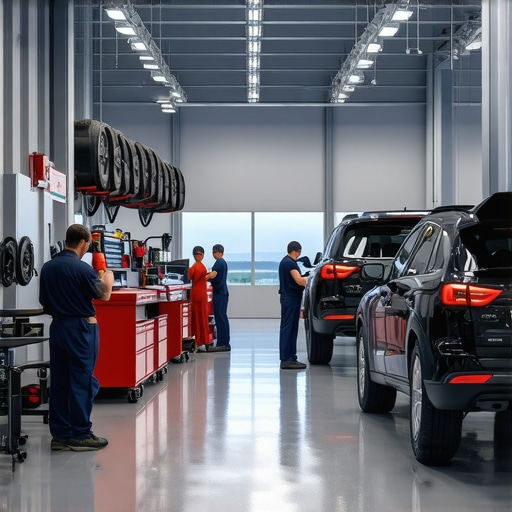
The Simple Google Maps Checklist That Keeps Our Brake Bays Full
There is a specific sound that every shop owner dreads: silence. It’s the sound of empty service bays, idle technicians, and a phone that refuses to ring. In the “old days” of local marketing, you could throw some money at the Yellow Pages or a local radio spot and hope for the best. But in 2026, the game has changed. Your “storefront” isn’t just the brick-and-mortar building on Main Street; it’s the digital real estate you occupy in the Google Maps “Map Pack.”
If you aren’t appearing in those top three spots when someone searches for “brake repair near me,” you are effectively invisible. The reality of local search in 2026 is governed by three pillars: Proximity, Relevance, and Prominence. However, following the March 2026 Google Core Update, the algorithm has become significantly more sophisticated. Google has moved beyond simple keyword matching and is now using advanced AI to verify the physical reality of your business. Shops that try to “game the system” with outdated tactics are finding their profiles suspended, while those who follow a disciplined, technical checklist are seeing their brake bays filled weeks in advance. To avoid being left behind, you need to understand How to Stop Being Invisible on Google Maps and Fill Your Repair Bays.
As a specialist in google business profile seo, I have seen firsthand how a few “misaligned” settings can stall a shop’s growth. This checklist is the result of years of testing what actually moves the needle for auto repair shops. It’s time to stop guessing and start engineering your local presence for maximum performance.
1. The Foundation: Precision Google Business Profile Optimization
Think of your Google Business Profile (GBP) as the engine of your local SEO strategy. If the timing is off by even a fraction, the whole machine runs poorly. The first step in any successful campaign is a comprehensive google business profile optimization. This isn’t just about filling out your name and phone number; it’s about providing Google with the high-fidelity data it craves.
The most common mistake I see in the auto niche is improper category selection. Your primary category should almost always be “Auto Repair Shop.” However, the magic happens in the secondary categories. If you want to keep those brake bays full, you must include “Brake Shop” as a secondary category. If you also handle transmissions or exhaust, those need to be listed too. Without these secondary signals, you’re leaving money on the table. This is Why Your Google Maps Optimization Isn’t Booking More Brake Repairs even if you think you’ve done everything right.
To ensure your profile is fully tuned, I recommend using a professional google business profile audit tool. These tools can scan your profile for “missing links” – such as unverified attributes (e.g., “Identifies as veteran-led” or “Wheelchair accessible entrance”) – that help Google understand the full context of your business.
Finally, let’s talk about visuals. In 2026, generic stock photos are the equivalent of a “Check Engine” light for your ranking. Google’s Vision AI can now “see” what is in your photos. If you upload high-resolution images of your technicians actually performing a brake pad replacement or using a computerized brake lathe, Google recognizes that relevance. In fact, This Simple Photo Hack Doubled Our Google Business Profile Traffic for Transmission Repairs by simply replacing generic shop shots with “action” photos of complex repairs. When you show Google (and potential customers) exactly what happens in your bays, your conversion rates skyrocket.
2. Navigating the 2026 Keyword Crackdown
The March 2026 Google Core Update sent shockwaves through the local SEO community, specifically targeting businesses that were “keyword stuffing” their business names. For years, shops would change their name to “Best Brake Repair Cityville” to trick the algorithm. That era is over. Google is now cross-referencing your GBP name with your legal business filings and signage. If they don’t match, you face immediate suspension.
So, how do you build relevance without keyword stuffing? You do it through the “Services” and “Products” sections of your profile. This is where you can be as detailed as possible. Instead of just listing “Brake Repair,” list “Ceramic Brake Pad Installation,” “Brake Rotor Resurfacing,” and “ABS System Diagnostics.” This builds a “semantic web” of relevance around your shop. This is a critical part of rank google business profile strategies in the current landscape. If you ignore this, you’ll find out Why Most Auto Repair Shops Fail the Google Business Profile Algorithm and lose their rankings overnight.
The goal is to provide enough “fuel” for Google’s AI to understand that when a user asks for a specific, high-intent service, your shop is the most authoritative answer. This shift from “keyword matching” to “entity relevance” is the hallmark of modern local search.
3. Building Prominence Through Citations & NAP Consistency
If your GBP is the engine, then your citations are the fuel lines. A citation is any mention of your Name, Address, and Phone number (NAP) across the web – on sites like Yelp, Yellow Pages, Bing, and industry-specific directories. For Google to trust your business enough to rank it in the top 3, your NAP data must be 100% consistent. Even a minor discrepancy, like “St.” vs. “Street” or an old phone number from three years ago, creates “friction” in the algorithm.
This is why you must Audit Your Shop’s Citations to Stop Confusing Local Drivers. Inconsistent data doesn’t just confuse Google; it confuses your customers. Imagine a driver with squealing brakes trying to call you, only to find a disconnected number listed on a local directory. That’s a lost lead and a strike against your shop’s prominence.
Managing hundreds of citations manually is a nightmare. This is where local seo software becomes indispensable. These tools allow you to push your correct NAP data to all major aggregators simultaneously, ensuring your “digital footprint” is clean and professional. When Google sees the same data echoed across the entire web, it gains the confidence to rank you higher. This is a foundational element of any google maps ranking service that actually delivers results.
4. The Review Engine: Fueling Your Ranking with Social Proof
Reviews have always been important, but in 2026, they are the primary driver of “Prominence.” However, it’s no longer just about the number of stars. Google’s AI now analyzes the content of the reviews to verify your expertise. A review that says “Great job!” is good. A review that says “They did a fantastic job on my brake repair and the new brake pads are silent!” is gold.
You need a proactive strategy to generate these keyword-rich reviews. You should be training your service advisors to ask for specific feedback. Instead of “Leave us a review,” try “Could you mention that we worked on your brakes today? It really helps other local drivers find us.” We’ve identified 7 Simple Ways to Get More 5-Star Reviews Without Being Pushy that can turn your satisfied customers into your most effective marketing team.
Furthermore, you must respond to every review – both positive and negative. Responding to reviews signals to Google that you are an active, engaged business owner. It also provides another opportunity to naturally include service-related keywords. If a customer praises your brake service, your response should be: “Thank you, Sarah! We take pride in being the go-to shop for brake repair in [City Name]. Glad we could get you back on the road safely!”
5. Advanced Tactics: Geo-Pages & Hyperlocal SEO
If you want to fill your brake bays with customers from the next town over, you need to look beyond your immediate physical location. This is where “Geo-Pages” come into play. A Geo-Page is a landing page on your website specifically designed to rank for a specific neighborhood or suburb (e.g., “Brake Repair in North Hills”).
However, many shop owners get this wrong by creating thin, “cookie-cutter” pages that Google now penalizes. To succeed, these pages must contain local-specific content, such as mentions of local landmarks, embedded Google Maps, and testimonials from customers in that specific area. You also need to ensure your technical SEO is on point. You should Fix the Geo-Page Errors That Hide Your Shop From Local Drivers to ensure your website and GBP are working in harmony.
Using local seo ranking tools can help you track your “heat map” – showing you exactly where your rankings start to drop off as you move away from your shop. This data allows you to target your Geo-Pages and local ad spend with surgical precision, ensuring you aren’t wasting money on areas where you already dominate or areas that are too far for a customer with a brake emergency to travel.
6. Building Local Authority Beyond the Map
Google doesn’t just look at your GBP; it looks at your shop’s overall “authority” on the web. This is influenced by your involvement in the local community and the quality of your website’s content. Are you sponsoring a local Little League team? Do you have a blog that explains When to Know You Need Brake Service Now? These signals tell Google that you are a pillar of the community, not just a faceless business.
We recommend a strategy of 7 Specific Moves to Build Local Authority and Fill Your Service Bays. This includes getting mentioned in local news outlets, participating in community events, and building “local backlinks” from other reputable businesses in your area. This broad-based approach to local business seo creates a “moat” around your rankings that competitors will find nearly impossible to cross.
By positioning yourself as the local expert on all things automotive, you create a brand that people trust before they even need a repair. When their brakes eventually start to squeal, yours is the only name they’ll search for on Google Maps.
Conclusion: Your Monday Morning Checklist
Ranking in the top 3 of Google Maps isn’t a matter of luck; it’s a matter of engineering. The shops with full service bays are the ones that treat their local search optimization with the same level of care they treat a complex engine rebuild. If you want to rank higher on google maps, you need to start today.
Here is your “Monday Morning” checklist to get the gears turning:
- Audit Your Categories: Ensure “Auto Repair Shop” is primary and “Brake Shop” is secondary.
- Verify Your NAP: Use local seo software to find and fix any inconsistent listings across the web.
- Update Your Photos: Replace three stock photos with high-quality “action shots” of your team working on brakes.
- Request Keyword-Rich Reviews: Ask your next five happy customers to mention the specific service they received.
- Check Your Standings: Use a google maps rank tracker from a reputable gmb ranking service like SEO Viper Tools to see exactly where you rank today.
The 2026 search landscape is competitive, but it’s also full of opportunity for those who are willing to do the work. Don’t let your shop remain invisible. Implement these google maps ranking service tactics, keep your data clean, and watch as your brake bays stay full month after month. For those who need a professional edge, investing in google business profile seo through seovipertools.com is the fastest way to ensure your shop is the one drivers see first.