Why Drivers Find Your Competitors First for Major Transmission Repairs
It is a Tuesday morning. A driver in your zip code feels a violent shudder as their vehicle shifts from second to third gear. The “Check Engine” light flickers on, and the sinking feeling of a potential $5,000 repair bill sets in. They pull over, take out their smartphone, and type “transmission repair near me” into Google.
Your shop is less than three miles away. You have the specialized diagnostic equipment, the certified builders, and the best warranty in the county. But as the driver scrolls through the Google Map Pack – the top three local results – your business is nowhere to be found. Instead, they call the shop five miles further away because that shop appeared at the top of the list.
This is the “$5,000 Disappearing Act,” and it happens dozens of times a month in every major market. If you aren’t in that Top 3 Map Pack, for all intents and purposes, you do not exist to the modern consumer. While many shop owners believe that “proximity” (being close to the driver) is the only factor that matters, the reality is far more complex. Proximity is a baseline, but relevance and prominence are where shops either win the lead or lose it to a competitor. If you’ve noticed a dip in high-ticket calls, it’s likely because of 3 Tracking Errors That Hide Your Most Profitable Transmission Leads, preventing you from seeing where the breakdown in your digital funnel truly lies.
II. The Anatomy of the Google Map Pack for Auto Repair
To understand why your competitors are eating your lunch, you have to understand how the Google Map Pack functions as a diagnostic tool for the user. Google’s goal is to provide the most helpful, trustworthy answer to a query. For a high-ticket, high-risk service like transmission rebuilding, Google’s algorithm is incredibly picky. It operates on a framework of Proximity, Relevance, and Prominence.
Proximity is simply how close you are to the searcher. However, Google will often bypass a closer shop to show a more “relevant” one further away. This is where google business profile seo becomes the deciding factor. If your profile doesn’t explicitly signal that you are a specialist, Google won’t risk showing you for a complex query.
Relevance is how well your business profile matches the user’s intent. If someone searches for “CVT transmission fluid flush,” and your profile only mentions general “auto repair,” you lose. Google looks for “signals of expertise” – specific mentions of services in your description, your service list, and even your customer reviews.
Prominence refers to how well-known your business is. This is calculated through backlink profiles, citation consistency, and review velocity. If you want to rank google business profile listings effectively, you must build a digital footprint that proves you are an authority in the local automotive space. Google isn’t just looking at your shop; it’s looking at what the rest of the internet says about your shop.
III. The Category Crisis: Why “Auto Repair Shop” Isn’t Enough
One of the most common “mechanical failures” we see in local SEO is the improper selection of business categories. Google allows you to select one Primary Category and up to nine Secondary Categories. Most owners simply select “Auto Repair Shop” and call it a day. While technically true, this is like trying to win a drag race in a minivan. It’s too generic.
If you want to capture transmission leads, your Primary Category should ideally be “Transmission Shop.” If you provide general repairs but want the high-ticket work, “Transmission Shop” must be at the top of your secondary category list. Our research shows that shops that fail to specify these categories are frequently filtered out of specialized searches. To fix this, you must Audit Your Shop’s Citations to Stop Confusing Local Drivers and ensure that your category data is consistent across the entire web.
The “Service Page” Rule
Selecting the category in your Google Business Profile (GBP) is only half the battle. To maximize the “Relevance” signal, you must have a dedicated URL on your website for every major service you list. If you list “Transmission Repair” as a category, you need a page on your site – yourshop.com/transmission-repair – that goes into detail about your process, the types of transmissions you service (CVT, Automatic, Manual, Dual-Clutch), and your warranty. When Google sees a direct match between your GBP category and a deep-link service page on your site, your “relevance” score skyrockets.
Without this alignment, your google maps ranking service will struggle to push you into the top positions for the most profitable keywords. Google wants to see a cohesive story: your GBP says you fix transmissions, your website explains how you fix transmissions, and your customers confirm that you fixed their transmissions.
IV. Review Velocity and “Keyword-Rich” Social Proof
We all know that 5-star reviews are important, but for the Google Maps algorithm, the *text* inside those reviews is often more important than the rating itself. Google uses Natural Language Processing (NLP) to read customer feedback and identify what your shop actually does.
A review that says, “Great service, nice guys!” is nice for morale, but it does almost nothing for your SEO. However, a review that says, “They diagnosed the slipping 6L80 transmission in my Silverado and performed a full rebuild with a heavy-duty torque converter,” is SEO gold. That review contains high-intent keywords that tell Google you are a legitimate transmission specialist.
If you want to rank higher on google maps, you need to encourage your customers to be specific. When a customer is happy with a major repair, ask them to mention the vehicle model or the specific problem you solved. This creates a “keyword-rich” social proof environment that the algorithm loves. If you’re struggling to get this kind of feedback, check out 7 Simple Ways to Get More 5-Star Reviews Without Being Pushy.
Furthermore, your response to reviews matters. When you reply to a review, don’t just say “Thanks!” Use it as an opportunity for google business profile optimization. Reply with: “Thank you for bringing your Ford F-150 in for a transmission fluid flush; we’re glad we could get those gears shifting smoothly again!” This adds another layer of keyword relevance to your profile. Many shops fail here because Most Auto Repair Shops Fail the Google Business Profile Algorithm by treating it as a static billboard rather than an interactive community hub.
V. Technical Red Flags: The “Invisible” Barriers
In the shop, a bad ground wire can cause a transmission to hunt for gears or shift sporadically. In the world of Local SEO, technical “grounding” issues can make your business invisible to Google. The most common technical red flag is NAP inconsistency. NAP stands for Name, Address, and Phone number. If your shop is listed as “Joe’s Transmission” on Google, “Joe’s Auto & Transmission” on Yelp, and “Joe’s Repair” on Facebook, Google’s “trust” in your data drops.
Think of technical SEO like The $12 Transmission Ground Wire Fix for Weird Shifting Problems. It’s a small detail that, if ignored, causes the whole system to fail. You need a clean, consistent digital footprint.
Ghost Listings and Duplicate Profiles
Another major issue is the “ghost listing.” If your shop moved locations three years ago and the old listing still exists, you are splitting your “ranking power” between two addresses. Google gets confused about which one is the “real” you, and as a result, neither ranks well. Utilizing a google business profile audit tool is essential to identifying these duplicates and merging them.
Additionally, ensure your website’s technical health is up to par. Slow loading times, lack of mobile optimization, and missing schema markup (code that tells search engines exactly what your business is) will suppress your rankings. If your website is a clunker, your GBP will never reach its full potential. This is why local seo services often start with a full technical audit of both the profile and the connected website to ensure there are no “leaks” in your ranking power.
VI. Visual Trust Signals: Photos That Convert
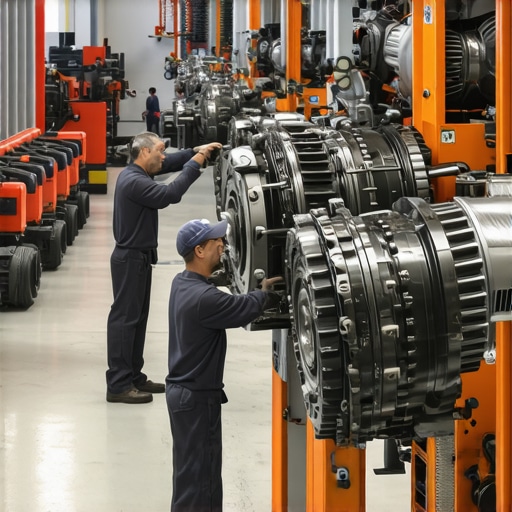
Google’s AI is now sophisticated enough to “read” the content of your photos. If you upload generic stock photos of a generic steering wheel, Google learns nothing. But if you upload high-resolution photos of a transmission on a specialized jack, a technician using a high-end diagnostic scanner, or a shelf full of specific transmission rebuild kits, you are sending a powerful signal.
These photos tell Google’s AI: “This shop actually does the work they claim to do.” This is the “Photo Hack” that many of your competitors are likely missing. By consistently uploading “action shots” of your shop, you increase your relevance for specialized repairs. We’ve seen cases where This Simple Photo Hack Doubled Our Google Business Profile Traffic for Transmission Repairs simply because it moved the shop from “generalist” to “specialist” in the eyes of the algorithm.
Visual Checklist for Transmission Shops:
- The Gearbox: Photos of disassembled transmissions showing the intricate parts.
- The Tech: Photos of your ASE-certified technicians in the bay.
- The Tools: Photos of your scan tools, fluid exchange machines, and heavy-duty lifts.
- The Facility: Clean, professional shots of your storefront and waiting area to build trust.
When a driver sees these photos, their “trust meter” goes up. When Google’s AI sees them, your “relevance score” goes up. It is a win-win for google maps lead generation. If you want to Stop Being Invisible on Google Maps and Fill Your Repair Bays, you must treat your GBP photos like a professional portfolio, not an afterthought.
VII. Conclusion: Reclaiming Your Local Territory
The reason your competitors are getting those high-ticket transmission leads isn’t necessarily because they are better mechanics. It’s because they have calibrated their “Digital Transmission” – their Google Business Profile – to shift perfectly with the search algorithm.
To recap, if you want to dominate the local market, you must:
- Optimize your categories to prioritize “Transmission Shop.”
- Build keyword-rich reviews that mention specific services and vehicle types.
- Clean up technical “grounding” issues like NAP inconsistency and duplicate listings.
- Use visual trust signals to prove your expertise to both Google and the consumer.
Don’t let another $5,000 repair job drive past your shop and into the bay of a competitor who just happens to have better gmb seo tools in their arsenal. The Google Maps algorithm is complex, but it is predictable. By following The Local SEO Strategy That Actually Wins the Google Maps Algorithm, you can ensure that when a driver’s transmission fails, your shop is the first and only one they call.
Ready to see where your shop stands? Use a professional google business profile audit tool to identify your ranking gaps today. Whether you’re dealing with 2026 Transmission Shudders or trying to fix your Hard Shifting Into Second, the logic is the same: find the point of failure, apply the right fix, and get back on the road to profitability.
For more specialized tips, don’t miss The Simple Google Maps Checklist That Keeps Our Brake Bays Full or learn Why Your Google Maps Optimization Isn’t Booking More Brake Repairs to see how these strategies apply across all your service offerings. Using the right local seo software or SEO Viper Tools will give you the diagnostic edge you need to stay ahead of the curve.