The Fuel Trim Crisis Hidden in Your Dashboard
Modern internal combustion engines operate on a razor-thin margin of efficiency, dictated by high-speed data exchanges between the Electronic Control Unit (ECU) and a suite of precision sensors. While most vehicle owners equate a tune up with replacing spark plugs or air filters, the most significant impact on miles per gallon (MPG) often stems from the degradation of feedback sensors. When these components fail to report accurate data, the ECU defaults to a ‘limp’ or ‘rich’ fuel map to protect the engine, inadvertently sacrificing efficiency for safety. This analytical approach to auto repair suggests that maintaining the integrity of these signals is paramount to vehicle longevity. A vehicle running in a sub-optimal ‘open-loop’ state can consume up to 25% more fuel than necessary, yet this condition often fails to trigger an immediate diagnostic trouble code. Understanding the subtle shift in fuel trims—the adjustments the ECU makes to compensate for sensor inaccuracies—is the hallmark of a high-level mechanic.
Why Sensors Lie Long Before the Check Engine Light Glows
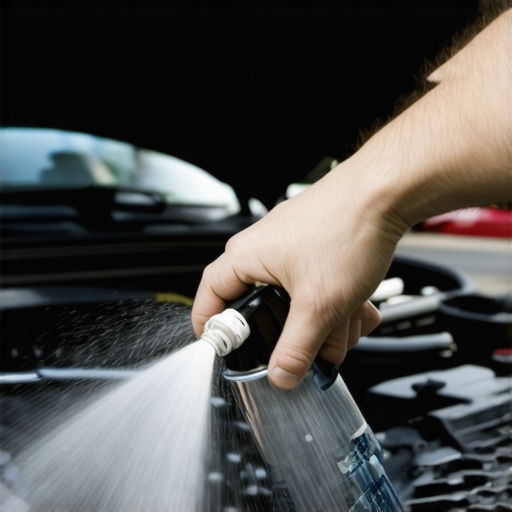
The Mass Air Flow (MAF) sensor is the primary arbiter of the air-to-fuel ratio, measuring the density of incoming air to determine the precise amount of fuel required for combustion. Over time, oil vapor and microscopic debris coat the delicate sensing wire, insulating it and causing it to report less air than is actually entering the system. This results in poor acceleration and a noticeable drop in efficiency. Utilizing the 15-dollar MAF sensor fix can often restore factory-spec performance without the need for expensive component replacement. A skilled technician will identify this lag in the data stream before it triggers a Check Engine Light, saving the driver from months of fuel waste. Furthermore, the downstream oxygen sensors eventually suffer from ‘silica poisoning’ or carbon soot buildup, slowing their response time. According to research published by the Department of Energy (DOE), replacing a degraded oxygen sensor can improve fuel economy by as much as 40% in older, high-mileage vehicles (Fueleconomy.gov).
Precision Maintenance Saves More Than Just Gas
Viewing maintenance through a lens of total cost of ownership reveals that passive neglect is the most expensive way to operate a vehicle. Implementing advanced tune up strategies allows for the correction of volumetric efficiency before it compounds into catalytic converter failure or carbon buildup on intake valves. This proactive approach is equally vital in other areas of maintenance; for instance, a neglected brake service can lead to sticking calipers that create parasitic drag, further destroying your MPG. Finding the right balance between mechanical repairs and electronic optimization is why finding the right mechanic is an investment rather than a cost. High-level diagnostics often reveal that a vehicle’s ‘stumble’ on cold starts is not a hardware failure, but a software reaction to skewed sensor data.
Can a twelve dollar chemical fix replace a five hundred dollar repair?
In many diagnostic scenarios, the answer is a resounding yes. Chemical cleaning of the throttle body and MAF sensor addresses the root cause of idle instability and fuel trim errors that mimic the symptoms of failing injectors or vacuum leaks. While a high-ticket overhaul might be recommended by less experienced shops, the application of specialized solvents can often resolve these issues for a fraction of the price. However, precision is key; using the wrong solvent can destroy sensitive platinum elements or Teflon coatings on throttle plates. Beyond the engine bay, safety must remain a priority; if you are noticing a decline in stopping power alongside your fuel issues, explore our brake service secrets to ensure your safety matches your efficiency. If you are ready to take control of your vehicle’s performance for the coming year, contribute your own insights or check out our essential tune-up tips for 2025.
Kill the Parasitic Drag Stalling Your Performance
While most enthusiasts focus on what happens inside the combustion chamber, a veteran mechanic understands that the drivetrain’s resistance is the silent enemy of efficiency. A common oversight in a standard auto repair regimen is the condition of the brake calipers. Over time, the slide pins lose lubrication, causing the pads to stay in light contact with the rotor even when your foot is off the pedal. This ‘brake drag’ generates excessive heat and forces the engine to work harder to maintain cruising speed, essentially negating the benefits of a fresh air filter. To prevent this, implementing specific brake service strategies is essential. This isn’t just about safety; it’s about mechanical liberation. If the hub surface isn’t perfectly clean, even the most expensive parts will fail prematurely. Often, the 10-minute hub scrub is the difference between a smooth ride and a vibrating steering wheel that mimics a failing suspension or unbalanced tires.
Why do high-performance brake pads smell like they are burning after a professional install?
It is a disconcerting sensation for any driver, but the ‘burning’ scent is often a sign of the chemical bedding process known as outgassing. As new friction material reaches operating temperature for the first time, resins within the pad cure and release gases. However, if the smell persists beyond the initial drive, it may indicate that the pads were not properly matched to the rotor surface or that a caliper is seized. Many drivers panic and assume a major failure, but understanding why your new brakes smell like they’re burning can help you distinguish between normal ‘burnishing’ and a legitimate mechanical error. According to the Car Care Council, proactive maintenance like this can prevent a significant portion of the $2 billion in unperformed vehicle repairs that lead to roadside breakdowns annually (Carcare.org). This expert-level awareness ensures you aren’t paying for repairs that aren’t actually necessary.
Eliminate Electrical Noise to Restore ECU Accuracy
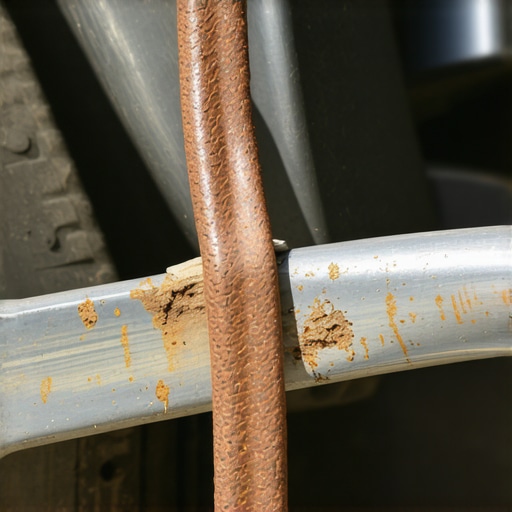
The transition to 2025 technology means that ‘mechanical’ problems are increasingly rooted in electrical interference. A frayed or corroded engine ground strap creates high resistance, which introduces ‘noise’ into the sensor signals the ECU relies on for a tune up. This interference can cause ghost misfires, erratic shifting, or a rough idle that no amount of new spark plugs will fix. In these cases, the 20-dollar ground strap fix is the ultimate diagnostic win for a budget-conscious car owner. This highlights why how to choose a skilled mechanic depends on finding someone who understands the nuances of electrical paths. By cleaning the contact points where the battery meets the chassis, you ensure the ‘clean’ signal necessary for peak volumetric efficiency. Without this solid path for current, sensors can produce erratic data waves, leading to hard starts and poor timing. This proves that high-level auto care is more about signal integrity than simple parts swapping. If you’ve ever chased a misfire that only happens under heavy electrical load, have you checked your battery grounds lately? Share your weirdest diagnostic stories in the comments or read more about our latest performance benchmarks to stay ahead of the curve.
Transmission Fluid Friction is Stealing Your Torque
A comprehensive tune up shouldn’t stop at the firewall. The transmission is the primary conduit for power, and its internal health dictates how much of that combustion energy actually reaches the pavement. As transmission fluid shears down over thousands of miles, its viscosity changes, and its ability to manage heat diminishes. This leads to increased internal friction within the torque converter and planetary gear sets. A savvy mechanic knows that darkened, burnt-smelling fluid is a sign that the transmission is working against the engine. In many modern vehicles, the transmission control module (TCM) communicates directly with the engine’s ECU to retard timing during shifts to protect the gears. If the fluid is degraded, these shift intervals take longer, and the engine stays at a higher RPM for extended periods, directly impacting your fuel economy. This is why a fluid refresh is a critical component of professional auto repair that goes beyond simple oil changes.
Why does my automatic transmission hunt for gears on slight inclines?
This behavior, often called ‘gear hunting,’ is frequently a symptom of the ECU trying to find an equilibrium between engine load and throttle position while compensating for a loss of hydraulic pressure. When fluid is old or the filter is clogged, the hydraulic servos cannot react fast enough to maintain the requested gear under load. Instead of a mechanical failure, you might simply be dealing with fluid that has lost its specific gravity. According to the National Institute for Automotive Service Excellence (ASE), maintaining fluid levels and quality is the single most effective way to prevent the $4,000+ cost of a total transmission rebuild (Ase.com). Addressing this during your next brake service or scheduled maintenance can prevent a minor hydraulic lag from becoming a major mechanical catastrophe.
Stop Letting a Sticky Thermostat Dictate Your Fuel Budget
Thermal management is the unsung hero of engine efficiency. If your thermostat is ‘lazy’—meaning it opens too early or stays partially open—the engine may never reach its optimal operating temperature of roughly 195 to 220 degrees Fahrenheit. When the Coolant Temperature Sensor (CTS) reports a lower-than-optimal temperature, the ECU assumes the engine is still in its ‘warm-up’ phase. To compensate, it injects extra fuel to stabilize the combustion process. This is essentially like driving with the ‘choke’ on in an old carbureted car. 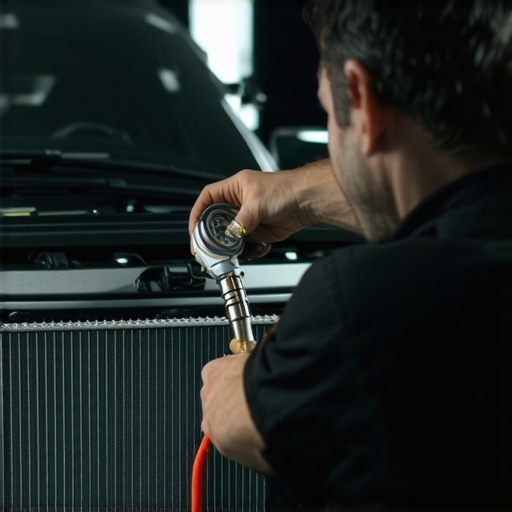 You might notice that your cabin heater isn’t quite as hot as it used to be, which is a classic sign of a cooling system that is preventing the engine from entering its most efficient ‘closed-loop’ state. This extra fuel doesn’t just waste money; it washes the oil off your cylinder walls, accelerating engine wear.
Give Your Cooling System a Pressure Test Before Summer Hits
A small leak in the cooling system doesn’t just risk a breakdown; it prevents the system from pressurizing, which lowers the boiling point of the coolant and creates localized ‘hot spots’ in the cylinder head. These hot spots can trigger the knock sensor, causing the ECU to pull back ignition timing, which kills your power. A professional mechanic will use a pressure tester to find these micro-leaks before they leave you stranded. If you want to ensure your vehicle is ready for long-distance travel, consider pairing your cooling system check with our latest high-mileage maintenance checklist. Keeping the temperature stable is just as important as the spark itself when it comes to a high-level tune up. Beyond the radiator, the condition of your drive belts ensures that the water pump is spinning at the correct RPM to maintain this delicate balance.
Tire Rolling Resistance and the Hidden Cost of Low Pressure
The final link in the efficiency chain is where the rubber meets the road. Even if your engine is perfectly tuned, low tire pressure creates a massive amount of rolling resistance that acts like a constant anchor on your vehicle. This resistance forces the engine to burn more fuel to maintain the same cruising speed. During a standard brake service, many technicians will overlook the precise PSI requirements listed on your door jamb, yet being off by just 5 PSI can reduce fuel economy by 2%. This is a mechanical drag that no amount of sensor cleaning can fix. When tires are under-inflated, the sidewalls flex excessively, generating heat and causing the tread to wear unevenly, which can lead to vibrations that mimic suspension issues. A true expert in auto repair looks at the vehicle as a total system, ensuring that the work done under the hood isn’t being neutralized by poor maintenance at the wheels.
The Invisible Link Between Oil Viscosity and Camshaft Timing
In the era of modern high-compression engines, a tune up is no longer limited to what happens in the combustion chamber; it is increasingly about the fluid dynamics of the lubrication system. Variable Valve Timing (VVT) systems rely on hydraulic pressure from the engine oil to actuate the camshaft phasers. When a vehicle owner neglects oil change intervals or uses a viscosity that deviates even slightly from the manufacturer’s specification, the VVT solenoids struggle to adjust the timing with the millisecond precision required for peak volumetric efficiency. This creates a ‘soft’ performance lag where the engine remains functional but loses its competitive edge in fuel economy. A veteran mechanic understands that microscopic sludge buildup in the solenoid screens can cause a delay in timing advancement, forcing the ECU to compensate with suboptimal fuel maps. Ensuring the integrity of this hydraulic circuit is a hallmark of advanced auto repair that often goes overlooked during a standard visual inspection.
How can a clogged catalytic converter mimic a transmission slip?
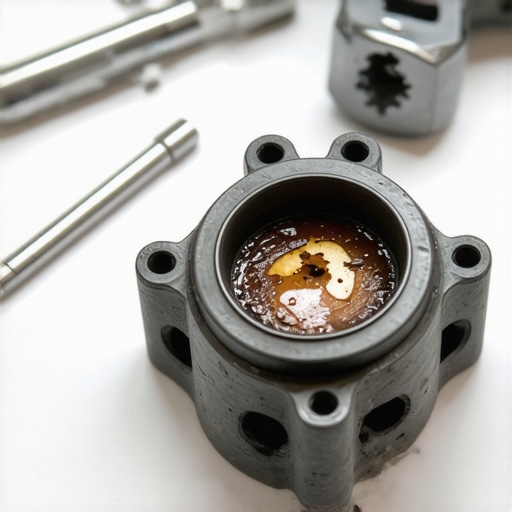
When an exhaust system becomes restricted due to a degrading catalytic converter, the engine experiences excessive backpressure, which prevents it from exhaling spent gases efficiently. This restriction creates a flat spot in the powerband that many drivers mistake for a slipping transmission or a failing torque converter. Because the engine cannot move air, it cannot generate torque, leading to high-RPM ‘searching’ as the computer tries to find a gear that can sustain the vehicle’s speed. High-level diagnostics involving a backpressure gauge can reveal if your exhaust is choked before you commit to an expensive and unnecessary transmission rebuild. According to research published by SAE International, even a minor increase in exhaust restriction can lead to a measurable decrease in brake thermal efficiency, particularly under highway load conditions (Sae.org). Addressing these internal bottlenecks is essential for any brake service or general maintenance routine that aims to restore a vehicle to its original factory performance metrics.
Detect Exhaust Backpressure Before it Kills Your Powerband
Thermal stress is the primary enemy of the modern exhaust system, and a rich-running engine—caused by those faulty sensors discussed earlier—can melt the ceramic substrate inside your converter in a matter of miles. This creates a physical blockage that acts like a cork in the engine’s throat. A professional tune up should always include a check of the exhaust gas temperature and a physical inspection of the hangers and heat shields to ensure no external vibrations are stressing the internal components. When the exhaust flows freely, the engine works less, the turbocharger (if equipped) spools faster, and your fuel economy sees a direct, positive correlation. If you’ve noticed a ‘sulfur’ smell or a glowing manifold after a long drive, the time for passive observation has passed.
Straighten Your Path to Stop Scrubbing Away Fuel Dollars
Even the most perfectly tuned engine cannot overcome the physics of a misaligned chassis. If your vehicle’s toe-in or camber is out of specification, the tires are essentially being dragged sideways as you drive down the road. This ‘scrubbing’ action creates immense friction, which acts as a constant parasitic load on the drivetrain. Most drivers associate an alignment with tire wear, but the fuel savings of a perfectly straight-tracking vehicle are just as significant. During your next brake service, insist on a four-wheel alignment check to ensure your vehicle isn’t fighting itself for every mile. When the suspension geometry is optimized, rolling resistance is minimized, and the effort required for the engine to maintain 65 MPH drops significantly. Are you ready to see how these advanced adjustments can transform your daily commute? Connect with an expert technician today to perform a deep-dive diagnostic on your VVT system and chassis geometry to reclaim the performance you’ve been losing.
The Fuel Trim Crisis Hidden in Your Dashboard
Modern internal combustion engines operate on a razor-thin margin of efficiency, dictated by high-speed data exchanges between the Electronic Control Unit (ECU) and a suite of precision sensors. While most vehicle owners equate a tune up with replacing spark plugs or air filters, the most significant impact on miles per gallon (MPG) often stems from the degradation of feedback sensors. When these components fail to report accurate data, the ECU defaults to a ‘limp’ or ‘rich’ fuel map to protect the engine, inadvertently sacrificing efficiency for safety. This analytical approach to auto repair suggests that maintaining the integrity of these signals is paramount to vehicle longevity. A vehicle running in a sub-optimal ‘open-loop’ state can consume up to 25% more fuel than necessary, yet this condition often fails to trigger an immediate diagnostic trouble code. Understanding the subtle shift in fuel trims—the adjustments the ECU makes to compensate for sensor inaccuracies—is the hallmark of a high-level mechanic.
Why Sensors Lie Long Before the Check Engine Light Glows
The Mass Air Flow (MAF) sensor is the primary arbiter of the air-to-fuel ratio, measuring the density of incoming air to determine the precise amount of fuel required for combustion. Over time, oil vapor and microscopic debris coat the delicate sensing wire, insulating it and causing it to report less air than is actually entering the system. This results in poor acceleration and a noticeable drop in efficiency. Utilizing the 15-dollar MAF sensor fix can often restore factory-spec performance without the need for expensive component replacement. A skilled technician will identify this lag in the data stream before it triggers a Check Engine Light, saving the driver from months of fuel waste. Furthermore, the downstream oxygen sensors eventually suffer from ‘silica poisoning’ or carbon soot buildup, slowing their response time. According to research published by the Department of Energy (DOE), replacing a degraded oxygen sensor can improve fuel economy by as much as 40% in older, high-mileage vehicles (Fueleconomy.gov).
Precision Maintenance Saves More Than Just Gas
Viewing maintenance through a lens of total cost of ownership reveals that passive neglect is the most expensive way to operate a vehicle. Implementing advanced tune up strategies allows for the correction of volumetric efficiency before it compounds into catalytic converter failure or carbon buildup on intake valves. This proactive approach is equally vital in other areas of maintenance; for instance, a neglected brake service can lead to sticking calipers that create parasitic drag, further destroying your MPG. Finding the right balance between mechanical repairs and electronic optimization is why finding the right mechanic is an investment rather than a cost. High-level diagnostics often reveal that a vehicle’s ‘stumble’ on cold starts is not a hardware failure, but a software reaction to skewed sensor data.
Can a twelve dollar chemical fix replace a five hundred dollar repair?
In many diagnostic scenarios, the answer is a resounding yes. Chemical cleaning of the throttle body and MAF sensor addresses the root cause of idle instability and fuel trim errors that mimic the symptoms of failing injectors or vacuum leaks. While a high-ticket overhaul might be recommended by less experienced shops, the application of specialized solvents can often resolve these issues for a fraction of the price. However, precision is key; using the wrong solvent can destroy sensitive platinum elements or Teflon coatings on throttle plates. Beyond the engine bay, safety must remain a priority; if you are noticing a decline in stopping power alongside your fuel issues, explore our brake service secrets to ensure your safety matches your efficiency. If you are ready to take control of your vehicle’s performance for the coming year, contribute your own insights or check out our essential tune-up tips for 2025.
Kill the Parasitic Drag Stalling Your Performance
While most enthusiasts focus on what happens inside the combustion chamber, a veteran mechanic understands that the drivetrain’s resistance is the silent enemy of efficiency. A common oversight in a standard auto repair regimen is the condition of the brake calipers. Over time, the slide pins lose lubrication, causing the pads to stay in light contact with the rotor even when your foot is off the pedal. This ‘brake drag’ generates excessive heat and forces the engine to work harder to maintain cruising speed, essentially negating the benefits of a fresh air filter. To prevent this, implementing specific brake service strategies is essential. This isn’t just about safety; it’s about mechanical liberation. If the hub surface isn’t perfectly clean, even the most expensive parts will fail prematurely. Often, the 10-minute hub scrub is the difference between a smooth ride and a vibrating steering wheel that mimics a failing suspension or unbalanced tires.
Why do high-performance brake pads smell like they are burning after a professional install?
It is a disconcerting sensation for any driver, but the ‘burning’ scent is often a sign of the chemical bedding process known as outgassing. As new friction material reaches operating temperature for the first time, resins within the pad cure and release gases. However, if the smell persists beyond the initial drive, it may indicate that the pads were not properly matched to the rotor surface or that a caliper is seized. Many drivers panic and assume a major failure, but understanding why your new brakes smell like they’re burning can help you distinguish between normal ‘burnishing’ and a legitimate mechanical error. According to the Car Care Council, proactive maintenance like this can prevent a significant portion of the $2 billion in unperformed vehicle repairs that lead to roadside breakdowns annually (Carcare.org). This expert-level awareness ensures you aren’t paying for repairs that aren’t actually necessary.
Eliminate Electrical Noise to Restore ECU Accuracy
The transition to 2025 technology means that ‘mechanical’ problems are increasingly rooted in electrical interference. A frayed or corroded engine ground strap creates high resistance, which introduces ‘noise’ into the sensor signals the ECU relies on for a tune up. This interference can cause ghost misfires, erratic shifting, or a rough idle that no amount of new spark plugs will fix. In these cases, the 20-dollar ground strap fix is the ultimate diagnostic win for a budget-conscious car owner. This highlights why how to choose a skilled mechanic depends on finding someone who understands the nuances of electrical paths. By cleaning the contact points where the battery meets the chassis, you ensure the ‘clean’ signal necessary for peak volumetric efficiency. Without this solid path for current, sensors can produce erratic data waves, leading to hard starts and poor timing. This proves that high-level auto care is more about signal integrity than simple parts swapping. If you’ve ever chased a misfire that only happens under heavy electrical load, have you checked your battery grounds lately? Share your weirdest diagnostic stories in the comments or read more about our latest performance benchmarks to stay ahead of the curve.
Transmission Fluid Friction is Stealing Your Torque
A comprehensive tune up shouldn’t stop at the firewall. The transmission is the primary conduit for power, and its internal health dictates how much of that combustion energy actually reaches the pavement. As transmission fluid shears down over thousands of miles, its viscosity changes, and its ability to manage heat diminishes. This leads to increased internal friction within the torque converter and planetary gear sets. A savvy mechanic knows that darkened, burnt-smelling fluid is a sign that the transmission is working against the engine. In many modern vehicles, the transmission control module (TCM) communicates directly with the engine’s ECU to retard timing during shifts to protect the gears. If the fluid is degraded, these shift intervals take longer, and the engine stays at a higher RPM for extended periods, directly impacting your fuel economy. This is why a fluid refresh is a critical component of professional auto repair that goes beyond simple oil changes.
Why does my automatic transmission hunt for gears on slight inclines?
This behavior, often called ‘gear hunting,’ is frequently a symptom of the ECU trying to find an equilibrium between engine load and throttle position while compensating for a loss of hydraulic pressure. When fluid is old or the filter is clogged, the hydraulic servos cannot react fast enough to maintain the requested gear under load. Instead of a mechanical failure, you might simply be dealing with fluid that has lost its specific gravity. According to the National Institute for Automotive Service Excellence (ASE), maintaining fluid levels and quality is the single most effective way to prevent the $4,000+ cost of a total transmission rebuild (Ase.com). Addressing this during your next brake service or scheduled maintenance can prevent a minor hydraulic lag from becoming a major mechanical catastrophe.
Stop Letting a Sticky Thermostat Dictate Your Fuel Budget
Thermal management is the unsung hero of engine efficiency. If your thermostat is ‘lazy’—meaning it opens too early or stays partially open—the engine may never reach its optimal operating temperature of roughly 195 to 220 degrees Fahrenheit. When the Coolant Temperature Sensor (CTS) reports a lower-than-optimal temperature, the ECU assumes the engine is still in its ‘warm-up’ phase. To compensate, it injects extra fuel to stabilize the combustion process. This is essentially like driving with the ‘choke’ on in an old carbureted car. You might notice that your cabin heater isn’t quite as hot as it used to be, which is a classic sign of a cooling system that is preventing the engine from entering its most efficient ‘closed-loop’ state. This extra fuel doesn’t just waste money; it washes the oil off your cylinder walls, accelerating engine wear.
Give Your Cooling System a Pressure Test Before Summer Hits
A small leak in the cooling system doesn’t just risk a breakdown; it prevents the system from pressurizing, which lowers the boiling point of the coolant and creates localized ‘hot spots’ in the cylinder head. These hot spots can trigger the knock sensor, causing the ECU to pull back ignition timing, which kills your power. A professional mechanic will use a pressure tester to find these micro-leaks before they leave you stranded. If you want to ensure your vehicle is ready for long-distance travel, consider pairing your cooling system check with our latest high-mileage maintenance checklist. Keeping the temperature stable is just as important as the spark itself when it comes to a high-level tune up. Beyond the radiator, the condition of your drive belts ensures that the water pump is spinning at the correct RPM to maintain this delicate balance.
Tire Rolling Resistance and the Hidden Cost of Low Pressure
The final link in the efficiency chain is where the rubber meets the road. Even if your engine is perfectly tuned, low tire pressure creates a massive amount of rolling resistance that acts like a constant anchor on your vehicle. This resistance forces the engine to burn more fuel to maintain the same cruising speed. During a standard brake service, many technicians will overlook the precise PSI requirements listed on your door jamb, yet being off by just 5 PSI can reduce fuel economy by 2%. This is a mechanical drag that no amount of sensor cleaning can fix. When tires are under-inflated, the sidewalls flex excessively, generating heat and causing the tread to wear unevenly, which can lead to vibrations that mimic suspension issues. A true expert in auto repair looks at the vehicle as a total system, ensuring that the work done under the hood isn’t being neutralized by poor maintenance at the wheels.
The Invisible Link Between Oil Viscosity and Camshaft Timing
In the era of modern high-compression engines, a tune up is no longer limited to what happens in the combustion chamber; it is increasingly about the fluid dynamics of the lubrication system. Variable Valve Timing (VVT) systems rely on hydraulic pressure from the engine oil to actuate the camshaft phasers. When a vehicle owner neglects oil change intervals or uses a viscosity that deviates even slightly from the manufacturer’s specification, the VVT solenoids struggle to adjust the timing with the millisecond precision required for peak volumetric efficiency. This creates a ‘soft’ performance lag where the engine remains functional but loses its competitive edge in fuel economy. A veteran mechanic understands that microscopic sludge buildup in the solenoid screens can cause a delay in timing advancement, forcing the ECU to compensate with suboptimal fuel maps. Ensuring the integrity of this hydraulic circuit is a hallmark of advanced auto repair that often goes overlooked during a standard visual inspection.
How can a clogged catalytic converter mimic a transmission slip?
When an exhaust system becomes restricted due to a degrading catalytic converter, the engine experiences excessive backpressure, which prevents it from exhaling spent gases efficiently. This restriction creates a flat spot in the powerband that many drivers mistake for a slipping transmission or a failing torque converter. Because the engine cannot move air, it cannot generate torque, leading to high-RPM ‘searching’ as the computer tries to find a gear that can sustain the vehicle’s speed. High-level diagnostics involving a backpressure gauge can reveal if your exhaust is choked before you commit to an expensive and unnecessary transmission rebuild. According to research published by SAE International, even a minor increase in exhaust restriction can lead to a measurable decrease in brake thermal efficiency, particularly under highway load conditions (Sae.org). Addressing these internal bottlenecks is essential for any brake service or general maintenance routine that aims to restore a vehicle to its original factory performance metrics.
Detect Exhaust Backpressure Before it Kills Your Powerband
Thermal stress is the primary enemy of the modern exhaust system, and a rich-running engine—caused by those faulty sensors discussed earlier—can melt the ceramic substrate inside your converter in a matter of miles. This creates a physical blockage that acts like a cork in the engine’s throat. A professional tune up should always include a check of the exhaust gas temperature and a physical inspection of the hangers and heat shields to ensure no external vibrations are stressing the internal components. When the exhaust flows freely, the engine works less, the turbocharger (if equipped) spools faster, and your fuel economy sees a direct, positive correlation. If you’ve noticed a ‘sulfur’ smell or a glowing manifold after a long drive, the time for passive observation has passed.
Straighten Your Path to Stop Scrubbing Away Fuel Dollars
Even the most perfectly tuned engine cannot overcome the physics of a misaligned chassis. If your vehicle’s toe-in or camber is out of specification, the tires are essentially being dragged sideways as you drive down the road. This ‘scrubbing’ action creates immense friction, which acts as a constant parasitic load on the drivetrain. Most drivers associate an alignment with tire wear, but the fuel savings of a perfectly straight-tracking vehicle are just as significant. During your next brake service, insist on a four-wheel alignment check to ensure your vehicle isn’t fighting itself for every mile. When the suspension geometry is optimized, rolling resistance is minimized, and the effort required for the engine to maintain 65 MPH drops significantly. Are you ready to see how these advanced adjustments can transform your daily commute? Connect with an expert technician today to perform a deep-dive diagnostic on your VVT system and chassis geometry to reclaim the performance you’ve been losing.
Expert Insights & Advanced Considerations
The Electrical Ghost Haunting Your Fuel Trim
Even the most expensive new sensors will fail to calibrate correctly if the engine’s electrical ground is compromised. Using the 20-dollar ground strap fix can resolve mystery misfires that standard diagnostic tools often miss. A veteran mechanic knows that signal noise is often more problematic than a complete component failure, as it forces the ECU to constantly reset its learned adaptations.
Stop the Smoke Before it Starts
New brake components often undergo a thermal curing phase, but differentiating between normal outgassing and a seized caliper is vital for long-term safety. If you find yourself asking why your new brakes smell like they’re burning, verify the caliper slide pin lubrication immediately. Efficient auto repair isn’t just about replacing pads; it is about ensuring the entire mechanical assembly moves without parasitic drag.
Verify Every Bolt and Sensor Signal
Don’t assume the job is done just because the light went out. It is essential to audit your local mechanic by requesting a post-repair data log. This ensures your tune up actually achieved the target fuel trim values rather than just hiding the symptoms. Real-world performance data is the only metric that truly validates a high-level repair.
Curated Expert Resources
ASE Driver Information Portal
The gold standard for automotive knowledge, offering technical overviews of modern vehicle systems and what to expect during a professional brake service or engine overhaul.
Fueleconomy.gov (DOE)
The most reliable government data source for quantifying how specific sensor failures directly impact your wallet and the efficiency of internal combustion engines.
SAE International Technical Library
An advanced resource for those who want to dive into the physics of engine backpressure and the engineering standards behind modern auto repair protocols.
Final Expert Perspective
Mastering vehicle efficiency in 2025 requires looking past the physical hardware and addressing the invisible data streams and parasitic loads that define modern performance. A comprehensive tune up is no longer an optional luxury but a technical necessity for anyone looking to mitigate the rising costs of ownership. By staying proactive with your auto repair regimen and integrating advanced diagnostic strategies, you ensure your vehicle remains a reliable asset. If you are ready to stop the waste and reclaim your car’s factory potential, we invite you to review our ultimate tune-up checklist and share your most challenging diagnostic wins with our community of experts.