Read Your Master Cylinder Like a Professional Diagnostic Tool
In the realm of high-stakes automotive performance, the chemical state of your hydraulic fluid is a primary indicator of vehicle health. While most drivers focus on mechanical components like pads or rotors, the integrity of the entire braking system hinges on a medium that is inherently unstable over long durations. As a specialist in auto repair, I have observed that neglecting fluid inspections often leads to systemic failures that could have been prevented with a simple visual check. Brake fluid is glycol-based and hygroscopic, meaning it actively draws moisture from its environment, even through the microscopic pores of rubber hoses. This process doesn’t just lower the boiling point; it initiates a chemical breakdown that can erode the internal surfaces of your calipers and master cylinder. Understanding the nuances of the brake fluid color chart is not merely a maintenance task—it is an essential safety protocol for any comprehensive tune up.
Does Crystal Clear Always Mean Your Braking System is Safe?
New brake fluid typically exhibits a translucent, pale yellow or nearly clear appearance. However, the absence of dark color doesn’t always guarantee chemical potency. Even fluid that looks ‘clean’ can be saturated with moisture if it has been in the system for more than two years. Expert technicians use refractometers or electronic moisture testers to confirm what the eye cannot see. If you find that your brake fluid level keeps dropping slowly, it is a definitive sign that a professional mechanic needs to inspect the system for leaks or excessive pad wear before the fluid’s chemical integrity is further compromised.
Stop Ignoring the Oxidation Building Inside Your Braking System
As the fluid ages, it transitions from a golden hue to a darker, amber shade. This transition signifies the beginning of oxidation and the accumulation of copper leached from the internal lining of the brake lines. When the fluid reaches a dark brown or ‘iced tea’ appearance, the corrosion inhibitors are likely depleted. At this stage, the fluid is no longer protecting the delicate ABS valves and pistons from internal rust. According to technical standards maintained by SAE International, the presence of water in the fluid significantly increases the risk of ‘vapor lock,’ a dangerous condition where the fluid boils under heat, leaving the driver with a spongy pedal and diminished stopping power. Implementing brake service secrets to boost safety early in this darkening phase can save thousands in component replacements.
What the Darkening Spectrum Reveals About Your Internal Components
When the fluid turns black or contains visible floating debris, you are looking at a system in distress. This level of contamination usually indicates that the rubber seals within the master cylinder or calipers are disintegrating. Black fluid is often a mixture of old oil, moisture, and pulverized rubber particles. Driving with fluid in this state is a gamble; the acidic nature of degraded fluid will eventually eat through every seal it contacts. A proactive brake service at this point is no longer about prevention—it is about rescue. If you are concerned about your vehicle’s performance beyond just the hydraulics, check out our ultimate tune-up checklist for every car owner to ensure every system is optimized for the road. Regular monitoring of these fluid shifts allows you to address minor chemical imbalances before they manifest as catastrophic mechanical failures.
Modern Electronic Control Units Won’t Forgive Acidic Fluid
In contemporary vehicles, the braking system is no longer a simple mechanical link between your foot and the wheels; it is a complex network of solenoids and micro-valves within the Anti-lock Braking System (ABS) and Electronic Stability Control (ESC) modules. These precision-engineered components have tolerances measured in microns, making them exceptionally vulnerable to the microscopic debris found in darkened fluid. When the fluid’s pH level drops due to moisture contamination, it becomes acidic, attacking the zinc coating on internal brake lines and the fine machined surfaces of the ABS pump. This internal degradation is often the hidden culprit behind why your brake pedal feels hard as a rock during emergency maneuvers. A failure in these electronic units can cost thousands, a stark contrast to the relatively low cost of a periodic fluid flush.
Is Your Aggressive Driving Killing Your Hydraulic Chemistry?
Thermal cycling is the silent accelerant of brake fluid degradation. For drivers who frequently navigate steep descents or engage in spirited driving, the intense heat generated at the calipers is transferred directly to the fluid. High temperatures cause the glycol ethers to break down at an accelerated rate, often manifesting as a rapid shift from amber to deep brown. This isn’t just an aesthetic change; it represents a fundamental shift in the fluid’s boiling point. According to data from the National Highway Traffic Safety Administration (NHTSA), brake fluid can absorb up to 2% moisture in its first year alone, which can reduce its boiling point by nearly 100 degrees Fahrenheit. This thermal stress eventually leads to ‘pedal fade,’ where the fluid literally turns into gas under pressure. Understanding how your environment dictates your maintenance schedule is a hallmark of how a top-rated mechanic ensures safe auto repairs every time.
Use Galvanic Voltage to Predict Internal Component Failure
While visual inspection is a vital first step, the most sophisticated way to assess fluid health is through electrical testing. Just as you might use the 12-multi-meter test for your charging system to diagnose a dying battery, you can use a multimeter to check the galvanic voltage within your brake fluid reservoir. By placing the positive lead in the fluid and the negative lead on the battery’s negative terminal, a reading above 0.3 volts typically indicates that the fluid has become a conductive electrolyte, actively stripping metal from your lines and cylinders. This level of precision allows you to identify exactly when the corrosion inhibitors have failed, long before the fluid turns pitch black.  If you have noticed a slight change in how your car handles during heavy traffic, don’t wait for a warning light. We encourage you to share your experiences with pedal feel in the comments below, or explore our specialized brake maintenance hacks to prevent costly failures to stay ahead of the curve.
Don’t Let DOT Ratings Confuse Your Maintenance Schedule
While color is a visual indicator, the chemical classification of your fluid—DOT 3, DOT 4, or DOT 5.1—determines its thermal resilience. A common mistake in many auto repair shops is assuming these fluids are interchangeable just because they are glycol-based. Higher DOT ratings generally signify a higher dry and wet boiling point, but they also tend to be more hygroscopic, meaning they pull moisture from the air faster. If your vehicle was engineered for DOT 4, reverting to DOT 3 during a tune up can lead to early fluid boiling during heavy braking, effectively neutralizing your safety margins. On the other hand, upgrading without a full system flush can lead to chemical cross-contamination that muddies your diagnostic color chart before the car even leaves the driveway.
What happens if I mix two different colors of brake fluid?
Technically, if two fluids meet the same DOT specification, they can be mixed regardless of their slight variations in amber or gold shades. However, this is a nightmare for a mechanic trying to perform a precise visual diagnostic. Mixing brands often results in a murky ‘middle-ground’ color that mimics the appearance of contamination or oxidation. If you are unsure of what is currently in your reservoir, the safest brake service protocol is a complete fluid exchange. This ensures the chemical baseline is reset, allowing you to use the color chart accurately for future monitoring. Always refer to the specific fluid standards outlined by the Federal Motor Carrier Safety Administration (FMCSA) regarding hydraulic brake systems to understand the legal and safety requirements for heavy-duty applications.
The Hidden Danger of Manual Pedal Pumping During Flushes
Traditional ‘pump-and-hold’ bleeding is a staple of DIY auto repair, but on high-mileage vehicles, this method can actually destroy your master cylinder. Over years of use, the piston inside the master cylinder travels within a specific, clean range. Outside that range, a small ridge of rust and debris can form in the bore. When you push the pedal to the floor during a manual bleed, the rubber seals are forced over this abrasive ridge, causing immediate internal damage. This is why professional shops prefer pressure bleeding or vacuum extraction. These methods move fluid through the lines without cycling the master cylinder piston beyond its normal operating stroke, preserving the integrity of the primary and secondary seals. 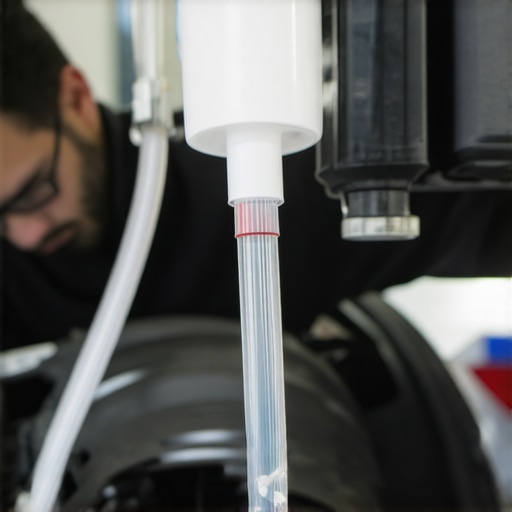
Humidity is the Undefeated Enemy of Hydraulic Performance
In regions with high ambient humidity, your braking system is under constant chemical assault. Even a perfectly sealed system will eventually see a rise in water content due to the permeability of rubber flex-hoses at each wheel. As water enters the system, it doesn’t just sit in the reservoir; it migrates to the lowest points—the calipers. This is where the most heat is generated and where the fluid is most likely to boil under pressure. If you have recently performed a brake service but still feel a slight ‘give’ in the pedal during hot days, your fluid might already be compromised at the wheel end. To see how this fits into your broader vehicle health, check out our guide on brake maintenance hacks to prevent costly failures. Understanding the relationship between your local climate and fluid longevity is what separates a standard driver from a savvy vehicle owner who avoids emergency repairs through foresight.
Copper Strip Tests Reveal What Your Eyes Miss
Expert-level diagnostics transcend mere visual assessment by focusing on the chemical concentration of copper ions. As corrosion inhibitors in the fluid deplete, the internal copper lining of your brake pipes begins to leach into the hydraulic solution. High copper content is a precursor to the acidification of the fluid, which eventually attacks more expensive components like the ABS modulator. By utilizing chemical test strips, a mechanic can quantify the parts per million (ppm) of copper. According to the Motorist Assurance Program (MAP), fluid should generally be replaced when copper levels exceed 200 ppm, regardless of how clean the fluid appears to the naked eye.

Can an Aged Reservoir Cap Compromise Your New Fluid?
The integrity of your hydraulic system often relies on a small, overlooked rubber diaphragm inside the master cylinder cap. This component is designed to expand and contract as the fluid level fluctuates, preventing ambient air—and the moisture it carries—from making direct contact with the fluid. If this diaphragm is torn or if the cap seal has flattened over time, your freshly flushed fluid will reach critical moisture saturation levels in months rather than years. During a tune up, a specialist doesn’t just look at the fluid; they inspect the physical seal of the reservoir to ensure the system remains truly closed to the atmosphere.
Stop Internal Pitting Before It Erodes Your Calipers
When moisture-laden fluid sits stagnant in the lowest points of the system, it creates localized galvanic cells. This leads to internal pitting on the piston bores of your calipers. Once pitting begins, the rubber square-cut seals can no longer maintain a perfect interface, leading to weeping leaks or, worse, a piston that refuses to retract fully. This mechanical drag creates excessive heat, which further degrades the fluid in a destructive feedback loop. Professional auto repair involves cleaning these bore surfaces, but once pitting is deep enough to be felt with a fingernail, the component is effectively scrap. Proactive flushing is the only way to prevent this microscopic erosion.
Modern ESP Systems Demand Low Viscosity Fluid
If you drive a vehicle manufactured within the last decade, it likely requires a specific LV or Low Viscosity variant of DOT 4 fluid. Electronic Stability Programs (ESP) and Traction Control systems rely on the rapid-fire pulsing of the ABS pump to stabilize the vehicle in milliseconds. Standard brake fluid is significantly more viscous at low temperatures, which can slow down the response time of these life-saving valves. Using the wrong fluid grade during a brake service might not cause an immediate failure, but it can compromise the vehicle’s ability to correct a skid in freezing conditions. Always verify the specific viscosity requirements in your owner’s manual to maintain the millisecond precision your safety systems require.
If you’ve noticed a change in your vehicle’s braking response or suspect your fluid hasn’t been tested for copper content, don’t leave your safety to chance. Schedule a comprehensive inspection today to ensure your high-tech braking components are protected from internal chemical decay.
Expert Insights and Advanced Considerations
The Moisture Trap You Did Not Know Existed
Even a sealed master cylinder has a small breather to allow for fluid expansion. Over time, this tiny port acts as a gateway for atmospheric humidity to enter, regardless of how rarely you drive. For high-performance setups, consider a sealed bladder system if available, or simply accept that time, not mileage, is the primary driver for a brake service. If you are unsure of the timeline, check out when to know you need brake service now to avoid internal corrosion.
Why the ABS Module Hates Your Old Fluid
The microscopic passages within an Anti-lock Braking System (ABS) modulator can be as narrow as a human hair. When brake fluid oxidizes and darkens, it carries suspended metal particles and disintegrated rubber that can wedge themselves into these valves. This is why a standard tune up should always include a check of hydraulic clarity and moisture content. To learn more about professional safety standards, read how a top-rated mechanic ensures safe auto repairs every time.
Don’t Flush Without Cycling the Solenoids
A simple gravity bleed often leaves old fluid trapped inside the ABS pump and secondary circuits. True experts use a bi-directional scan tool to pulse the solenoids during the flush, ensuring every cubic centimeter of acidic fluid is purged. This advanced auto repair technique is what differentiates a basic service from a specialized brake clinic. For those looking to master these technical nuances, our guide on tune-up your car like a pro offers deeper mechanical context.
Tools the Professionals Use for Deep Diagnostics
To truly understand the state of your vehicle, you must look beyond the reservoir cap. These resources and methods are the gold standard for any serious mechanic or enthusiast:
- SAE International (J1703/J1704 Standards): These are the definitive industry white papers on fluid boiling points and chemical stability requirements.
- Motorist Assurance Program (MAP) Guidelines: Use these industry-standard benchmarks to determine exactly when a component has moved from functional to failure-imminent.
- The 12-Multi-Meter Test: A practical way to measure galvanic voltage within the fluid. Learn more about this in our 12-multi-meter test guide to see how the same principles apply to hydraulic health.
The Final Word on Hydraulic Health
Maintaining your braking system is an exercise in chemical management rather than mechanical endurance. While pads and rotors are the visible hardware of your stopping power, the fluid is the vital nervous system. Neglecting a regular brake service does not just reduce performance; it actively destroys the expensive electronic and metal infrastructure of your vehicle. By utilizing advanced diagnostics like copper strip testing and voltage checks, you can stay ahead of costly auto repair bills. #IMAGE_PLACEHOLDER_E# If you have encountered a spongy pedal after a long descent or noticed your fluid turning dark prematurely, we invite you to share your diagnostic findings in the comments below. For more strategic advice, explore our auto repair cost-saving tips from industry experts to keep your vehicle in peak condition without breaking the bank.