
Establishing Credibility in Auto Repair: The Foundation of Trust
In the competitive landscape of automotive maintenance, trust is the cornerstone that distinguishes reputable mechanics from transient service providers. As an industry expert, I emphasize that building reliability begins with transparent communication and consistent quality assurance. Establishing a reputation for integrity and expertise encourages repeat business and positive referrals, which are vital in cultivating long-term trust.
Deciphering the Nuances of Mechanic Expertise to Enhance Customer Confidence
Expertise in auto repair extends beyond basic diagnostics. Skilled mechanics utilize diagnostic tools and interpret complex data to identify issues efficiently. They also stay updated with the latest vehicle technologies through continuous education. For instance, understanding the intricacies of hybrid and electric vehicle systems can significantly boost a mechanic’s credibility among modern car owners. Referencing authoritative resources like the Society of Automotive Engineers can help mechanics stay aligned with industry standards and innovations.
How to Foster Trust with Transparent Pricing and Honest Assessments
One of the most effective strategies for enhancing reliability is transparent pricing. Providing detailed estimates and explaining repair procedures demystifies the process for customers, reducing anxiety and suspicion. Honest assessments, especially when recommending necessary repairs versus optional services, demonstrate professional integrity. This approach encourages customers to view the mechanic as a trusted advisor rather than just a service provider.
Leveraging Advanced Brake Service Techniques to Reinforce Reliability
Braking systems are critical for vehicle safety, and expert-level brake maintenance is essential for building customer confidence. Techniques such as ultrasonic brake caliper cleaning, high-performance pad selection, and precision rotor resurfacing exemplify the depth of professional care. Incorporating diagnostic tools like brake fluid testers ensures that maintenance is comprehensive and effective, ultimately reinforcing the mechanic’s authority in the field.
What Are the Most Overlooked Indicators of Brake System Failure That Experts Need to Address?
Many drivers overlook subtle signs like uneven brake pad wear or minor pulsations during braking. From a professional perspective, early detection of these issues through diagnostic scans and visual inspections can prevent costly repairs and safety hazards. Educating customers about these indicators fosters proactive maintenance and positions the mechanic as a trustworthy authority.
For further insights into optimizing auto repair trust, explore our tune-up checklist for vehicle longevity. Engaging with community forums and sharing expert knowledge not only enhances credibility but also contributes to the broader auto repair community’s standards.
In conclusion, reliable mechanics and meticulous brake service are intertwined with transparent communication, advanced technical proficiency, and unwavering integrity. By adopting these expert strategies, auto repair professionals can cultivate lasting trust and elevate their reputation in an increasingly competitive market.
Building Trust Through Continuous Education and Certification
In today’s auto repair industry, ongoing education and certification are fundamental to establishing credibility. Mechanics who pursue advanced training and earn industry-recognized certifications, such as ASE Master Technician credentials, demonstrate their commitment to quality and professionalism. These credentials not only validate technical expertise but also reassure customers about the mechanic’s dedication to staying current with evolving vehicle technologies. For insights on elevating your skill set, visit our guide on building auto repair trust.
Implementing Data-Driven Diagnostics for Precision Repairs
Utilizing advanced diagnostic tools that leverage data analytics can significantly enhance repair accuracy. Today’s vehicles contain complex electronic systems, and modern diagnostics go beyond simple fault codes. Mechanics integrating software that analyzes sensor data and predicts potential failures can offer proactive maintenance, reducing downtime and increasing customer confidence. This approach aligns with the industry trend towards predictive maintenance, which is vital for long-term trust. A comprehensive understanding of these tools is outlined in resources like the top auto repair trends for 2025.
How Can Mechanics Leverage Customer Data to Personalize Service and Strengthen Loyalty?
Personalized service driven by customer history and vehicle usage patterns fosters deeper trust. Maintaining detailed records of repairs, parts replaced, and service intervals allows mechanics to offer tailored advice and proactive recommendations. This personalized approach not only improves vehicle longevity but also demonstrates genuine care, prompting repeat business and positive word-of-mouth. For practical tips on effective customer relationship management, explore our expert questions to ask your mechanic.
Sharing knowledge about emerging auto repair innovations and best practices on social media platforms can further establish your reputation as a trusted authority. Engaging content that educates customers about maintenance and safety issues fosters transparency and confidence, ultimately reinforcing long-term loyalty.
Beyond Basics: Embracing Industry Innovations for Lasting Trust
Adapting to new automotive technologies, such as electric vehicles (EVs) and hybrid systems, requires more than just technical skill—it demands strategic foresight. Mechanics who invest in specialized training for EV repair and diagnostics position themselves as forward-thinking professionals. This proactive stance appeals to modern vehicle owners who prioritize safety, efficiency, and environmental responsibility. Staying ahead of these trends is essential for maintaining relevance and trust in a rapidly changing industry. For more on future-proofing your auto repair services, consult industry trend reports for 2025.
Cracking the Code of Brake System Anomalies Before They Escalate
When it comes to vehicle safety, the nuances of brake system performance can be a mechanic’s best friend or worst enemy. Advanced diagnostics go beyond surface-level inspections, utilizing a combination of ultrasonic testing, thermal imaging, and sensor data analysis to uncover hidden issues. For example, ultrasonic brake caliper inspection can detect micro-cracks or uneven wear patterns that standard visual checks might miss. Thermal imaging cameras, on the other hand, reveal uneven heat distribution indicative of underlying problems like sticking pistons or warped rotors. Integrating these cutting-edge techniques not only enhances repair accuracy but also positions your shop as a leader in proactive safety measures.
How Do Modern Diagnostic Tools Elevate Brake Service Precision
Modern diagnostic tools leverage intricate data analytics and real-time sensor feedback to diagnose brake issues with remarkable precision. Devices such as brake fluid testers, combined with software that interprets sensor data, enable mechanics to assess system health more comprehensively. For instance, analyzing brake fluid’s boiling point can predict imminent brake fade, allowing preemptive intervention. This data-driven approach minimizes guesswork, reduces unnecessary repairs, and fosters trust with customers who now see their vehicle’s maintenance as a science-based process. According to a study published in the SAE International Journal of Vehicle Powertrain and Vehicle System Dynamics, integrating these diagnostics correlates directly with improved safety outcomes and customer satisfaction.
What Is the Impact of Sensor Data Fusion on Brake System Diagnoses?
Sensor data fusion, which combines inputs from multiple sources like ABS sensors, brake pad wear monitors, and temperature sensors, creates a holistic view of the brake system’s condition. This multi-layered data analysis allows technicians to detect subtle deviations—such as slight increases in pad wear coupled with abnormal temperature spikes—that may precede failure. By employing machine learning algorithms trained on vast datasets, shops can predict failures with unprecedented accuracy, enabling maintenance before critical breakdowns occur. This predictive capacity is transforming brake repair from reactive to preventive, a hallmark of advanced automotive service.
Implementing a Continuous Learning Framework to Stay Ahead in Brake Technology
To truly excel, auto repair shops must foster a culture of continuous education. As brake technology evolves—integrating regenerative braking in hybrids, electronically controlled calipers, and smart sensor networks—technicians need ongoing training. Partnering with OEMs and industry bodies like SAE ensures access to the latest standards and innovations. Simultaneously, participating in workshops and certification programs, such as ASE’s Advanced Brake Systems specialization, keeps skills sharp and up-to-date. This commitment not only enhances technical proficiency but also signals to clients that your shop invests in cutting-edge expertise, reinforcing trust and loyalty.
Can Integrating AI-Powered Diagnostics Revolutionize Brake Service?
Artificial intelligence (AI) is poised to redefine brake diagnostics by enabling real-time anomaly detection and decision support. AI algorithms can analyze sensor data streams continuously, flagging irregularities that may escape human observation. Moreover, AI can recommend tailored repair strategies, prioritize interventions, and even predict future failures based on patterns learned from thousands of cases. For example, predictive analytics models developed by automotive tech firms like Bosch are already demonstrating significant reductions in emergency repairs and warranty claims. Embracing AI-driven diagnostics positions your business at the forefront of the industry, delivering unparalleled precision and customer confidence.
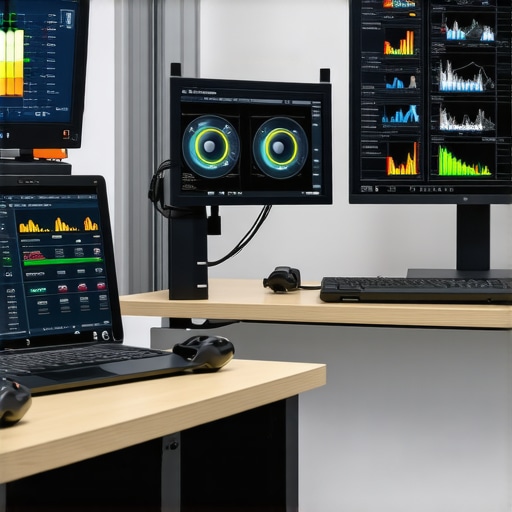
Image prompt: High-tech brake diagnostics laboratory with ultrasonic sensors, thermal imaging, and data analytics display, illustrating advanced brake repair techniques.
Leveraging Cutting-Edge Techniques to Detect Brake System Anomalies
Innovative diagnostic methods such as ultrasonic inspection, thermal imaging, and sensor data fusion revolutionize how mechanics identify hidden brake issues. Ultrasonic testing can reveal micro-cracks and micro-pitting in calipers and rotors that are invisible to the naked eye, ensuring early intervention before catastrophic failure. Thermal imaging provides real-time visualization of heat distribution across brake components, pinpointing uneven wear or sticking pistons that could compromise safety. Integrating these diagnostic tools enhances precision, minimizes guesswork, and elevates the standard of brake maintenance.
Why Sensor Data Fusion Transforms Brake System Analysis
Sensor data fusion amalgamates inputs from multiple sources—such as ABS sensors, brake pad wear monitors, and temperature sensors—offering a comprehensive snapshot of brake health. This multi-layered analysis detects subtle deviations indicative of impending failure, facilitating predictive maintenance. Advanced algorithms, including machine learning models trained on extensive datasets, can forecast brake component deterioration with remarkable accuracy. This proactive approach shifts repair strategies from reactive to preventive, significantly reducing emergency breakdowns and enhancing customer trust.
What Are the Practical Benefits of AI in Brake Diagnostics?
Artificial intelligence-driven diagnostics enable real-time anomaly detection and decision support, transforming traditional brake service paradigms. AI systems continuously analyze sensor streams, identifying patterns that may escape human observation, such as slight temperature anomalies or wear irregularities. These insights allow technicians to prioritize repairs, recommend tailored interventions, and anticipate failures before they manifest. Automotive technology companies like Bosch have pioneered AI applications that demonstrate substantial improvements in safety outcomes and customer satisfaction, underscoring AI’s vital role in modern brake maintenance.
How to Incorporate Continuous Learning to Stay Ahead of Brake Technology Trends
As brake systems evolve with features like regenerative braking and electronically controlled calipers, ongoing education becomes essential. Participating in OEM training programs, industry certifications such as ASE’s Advanced Brake Systems specialization, and industry conferences ensures technicians remain current. Embracing emerging technologies like smart sensors and predictive analytics not only enhances technical proficiency but also signals expertise to clients, fostering loyalty. Establishing a culture of continuous learning guarantees your shop maintains a competitive edge amid rapid technological advancements.
Harnessing Predictive Analytics to Prevent Brake Failures
Predictive analytics utilize vast datasets and machine learning algorithms to anticipate brake system failures before they occur. By analyzing historical repair data, sensor readings, and operational patterns, these systems identify early warning signs—such as incremental increases in brake fluid temperature or subtle pad wear changes—allowing preemptive maintenance. This approach reduces repair costs, enhances safety, and builds customer confidence. Industry leaders advocate integrating predictive analytics into daily operations, transforming brake service from routine maintenance into a science-driven process.
Embrace Innovation and Future-Proof Your Brake Service Expertise
Staying ahead in brake diagnostics requires embracing industry innovations like electric vehicle-specific brake systems and smart sensor networks. Investing in specialized training for EV brake components positions your shop as a forward-thinking leader, appealing to environmentally conscious clients. Additionally, adopting AI-powered diagnostics and data analytics ensures your services remain relevant and trusted. For a comprehensive guide on integrating these technologies, visit SAE International—the industry’s most authoritative resource for automotive engineering advancements.
Refine Your Expertise with Cutting-Edge Knowledge
Auto repair professionals who stay ahead of industry trends leverage continuous education and innovative diagnostic tools. Mastering the latest vehicle technologies, such as electric and hybrid systems, ensures credibility and safety in service delivery. Engaging with resources like Society of Automotive Engineers provides invaluable insights into emerging standards and practices, allowing you to elevate your technical proficiency and build trust with discerning clients.
Implement Data-Driven Maintenance for Precision and Confidence
Utilizing advanced diagnostic software and sensor data fusion enables precise identification of issues, minimizing guesswork and enhancing repair accuracy. Predictive analytics can forecast potential failures, allowing preemptive interventions that safeguard vehicle longevity and driver safety. Incorporating these technologies demonstrates your commitment to excellence and positions your shop as a modern, trustworthy authority in auto repair.
Foster Loyalty Through Personalized Service Strategies
Building long-term trust involves maintaining detailed customer and vehicle histories. Tailoring recommendations based on usage patterns and previous repairs not only improves vehicle performance but also shows genuine care. Engaging customers with transparent communication and proactive maintenance advice reinforces your reputation as a dependable expert they can rely on for consistent quality.
Stay Ahead by Embracing Industry Innovation and Certification
Achieving industry-recognized certifications such as ASE Master Technician status signals professionalism and dedication. Continually updating skills through OEM training and specialized courses ensures your team remains competent amidst technological advances. These credentials, combined with a culture of ongoing learning, solidify your reputation as a credible, expert mechanic trusted by your community.
Leverage Expert Resources for Continuous Growth
- Society of Automotive Engineers (SAE): A cornerstone for standards, research, and innovation in automotive engineering, essential for staying current.
- Automotive Service Association (ASA): Offers training programs, certifications, and industry insights to sharpen your skills and expand your professional network.
- Industry-specific webinars and workshops: Regular participation keeps you informed about the latest repair techniques, diagnostic tools, and safety protocols.
Reflect and Engage for Future Success
In the realm of auto repair, embracing technological advancements and expert insights is paramount to establishing lasting trust. By integrating data analytics, continuous education, and personalized service, you position yourself as a leader in the industry. For further mastery, explore our comprehensive tune-up checklist and share your experiences or questions with fellow professionals. Your commitment to excellence not only benefits your customers but also elevates the standards of automotive care industry-wide.