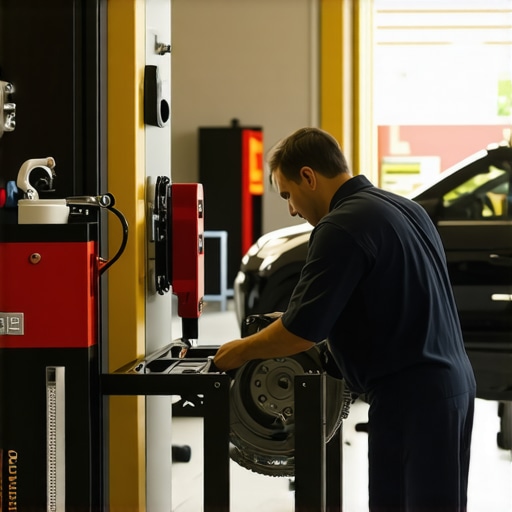
Maximizing Auto Reliability with Precision Tune-Ups and Brake System Optimization
In the realm of automotive maintenance, the expertise of a seasoned mechanic extends beyond routine procedures, encompassing a strategic understanding of how comprehensive tune-ups and specialized brake services can significantly enhance vehicle longevity and safety. Professionals recognize that a meticulously executed tune-up, aligned with the latest industry standards and diagnostic tools, not only restores optimal engine performance but also preemptively addresses emerging issues before they escalate.
Advanced auto repair techniques involve analyzing engine diagnostics data to identify subtle inefficiencies, employing high-grade components, and integrating predictive maintenance practices. Similarly, a thorough brake service extends beyond pad replacement, encompassing rotor resurfacing, fluid flushing, and system calibration—measures fundamental to maintaining precise braking responsiveness under diverse driving conditions. Such practices are crucial in preventing failures that could compromise safety and lead to costly repairs.
The Role of Diagnostic Precision in Modern Auto Tune-Ups and Brake Maintenance
How do diagnostic tools impact the effectiveness of contemporary tune-up and brake services?
Modern diagnostic technology, including OBD-II scanners and sensor analysis, enables mechanics to uncover issues that traditional inspection might overlook, such as subtle sensor malfunctions or fuel injection anomalies. These insights allow for targeted interventions, optimizing both engine performance and brake responsiveness. The integration of predictive diagnostics aligns with industry movements towards proactive vehicle care, reducing downtime and enhancing owner confidence.
According to industry standards outlined by the Society of Automotive Engineers, the adoption of advanced diagnostics is instrumental in achieving precise auto repair outcomes and ensuring compliance with safety regulations (SAE International).
Enhancing Vehicle Trust through Trusted Repair Practices
Reliability in auto repair hinges on transparent communication, consistent quality, and adherence to best practices—elements that foster trust and extend vehicle lifespan. Skilled mechanics prioritize not just immediate fixes but also strategic maintenance plans that encompass tune-ups and brake services aligned with manufacturer specifications. Such approaches mitigate risks associated with inferior parts or shortcuts, reinforcing long-term confidence among vehicle owners.
Regular maintenance checks, informed by expert insights, contribute to economic savings by preventing catastrophic failures, particularly in braking systems, which are vital for road safety. For instance, timely brake fluid replacement can prevent the corrosion of calipers and prevent brake fade, issues often linked to neglect.
The Complexities of Brake System Modernization and Its Impact on Auto Longevity
The evolution of brake technologies, including anti-lock systems and electronic stability controls, necessitates that auto repair professionals stay abreast of the latest advancements. Upgrading or maintaining these systems requires specialized knowledge to ensure compatibility and optimal performance. Neglect or improper service can result in reduced braking efficiency, jeopardizing driver safety and vehicle integrity.
Are there emerging technologies in brake repair that promise superior safety and longevity?
Emerging innovations such as regenerative braking systems and smart sensors aim to enhance safety, efficiency, and vehicle lifespan. These technologies necessitate a higher level of expertise to maintain and repair, emphasizing the importance of choosing a mechanic with specialization in contemporary auto repair techniques.
Interested readers and automotive professionals are encouraged to explore more about high-tech brake solutions and share insights on effective maintenance practices by visiting Auto Care Hub’s comprehensive guide on brake maintenance hacks.
Unlocking the Secrets of Superior Auto Tune-Ups for Peak Performance
Achieving optimal vehicle performance goes beyond basic maintenance—it’s about understanding and implementing expert-level tune-up techniques that ensure reliability and efficiency over the long haul. Skilled mechanics utilize advanced diagnostic tools and industry-leading practices to identify underlying issues, fine-tune engine components, and calibrate systems for maximum output. By doing so, they lay the foundation for increased fuel economy, reduced emissions, and enhanced driving pleasure. For a comprehensive approach, consider reviewing pro tips on expert car tune-ups.
The Evolution of Brake Systems and Their Role in Auto Longevity
Modern braking technology encompasses more than just pads and rotors; it’s about integrating electronic controls, sensors, and innovative materials to prolong vehicle lifespan while maintaining safety. Automated diagnostics and predictive maintenance allow technicians to anticipate and address issues before they compromise system integrity. Staying updated with the latest industry advancements, such as ceramic materials and regenerative braking, is essential for mechanics dedicated to long-term vehicle health. Does your vehicle benefit from the newest brake innovations? Discover more about cutting-edge brake maintenance hacks.
How do calibration and system synchronization influence vehicle reliability and driver safety?
Precision calibration of engine and brake systems ensures harmonious operation, minimizing wear and tear, and preventing unexpected failures. Techniques like adaptive learning algorithms and sensor synchronization are crucial in modern vehicles equipped with electronic stability control and driver-assist features. Proper calibration not only optimizes performance but also significantly reduces repair costs and enhances safety. Are your vehicle’s systems properly synchronized? Explore strategies to save costs with expert auto repair tips.
Can emerging technologies redefine the standards of auto maintenance, promising safer and more durable vehicles?
Absolutely. Innovations such as artificial intelligence-driven diagnostics, smart sensor arrays, and predictive analytics are transforming auto repair from reactive fixes to proactive management. These developments enable mechanics and vehicle owners to anticipate issues, schedule maintenance efficiently, and extend component life cycles. Embracing such technologies can revolutionize your approach to car care, ensuring longevity and safety. For insights into the future of auto tech, visit top trends in auto repair for 2025.
Enhance your vehicle’s longevity—share your maintenance experiences or ask questions in the comments below to join the conversation on expert auto care strategies!
,
Unleashing the Power of Next-Generation Auto Diagnostics for Superior Tune-Ups
In the rapidly evolving landscape of automotive technology, static diagnostic assessments are quickly becoming obsolete. Today, advanced diagnostic tools leverage high-resolution data and machine learning algorithms to not only identify existing issues but also predict potential failures before they manifest visibly. This proactive approach enables mechanics to implement strategic interventions that optimize engine performance and extend component lifespan.
For example, integrating engine noise analysis software with sensor data allows for nuanced detection of misfires and operational inefficiencies that traditional OBD-II scanners might miss. Moreover, the advent of real-time telematics provides vehicle owners and technicians with continuous performance insights, facilitating timely maintenance and avoiding costly repairs.
How does the fusion of artificial intelligence with vehicle diagnostics redefine maintenance precision?
Artificial intelligence (AI), processing vast datasets from diverse vehicle models, enables predictive analytics that preemptively flag critical wear points or system anomalies. This innovation transforms maintenance from reactive to predictive, resulting in fewer breakdowns, improved reliability, and enhanced safety. According to a comprehensive study by McKinsey & Company, AI-infused diagnostics can reduce maintenance costs by up to 30% while simultaneously improving repair accuracy (McKinsey & Company).
Mechanics skilled in deploying such tools not only elevate their craft but also offer clients a maintenance experience rooted in precision and foresight. Want to harness the future of auto diagnostics? Explore specialized training programs and technological partnerships that bring cutting-edge diagnostic capabilities into your workshop.
System Calibration and Synchronization: The Unsung Heroes of Reliability
While replacement parts and repairs often steal the spotlight, the meticulous calibration and synchronization of vehicle systems underpin long-term reliability and safety. In vehicles equipped with electronic stability programs, adaptive cruise control, and autonomous driving features, system calibration ensures sensor accuracy and proper communication between components.
Furthermore, as hybrid and electric vehicles incorporate complex power management systems, precision calibration becomes vital to maximize efficiency and lifespan. Techniques such as dynamic calibration, where sensors are tested under real-world conditions to fine-tune system responses, are crucial for optimal operation.
Addressing complex calibration challenges: How do modern tools and methodologies ensure long-term system harmony?
Advanced calibration platforms employ multi-axis motion simulators and environmental testing chambers to replicate diverse driving scenarios, enabling technicians to validate and adjust system responses accurately. For example, in electric vehicle regenerative braking calibration, precise sensor adjustments are essential to balance energy recovery with driver comfort.
Furthermore, integration of over-the-air updates allows for ongoing calibration refinement without physical interventions, ensuring systems adapt to evolving software improvements and hardware modifications. Embracing such innovations requires a commitment to continuous learning and investment in specialized equipment.
Stay ahead of the curve by exploring training resources on system calibration best practices and collaborating with manufacturers to access proprietary calibration protocols. Your expertise can significantly influence vehicle longevity and driver safety, especially as automotive systems grow increasingly sophisticated.
The Future of Auto Maintenance: Merging Human Skill with Intelligent Systems
The convergence of expert human judgment with intelligent diagnostic and calibration technologies charts a promising path forward. While machines handle data-driven detection and fine-tuning, the mechanic’s insightful interpretation remains indispensable for complex decision-making and personalized customer service. This synergy maximizes efficiency, ensures precision, and fosters trustworthiness in auto repair services.
Looking ahead, developments such as augmented reality guidance systems and robotic-assisted repairs promise to further elevate maintenance standards. For example, AR overlays can guide technicians through intricate calibration procedures with unprecedented accuracy, reducing human error and downtime.
Are you prepared to integrate these transformative tools into your auto repair practice? Consider partnering with technology providers and ongoing education to unlock new levels of expertise. The future of auto care depends on your ability to adapt and innovate—so dive deep into emerging trends and be a pioneer in delivering next-gen vehicle reliability and safety.
Leveraging Cutting-Edge Technologies to Elevate Auto Maintenance Standards
In the pursuit of automotive excellence, integrating groundbreaking diagnostic and calibration tools is not merely advantageous—it’s essential for professionals aiming to set industry benchmarks. Innovations such as machine learning-powered diagnostics and adaptive system calibration are transforming traditional repair paradigms, allowing technicians to anticipate issues with unprecedented accuracy and customize interventions that extend vehicle lifespan.

Emerging solutions like artificial intelligence-driven software analyze vast datasets to identify patterns indicative of impending system failures, enabling preemptive repairs that mitigate costly damages. When combined with cloud-connected diagnostic platforms, mechanics can access real-time vehicle data across multiple locations, fostering a proactive, data-informed maintenance culture that elevates trustworthiness and consumer satisfaction.
Why Confronting Calibration Complexities Can Make or Break Longevity
What are the most effective practices for mastering modern system calibration challenges?
Handling intricate calibration tasks, especially in vehicles equipped with hybrid powertrains and autonomous driving systems, demands a mastery of multi-dimensional testing environments. Utilizing precision calibration rigs that simulate diverse operational conditions ensures sensors and electronic modules function harmoniously within their designed parameters. This meticulous approach minimizes drift and misalignment over time, preserving system integrity and performance.
Moreover, staying current with manufacturer-specific calibration protocols and software updates is vital. Regular training on the latest procedures prevents technicians from falling behind technological advancements, thereby safeguarding vehicle reliability and safety.
Industry leaders like Bosch have pioneered integrated calibration solutions that combine hardware and software to streamline these complex processes, effectively reducing service times and enhancing accuracy (Bosch Official Site).
Adopting a Holistic Approach to System Synchronization for Unmatched Durability
Synchronization isn’t a one-time task but an ongoing process that ensures all vehicle systems operate seamlessly over their service life. In advanced vehicles, this involves aligning multiple electronic control units (ECUs), sensor arrays, and software algorithms to achieve cohesive functionality.
Implementing over-the-air (OTA) updates allows real-time system recalibration, compensating for component wear and environmental variations without necessitating physical intervention. This capability not only enhances reliability but also reduces maintenance costs and improves the user experience.
For practitioners committed to excellence, embracing integrated diagnostic-synchronization frameworks—such as those offered by aftermarket specialists—can make the difference between average and elite auto care. Explore tools and techniques that facilitate continuous system harmony, thereby guaranteeing vehicle longevity and driver confidence.
Harnessing Industry Trends That Promise a Revolution in Auto Repair
As automotive technology progresses, the field of auto maintenance inches toward a future dominated by intelligent systems and automated repair processes. The development of AI-enabled diagnostic platforms, autonomous calibration systems, and predictive analytics signifies a paradigm shift—one where human expertise is complemented and amplified by machine intelligence.
If your workshop aspires to lead this transformation, consider investing in training and tools that embrace these innovations. Collaborations with tech providers, participation in industry consortia, and continuous education will position you at the forefront of this revolution, unlocking new levels of service quality, safety, and customer loyalty.
Engage with thought leaders and industry publications to stay ahead—your vehicle repair practice depends on it. Are you ready to redefine automotive excellence? Dive into the latest advancements and transform your approach today.
,
Break Barriers in Auto Care with Cutting-Edge Approaches
Harnessing the latest automotive technologies, such as AI-driven diagnostics and smart calibration tools, empowers technicians to identify potential issues before they manifest, ensuring vehicles perform at their peak. Staying ahead in the auto repair industry involves integrating these advancements into routine practice, which significantly enhances reliability and safety.
Don’t Underestimate Precision—It Transforms Reliability
Accurate calibration and system synchronization are not just technical necessities but foundational pillars that determine vehicle longevity. Modern diagnostic platforms facilitate meticulous adjustments, fostering harmony among complex electronic systems, ultimately reducing long-term costs and boosting driver trust.
Think Holistically — Maintenance as a Strategic Investment
Proactive maintenance, including comprehensive tune-ups and brake system evaluations, mitigates unexpected failures and extends vehicle lifespan. Expert practitioners recognize that strategic planning, aligned with manufacturer standards, optimizes performance and enhances safety margins over years of use.
Leverage Frontline Resources to Deepen Expertise
Reliable sources such as SAE International provide invaluable insights into evolving standards, while platforms like Auto Care Hub’s latest industry trends keep professionals informed. These resources foster continuous learning essential for mastery in auto maintenance.
Empowering Your Auto Repair Journey Starts Here
The fusion of advanced diagnostic tools, strategic calibration, and proactive maintenance defines the future of auto care. Embracing these expert insights transforms ordinary service into a trusted, safety-focused practice that builds lasting customer confidence. Dive deeper into these topics, and let your commitment to excellence set new standards in vehicle reliability and safety!