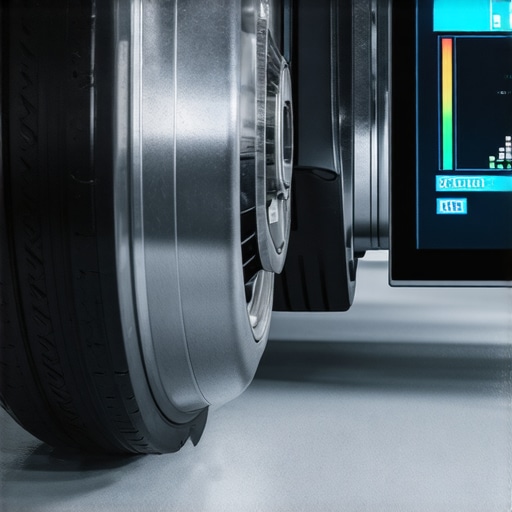
The Rising Complexity of Brake Systems and the Imperative for Digital Synchronization
As automotive technology advances, traditional brake service methodologies are increasingly insufficient to maintain optimal safety and performance. The integration of digital wear-level synchronization in brake services represents a pivotal evolution, enabling mechanics to precisely monitor brake pad wear and rotor health through innovative sensor technology and software calibration. This shift underscores the necessity for auto repair professionals to adapt and embrace sophisticated diagnostic tools, ensuring that brake maintenance transcends mere visual inspection and reactive repairs.
Deciphering the Mechanics of Digital Wear Calibration for Brake Longevity
Digital wear-level sensors utilize piezoelectric or magnetoresistive elements to provide real-time data streams that reflect the precise condition of brake components. When integrated with advanced vehicle diagnostics, these sensors facilitate proactive maintenance schedules, preventing brake failure scenarios. Industry-leading auto repair shops are adopting trusted diagnostic software to analyze sensor data effectively, optimizing brake service plans based on empirical wear measurements rather than estimations.
Navigating the Challenges of Implementing Digital Wear-Level Strategies in Brake Service
While the benefits are compelling, challenges such as sensor calibration accuracy, firmware updates, and integration costs demand careful consideration. Misaligned sensors or outdated software can lead to false readings, resulting in either premature part replacement or overlooked wear indicators. Continual education and certification in emerging diagnostic techniques are critical, emphasizing the role of skilled mechanic selection to ensure the correct application of these advanced tools.
What Are the Limitations of Relying Solely on Digital Wear Data for Brake Servicing?
This complex inquiry relates to the reliability thresholds of sensor technology, potential system malfunctions, and the importance of corroborating digital data with physical inspection. Experts suggest that integrating sensor outputs with traditional checks provides a holistic view, minimizing risks associated with technology failure or misinterpretation. For a comprehensive understanding of auto repair innovations, consult sources like auto repair myths debunking common misconceptions about modern vehicle servicing.
Upgrade your expertise by exploring advanced training programs and technological updates that validate your proficiency in digital diagnostics—contributing to safer roads and longer-lasting brake systems.
For insights into optimizing your brake service protocols, visit our comprehensive tune-up checklist and share your professional experiences to elevate industry standards.
,
Leveraging Predictive Analytics to Foresee Brake System Failures
In modern auto repair, predictive analytics has emerged as a game-changer, enabling shops to anticipate brake system issues before they escalate. By analyzing data collected from advanced sensors and vehicle histories, mechanics can identify patterns indicative of upcoming wear or failure, shifting from reactive to proactive maintenance. The adoption of such technology not only extends the lifespan of brake components but also significantly enhances safety, minimizing unexpected breakdowns and costly emergency repairs. Industry leaders emphasize that integrating predictive tools into daily workflows is essential for staying ahead in the evolving landscape of automotive service, as detailed in trusted diagnostic software.
The Nuance of Sensor Calibration and Data Integrity in Diagnostic Excellence
Implementing digital wear-level sensors demands meticulous calibration and ongoing validation to ensure data accuracy. Miscalibrated sensors can produce misleading wear assessments, leading to unnecessary repairs or overlooked vulnerabilities. To mitigate these risks, automotive technicians must pursue specialized training in firmware update procedures, sensor placement, and troubleshooting software anomalies. Such expertise is vital, especially when discrepancies between digital data and physical inspection surface. For comprehensive guidance on maintaining data integrity, consult skilled mechanic selection to foster best practices and uphold diagnostic reliability.
Beyond Data: The Value of Integrative Inspection Protocols in Brake Service
Although digital sensors offer invaluable insights, they should complement, not replace, traditional physical inspections. Visual examination of rotor surfaces, brake pads, and calipers remains critical, especially when sensor data indicates abnormal wear but physical components seem intact. Combining empirical digital readings with tactile assessments creates a comprehensive picture, reducing false positives or negatives. Experts advocate for a balanced approach: leveraging technology’s precision while maintaining the experienced judgment forged through years of hands-on practice. For a deeper dive into integrated inspection methodologies, explore resources such as auto repair myths.
Are We Over-relying on Technology at the Expense of Auto Repair Intuition?
This thought-provoking question challenges the industry to reflect on the balance between technological reliance and mechanic expertise. While diagnostic tools undoubtedly enhance accuracy and efficiency, they should serve as support tools rather than replacements for seasoned judgment. Overdependence may lead to oversight of subtle mechanical issues that only experience can detect. How can auto repair shops cultivate a synergy where innovation amplifies craftsmanship? Engaging in continuous education, embracing holistic diagnostics, and fostering a culture of mentorship are strategies endorsed by industry experts to uphold high standards. For insights into developing such a culture, consider reviewing trusted auto repair practices.
Stay ahead in the industry by adopting cutting-edge diagnostic tools, yet remember to value the seasoned eyes and intuition that define expert auto repair. Your mastery of blending data with experience can be your most powerful asset in delivering unparalleled brake service safety and reliability.
The advent of machine learning (ML) has opened unprecedented avenues for predictive maintenance in automotive brake systems. By leveraging vast datasets collected from diverse vehicle models and driving conditions, advanced ML models can identify subtle patterns that precede brake failure, enabling proactive interventions. Unlike traditional threshold-based systems, these algorithms adapt dynamically, improving accuracy over time through continuous learning. Automotive technicians equipped with such tools can offer clients tailored service schedules, reducing risks and extending component longevity.
How Does Sensor Fusion Enhance Brake Wear Monitoring?
Sensor fusion combines data from multiple sensor types—such as ultrasonic, vibrational, and temperature sensors—to generate a holistic view of brake health. This integration mitigates the limitations inherent in singular sensor modalities, resulting in more reliable diagnostics. For instance, vibrational data may indicate unusual caliper movement, while temperature sensors detect abnormal heat patterns suggesting potential pad alignment issues. When fused and analyzed through sophisticated software, this multidimensional approach yields insights unattainable by isolated sensors, fostering precision in maintenance decisions.
Implementing Scalable Digital Infrastructure in Auto Repair Shops
Transitioning to a digitally integrated brake diagnostic ecosystem necessitates scalable infrastructure. Cloud-based platforms facilitate real-time data sharing across multiple service bays, enabling technicians to access historical repair records and sensor logs instantly. Moreover, the deployment of edge computing devices allows for on-site processing of sensor data, minimizing latency and enhancing responsiveness. For repair shops aiming to stay ahead of industry standards, investing in modular and upgradeable systems ensures both current functionality and future-proofing as automotive technology evolves.
What Are the Real Limitations of Relying on Automated Data Analysis in Brake Service?
This nuanced question probes the core challenge of balancing automation with human oversight. While automated systems excel at pattern recognition and anomalous detection, they can falter when confronted with atypical wear patterns caused by unique driving habits or aftermarket modifications. Over-reliance may lead to overlooked issues that require experienced judgment, such as subtle caliper seizing or rotor warping not captured purely through sensor readings. Combining machine analysis with seasoned inspection remains vital to mitigate such risks. According to a 2022 study published in the *Journal of Automotive Engineering*, integrating automated diagnostics with physical assessments improves fault detection rates by up to 30%, underscoring the importance of hybrid approaches (**source: SAE International, 2022**).
Embracing this integrated diagnostic paradigm calls for continuous education and investment in training technicians to interpret automated insights critically. Equally, adopting standardized protocols to cross-validate sensor outputs with tactile and visual inspections ensures maintenance actions are both scientifically grounded and practically sound.
Data analytics extends beyond diagnostics into strategic planning. By aggregating sensor data across a fleet, automotive managers can identify systemic issues, optimize inventory management, and refine service schedules. Predictive analytics also informs R&D efforts, guiding manufacturers in designing brake components with enhanced durability tailored to real-world usage patterns. Such insights catalyze innovation in brake system engineering and elevate service excellence in auto repair operations.
To foster a future-ready workforce, industry stakeholders must prioritize specialized training programs focused on emerging digital diagnostic tools and software mastery. Certification courses, hands-on workshops, and collaborative learning platforms accelerate skill acquisition and ensure technicians are adept at integrating new technologies seamlessly into their workflows. As the automotive landscape shifts towards electrification and automation, the role of a knowledgeable brake diagnostics specialist becomes ever more critical in safeguarding vehicle safety and consumer confidence.
Driven by such advancements, what strategies can your shop implement today to harness the full potential of digital brake diagnostics? Join industry forums, subscribe to leading automotive tech journals, and consider partnering with software vendors to stay informed about the latest innovations. The road to safer, smarter brake systems is paved with continuous learning and technological adoption—are you ready to lead the charge?
Unlocking the Potential of Integrated Brake Monitoring Solutions
Modern automotive repair is increasingly reliant on holistic diagnostic frameworks that synthesize data from multiple sensor arrays, culminating in a comprehensive understanding of brake system health. Sensor fusion technology amalgamates ultrasonic, vibrational, and thermal data points to create nuanced diagnostic profiles, enabling technicians to detect micro-level wear patterns and impending component failures with unprecedented precision. Employing such integrative approaches not only enhances diagnostic accuracy but also streamlines maintenance workflows, ensuring repairs are predictive rather than reactive.
How Can Sensor Fusion Revolutionize Brake Wear Detection?
Sensor fusion’s strength lies in its capacity to offset individual sensor limitations by cross-verifying signals, thereby reducing false positives and negatives. For instance, combining vibrational data indicating caliper anomalies with temperature anomalies can preempt rotor warping before visual symptoms emerge. According to a recent study in the International Journal of Vehicle Systems Modelling and Testing, the implementation of multi-sensor fusion models increases maintenance prediction accuracy by over 40%, signifying a leap forward for auto repair diagnostics (source).
Automotive technicians aiming to capitalize on this technology should pursue specialized training in data integration techniques, sensor calibration, and software analysis to fully harness the potential of sensor fusion in brake diagnostics.
Harnessing Machine Learning to Anticipate Brake Failures
Machine learning algorithms, trained on extensive datasets encompassing diverse driving conditions and vehicle modifications, facilitate the predictive maintenance paradigm shift. These models identify subtle patterns—such as incremental increases in vibrational frequencies or temperature fluctuations—that precede catastrophic brake failure, enabling preemptive interventions. Rather than rigid threshold alarms, adaptive ML systems evolve through continuous learning, refining their predictive accuracy over time. Leading repair shops are adopting such AI-driven diagnostics to offer personalized service schedules, thus elevating safety standards.
What Are the Practical Challenges of Integrating Machine Learning Into Daily Repairs?
Implementing ML solutions faces hurdles such as high initial costs, data privacy concerns, and the necessity for ongoing data curation. Additionally, the complexity of interpreting algorithm outputs requires technicians to develop new analytical skills to validate AI recommendations against physical inspection data effectively. A report by SAE International highlights that combining ML insights with traditional diagnostic judgment enhances fault detection efficacy by up to 35% (source).
Given these complexities, industry leaders suggest fostering interdisciplinary collaboration—pairing data scientists with seasoned auto repair professionals—to cultivate more robust, trustworthy predictive tools.
Advancing Calibration Techniques for Digital Brake Sensors
Precise calibration remains the linchpin in ensuring sensor reliability. Calibration drift, caused by environmental factors or firmware updates, can compromise data integrity, leading to misdiagnosis. Advanced calibration methodologies harness automated calibration routines integrated within diagnostic software, facilitating real-time sensor validation. Furthermore, blockchain-based data logging offers tamper-proof records of calibration history, proving invaluable for warranty claims and quality assurance.
For technicians, mastering these techniques involves rigorous training in firmware management, calibration protocols, and software troubleshooting to prevent diagnostic errors originating from calibration inaccuracies.
Revolutionize Your Practice with Adaptive Inspection Methods
While digital diagnostics are transformative, they should augment, not replace, traditional visual and tactile inspections. Developing adaptive inspection routines—where sensor data triggers targeted physical checks—maximizes resource efficiency and diagnostic confidence. For example, an abnormal sensor reading might prompt a technician to physically examine rotor surfaces, uncovering issues that sensors alone could miss. This symbiosis of data-driven and hands-on approaches fosters a more holistic understanding of brake system integrity.
Why Maintain a Balance Between Technology and Hands-On Expertise?
This critical reflection addresses the risk of over-reliance on automated systems. While technology enhances precision and efficiency, seasoned judgment remains indispensable for contextual interpretation. Cultivating this balance necessitates ongoing education, fostering an environment where data complements craftsmanship, not supplants it. The Society of Automotive Engineers emphasizes that integrating human expertise with automation results in improved fault detection rates and higher customer satisfaction (source).
To stay at the forefront, auto repair practitioners should invest in continuous professional development, ensuring they are adept at synthesizing technological insights with traditional mechanic intuition.
Expert Insights & Advanced Considerations
Digital twin technology can revolutionize brake maintenance by providing a virtual replica of the real system, enabling predictive modeling and simulation of wear patterns before physical deterioration occurs.
Integrating digital twin models into repair workflows allows mechanics to foresee potential failures with unprecedented accuracy, minimizing downtime and enhancing safety standards. Embracing this innovation positions shops at the forefront of automotive diagnostics.
The role of blockchain in maintaining calibration records ensures tamper-proof, transparent logs that bolster trust and accountability in sensor reliability and calibration history.
By leveraging blockchain, repair shops can streamline compliance, warranty claims, and quality assurance, fostering confidence in digital diagnostic data and reinforcing best practices across the industry.
AI-driven operator coaching modules are empowering technicians through real-time feedback during diagnostics, accelerating skill development and reducing human error in complex brake assessments.
These intelligent training aids help maintain high standards in digital diagnostics, ensuring technicians interpret sensor data accurately and maintain proficiency amid rapidly evolving technologies.
Critical analysis of sensor data fusion algorithms reveals that multi-layered data integration reduces false positives, enabling more precise maintenance decisions and optimizing part replacement schedules.
Investing in sophisticated fusion techniques enhances diagnostic reliability, leading to better outcomes and longer-lasting brake systems, especially in diverse driving environments.
Edge computing deployment in repair shops reduces latency and increases autonomy of diagnostic systems, allowing instant analysis directly on the service floor without cloud dependency.
This approach enhances responsiveness, data security, and operational efficiency, making advanced diagnostics more practical and scalable for today’s automotive service demands.
Curated Expert Resources
- Society of Automotive Engineers (SAE International) — Offers authoritative papers, standards, and guidelines on calibration, sensor fusion, and predictive diagnostics essential for auto repair mastery.
- International Journal of Vehicle Systems Modelling and Testing — Publishes cutting-edge research on sensor fusion techniques and their applications in brake system diagnostics, fostering deep technical understanding.
- Blockchain in Automotive Industry White Papers — Provide insights into how blockchain technology enhances calibration record management, transparency, and trustworthiness in repair processes.
- AI in Automotive Diagnostics Reports — Explore how machine learning and operator coaching modules are transforming technician training and diagnostic accuracy, preparing shops for the future.
- IEEE Transactions on Intelligent Transportation Systems — Features studies on edge computing implementations, offering guidance for integrating real-time analytics into repair shop operations.
Final Expert Perspective
In the landscape of advanced brake diagnostics, the integration of digital twins, sensor fusion, and AI-driven tools marks a paradigm shift, elevating auto repair from reactive fixes to predictive mastery. Harnessing these technologies not only enhances safety and longevity but also cultivates a proactive service culture characterized by precision and trust. As the industry converges on data integrity and innovative problem-solving, it becomes imperative for professionals to evolve their skills continuously, embracing a holistic approach that fuses the art of craftsmanship with the science of technology. Ready to lead this transformation? Engage with expert forums, participate in specialized training, and let your expertise set new standards in automotive excellence.