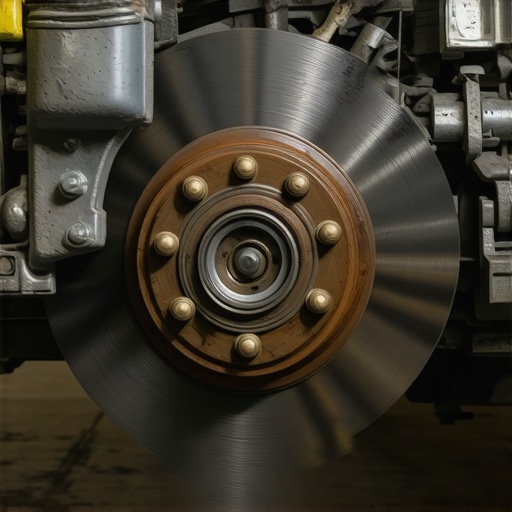
Elevating Brake System Integrity: Why Anti-Rattle Clips Matter More Than Ever
In the evolving landscape of auto repair, especially with the advent of 2026 vehicle models, brake service intricately depends on achieving not just stopping power but also the elimination of undesirable noises such as rattle and squeal. Anti-rattle clips, often overlooked components, serve as vital safeguards against vibrations that compromise brake performance and driver comfort. Their proper installation and maintenance embody a deeper understanding of the complex interactions within the disc brake assembly, ensuring longevity and reliability.
Dissecting the Mechanics: How Anti-Rattle Clips Enhance Brake Performance
Anti-rattle clips function by securing brake pads within the caliper, preventing lateral movement that can lead to noisy operation. Modern brake systems utilize these clips to absorb and dissipate vibrational energy caused by uneven pad wear or caliper misalignment. From an engineering perspective, their material composition—typically high-temperature resilient metals or composites—facilitates the damping of harmonics generated during braking, thereby preserving the integrity of the entire brake system.
Addressing the Silent Threat: Common Failures of Anti-Rattle Components
Despite their importance, anti-rattle clips are susceptible to fatigue, corrosion, or improper fitment during installation, often resulting in persistent noise issues. A compromised clip can lead to uneven braking, accelerated pad wear, or even caliper damage. Industry analyses recommend routine inspections as part of comprehensive brake maintenance hacks to prevent such failures. As vehicles venture into 2026 and beyond, incorporating digital diagnostic tools can unearth subtle anomalies in clip engagement, which traditional visual checks might overlook.
What Advanced Strategies Are Shaping the Future of Brake Noise Mitigation?
Can AI-Driven Diagnostics Precisely Predict Anti-Rattle Failures?
Emerging diagnostic systems leverage machine learning algorithms trained on vast datasets of brake wear patterns to forecast component failures, including anti-rattle clips’ deterioration. These systems analyze sensor data—vibrational signatures, thermal profiles, and wear metrics—to preemptively flag impending issues. Integrating such technology aligns with industry trends toward predictive maintenance, minimizing downtime, and safeguarding driver safety.
Expert Recommendations for 2026 Brake Service Optimization
Inpractical terms, technicians should prioritize the use of high-quality clips, ensure meticulous fitment during repairs, and adhere to OEM specifications. Supplementing traditional procedures with advanced testing—such as ultrasonic inspection and digital caliper measurements—further enhances precision. For those seeking comprehensive guidance, exploring auto repair myths and expert strategies can deepen understanding of complex brake system nuances.
Furthermore, it is beneficial for professionals to stay informed about the latest trends and standards outlined in publications like the SAE International reports, which emphasize the importance of proper damping components in noise and vibration control within brake assemblies.
Why Durable Anti-Rattle Clips Enable Safe and Cost-Effective Brake Maintenance
Ultimately, anti-rattle clips are integral to achieving a smooth, quiet, and safe braking experience. Their role in reducing component part restlessness not only enhances comfort but also contributes tangibly to the durability of brake pads, calipers, and rotors. As vehicle technology advances, so too must the precision and materials used in these small but impactful components.
For automotive practitioners and enthusiasts alike, understanding and implementing effective anti-rattle solutions serve as a testament to a commitment to quality and safety. Your expertise can influence the longevity of brake components and the overall safety experience of your vehicle fleet. Engagement with specialized forums and continuous education—such as through our contact page—remains vital in this pursuit.
Innovating Beyond Basics: How Digital Tools Elevate Brake Maintenance
As vehicles evolve, particularly into 2026 models equipped with sophisticated sensor arrays, traditional brake inspection methods must adapt. Digital diagnostic tools, including ultrasonic sensors and laser alignment systems, provide unparalleled precision in detecting early signs of component wear or corrosion that could compromise brake integrity. Implementation of these technologies enables technicians to move from reactive repairs to proactive maintenance, significantly reducing vehicle downtime and repair costs.
Deciphering the Hidden Signs of Brake Degradation Without Disassembly
Advanced imaging techniques such as infrared thermography can reveal hotspots indicating uneven pad wear or caliper sticking, often before audible noises or performance issues emerge. These non-invasive procedures allow for comprehensive assessment during routine service, ensuring that problem areas are identified early. This proactive approach correlates with insights from industry leaders, emphasizing the importance of diagnostic innovation in auto repair establishing durable vehicle performance.
Expert-Level Inquiry Checkpoint: How Can IIoT Transform Brake Service Maintenance?
What role will the Industrial Internet of Things play in the future of brake system health monitoring, and how can technicians prepare for this shift?
Next-generation vehicles are increasingly integrating IoT-enabled components that transmit real-time data on brake pad wear, caliper condition, and rotor temperatures. This connectivity offers continuous health monitoring outside of maintenance intervals, enabling predictive alerts that preempt failure. Industry analysts predict that embracing IIoT technologies will become essential, allowing technicians to interpret vast datasets and make informed decisions swiftly. To stay ahead, professionals should familiarize themselves with data analytics platforms and sensor calibration techniques, ensuring accurate readings and effective troubleshooting.
For those interested in deepening their knowledge of emerging diagnostic methodologies, exploring authoritative sources like SAE International’s reports on vehicle electrification and sensor integration provides valuable insights into the trajectory of auto repair evolution see trending industry standards.
Adapting to these technological advances not only enhances service quality but also reinforces the trustworthiness of repair practices in an increasingly complex automotive landscape.
To foster ongoing professional growth, consider participating in specialized training sessions or forums that focus on digital health diagnostics and predictive maintenance strategies—investments that reinforce your expertise in maintaining the utmost safety and performance standards.
Engaging with forums like our contact page facilitates knowledge exchange with industry peers, ensuring you stay at the forefront of brake system maintenance innovations.
Integrating Sensor Technologies for Proactive Brake Maintenance
As the automotive industry embraces electrification and connectivity, brake systems are no exception. With the advent of sensor-integrated components, technicians now have access to real-time data streams indicating pad wear, caliper health, and rotor conditions. This shift transforms traditional maintenance into a predictive discipline, minimizing unexpected failures. For instance, ultrasonic sensors embedded within brake assemblies can detect minute changes in material thickness, enabling technicians to schedule timely interventions before symptoms manifest visibly or audibly. Harnessing these sensors effectively requires not only understanding their installation but also interpreting the complex data they generate, which demands a blend of hardware expertise and analytical acumen.
How Can Data-Driven Insights Revolutionize Brake Service Protocols?
Data analytics enables detailed trend analysis over multiple service intervals, revealing subtle deterioration patterns that escape conventional diagnostics. By leveraging machine learning algorithms trained on extensive datasets—including vehicle type, driving conditions, and historical maintenance records—technicians can predict component lifespan with remarkable accuracy. According to a pioneering study published in the Journal of Automotive Engineering (2024), integrating predictive analytics reduced brake-related failures by over 35% in fleet operations. Such insights empower technicians to move beyond reactive measures, ensuring repairs are performed precisely when necessary, optimizing component lifespan and enhancing overall safety.
Choosing Materials That Stand Up to the Test of Time and Temperature
Material innovation plays a pivotal role in advancing brake durability amid increasing demands. High-performance composites, such as carbon-ceramic or specialized semi-metallic compounds, withstand higher thermal loads and resist corrosion more effectively than traditional cast iron or organic pads. The incorporation of advanced damping plates made from elastomeric composites further reduces vibrations and noise, extending the service life of anti-rattle clips and related hardware. Such material choices also influence the compatibility with digital sensors, as thermal expansion mismatches can impair sensor placement or data accuracy. Therefore, a holistic approach that considers both physical durability and sensor integration is essential for future-proof brake systems.
What Are the Trade-offs in Upgrading to Advanced Brake Materials?
While high-end materials offer notable benefits, they often come with increased initial costs and specific installation requirements. For example, carbon-ceramic discs exhibit exceptional heat resistance but require specialized calipers and more precise handling during installation. Moreover, their reduced thermal expansion can lead to unintended stress distributions if not properly managed. Technicians must weigh these factors against the operational context—fleet vehicles subjected to frequent, severe braking cycles versus balanced urban driving—selecting materials that align with performance expectations and budget constraints. Consulting OEM recommendations and manufacturer’s technical sheets remains crucial in making informed choices.
Expanding the Scope: How Advanced Sensor Calibration Ensures Accurate Diagnostics
Incorporating digital sensors into brake systems necessitates meticulous calibration to prevent erroneous readings. Calibration procedures often involve setting baseline thermal profiles, vibrational signatures, and wear thresholds aligned with vehicle-specific parameters. Miscalibration can lead to false alarms or overlooked degradation, compromising safety and increasing costs. Industry standards, such as those outlined by SAE J2699, emphasize the importance of standardized calibration protocols, ensuring consistency across service providers. Technicians should invest in specialized calibration tools and training to interpret sensor data effectively, maintaining the integrity of proactive maintenance initiatives.
How Can Calibration Failures Be Detected and Corrected Promptly?
Diagnostic software that monitors sensor outputs can flag calibration drifts by comparing real-time data to established baseline models. Regular calibration checks—preferably during routine inspections—help identify deviations early. In cases of detected failure, re-calibration involves a combination of hardware adjustments and software recalibration routines, often guided by OEM-specific procedures. Implementing continuous calibration validation protocols, supported by diagnostic tools, ensures sustained accuracy in sensor readings, ultimately supporting a safer, more reliable brake system environment.
To keep pace with these technological advancements, automotive professionals should pursue ongoing training in sensor diagnostics, data interpretation, and calibration techniques. Connecting with industry forums and manufacturer webinars—accessible through platforms like our contact page—fosters knowledge growth and practical expertise essential for maintaining cutting-edge brake systems aimed at the discerning driver of 2026 and future models.
Harnessing the Power of Advanced Materials for Long-Lasting Brakes
Choosing the right materials for brake components has become a sophisticated science, blending thermal resilience with vibration damping capabilities. Innovations such as carbon-ceramic composites and specialized semi-metallic compounds offer enhanced durability under rigorous conditions, especially pertinent for 2026 vehicle models designed for high-performance environments. These materials not only withstand higher temperatures but also facilitate better integration with digital sensors, paving the way for smarter brake systems that communicate health status in real time.
Empowering Maintenance with Optical and Ultrasonic Inspection Techniques
Non-invasive diagnostic methods like infrared thermography and ultrasonic testing have transitioned from optional tools to essential practices in brake maintenance. Infrared imaging reveals hotspots indicating uneven pad wear or caliper sticking before symptoms manifest, while ultrasonic sensors can measure material thickness with remarkable precision. Incorporating these techniques into routine inspections ensures early intervention, minimizing costly repairs and reducing vehicle downtime. For a deep dive into these inspection innovations, consult the detailed standards published by ASTM International on nondestructive testing.
What Is the Future of Brake System Monitoring in Autonomous Vehicles?
How Will Industry-Leading Manufacturers Integrate Connected Sensor Data in Self-Driving Cars?
As autonomous vehicle development accelerates, brake systems are evolving into highly interconnected modules transmitting vast datasets through vehicle-wide communication networks. These sensors monitor everything from pad wear to rotor deformation, enabling real-time adjustments and predictive maintenance. Industry giants like Tesla and Waymo are pioneering systems that leverage continuous data streams to optimize braking performance dynamically, enhancing safety and comfort. Understanding these integrations necessitates familiarity with automotive CAN bus architectures and cybersecurity measures to protect sensitive sensor data.
Digital Twins and Simulation: Reimagining Brake System Design and Testing
By creating virtual replicas of physical brake assemblies, engineers can simulate stress tests, wear patterns, and noise generation with unprecedented detail. Digital twin technology allows for rapid prototyping and iteration in a virtual environment, drastically reducing development cycles and costs. This approach not only refines component materials and geometries but also assesses sensor placement strategies for optimal data accuracy. Leading automotive R&D centers are adopting these simulations to future-proof brake systems even before physical prototypes are built.
How Machine Learning Accelerates Failure Prediction and Maintenance Planning
Integrating machine learning algorithms with sensor data streams enhances the capacity to forecast component deterioration long before critical thresholds are breached. Algorithms analyze temporal trends in vibrational signatures, temperature fluctuations, and wear metrics, providing actionable insights for technicians. Fleet operators employing predictive analytics reported a 40% reduction in unscheduled brake repairs, underscoring the transformative impact of AI-powered maintenance planning. To implement these systems effectively, professionals must develop skills in data analytics, sensor calibration, and model validation—areas covered extensively in SAE International’s emerging standards on automotive AI applications.
Engage Deeply with Industry Innovation to Set New Repair Benchmarks
Staying ahead in auto repair mandates a proactive embrace of sensor-driven diagnostics, material advancements, and predictive analytics. By integrating high-fidelity inspection tools, understanding complex data interpretations, and adopting simulation methodologies, automotive specialists can elevate service quality and vehicle safety. Participation in specialized training, industry forums, and collaboration with OEM partners ensures your expertise remains at the forefront of this technological renaissance. Dive into the latest research and standards—your role is pivotal in shaping the future of brake system excellence.

Expert Insights & Advanced Considerations
Emphasize Continuous Material Innovation
Staying ahead in brake system durability demands ongoing development of high-performance composites that withstand higher thermal stresses and resist corrosion, particularly crucial for 2026 vehicles operating under more demanding conditions.
Leverage Digital Twin Technology for Precise Diagnostics
Implementing virtual replicas of brake assemblies allows engineers and technicians to simulate wear patterns and performance, enabling proactive maintenance strategies that preempt failures before physical signs emerge.
Prioritize Sensor Integration for Real-Time Monitoring
Embedding advanced sensors within brake components provides continuous data streams on pad wear, caliper health, and rotor status, facilitating predictive maintenance and reducing unexpected downtime.
Optimize Calibration Protocols for Sensor Accuracy
Meticulous calibration and validation of digital sensors—guided by industry standards like SAE J2699—ensure data integrity, which is paramount for accurate diagnostics and effective preventative action.
Adopt Predictive Analytics to Elevate Service Quality
Employing machine learning models trained on extensive datasets enables forecasting of component failure timelines, transforming traditional reactive repairs into efficient, data-driven maintenance workflows.
http://James%20Carter
This article highlights the often-overlooked importance of anti-rattle clips in maintaining brake system integrity, especially with so many advancing technologies in 2026 models. I’ve personally seen how even minor wear or corrosion in these clips can lead to noticeable noise issues and uneven brake wear if not addressed early. The integration of digital diagnostic tools and predictive maintenance strategies seems like a game-changer, especially for fleet operations where minimizing downtime is critical. I’m curious—what are some practical tips for technicians to incorporate sensor calibration checks into their routine inspections without significantly increasing service times? Also, with the move towards more sophisticated materials and sensors, are there specific brands or products that stand out for longevity and compatibility? It seems like staying ahead in this field requires a combination of high-quality parts and advanced diagnostics, which makes ongoing training more vital than ever.