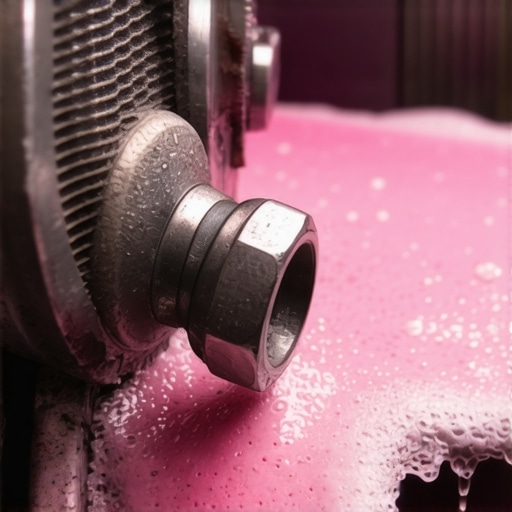
The convergence of a failing cooling system and a delicate automatic transmission is one of the most catastrophic events in the realm of auto repair. When the internal wall of the radiator-integrated transmission cooler breaches, it facilitates a cross-contamination event known as the “strawberry milkshake.” This is not merely a messy fluid swap; it is a chemical assault on the friction materials and hydraulic seals within your gearbox. Glycol, the primary component in coolant, is a solvent that aggressively attacks the water-soluble glues holding the friction paper to the clutch discs. Understanding the mechanics of this failure is the first step in a high-stakes recovery mission that requires the precision of a seasoned mechanic.
Stop the Flow Before Glycol Destroys Every Internal Seal
The moment you detect a pink, frothy substance on your transmission dipstick or notice the engine temperature spiking alongside gear slippage, the vehicle must be decommissioned immediately. Continuing to drive circulates the contaminated slurry through the torque converter, valve body, and governor. Unlike a standard cooling system flush, which focuses on scale and debris, a transmission contaminated with coolant requires a strategic evacuation of fluids. If the vehicle stays in operation, the water in the coolant will cause the friction plates to swell and eventually delaminate, leading to a total mechanical seizure of the rotating assembly.
The Scientific Reason Glycol Dissolves Your Transmission Components
Transmission fluid is an oil-based lubricant designed for high-pressure hydraulic work and heat dissipation. Coolant, conversely, is water-based. According to research published by SAE International, even a 3% concentration of water in transmission fluid can reduce the fatigue life of bearings by over 50%. The glycol acts as a surfactant, breaking down the molecular bonds of the transmission seals. This leads to hardening and cracking, which explains why your transmission shifts hard once the contamination has set in. Professional auto repair in this context shifts from preventive maintenance to aggressive salvage, focusing on chemical neutralizers and high-volume fluid exchanges.
Can specialized detergents truly strip water from a torque converter?
The torque converter is a centrifugal trap for contaminants; its design makes it nearly impossible to drain fully without removal. However, advanced technicians use a series of “hot flushes” where the fluid is exchanged while the transmission is at operating temperature, allowing the thermostat to open and the fluid to cycle through the cooler lines. Some suggest a 20 dollar fluid swap might help in the very earliest stages, but once the glycol has permeated the clutch fibers, chemical bonding occurs. Experts often use anhydrous detergents designed to encapsulate moisture molecules, pulling them out of the crevices of the valve body during a high-pressure exchange.
Proactive Maintenance as the Only Real Insurance Policy
The best way to avoid this disaster is to integrate cooling system inspections into your regular tune up schedule. Much like a comprehensive brake service ensures your stopping power isn’t compromised by moisture-heavy brake fluid, checking the integrity of your radiator’s internal baffles prevents cross-contamination. If you suspect your vehicle is at risk due to age or known radiator defects, consult a professional to discuss an external transmission cooler bypass—an expert-level modification that removes the risk of the “strawberry milkshake” forever. For those currently facing this crisis, do not delay; every mile driven on contaminated fluid increases the likelihood of a five-thousand-dollar rebuild. Explore more mechanic tips for diagnosing complex drivetrain failures before they leave you stranded.
Detect the Chemical Infiltration Before the Milkshake Appears
Waiting for the fluid to turn pink is a reactive gamble that most car owners lose. By the time the “strawberry milkshake” is visible to the naked eye, the internal damage is often already widespread. Early detection relies on observing subtle changes in fluid viscosity and smell. If you have already mastered how to test your brake fluid for water content at home, you understand that fluid clarity is the first line of defense. Contaminated ATF (Automatic Transmission Fluid) will lose its translucent cherry-red hue and begin to look opaque long before it foams. A simple blotter test—dropping fluid onto a white paper towel—can reveal “halos” where water or glycol separates from the oil, indicating a breach in the cooling jacket that hasn’t yet reached a critical mass.

Why does your transmission fail weeks after a “successful” flush?
Many drivers experience a heartbreaking scenario where they catch the leak, replace the radiator, and perform a full flush, only for the transmission to die 500 miles later. This phenomenon occurs because glycol is a silent killer that embeds itself into the porous lining of the clutch packs. Even after the fluid is replaced, the chemical degradation of the adhesives continues. According to technical research from Lubrizol, friction modifiers in modern ATF are meticulously balanced; the introduction of coolant alters the fluid’s pH and surface tension permanently. This residual acidity continues to eat away at the valve body gaskets. It is a harsh reality in auto repair that once the saturation point is reached, the “fix” is often just a temporary reprieve. This is why some enthusiasts debate the truth about engine flushes and whether aggressive chemical cleaning does more harm than good in a compromised system.
External Cooling Solutions as a Permanent Fail-Safe
For vehicles prone to radiator failure, such as certain early 2000s SUVs and trucks, the most robust auto repair strategy is to bypass the internal radiator cooler entirely. By installing a dedicated external air-to-oil transmission cooler, you physically decouple the transmission fluid from the engine coolant. This modification is one of the most effective auto repair cost saving tips from industry experts, as it eliminates the possibility of cross-contamination for the life of the vehicle. While it may slightly increase the time it takes for the transmission to reach operating temperature in arctic climates, the trade-off in peace of mind is immeasurable. A professional mechanic can typically perform this bypass in under two hours, protecting the gearbox from the single most common cause of non-wear-related failure.
Maintaining a high level of mechanical awareness involves more than just watching the dashboard for lights. It requires listening for the “mystery clunk” or knowing how to identify a bad cv axle before it snaps. If you are unsure whether your current technician has the diagnostic depth to handle complex fluid contamination, it is vital to learn how to choose a skilled mechanic you can trust who prioritizes long-term vehicle health over quick, profitable flushes.
Precision is the only currency that matters when rehabilitating a transmission that has ingested engine coolant. The hydraulic valve body, often referred to as the ‘brain’ of the unit, contains dozens of small spool valves that move with tolerances measured in ten-thousandths of an inch. When the coolant-oil emulsion enters these bores, it carries microscopic grit from the radiator and creates a sticky varnish. This varnish increases friction, leading to delayed engagements or ‘gear hunting.’ Even if you manage to replace the bulk of the fluid, these micro-deposits often remain lodged in the furthest recesses of the hydraulic circuit, necessitating a specialized approach that goes beyond a standard drain-and-fill.
Flush the Hydraulic Brain to Save Your Spool Valves
Technical bulletins from the Automatic Transmission Rebuilders Association (ATRA) often highlight that physical debris is only half the battle; the chemical alteration of the friction material’s surface tension is the true silent killer. In high-performance or heavy-duty units, the friction plates are designed with specific porosity to allow fluid to escape during engagement. Glycol clogs these pores, causing the plates to glaze over. This glazing creates a smooth surface that cannot ‘bite,’ leading to the classic symptom of a transmission that flares between gears. If you find yourself in this situation, performing a series of ‘short-cycle’ fluid changes every 50 miles for the first 200 miles can sometimes leach out the remaining glycol, but it is a labor-intensive gamble for any mechanic.
How does coolant contamination impact electronic shift solenoids specifically?
Electronic solenoids rely on precise electromagnetic forces to move plungers within the valve body. Coolant is significantly more conductive than pure ATF, which can cause erratic signals or ‘ghost codes’ in the Transmission Control Module (TCM). Furthermore, the water content promotes internal oxidation on the solenoid springs and plungers. This rust, however microscopic, causes the solenoid to hang up or respond sluggishly. Replacing the solenoids is often a mandatory step in a high-level auto repair strategy, as cleaning them rarely restores the millisecond-response times required by modern 6-speed or 10-speed transmissions.
Material Science and the Nitrile Seal Sponge Effect
The material science of internal seals also plays a pivotal role in the long-term viability of a repaired unit. Most older transmissions utilize Nitrile or Buna-N seals, which are highly susceptible to swelling when exposed to water-based fluids. Newer units might use Viton or specialized elastomers, but even these are not immune to the acidic byproducts formed when glycol breaks down under high heat. The ‘sponge effect’ occurs when the seal absorbs water and expands, only to shrink and harden once the water is removed during a flush. This transition often leaves the seal brittle, leading to internal pressure leaks that prevent the transmission from holding a gear under heavy load. If you are performing a tune up or maintenance on a high-mileage vehicle, inspecting the transmission harness connector for signs of ‘wicking’—where fluid travels up the wires—is a vital diagnostic step.
For enthusiasts looking to dive deeper into the hydraulic logic of their vehicle, learning to interpret pressure tap readings can provide a window into the health of these seals. It is the difference between guessing and knowing. If the pressure drops significantly as the fluid reaches operating temperature, the internal leakage is already too severe for a chemical fix. Master the use of transmission pressure gauges to determine if your salvage efforts are actually working or if a mechanical overhaul is inevitable.
Neutralize the Acidic Ghost Before It Eats Your Valve Body
The residual effects of glycol contamination are not limited to the immediate ‘milkshake’ appearance; they linger in the form of a chemical shift that alters the fluid’s pH. When engine coolant mixes with automatic transmission fluid, the resulting mixture becomes increasingly acidic under the intense heat and shear forces of the gearbox. This acidity acts as a corrosive agent on the thin lead-tin overlays of the bushings and the delicate aluminum bores of the valve body. In the world of professional auto repair, the window for intervention is remarkably narrow. If the acidic byproduct is not neutralized through immediate and multiple fluid exchanges using high-detergent ATF, the damage to the hydraulic logic becomes irreversible. Every heat cycle effectively ‘bakes’ these contaminants into the metal surfaces, creating a layer of varnish that no standard cleaning procedure can fully erase.
How Heat Cycles Turn Damp Seals Into Brittle Glass
One of the most insidious aspects of this contamination is the delayed reaction within the transmission’s rubber and elastomeric components. Initially, the water in the coolant causes the internal seals—such as the piston seals and o-rings—to swell and soften. This might actually temporarily mask internal pressure leaks. However, as the vehicle is driven and the fluid reaches operating temperatures, the water begins to evaporate or react with the fluid’s additive package. This process strips the plasticizers from the rubber. Much like how a neglected brake service results in spongy pedal feel due to moisture-degraded seals, the transmission’s internal pressure control begins to fail. The once-pliable seals become brittle and ‘glassy,’ eventually cracking under the high hydraulic pressures required for gear engagement. A seasoned mechanic knows that a transmission that feels ‘mostly fine’ today can suffer a total pressure loss next week due to this delayed material failure.
Can aftermarket additive packages actually reverse friction plate glazing?
The short answer is rarely, especially once the glycol has compromised the organic bonding agents in the friction material. While some high-end additives can help break down light varnish and improve the ‘bite’ of the fluid, they cannot restore the structural integrity of a delaminated clutch disc. According to the technical experts at Sonnax, a leader in transmission valve body engineering, the only way to truly guarantee a fix after heavy contamination is the replacement of the friction elements and a thorough cleaning of the hydraulic circuits. Just as a basic tune up replaces worn plugs to prevent misfires, high-level transmission salvage requires the replacement of the shift solenoids and the torque converter to ensure no latent glycol remains to re-contaminate the fresh fluid.
The Critical Pressure Tap Test for Diagnostic Certainty
Before investing in gallons of expensive synthetic fluid for a flush, perform a mechanical pressure test at the transmission’s diagnostic ports. If the line pressure is significantly below the manufacturer’s specification when the fluid is hot, it indicates that the internal seals have already lost their ability to hold a seal. This diagnostic step is a hallmark of an expert mechanic who values precision over guesswork. If the pressures hold steady, you may have caught the leak in time to save the unit through aggressive flushing and chemical neutralization. Do not commit to a repair strategy without first verifying the hydraulic integrity of the pump and valve body. Reach out to a transmission specialist today to perform a professional pressure analysis before the internal damage leaves you stranded on the roadside.
Expert Insights & Advanced Considerations
Pressure Transducers Reveal Hidden Internal Leaks
While a standard mechanical gauge provides a baseline, a high-speed digital pressure transducer can identify microscopic ‘jitter’ in the line pressure. This oscillation is often a signature of air or water vapor pockets forming as contaminated fluid shears through the pump. A skilled mechanic uses this high-fidelity data to decide if a unit is salvageable before recommending an expensive multi-stage flush. If the hydraulic pulse is inconsistent, it suggests that the internal seal damage has already progressed beyond the point of chemical correction.
Synthetic Fluids Cannot Repair Chemically Compromised Adhesives
A common misconception in auto repair is that high-end synthetic ATF can ‘recondition’ a transmission after a leak. In reality, once glycol has dissolved the water-soluble glues holding the friction paper to the clutch discs, no lubricant can restore that structural bond. If your transmission shifts hard only when the engine is cold, the glycol may have already altered the friction coefficient permanently, making a mechanical rebuild the only long-term solution.
Thermal Expansion Mismatch Risks Long-Term Seal Integrity
Coolant and transmission fluid have different thermal expansion rates. When they mix, the resulting slurry causes internal O-rings to swell at rates they weren’t designed for, leading to micro-tears in the elastomer. Even after the ‘strawberry milkshake’ is flushed, these weakened seals often fail during the next high-load event. Implementing proactive tune up strategies to save money should always include a radiator pressure test to ensure these fluids never meet in the first place.
Curated Expert Resources
Sonnax Technical Library: This is an essential resource for understanding the hydraulic logic of modern valve bodies. Their deep dives into vacuum testing can help you determine if your transmission’s ‘brain’ has been eroded by acidic coolant byproducts.
ATRA Technical Bulletins: The Automatic Transmission Rebuilders Association provides model-specific diagnostic flowcharts that are the industry standard for identifying whether a specific gearbox can survive a glycol breach.
Lubrizol Fluid Engineering Whitepapers: For those who want to understand the molecular chemistry of ATF, Lubrizol offers unparalleled research on how water-based contaminants degrade the additive packages essential for gear protection.
#IMAGE_PLACEHOLDER_E#
Final Expert Perspective
The intersection of your vehicle’s cooling system and its drivetrain is a high-stakes environment where a single breach can result in total mechanical failure. Whether you are executing a high-level tune up or managing a catastrophic contamination event, the goal is always the same: maintain the chemical and hydraulic integrity of the system. Just as a professional brake service ensures your safety through fluid purity, your transmission relies on the absence of moisture to survive. If you have already attempted a 20 dollar fluid swap and the symptoms persist, it is time to consult a specialist. We invite you to explore our advanced technical guides or learn how to choose a skilled mechanic who has the diagnostic equipment to handle complex auto repair challenges with precision.