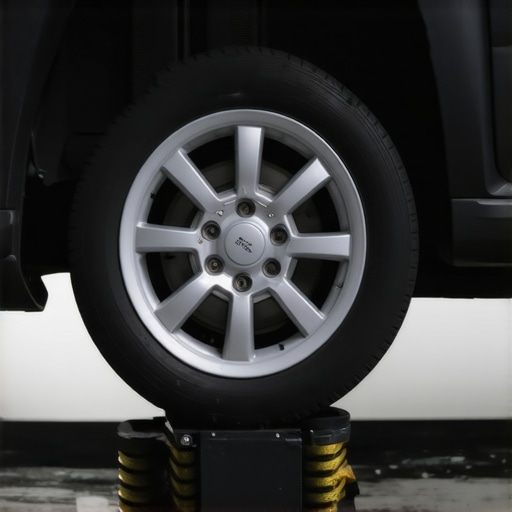
When a vehicle reaches highway speeds, the wheel assembly transforms into a high-velocity gyroscope. Even a variance as small as a quarter-ounce can generate significant centrifugal force, leading to rhythmic oscillations that degrade tire life and strain steering components. From an expert perspective, tire balancing is not a mere convenience; it is a critical calibration of rotational mass. True precision requires accounting for both static and dynamic forces, ensuring that the center of gravity aligns perfectly with the axis of rotation. Without this, the driver experiences a visceral disconnect between the steering input and the road surface, often manifesting in localized vibrations that signal a failure in technical execution.
Why a Simple Balance Job Often Fails the Real-World Test
Many drivers assume that a visit to the local shop guarantees a vibration-free ride, yet many find that your new tires still vibrate after a high-speed shop balance. This phenomenon often occurs because traditional spin balancers only measure the tire in a no-load state. In professional diagnostics, we utilize road-force balancing, which applies a roller to the tire to simulate the weight of the vehicle. This process identifies ‘hard spots’ or structural uniformity issues that a standard balancer would miss. If your technician did not perform a road-force test, they might have balanced the weight but ignored the tire’s physical shape. High-performance vehicles are particularly sensitive to these micro-variations in unsprung weight, requiring a more nuanced approach to mass distribution.
Why Your Steering Wheel Shakes at Exactly 55 MPH
One of the most telling signs of a precision error is the ‘speed-sensitive’ vibration. If you notice that your steering wheel shakes at exactly 55 mph and then smooths out at higher speeds, you are likely experiencing the resonant frequency of an imbalanced assembly. At this specific velocity, the rotational frequency of the tire matches the natural frequency of the suspension system, amplifying the shake. As an expert, I look for these specific windows of interference to determine if the issue is a lost clip-on weight or an internal tire failure. According to technical papers published by SAE International, these harmonics are critical indicators of wheel health and should never be ignored as they can lead to premature failure of tie-rod ends and wheel bearings.
The Hidden Force Behind High-Speed Vibrations
Vibrations felt through the seat rather than the steering wheel typically indicate that the imbalance is located in the rear tires. However, the diagnostic path is rarely that linear. Skilled mechanics must also consider lateral runout—the side-to-side wobble of a wheel. If a wheel is bent or the tire is improperly seated on the bead, no amount of lead weight will truly fix the problem. You must also keep an eye on tire wear patterns that prove your alignment shop is lazy, as cupping or feathered edges can mimic the sensations of a bad balance. In these cases, the problem is not weight distribution, but the physical geometry of how the tire meets the asphalt.
Is It a Balance Issue or a Damaged Tire Belt?
Could the persistent thumping in your floorboards actually be a structural failure rather than a balance error? When internal steel belts shift or separate, they create a lump in the tread. This causes a low-frequency vibration that balance machines might struggle to compensate for. To differentiate, a technician should perform a visual inspection for ‘out-of-round’ conditions. If the handling remains compromised, you should also learn how to tell if your shocks are shot without a mechanics help, as worn dampers cannot control the natural oscillations of even a perfectly balanced tire. If your vehicle handling still feels ‘vague’ or unstable, we invite you to contact our specialist team for a deep-dive suspension and wheel assembly audit.
A common oversight in many high-volume service bays is the accumulation of iron oxide and road grime on the hub’s mating surface. If this debris isn’t cleared, the wheel won’t sit perfectly flush against the hub, creating a ‘false’ balance that disappears the moment you hit the highway. This is why we emphasize the 10-minute hub scrub that stops brand new brake pads from squealing as a fundamental step for wheel mounting too. When a wheel is cocked by even a fraction of a millimeter due to rust, the dynamic balance is thrown into chaos. Skilled technicians use a specialized wire brush or abrasive disc to ensure a metal-to-metal connection, preventing the wheel from ‘walking’ slightly under load. If you’ve ever wondered why your steering wheel shakes even after a high-speed balance, the answer often lies in this hidden layer of corrosion rather than the tire itself.
Does Your Mechanic Actually Clean the Corrosion Off Your Hubs?
When you observe a technician mounting your wheels, look for the ‘hub scrub.’ It is an expert-level detail that separates a generic tire swap from a professional calibration. A clean mounting surface ensures that the torque applied to your lug nuts is distributed evenly across the rotor hat and the wheel flange. Without this, the wheel may initially feel stable but will inevitably develop a wobble as the debris shifts or compresses under the extreme heat of braking. This technical nuance is a cornerstone of mechanic tips diagnosing common auto problems, yet it is frequently skipped in the rush to meet hourly quotas.
The Invisible Impact of Rotor Runout on Wheel Stability
Beyond the hub, the brake rotor itself acts as a critical secondary mounting surface. If the rotor is warped or has excessive lateral runout, it can translate those oscillations directly into the wheel assembly, mimicking the sensations of an unbalanced tire. This creates a complex diagnostic scenario where the symptoms of a bad balance and a bad brake job overlap perfectly. You might find that why your new brake rotors still pulse after a professional install is intrinsically linked to your high-speed vibration issues. According to the National Highway Traffic Safety Administration (NHTSA), maintaining the integrity of the entire wheel-end assembly is paramount for directional stability, especially during emergency maneuvers where mass shifts can amplify existing vibrations. If you are experiencing persistent issues, share your specific vibration symptoms in the comments so we can help narrow down the diagnostic path for your vehicle.
The Hub-Centric vs. Lug-Centric Mounting Debate
One often ignored variable in the hunt for a smooth ride is how the wheel centers itself. Most modern vehicles are hub-centric, meaning the center bore of the wheel fits snugly over the hub to ensure perfect concentricity. However, if you are using aftermarket wheels without the proper hub-centering rings, you are relying solely on the lug nuts to center the wheel. This lug-centric approach is notoriously prone to micro-misalignments that no amount of lead weights can fix. In these cases, the wheel is technically balanced but is not rotating on its true center. Proper torque patterns are equally vital; unevenly torqued lug nuts can distort the wheel mounting flange, leading to the very shakes you’re trying to eliminate. Precision in auto repair isn’t just about the tools you use, but the sequence and cleanliness of the installation process.
While we often discuss the amount of weight needed, the physical placement of that weight on the wheel barrel is equally vital to neutralizing dynamic forces. In the world of high-performance alloy wheels, technicians frequently opt for adhesive "tape weights" tucked behind the spokes. While aesthetically superior, these weights require a surgically clean surface to prevent them from flinging off at high centrifugal speeds. If your shop doesn’t use a brake cleaner or specialized solvent on the inner rim before application, you are driving on a ticking clock. Once a single 0.25-ounce square detaches, the entire dynamic equilibrium of the assembly is shattered. This is why we distinguish between static balance—which addresses the heavy spot on the tire’s circumference—and dynamic balance, which counters the side-to-side "wobble" or couple imbalance.
Does Overnight Flat-Spotting Cause Permanent Tire Damage?
Many drivers report a rhythmic thumping that disappears after five miles of driving, a phenomenon known as temporary flat-spotting. This occurs when a vehicle sits for an extended period, and the weight of the car compresses the tire’s contact patch. High-performance tires with softer compounds or nylon reinforcement belts are particularly susceptible to this. As the tire warms up, the rubber regains its elasticity and the shape returns to round. However, if a vehicle is stored for months without moving, the internal structure can take a permanent set. According to the Tire Industry Association (TIA), maintaining specific storage pressures and utilizing tire cradles can prevent these structural deformities from becoming a permanent vibration source that no balancing machine can rectify. Understanding the difference between a cold-start shimmy and a mechanical failure is key to avoiding unnecessary repair costs.
Why Nitrogen Inflation Might Actually Save Your Suspension
The air inside your tire is not just for support; it is a component of the spring rate. Regular compressed air contains moisture which expands and contracts significantly with temperature fluctuations. As the air heats up during a long highway haul, the internal pressure increases, potentially changing the tire’s footprint and how it reacts to road-force variations. Nitrogen inflation, while often debated, offers a more stable pressure environment because the larger molecules migrate through the tire casing much slower than oxygen. This stability ensures that the balance achieved in the shop remains consistent across a wide range of operating temperatures. If you are a precision-oriented driver, we suggest you learn the truth about nitrogen inflation to see if it fits your driving style. Inconsistent pressures are one of the leading causes of "ghost vibrations" that seem to come and go based on the time of day.
The Role of Tire Age in Rotational Stability
Even a tire with 80% tread life can become a source of instability if the rubber compound has begun to harden or "ozonate." Over time, the oils that keep rubber pliable evaporate, leading to a stiffer carcass that doesn’t absorb road imperfections. When this happens, the tire becomes hyper-sensitive to even the smallest variations in wheel balance. You might find that a set of six-year-old tires simply cannot be balanced to a satisfactory level because the internal belts have lost their tension. Expert diagnostics involve checking the DOT date code on the sidewall to ensure the material itself hasn’t reached its effective service life. If the rubber feels brittle or shows signs of "dry rot" in the grooves, the vibration is a symptom of a much larger safety concern regarding the tire’s structural integrity. When the internal plies start to fray or the bonding between the steel and rubber weakens…
When the internal plies start to fray or the bonding between the steel and rubber weakens, the tire undergoes a metamorphosis from a circular cushion to a volatile, eccentric mass. This structural decay often originates at the molecular level, where thermal cycles gradually degrade the adhesive properties of the belt packages. From a specialized technical standpoint, the tire is no longer a uniform torus but a collection of shifting densities that defy simple counter-weighting. To resolve these issues, we must look beyond the rubber and into the intricate dynamics of the entire wheel-end assembly.
TPMS Sensors Throw a Wrench in Perfect Symmetry
Modern Tire Pressure Monitoring Systems (TPMS) have introduced a new variable into the equation of rotational mass. These sensors, while vital for safety, add a concentrated ‘heavy spot’—often weighing up to 40 grams—directly to the inner rim. If a technician fails to index the tire correctly against the valve stem location, they are essentially fighting against an inherent weight bias from the start. High-precision shops utilize the ‘match mounting’ technique, aligning the lightest spot of the tire with the heaviest part of the wheel assembly, usually the TPMS sensor, to minimize the need for excessive lead weights. This reduces the total unsprung mass and leads to a more responsive suspension feel during high-velocity maneuvers.
Stop Chasing Ghosts When Your Bushings Are the Culprit
We must also consider the role of the lower control arm bushings. These rubber or polyurethane components serve as the primary damping mechanism for the suspension. If these bushings are torn or have become excessively compliant, they lose their ability to suppress the natural harmonic frequencies produced by the tires. You might spend hundreds on road-force balancing, but if your suspension geometry is oscillating due to worn hardware, the vibration will persist. This is where a holistic vehicle inspection surpasses a simple tire service. When the chassis can no longer absorb the ‘micro-thumps’ of the road, even a perfectly balanced tire will feel like it is out of round because the suspension’s dampening integrity has been compromised.
Can a Dragging Brake Caliper Fool Your High-Speed Balancer?
The answer is a definitive yes. A caliper that doesn’t fully retract causes intermittent thermal expansion in the brake rotor. This heat can cause the metal to distort slightly while driving, creating a ‘pulsing’ sensation that feels remarkably similar to a dynamic wheel imbalance. According to the National Institute for Automotive Service Excellence (ASE), diagnosing high-speed instability requires a systematic process of elimination that includes measuring rotor thickness variation and checking for mechanical drag. If your car feels smooth for the first ten minutes but starts to shake as the brakes get hot, you aren’t looking at a balance issue—you’re looking at a thermal-mechanical failure that no amount of lead weights can fix.
High-Performance Alloys Require Finger-Plate Precision
For those running oversized or low-profile wheels, the margin for error shrinks to near zero. These setups lack the sidewall ‘buffer’ that standard tires provide, meaning every road imperfection and micro-imbalance is transmitted directly to the cabin. In these high-performance applications, we recommend using a ‘finger-plate’ adapter on the balancer rather than a standard center cone. This ensures the wheel is centered via its lug holes—exactly how it sits on the vehicle’s hub—eliminating the ‘cone-creep’ that frequently plagues high-volume tire shops. This level of technical specificity is what prevents the common complaint of vibrations returning just days after a service.
Steering Rack Play Masks True Wheel Health
Beyond the rotating mass, the steering rack’s internal tolerances play a massive role in how feedback is interpreted by the driver. A rack with even a millimeter of play in the inner tie-rod sockets or the rack-and-pinion engagement can act as an amplifier for minor wheel imbalances. When the steering system is tight, it can absorb a slight variance without alerting the driver; however, a worn rack allows these tiny centrifugal forces to manifest as a violent shudder at the wheel. Professionals don’t just look at the tire; they check for ‘lash’ in the steering gear to ensure the entire feedback loop is rigid. If you are tired of chasing elusive shakes and want a diagnostic partner who understands the complex physics of the road, we encourage you to schedule a consultation with our master technicians today.
Expert Insights & Advanced Considerations
Syncing the Assembly Beyond Simple Spinning
Precision balancing is an exercise in managing resonance frequencies. Even a wheel that is ‘zeroed out’ on a standard machine can vibrate if its natural frequency matches the vehicle’s suspension harmonics at speed. Experts look for the ‘sweet spot’ where tire uniformity and wheel runout cancel each other out, a process often referred to as match-mounting.
The Impact of Thermal Cycles on Adhesive Weights
High-performance braking generates immense heat that can soften the adhesive backing on tape weights. If your shop doesn’t use a surface pre-treatment, those weights are destined to fail during spirited driving. This is why we prioritize mechanic tips diagnosing common auto problems that focus on the installation environment as much as the hardware itself.
Why Radial Force Variation Trumps Balance Weights
A tire can be perfectly balanced in terms of weight but still feel ‘square’ if the internal sidewall stiffness is inconsistent. This radial force variation creates a physical ‘bump’ every time the stiff part of the tire hits the pavement. If you’ve wondered why your steering wheel shakes even after a high-speed balance, you are likely dealing with a structural uniformity issue rather than a mass distribution problem.
Deepen Your Technical Knowledge
- SAE International Technical Papers: The gold standard for understanding vehicle dynamics and the physics of wheel-end assemblies.
- Tire Industry Association (TIA) Guides: Essential for learning the safety protocols of mounting and demounting high-pressure assemblies.
- Hunter Engineering University: An excellent resource for mastering the nuances of Road Force Measurement and diagnostic balancing technology.
- Tire Rack Tech Center: Provides real-world testing data on how different tread patterns and compounds react to high-speed stress.
The Final Word on Rotational Integrity
Achieving a glass-smooth ride at 80 mph is not a matter of luck; it is a matter of technical execution. We have moved past the era where a simple spin-balance was enough. Today’s lightweight suspensions and low-profile tires demand that we account for hub corrosion, lateral runout, and the specific harmonics of the vehicle chassis. If you have ruled out the tires, remember to check your suspension dampers or how to tell if your shocks are shot without a mechanics help to ensure your vehicle can actually control the forces generated at speed. For a comprehensive diagnostic audit of your specific vibration issues, we invite you to contact our specialist team and let our master technicians restore your driving experience.