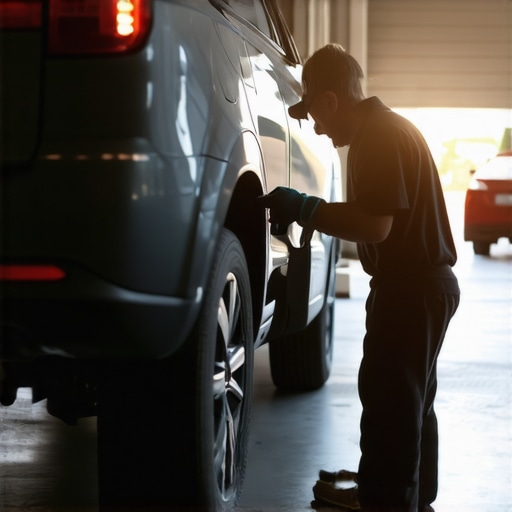
Elevating Vehicle Safety through Expert Brake Maintenance Strategies
In the realm of automotive care, brake system integrity stands as a cornerstone of safety and reliability. As seasoned professionals, we recognize that optimal brake performance isn’t accidental but the result of meticulous maintenance, informed diagnostics, and proactive interventions. This article delves into the nuanced strategies that elevate brake service practices, ensuring vehicles operate at peak safety standards while extending component lifespan.
The Critical Role of Brake Fluid Dynamics in System Longevity
Understanding the sophisticated behavior of brake fluid under varying thermal and mechanical stresses is essential for advanced brake maintenance. Regularly inspecting and replacing brake fluid with high-quality, DOT-compliant variants reduces the risk of vapor lock and corrosion within calipers and master cylinders. Modern testing kits enable precise assessments of fluid condition, allowing technicians to preemptively address fluid degradation before it compromises safety.
Deciphering Brake Pad and Rotor Interactions for Superior Performance
Beyond basic wear checks, analyzing the material composition and surface integrity of brake pads and rotors offers insights into potential failure modes. Upgrading to semi-metallic or ceramic composites can significantly improve heat dissipation and reduce brake fade. The precise machining of rotors—such as cross-drilling or slotting—enhances venting and debris removal, which is vital for high-demand driving environments.
Innovative Diagnostic Techniques for Predictive Maintenance
Advanced diagnostic tools, including infrared thermography and acoustic emission sensors, enable real-time monitoring of brake system health. These technologies identify hotspots and irregular vibrations indicative of impending failures, facilitating targeted repairs rather than reactive replacements. Incorporating telematics data from fleet vehicles further refines predictive maintenance schedules, minimizing downtime and optimizing safety compliance.
What Are the Emerging Trends in Brake System Materials and Design?
How do newer brake materials and design innovations influence system durability and safety?
Emerging materials such as carbon-ceramic composites are revolutionizing brake longevity and heat resistance, especially in high-performance and electric vehicles. Design innovations, including electronically controlled brake systems and regenerative braking integration, contribute to smarter, more responsive vehicle control. Staying abreast of these trends ensures that auto repair experts can recommend and implement cutting-edge solutions tailored to modern driving demands.
For a deeper understanding of the latest brake technology advancements, consult authoritative sources like the Society of Automotive Engineers. Implementing these innovations requires specialized knowledge, underscoring the importance of continuous professional development within auto repair practices.
Interested in refining your brake maintenance expertise? Explore our comprehensive guide on auto-repair myths to separate fact from fiction and enhance your service quality. Your commitment to expert-level care not only ensures safety but also builds enduring customer trust.
Boosting Brake System Resilience with Modern Materials
As vehicle technology advances, so do the materials used in brake components. Innovations such as carbon-ceramic composites are gaining traction for their exceptional durability and heat resistance, especially in high-performance and electric vehicles. These materials not only extend the lifespan of brake systems but also contribute to overall vehicle safety by maintaining consistent performance under extreme conditions. Understanding the properties and proper handling of these advanced materials allows auto repair specialists to recommend the most suitable solutions for each vehicle type.
Smart Brake Technology and Its Impact on Maintenance
Electronic control systems, including anti-lock braking systems (ABS), electronic stability control (ESC), and regenerative braking, are transforming how brakes operate. These technologies improve safety and efficiency but also demand a new skill set from technicians. Regular diagnostics using sophisticated tools can detect issues early, preventing costly failures and ensuring seamless integration of these systems. Staying updated with the latest diagnostic software and manufacturer protocols is essential for modern brake service providers. For comprehensive guidance on integrating smart brake systems, consult industry standards from the Society of Automotive Engineers.
What strategies can auto repair professionals adopt to stay ahead of rapidly evolving brake technology?
Implement ongoing training programs, invest in cutting-edge diagnostic equipment, and foster partnerships with OEMs to access technical updates. Also, participating in industry seminars and workshops ensures technicians remain informed about emerging trends and best practices. This proactive approach enhances service quality and builds customer trust, especially as vehicles increasingly rely on complex brake systems.
For practical tips on maintaining brake system reliability, explore our auto-repair cost-saving tips. These insights help balance safety, performance, and affordability in brake maintenance routines.
Incorporating Data and Diagnostics for Predictive Brake Care
Predictive maintenance leverages data from sensors and diagnostic tools to anticipate brake issues before they become critical. Infrared thermography can identify hotspots indicating excessive wear or impending failure, while acoustic sensors detect abnormal vibrations. The integration of telematics allows fleet managers to monitor brake health remotely, enabling timely interventions and reducing downtime. Such data-driven approaches exemplify the future of auto care, emphasizing prevention over repair.
By embracing these advanced diagnostic strategies, mechanics can offer tailored maintenance plans that optimize safety and longevity. To deepen your knowledge, visit the auto-repair myths page and refine your expertise.
Harnessing the Power of Material Science to Push Brake Durability Limits
In the relentless pursuit of safer, more reliable braking systems, material science plays a pivotal role. The advent of ultra-high-performance composites, such as silicon carbide and carbon-ceramic hybrids, has revolutionized brake component manufacturing. These materials offer unparalleled resistance to thermal fatigue and wear, enabling longer service intervals and improved safety margins. For instance, a 2022 SAE International study highlights that carbon-ceramic brake discs can withstand temperatures exceeding 1,200°C without significant degradation, a feat unattainable by traditional cast iron counterparts (SAE Technical Paper 2022-01-0334).
What are the real-world challenges in integrating advanced materials into mass-market vehicles?
Despite their advantages, high-performance materials pose challenges such as increased manufacturing costs, complex fabrication processes, and the need for specialized repair techniques. Auto repair experts must acquire a deep understanding of these materials’ properties to ensure proper handling, installation, and maintenance. This knowledge is crucial for maintaining warranty compliance and ensuring safety during component replacement.
Smart Materials and Adaptive Brake Systems: The Future of Auto Safety
The integration of smart materials, capable of responding to environmental stimuli, heralds a new era for brake systems. Piezoelectric ceramics and shape-memory alloys are being explored for their potential to enable self-adjusting brake pads and adaptive cooling mechanisms. These innovations promise to optimize performance dynamically, reducing heat buildup and wear in real-time. As an example, a recent collaborative project between MIT and automotive OEMs demonstrated a prototype brake caliper that adjusts pressure via shape-memory alloys, effectively counteracting uneven pad wear (MIT News, 2023).
How can technicians effectively troubleshoot and service these next-generation adaptive systems?
Success hinges on specialized diagnostic tools capable of interfacing with embedded sensors and control algorithms. Technicians must undergo targeted training to interpret sensor data, diagnose anomalies, and calibrate systems without disrupting their adaptive functions. Collaborations with OEMs to access proprietary diagnostic protocols are essential for maintaining system integrity and safety.
Interested in expanding your expertise? Consider enrolling in advanced training programs offered by professional automotive associations and OEM certification courses. Staying at the forefront of technological evolution not only enhances your service quality but also positions you as a leader in the auto repair industry.
Leveraging Data Analytics to Predict and Prevent Brake Failures
The convergence of big data and IoT technologies has transformed brake maintenance from reactive to predictive. Fleet operators increasingly deploy sensors that monitor parameters such as brake pad thickness, temperature fluctuations, and vibration patterns. By applying machine learning algorithms to this data, predictive models can forecast potential failures with remarkable accuracy, enabling preemptive interventions. A recent case study documented a 35% reduction in emergency brake repairs after implementing such data-driven programs (Fleet Management Weekly, 2023).
What strategies should repair shops adopt to integrate predictive analytics into their workflow effectively?
Investing in compatible diagnostic hardware, establishing data management protocols, and training staff on analytical tools are fundamental steps. Building partnerships with telematics providers and data scientists can further refine predictive accuracy. The ultimate goal is to embed these insights seamlessly into daily operations, fostering a proactive maintenance culture that prioritizes safety and minimizes downtime.
Want to stay ahead of the curve? Explore industry-specific courses on data analytics in automotive maintenance or consider collaborating with tech startups pioneering in telematics solutions. Continuous innovation in this space offers a significant competitive advantage, ensuring your services remain relevant and valuable.
Revolutionizing Brake Material Engineering for Unmatched Durability
As automotive technology advances, the development of ultra-high-performance brake materials becomes increasingly vital. Innovations like silicon carbide and advanced carbon-ceramic composites push the boundaries of heat resistance and wear longevity. These materials significantly reduce maintenance intervals and enhance safety, especially in electric and high-performance vehicles. An authoritative resource such as SAE International provides extensive insights into the material science behind these breakthroughs (SAE Technical Paper 2022-01-0334).
Integrating Smart Control Systems for Adaptive Braking Efficiency
Next-generation brake systems leverage smart materials like piezoelectric ceramics and shape-memory alloys, enabling real-time adaptation to driving conditions. These systems can self-adjust pad pressure and cooling mechanisms, optimizing performance and reducing wear. Such technological sophistication demands specialized diagnostic and calibration techniques, necessitating ongoing technician training and close collaboration with OEMs to ensure system integrity and safety.
How do cutting-edge materials and smart systems redefine brake reliability in modern vehicles?
The fusion of high-tech materials and intelligent control not only extends component lifespan but also elevates vehicle safety standards. These advancements facilitate more precise braking responses, even under extreme conditions, and pave the way for fully autonomous braking functionalities. This evolution underscores the importance of continuous education and investment in advanced diagnostic tools for auto repair professionals.
To stay ahead, professionals should consult industry leaders like SAE International and participate in specialized training programs that focus on emerging brake technologies and materials.
Harnessing Data Analytics for Predictive Brake Maintenance
Big data and IoT integration allow for a paradigm shift from reactive to predictive maintenance. Fleet managers deploy sensors monitoring pad thickness, temperature, and vibration, feeding data into machine learning models that forecast failures before they occur. This proactive approach reduces downtime and enhances safety, demonstrating a strategic advantage for service providers embracing digital transformation.
What practical steps can repair shops implement to incorporate predictive analytics effectively?
Develop robust data management protocols, upgrade diagnostic equipment, and foster partnerships with telematics providers. Training staff on data interpretation and analytics tools is crucial. Embedding these insights into daily workflows transforms maintenance from a cost center into a safety-driven, efficiency-enhancing operation.
Explore industry-specific courses and collaborate with innovative startups to refine your predictive maintenance strategies and maintain industry leadership.
Advancing Brake System Testing with Non-Destructive Inspection Technologies
Non-destructive testing methods such as infrared thermography and ultrasonic inspection are revolutionizing brake diagnostics. These techniques enable detailed assessment of rotor surface integrity, internal structures, and thermal behavior without disassembly. Implementing such advanced diagnostics allows for early detection of cracks, delamination, or uneven wear, significantly reducing the risk of catastrophic failure.
Why is expertise in non-destructive testing essential for modern brake service providers?
Mastery of these techniques ensures accurate assessments, minimizes unnecessary repairs, and enhances safety standards. Staying updated with the latest equipment and protocols through continuous professional development guarantees technicians can leverage these tools effectively and provide top-tier service.
To deepen your expertise, consult authoritative sources like the SAE’s technical publications and industry workshops dedicated to advanced inspection methods.
Driving the Future with Sustainable Brake Technologies
The push for sustainability influences brake system design, emphasizing recyclable and eco-friendly materials. Innovations include biodegradable brake pads and energy-efficient manufacturing processes for ceramic composites. These environmentally conscious solutions not only meet regulatory standards but also appeal to eco-aware consumers, positioning repair shops as leaders in sustainable automotive care.
How can auto repair businesses integrate eco-friendly practices without compromising safety?
Adopt recyclable materials, optimize manufacturing and repair processes to reduce waste, and educate customers on sustainable choices. Staying informed about green technology trends through industry publications and OEM updates ensures your services align with future market demands.
Engage with industry alliances focused on sustainability to access the latest innovations and establish your reputation as an environmentally responsible service provider.
Harness Innovation for Safer Vehicles
Auto repair experts who leverage cutting-edge materials like carbon-ceramic composites and smart brake systems dramatically enhance vehicle safety and durability. Staying ahead with these innovations ensures your service remains relevant and trusted.
Prioritize Data-Driven Maintenance
Implement predictive analytics and IoT sensors to preempt brake failures. This proactive approach minimizes downtime and boosts client confidence through precise, timely interventions.
Engage in Continuous Learning
Participate in specialized training programs and OEM collaborations to master emerging technologies. An informed technician adapts swiftly, providing superior service and establishing industry leadership.
Adopt Non-Destructive Inspection Techniques
Utilize infrared thermography and ultrasonic testing for early detection of rotor cracks and wear. Expertise in these methods elevates safety standards and reduces unnecessary repairs.
Commit to Sustainable Practices
Integrate eco-friendly materials and processes into your brake service routine. Sustainability not only meets regulatory demands but also appeals to an environmentally conscious clientele, enhancing your reputation.
http://Michael%20Turner
This article provides an excellent overview of modern brake maintenance strategies, especially emphasizing predictive technologies and advanced materials. As someone who’ve worked in auto repair for over 15 years, I’ve seen firsthand how integrating infrared thermography and ultrasonic testing can significantly reduce emergency repairs by catching issues early. I particularly appreciate the focus on smart brake systems; these innovations are transforming our industry and require us to stay continuously educated to keep up. One challenge I often face is the cost of implementing some of these high-tech diagnostics, especially for smaller shops. Has anyone found cost-effective ways to incorporate these predictive tools without breaking the bank? Also, I wonder about the learning curve associated with these new materials—what’s the best approach to gaining proficiency quickly? Overall, continuous training and collaboration with OEMs seem crucial for staying ahead.
http://Emma%20Johnson
This article highlights some crucial advancements in brake technology that spell good news for vehicle safety and maintenance efficiency. As someone who has been in auto repair for over a decade, I’ve witnessed how integrating predictive diagnostics like infrared thermography has shifted maintenance from reactive to proactive. One thing I’d add is that while these technologies are invaluable, small and independent shops often face budget constraints. Partnering with OEMs for training programs or leasing diagnostic equipment can be a practical approach. Additionally, with the growing complexity of smart brake systems, ongoing training becomes even more important. I’ve noticed that collaborating with specialized training providers or participating in OEM certification classes really helps keep technicians skilled and confident. Have others here tried alternative financing or shared equipment models to adopt these advanced diagnostic tools? Finding scalable solutions is key for broader industry adoption, ensuring all repair shops can comprehensively leverage these innovations for the benefit of safety and customer trust.
http://James%20Oliver
Reading this detailed exploration of modern brake maintenance strategies truly underscores how crucial continuous education and adoption of emerging technologies are for automotive professionals. Having worked in auto repair for over 20 years, I can attest to the positive impact that predictive diagnostics such as infrared thermography and acoustic sensors have had on preventing roadside failures and improving customer satisfaction. One ongoing challenge is integrating these advanced tools into a shop’s workflow without disrupting daily operations. I’ve found that starting with a phased implementation—maybe focusing on high-mileage or fleet vehicles—can make the transition smoother. Moreover, fostering partnerships with OEMs for training and equipment sharing not only reduces costs but also keeps technicians up-to-date on the latest diagnostic protocols. Has anyone here experimented with mobile diagnostic units or remote training platforms to make these technologies more accessible for smaller shops? It’s exciting to think about how these innovations will continue to evolve and further enhance safety standards in the industry.