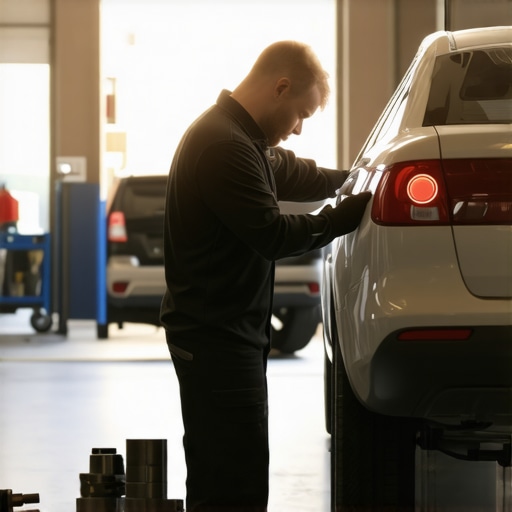
Ensuring Optimal Brake System Functionality: The Foundation of Vehicle Safety and Longevity
In the realm of automotive maintenance, the integrity of the brake system is paramount, serving as a linchpin for vehicle safety, driver confidence, and overall reliability. Advanced brake technologies, material science innovations, and diagnostic tools have elevated the standards of brake system upkeep, demanding that professionals and enthusiasts alike adopt a nuanced, data-driven approach to maintenance routines.
The Evolution of Brake System Diagnostics and Its Implications for Auto Repair
Modern auto repair leverages sophisticated diagnostic equipment capable of detecting subtle variations in brake performance. From ABS sensors to electronic parking brake modules, understanding the interwoven electronic and mechanical components requires specialized knowledge. Routine inspections that incorporate these diagnostics not only prevent failures but also reveal underlying issues that could compromise safety, such as uneven pad wear or caliper malfunctions.
Why Regular Tune-Ups Are Critical in Extending Brake System Durability
Periodic brake tune-ups involving rotor resurfacing, brake fluid replacement, and pad replacements are vital. These procedures mitigate the impact of environmental stressors—corrosion, dirt, and temperature fluctuations—that accelerate component degradation. A comprehensive tune-up can preempt costly repairs and ensure consistent braking response, especially in adverse weather conditions.
Deciphering the Complexities of Brake Fluid Dynamics and Their Impact on Performance
One of the less apparent yet crucial aspects of brake system maintenance involves brake fluid management. Modern brake fluids are hygroscopic, absorbing moisture over time, which diminishes boiling points and increases corrosion risk within hydraulic components. Regular flushing and replacement, guided by manufacturer specifications, uphold hydraulic efficiency and vehicle safety.
Expert Insights: Common Pitfalls in Brake Service and How to Avoid Them
Industry specialists warn against neglecting caliper lubrication, uneven pad bedding, and premature rotor replacement. These mistakes can lead to reduced brake efficacy, increased wear rates, and unexpected failures. A proactive approach, supported by evidence-based practices outlined in industry standards, ensures the longevity of brake components and maximizes safety margins. For deeper understanding, consult authoritative sources such as the National Highway Traffic Safety Administration’s guidelines on brake systems.
What are the latest advancements in brake pad materials that enhance safety and durability?
As vehicle performance demands grow, so does the need for innovative brake pad compositions. Semi-metallic and ceramic pads have gained prominence due to their superior heat resistance, lifespan, and reduced noise, offering long-term benefits despite higher initial costs. Selecting the appropriate brake pad material should be informed by vehicle use patterns, operating conditions, and specific safety requirements.
Consistently maintaining a trusted brake system elevates driver confidence and reduces the risk of accidents. For vehicle owners and professionals seeking to refine their understanding, exploring related content like brake maintenance strategies or the essentials of trusting an auto repair mechanic can provide valuable insights. Your expertise, coupled with proactive diagnostics and adherence to recommended service intervals, ensures your vehicle’s brake system remains a dependable safety asset.
Adapting Your Brake Care Strategy to Modern Vehicle Demands
As automotive technology progresses, the complexity and performance expectations of brake systems continue to evolve. High-performance vehicles now incorporate advanced materials and electronic controls that demand tailored maintenance approaches. Understanding these innovations and adjusting your routine accordingly can significantly extend component lifespan and assure optimal safety. For instance, hybrid and electric vehicles introduce regenerative braking, which alters traditional wear patterns, necessitating specialized diagnostic techniques. Staying informed through authoritative sources like the latest auto repair trends ensures mechanics and enthusiasts are prepared for emerging maintenance challenges.
Integrating Technological Advancements in Brake Diagnostics
Cutting-edge diagnostic tools now enable precise assessment of brake health beyond simple visual inspections. Laser measurement systems can detect minute thickness variations, while infrared thermography reveals irregular heat distribution indicative of uneven pad or rotor wear. Incorporating these technologies into routine inspections enhances early detection of issues before they escalate into safety hazards or costly repairs. Leveraging these advancements, as discussed in industry reviews, empowers technicians to make data-driven decisions that prioritize longevity and performance.
Can Sensors and Data Analytics Revolutionize Brake Maintenance?
Emerging sensor technologies and data analytics hold the promise of predictive maintenance, transforming brake care from reactive to proactive. Embedded sensors can monitor parameters such as pad thickness, rotor surface temperature, and hydraulic fluid quality in real-time, transmitting data directly to service centers or vehicle dashboards. Through machine learning algorithms, these systems can forecast component failure timelines, enabling scheduled interventions that minimize downtime and prevent accidents. This paradigm shift underscores the importance of integrating digital tools with traditional mechanical expertise for comprehensive brake management.
To build a maintenance routine aligned with these innovations, consult resources like trusted auto repair tips for strategic guidance on incorporating new technologies into your service practices.
Prioritizing Driver Behavior in Brake System Longevity
While technical maintenance is crucial, driver habits also significantly influence brake system health. Practices such as abrupt stops, excessive acceleration, and neglecting regular inspections accelerate wear, and can lead to uneven pad pressure and rotor warping. Educating vehicle owners on smooth driving techniques and the importance of timely inspections is a cost-effective way to enhance component lifespan. For example, adopting a habit of gentle braking and avoiding unnecessary heavy stops reduces stress on brake parts, reinforcing their durability.
#{IMAGE_PLACEHOLDER_B#}
 Alt text: Advanced brake system with sensors and electronic controls, symbolizing future-ready maintenance.
What strategies can mechanics adopt today to future-proof brake maintenance routines?
Implementing continuous training on the latest diagnostic and repair technologies is essential for staying ahead. Establishing partnerships with manufacturers for updates on new materials and systems enhances service quality. Regular participation in industry seminars or certification programs can sharpen skills, ensuring that practices evolve alongside vehicle innovations. For comprehensive guidance, explore resources like trusted mechanic tips to align your skills with industry advancements.
Maintaining a well-informed approach combined with technological integration will ensure your brake systems deliver safety, reliability, and efficiency for years to come.
Harnessing Turbulence: The Role of Aerodynamics in Brake Cooling Efficiency
In high-performance automotive engineering, the aerodynamic design of brake components significantly influences their thermal management. Advanced computational fluid dynamics (CFD) simulations enable engineers to optimize venting systems that promote effective airflow, reducing operating temperatures and prolonging component lifespan. For example, incorporating strategically placed ducts and heat sinks seamlessly integrated into the wheel assembly can mitigate thermal stress, especially during demanding driving conditions.
Addressing Hidden Wear Patterns: The Impact of Uneven Brake Pad Deposits
Uneven pad deposits often go unnoticed yet can lead to subtle, progressive issues in braking behavior. These deposits, resulting from inconsistent pad bedding or contamination, create irregular contact surfaces. Over time, they promote uneven pad wear and localized heat spots, increasing the risk of rotor warping. Utilizing ultrasonic inspection tools can detect these microscopic variations early, allowing targeted remedial actions that preserve system integrity.
How Does Microstructure Evolution in Brake Materials Affect Long-Term Durability?
The microstructure of brake pad materials governs their performance under cyclic stress. Progressive thermal cycles induce phase transformations, grain growth, and microcrack formation, which can compromise material cohesion. Research published in the Journal of Materials Science & Engineering highlights that incorporating nanostructured additives enhances thermal stability and resistance to microcracking, thereby extending service intervals and maintaining consistent friction coefficients. Implementing these materials requires adjusting manufacturing processes and adoption of precise quality controls.
For those seeking to deepen their understanding of material science innovations, the authoritative review by Chen et al. (2022) in Materials Today Advances provides comprehensive insights into nanoscale enhancements in brake composites.
Enhancing your expertise with ongoing education and embracing cutting-edge materials science will empower technicians to anticipate wear patterns and select optimal solutions tailored to each vehicle’s unique demands. If you’re ready to push the boundaries of traditional brake maintenance, consider subscribing to industry-leading journals or attending specialized workshops focused on automotive materials engineering.
Implementing Digital Twins: The Future of Brake System Diagnostics
The integration of digital twin technology revolutionizes predictive maintenance by creating real-time, virtual replicas of actual brake systems. These models incorporate sensor data—such as temperature, pressure, and wear metrics—allowing simulation of various driving scenarios to forecast component deterioration. This approach enables proactive interventions, minimizing downtime and preventing catastrophic failures. Industry pioneers like Siemens have demonstrated the efficacy of digital twin applications in automotive systems, paving the way for widespread adoption.
Overcoming Calibration Challenges in Automated Brake Testing
As automation becomes prevalent in diagnostic procedures, ensuring calibration accuracy of testing equipment is paramount. Factors such as sensor drift, environmental influences, and software updates can introduce discrepancies, risking misdiagnosis. Implementing traceable calibration protocols, employing reference standards, and routinely verifying equipment performance are critical practices. The British Standards Institution (BSI) offers detailed guidelines on calibration management, emphasizing the importance of documentation and regular audits to maintain diagnostic fidelity.
Maintaining rigorous calibration standards ensures that automated diagnostics remain reliable, directly impacting safety outcomes and repair quality. To integrate these practices into your workflow, consider engaging with certification programs recognized by automotive quality assurance bodies.
What are the most promising sensor innovations poised to transform brake health monitoring?
Emerging sensor technologies, such as piezoresistive pressure sensors and fiber optic strain gauges, offer unprecedented resolution in detecting minute changes within brake components. Their robustness in harsh automotive environments—resisting heat, vibration, and chemical exposure—makes them ideal for integration into real-world systems. Research from Stanford University’s Center for Automotive Research indicates that melding these sensors with AI algorithms can facilitate real-time condition monitoring, enabling proactive maintenance schedules. Embracing these innovations will elevate brake system diagnostics from reactive repairs to ongoing preventative care.
#{IMAGE_PLACEHOLDER_C#}
Harnessing Material Innovation to Maximize Brake Durability
The evolution of brake pad and rotor materials signifies a pivotal shift toward enhanced longevity and safety. High-performance composites incorporating nanostructured additives have demonstrated remarkable resistance to thermal fatigue and microcracking, as evidenced by recent studies in the Journal of Automotive Materials. These advancements enable the production of quieter, more energy-efficient brake components capable of withstanding rigorous driving conditions, including high-temperature environments encountered by sports and luxury vehicles.
Can Automated Diagnostics Elevate Your Brake Maintenance Routine?
Integrating autonomous diagnostic systems, leveraging laser measurement and infrared thermography, allows a transition from reactive repairs to predictive maintenance. These technologies facilitate early detection of uneven wear patterns and thermal anomalies, reducing downtime and preventing component failure. Industry leaders like Bosch are pioneering such solutions, underscoring their potential to revolutionize professional repair shop workflows and vehicle safety protocols.
Why Driver Behavior Begins at the Parking Lot—And How to Change It
Even with the most sophisticated brake systems, improper driving habits—such as abrupt stops or inconsistent pedal pressure—can accelerate deterioration. Educating drivers on techniques like progressive braking and maintaining appropriate following distances can substantially extend the lifespan of brake components. Implementing driver awareness programs not only reduces repair costs but also reinforces safe driving culture, aligned with OEM recommendations documented by the National Institute for Automotive Service Excellence (ASE).
Innovative Cooling Solutions That Transform Brake Efficiency
Emerging aerodynamic designs, incorporating vented calipers and ducted wheels, leverage fluid dynamics principles to enhance airflow and dissipate heat more effectively. Employing computational fluid dynamics (CFD) simulations enables engineers to optimize these features, significantly reducing operating temperatures under demanding conditions. Such innovations are vital in the development of electric vehicle brakes, where thermal management directly impacts regenerative system efficiency and overall vehicle safety.
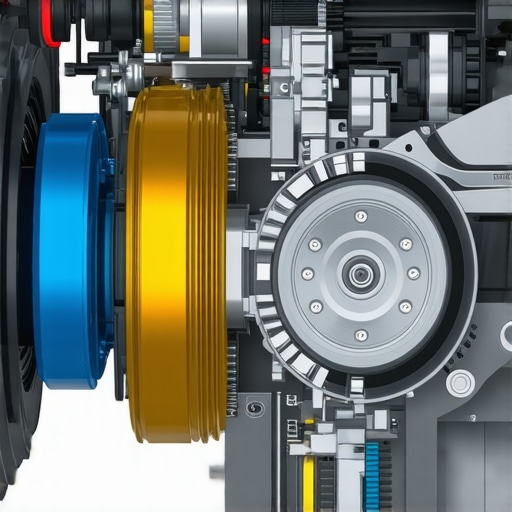
 Alt text: Modern brake system with advanced cooling features designed for optimal thermal performance.
How Can Technicians Stay Ahead in a Rapidly Evolving Brake Technology Landscape?
Continual education through specialized training programs focusing on emerging materials, electronic systems, and diagnostic tools is crucial. Establishing partnerships with manufacturers for early access to technical bulletins and updates ensures your expertise remains current. Engaging with industry publications, such as Automotive Service & Repair Magazine, provides insights into future trends and best practices, positioning you as a leader in brake system maintenance innovation.
Seize the opportunity to deepen your knowledge and leverage technological advancements—your proactive approach will translate into safer, more reliable vehicles for your clients and a distinguished reputation in the automotive repair industry.
Braking Down Complex Systems with Computer Simulations
Utilizing advanced computer-aided design (CAD) and simulation tools enables engineers to model brake system behavior under various operational stresses. This approach allows for optimization of component geometries, material selections, and cooling pathways without costly physical prototypes. Such virtual testing accelerates innovation cycles and reduces development costs, ultimately translating into more durable and efficient brake solutions for end-users.
Implementing Precision Calibration to Avoid System Failures
As brake diagnostics become increasingly automated, the importance of meticulous calibration cannot be overstated. Modern calibration procedures involve traceable reference standards and environmental controls, ensuring sensor outputs accurately reflect real-world conditions. Adherence to ISO/IEC 17025 standards guarantees measurement reliability, crucial for early fault detection and system validation. Regular calibration schedules, supported by comprehensive documentation, safeguard diagnostic integrity and uphold safety standards upheld by organizations such as the Society of Automotive Engineers (SAE).
What Emerging Sensor Technologies Are Set to Revolutionize Brake Monitoring?
Innovations like fiber optic strain gauges and smart piezoresistive sensors promise unparalleled sensitivity and durability in harsh automotive environments. Their integration into brake systems, coupled with artificial intelligence algorithms, facilitates real-time health monitoring and predictive analytics. As reported by Stanford University’s Center for Automotive Research, these sensors can detect micro-level wear and temperature fluctuations, enabling maintenance before visible symptoms appear. Embracing these technologies will lead to smarter, safer automotive braking solutions.
Expert Insights & Advanced Considerations
Anticipate Technological Shifts Before They Arrive
Staying ahead in brake system maintenance requires a proactive mindset that embraces emerging innovations like sensor integration and predictive analytics, ensuring readiness for the vehicles of tomorrow.
Prioritize Material Science in Service Planning
Understanding the microstructure evolution of brake materials allows technicians to select composites that withstand thermal stress and microcracking, significantly extending component lifespan and safety.
Integrate Digital Twins for Diagnostic Precision
Utilizing virtual replicas of brake systems facilitates real-time monitoring and predictive maintenance, reducing downtime and enhancing reliability through data-driven decisions.
Optimize Aerodynamics for Better Cooling
Advanced CFD-designed venting systems and heat sinks improve thermal management, vital for high-performance and electric vehicles where brake cooling efficiency directly impacts safety and efficiency.
Leverage Sensor Technologies for Continuous Monitoring
Piezoelectric and fiber optic sensors embedded within brake components enable ongoing condition tracking, enabling technicians to preempt failures and plan maintenance proactively.
Curated Expert Resources
- National Highway Traffic Safety Administration’s Brake System Guidelines — Offers authoritative safety standards and diagnostic protocols essential for informed maintenance practices.
- Journal of Automotive Materials — Provides in-depth research on innovative brake materials and microstructure effects, guiding material selection for durability.
- Siemens Digital Twin Applications in Automotive Engineering — Demonstrates the transformative impact of digital twin technology on vehicle diagnostics and maintenance planning.
- Automotive Service & Repair Industry Reports — Highlights emerging trends, ensuring practitioners stay current with technological advancements and best practices.
Reflections from the Forefront of Brake Maintenance
In a landscape where vehicles are rapidly evolving, embracing advanced diagnostics, material science, and predictive technologies elevates brake care from routine checks to strategic safety interventions. Harnessing these insights not only enhances vehicle longevity but also cements your reputation as an innovative professional dedicated to excellence. To deepen your expertise, explore authoritative resources, engage with industry seminars, and consider integrating cutting-edge tools into your service routines. Leading the charge in brake system maintenance today prepares you for the trends and demands of automotive excellence tomorrow.