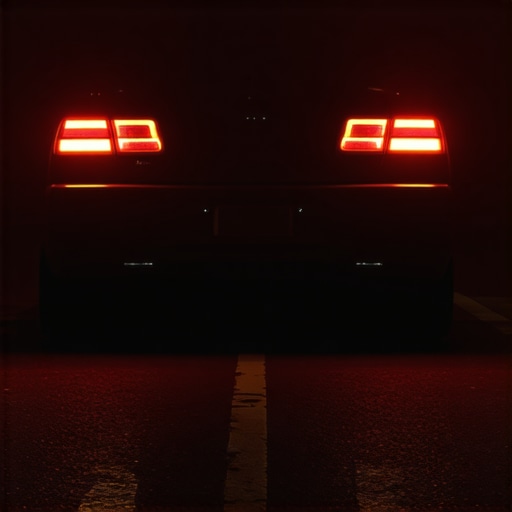
When you walk away from your vehicle only to notice the red glow of the brake lights reflecting off the garage wall, you aren’t just looking at a minor annoyance; you are witnessing a critical failure in the vehicle’s electrical priority circuit. In modern automotive engineering, the brake light circuit is one of the few systems—alongside the hazard lights and horn—that remains “hot” even when the ignition is in the OFF position. This design choice ensures that safety signals are available during emergency towing or if the vehicle stalls. However, when these lights fail to extinguish, it indicates a breakdown in the electromechanical handshake between the brake pedal assembly and the lighting control module. Diagnosing this requires more than just checking a fuse; it demands a forensic look at the stop lamp switch and the physical integrity of the pedal return mechanism. While a standard tune up focuses on engine efficiency, safety systems like the stop lamp circuit are often overlooked during routine maintenance.
Why Your Brake Lights Refuse to Sleep
The most common culprit behind a persistent brake light is the stop lamp switch, a small but vital component located near the top of the brake pedal arm. This switch functions on a “Normally Open” or “Normally Closed” logic depending on the vehicle’s architecture. When you depress the pedal, the switch changes state and completes the circuit. Over years of operation, the internal contacts of the switch can weld together due to electrical arcing, or the return spring can lose tension. This mechanical fatigue prevents the circuit from breaking, leading to a parasitic battery drain that kills cars overnight. Furthermore, advanced brake service secrets suggest that heat cycles under the dashboard can cause the plastic housing of these switches to warp, leading to permanent contact failure.
That Tiny Plastic Bumper You Never Noticed
Before assuming the switch itself has failed, experts always inspect the brake pedal stop pad or “bumper.” This is a small piece of plastic or rubber that sits on the brake pedal arm and physically presses the plunger of the brake light switch when the pedal is released. With age and exposure to cabin heat, this plastic becomes brittle and eventually shatters, leaving a hole where the bumper used to be. The switch plunger then passes right through the hole instead of being depressed, tricking the car into thinking you are constantly braking. Utilizing professional diagnostic techniques, a technician can quickly identify the tell-tale signs of “plastic confetti” on the driver-side floor mat, confirming this common mechanical failure. The intersection of hydraulic pressure and electrical signaling is where most DIY diagnostics fail, as even a slightly sinking pedal can prevent the mechanism from engaging the switch correctly.
Is a Failing Brake Switch Compromising Your Vehicle’s Safety Systems?
A malfunctioning brake switch does more than just drain the battery; it can paralyze critical safety features. In many modern vehicles, the stop lamp switch sends a signal to the Transmission Control Module (TCM) to allow the shifter to move out of “Park.” It also communicates with the ABS and Electronic Stability Control (ESC) modules. If the car perceives the brakes are always applied, it may disable cruise control or engage a “limp mode” to protect the drivetrain. According to technical standards maintained by the Society of Automotive Engineers (SAE), the integration of brake signals into the CAN-bus network means a simple light issue can manifest as complex drivability problems. If you are unsure whether your current technician can handle complex electrical gremlins, learn how to choose a skilled mechanic you can trust for high-precision repairs. This level of oversight is essential when navigating the essential guide to auto repair for modern, computer-dependent vehicles.
The interaction between the hydraulic system and the electrical switch is often misunderstood by DIYers. While most assume a “stuck on” light is purely an electrical short, hydraulic resistance—or the lack thereof—plays a pivotal role. If the brake master cylinder suffers from an internal bypass, or if there is air trapped in the lines, the brake pedal may fail to return to its zero-point. This “lazy” pedal doesn’t just make the brake pedal feel hard as a rock or abnormally soft; it physically prevents the pedal arm from depressing the stop lamp switch plunger. In this scenario, the electrical system is functioning perfectly, but the mechanical interface has failed to reset the circuit.
Can a Spongy Pedal Actually Drain Your Battery?
When hydraulic pressure isn’t sufficient to push the pedal all the way back up against its stop, the circuit remains closed even when you aren’t touching the brakes. This is particularly problematic in vehicles where the return spring has weakened over a decade of use. Beyond the lighting issue, a sagging pedal in a hybrid or electric vehicle can interfere with the regenerative braking logic. The vehicle’s computer may attempt to harvest energy or disengage the friction brakes prematurely because it perceives constant driver input. If you notice your fuel economy dipping alongside a persistent brake light, the hydraulic-to-electric handshake is likely out of sync and needs immediate calibration.
Pinpoint the Failure with a Five-Minute Voltage Check
To avoid “parts cannon” repairs where you replace components blindly, an electrical diagnostic is mandatory. Using the 12 multi-meter test for your charging system and peripheral circuits, you can check for continuity at the switch terminals. A healthy switch should show zero resistance when the plunger is released and infinite resistance when depressed. If the switch tests fine but the lights stay on, you may be dealing with a short-to-power in the wiring harness, often caused by a frayed ground strap that fixes ghost shifting and other phantom electrical issues. According to technical safety data from the National Highway Traffic Safety Administration (NHTSA), stop lamp switch failures have been the subject of numerous massive recalls because they directly impact the ability of following drivers to anticipate stops and can even disable the vehicle’s shift interlock.
Don’t Settle for Cheap Plastic in High-Heat Zones
When replacing these components, the temptation to buy the cheapest white-box part is high, but material science matters here. The stop lamp switch lives in a high-stress environment near the heater core and steering column. Inferior aftermarket switches often use low-grade polymers that warp under the exact same cabin heat that destroyed the original part. Smart brake service strategies that save you money involve choosing OEM or high-tier equivalents that use glass-filled nylon or high-temp resins. If you are looking for more auto repair cost saving tips from industry experts, remember that a $20 premium on a switch today prevents a $200 battery replacement next month. Have you checked your driver-side floor mat for small pieces of broken plastic lately? Drop a comment below if you’ve found “mystery crumbs” near your pedals—it might be the first sign your lights are about to stay on for good.
Beyond the Switch: The Body Control Module’s Digital Grip
In the current landscape of automotive electronics, the path from your foot to the bulb is rarely a straight line. Many modern platforms utilize a Body Control Module (BCM) or a Front Control Module (FCM) to interpret the signal from the stop lamp switch as a digital command rather than a simple power flow. When these modules encounter a ‘logic hang,’ they can keep the circuit energized indefinitely. This is often caused by a software glitch or a micro-short within the module’s solid-state circuitry. According to the ISO 26262 standard for functional safety in road vehicles, these systems are designed with redundancies to prevent total failure, yet a ‘latched’ state can still occur. A high-level mechanic won’t just look for a broken switch; they will use a bi-directional scan tool to command the BCM to toggle the lights, effectively resetting the digital handshake that has gone rogue.
Can a Corroded Trailer Plug Mimic a Stuck Pedal?
One of the most elusive causes of persistent brake lights resides at the very rear of the vehicle. If your car is equipped with a factory or aftermarket towing package, the trailer wiring harness is a prime suspect for ‘cross-talk.’ Road salt and moisture can infiltrate the 7-way or 4-way trailer connector, creating a conductive bridge of green oxidation between the constant 12V power pin and the brake light circuit. This bridge allows electricity to back-feed into the vehicle’s lighting system, bypassing the pedal switch entirely. It is a classic ‘ghost’ symptom that leads many to perform unnecessary auto repair on the dashboard components when the fix is actually as simple as a can of electrical contact cleaner and a wire brush. Check your hitch connector for any signs of fuzzy green growth; it’s a small detail that saves hours of diagnostic labor.
Stop Ghost Currents in Their Tracks
When the hydraulic and mechanical checks pass, the search shifts toward the vehicle’s grounding network and potential ‘shorts to power.’ A frayed wire inside a trunk hinge or a pinched harness under the seat can allow a hot wire to rub against the brake signal wire, providing a constant flow of electricity to the bulbs. This is where advanced tune up philosophy evolves into electrical forensic work. Utilizing a power probe or a thermal imaging camera can help a technician locate hotspots in the wiring loom where resistance is building. If you’ve recently had any interior work done, such as a stereo install or upholstery repair, a stray screw might have pierced the harness. Have you noticed any other strange electrical behavior, like a flickering dashboard or a radio that stays on? Sharing these symptoms in the comments below can help our community pinpoint whether your issue is a localized failure or part of a larger systemic electrical breakdown. The integration of multiplexing means that a fault in one area often whispers clues in another.
The Risk of High-Side Driver Failure
In high-end European and late-model domestic vehicles, traditional relays have been replaced by high-side drivers—integrated circuits that switch power on and off with extreme precision. While more efficient, these drivers are susceptible to ‘thermal runaway.’ If a bulb of the wrong wattage is installed, the increased current draw can overheat the driver, causing it to fail in the ‘closed’ position. This creates a permanent loop of power that no amount of pedal pumping will break. This level of complexity is why a specialized brake service must involve checking the specified resistance of the bulbs themselves. A simple mistake during a DIY bulb replacement could inadvertently fry an expensive control module, turning a five-minute fix into a four-figure repair bill. Precision is the name of the game when your vehicle’s brain is managing the voltage.
The evolution of vehicle electronics has transitioned the humble brake light from a simple bulb-and-battery loop into a sophisticated node within a high-speed data network. When your mechanic mentions the CAN-bus system, they are referring to the Controller Area Network that manages communication between modules. In many luxury and late-model vehicles, an LED upgrade that lacks the proper resistor can trigger a ‘phantom’ brake light. Because LEDs draw significantly less current, the Body Control Module (BCM) may interpret the low resistance as a circuit fault and keep the ‘stay-alive’ voltage active as a safety default. This is why a precision tune up for a modern car involves more than just mechanical adjustments; it requires verifying that every peripheral component matches the electrical impedance expected by the vehicle’s brain.
Does Your Aftermarket Remote Start Fight for Control of Your Brake Signal?
One of the most overlooked variables in the diagnostic process is the presence of aftermarket security or remote start systems. These devices are often spliced directly into the brake switch wire, as the brake pedal is used as a universal ‘kill switch’ for the remote start functionality. If the internal relay within the alarm module fails or experiences a ‘stuck’ contact, it can back-feed 12-volt power directly into the brake light circuit, bypassing the pedal switch entirely. This is a classic example of how a non-OEM auto repair or accessory installation can create a ‘ghost’ in the machine that traditional diagnostic paths fail to catch. If your lights stay on even after the switch is unplugged, the culprit is almost certainly an external power source leaking into the loom.
Beyond external accessories, the physical environment under the dashboard plays a silent role in electrical integrity. Condensation from the air conditioning evaporator housing, located just inches from the pedal assembly, can lead to localized humidity. This moisture facilitates electrochemical oxidation on the switch terminals. Over time, a conductive bridge of corrosion forms, allowing current to jump across the connector even when the switch is physically open. According to technical training standards from the National Institute for Automotive Service Excellence (ASE), diagnosing these intermittent high-resistance shorts requires a specialized approach that goes beyond a simple test light. Using a digital storage oscilloscope can reveal transient voltage spikes that indicate a failing module or a compromised harness.
The Humidity Trap Hidden Under Your Dashboard
When the hydraulic and mechanical checks pass, the focus must shift to the integrity of the harness itself. A pinched wire under the driver’s seat or a frayed loom near the steering column can cause ‘cross-talk,’ where power from a different circuit (like the dome light or power seats) jumps into the brake light wire. This requires a meticulous brake service that includes a point-to-point continuity test while wiggling the harness—a technique known as the ‘wiggle test.’ If you’ve noticed your brake lights flicker when you hit a bump or adjust your seat, you are likely dealing with a physical breach in the insulation. Don’t let a minor short turn into a major harness replacement; have you performed a visual inspection of your wiring lately? Share your findings in the comments below, or tell us about the strangest electrical gremlin you’ve encountered so we can help you decode the mystery.
Master the Details with Expert Insights
Your Car’s Brain Might Be Refusing to Sleep
In high-tech vehicle architectures, the Body Control Module (BCM) operates on a ‘keep-alive’ timer. If the BCM detects a minor change in resistance—perhaps from a slightly corroded bulb socket—it may refuse to enter its low-power sleep state. This keeps the lighting circuit energized even with the key out. To maximize your brake service efficiency, you must use a multimeter to monitor the ‘parasitic draw’ of the BCM itself, rather than just blaming the pedal switch.
Why LED Upgrades Often Backfire
Replacing traditional incandescent bulbs with LEDs without the proper load resistors is a common trap. Because LEDs have significantly lower electrical resistance, the vehicle’s diagnostic system might interpret the low current as a ‘bulb-out’ condition and keep the circuit active as a failsafe measure. If you want to tune up your car like a pro, ensure any lighting upgrades are CAN-bus compatible to avoid confusing the vehicle’s central logic module.
Hidden Mechanical Slack in the Pedal Linkage
Even a perfectly functioning switch cannot break a circuit if the pedal doesn’t return to its absolute zero point. Over time, the bushings in the brake pedal pivot or the pushrod connection to the booster can wear down. This minute amount of ‘slack’ prevents the pedal from fully depressing the switch plunger. While most people learn how to check your own brake pads for safety, few realize that a simple mechanical adjustment of the booster pushrod can be the cure for a phantom brake light.
Authority Resources for Professional Diagnostics
Mitchell 1 ProDemand
This is an essential industry standard for wiring diagrams and technical service bulletins. It provides the exact pin-out data required to trace a ‘short to power’ through a complex interior harness without tearing the entire dashboard apart.
iATN (International Automotive Technicians Network)
A high-level peer-to-peer platform where master mechanics share real-world ‘fix’ data. It is invaluable for identifying rare software glitches in Body Control Modules that aren’t yet documented in standard repair manuals.
SAE International Technical Papers
For those who want to understand the logic behind the hardware, the SAE library offers the technical foundations of CAN-bus communication and electrical safety standards that govern how modern stop lamps operate.
The Final Word on Electrical Integrity
Solving a brake light that refuses to turn off requires a shift in perspective—from seeing a simple circuit to understanding a complex data ecosystem. Whether it is a shattered plastic bumper, a moisture-filled trailer plug, or a ‘latched’ solid-state driver in the BCM, the solution lies in precision. A thorough brake service is no longer just about friction material; it is about the digital and mechanical handshake that keeps your vehicle safe and your battery alive. Have you ever encountered a ‘ghost’ in your car’s wiring that defied logic? We invite you to share your diagnostic victories or stubborn electrical mysteries in the comments below to help our community of enthusiasts and professionals alike.
#IMAGE_PLACEHOLDER_E#