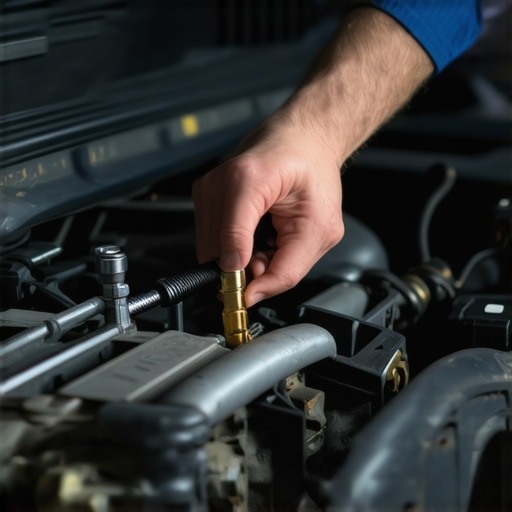
Elevating Automotive Maintenance: The Intersection of Precision and Professional Expertise
In the realm of automotive repair, meticulous attention to detail differentiates a seasoned mechanic from an average technician. As vehicles evolve with complex electronic systems and sophisticated materials, the significance of advanced services such as brake maintenance and comprehensive tune-ups becomes more pronounced. Understanding the intricate mechanics behind these procedures not only enhances vehicle longevity but also ensures optimal safety and performance for the driver.
Unveiling the Hidden Complexities of Brake System Restoration
Brake service transcends simple pad replacement; it involves a nuanced diagnostic process that considers rotor indexing, caliper calibration, and sensor synchronization. Modern brake components, including electronic parking brakes (EPB) and anti-lock braking system (ABS) modules, demand precise calibration and sometimes software updates to prevent issues such as pedal pulsation or squealing noises. For example, incorporating beyond-the-basic brake inspection techniques can significantly reduce long-term repair costs and enhance safety.
Deciphering the Science Behind Effective Tune-Ups
The traditional notion of a tune-up has expanded with advancements in engine management systems, sensor technology, and fuel delivery mechanisms. A comprehensive tune-up now involves checking secondary air injection, diagnostic testing for misfire patterns, and updating electronic control units (ECUs). Industry experts emphasize that regular tune-ups, aligned with the manufacturer’s specifications, can prevent costly component failures, such as failed ignition coils or clogged charcoal canisters, which compromise engine efficiency and emissions. For a detailed, step-by-step approach, refer to this expert-approved tune-up checklist.
Why Do Some Brake System Repairs Fail Despite Correct Procedures?
One common concern among technicians and vehicle owners involves recurrent brake issues after seemingly proper service operations. Root causes often include overlooked calibration mismatches, unaddressed sensor faults, or the use of incompatible hardware such as substandard brake pads or inadequate lubricants. For instance, neglecting to verify that the electronic parking brake module is correctly synchronized with the vehicle’s ECU can result in persistent squeals or uneven brake wear. Recognizing these pitfalls emphasizes the importance of ongoing training and mastery of diagnostic tools to ensure repair integrity.
What Are the Latest Diagnostic Challenges Facing Modern Brake Systems?
The integration of electronic control modules (ECMs) and complex sensor arrays has introduced new diagnostic challenges, such as interpreting code errors related to brake system hydraulics or electronic handbrakes. Advanced analyzers now employ diagnostic protocols that require a deep understanding of the vehicle’s network architecture. Mastery of these diagnostics is essential for tailored repairs that preserve warranty coverage and meet safety standards.
Continual education and engagement with professional discourse are vital. Explore how industry experts navigate these complexities by visiting auto repair cost-saving strategies. Your commitment to excellence in service fosters trust and positions you at the forefront of automotive innovation.
Explore professional insights and share your expertise in mastering complex auto repair challenges to elevate industry standards.
Innovating Brake Diagnostics: Are You Keeping Pace with Electronic Advances
Modern vehicles incorporate digital sensors, interconnected control modules, and adaptive braking systems that significantly complicate traditional diagnostic methods. Recognizing symptoms like unusual pedal responses or intermittent ABS activation signals not just hardware issues but potential software conflicts. Employing comprehensive diagnostic scanners that communicate with vehicle-specific modules enables technicians to identify issues like calibration discrepancies or sensor faults swiftly. Investing in the latest analysis tools ensures that brake repairs address root causes rather than superficial symptoms, thus reducing the likelihood of recurring failures. For advanced troubleshooting strategies, visit industry experts’ insights on repair efficiencies.
Redefining Tune-Ups in the Context of Emission Standards and Electronic Management
The age-old routine of engine tune-ups has transformed into a sophisticated process, driven by the need to comply with tightening emission regulations and maximize fuel economy. Modern tune-ups encompass not only spark plug replacement but also verifying sensor calibrations, updating ECU firmware, and inspecting emission control systems like the charcoal canister and secondary air injection. Maintaining an in-depth understanding of these components requires staying abreast of manufacturer updates and industry innovations. Emphasizing precision during these procedures can prevent issues like engine stalling or excessive emissions, ultimately extending the vehicle’s lifespan. For a detailed guide on a comprehensive tune-up procedure, see this expert-approved checklist.
What Are the Implications of Overlooking Electronics in Brake and Engine Maintenance
Ignoring the electronic aspects of car maintenance can lead to costly failures and safety risks. For instance, neglecting to recalibrate the electronic parking brake after pad replacement may cause the system to malfunction, leading to unintended vehicle movement or warning lights. Similarly, outdated software or firmware updates can impair sensor accuracy, skewing diagnostic results. Staying informed about the latest in vehicle electronics—such as adaptive cruise control, electronic stability programs, and brake-by-wire systems—is crucial for effective repairs. Regular education on these evolving technologies ensures technicians can diagnose efficiently and prevent overlooked faults. Industry authorities recommend ongoing training and certification updates; learn more at trusted insights from automotive specialists.
Engage with the professional community by sharing your experiences navigating complex electronic systems and help elevate repair standards across the industry.
Harnessing Comprehensive Data Analysis for Precision Repairs
In today’s automotive diagnostics landscape, reliance on basic codes and visual inspections no longer suffices. Advanced data analytics integrate multiple sensor inputs, ECU parameters, and real-time feedback to offer a holistic view of vehicle health. By deploying sophisticated diagnostic software that interprets complex data patterns, technicians can predict potential failures before symptoms manifest, thereby adopting a proactive maintenance approach. According to a 2022 report by the Automotive Electronics Council, leveraging such analytics reduces diagnostic time by up to 35%, significantly enhancing efficiency and repair accuracy.
Integrating Machine Learning for Predictive Maintenance in Brake and Engine Systems
The advent of machine learning algorithms provides a transformative edge in automotive repair. These systems analyze historical repair data, sensor anomalies, and driving patterns to forecast component wear and potential failures. For example, by implementing predictive analytics, a repair shop can advise customers on brake pad replacement intervals tailored to their driving style, optimizing both safety and cost. This proactive methodology shifts the paradigm from reactive fixes to preventative care, aligning with Industry 4.0 standards in automotive service.
Addressing Calibration Complexities in Electronic Brake and Management Systems
Electronic brake systems, with their multitude of sensors and control modules, pose unique calibration challenges that demand precision. Proper calibration ensures that sensors relay accurate positional data, which is critical for ABS activation, stability control, and autonomous driving features. Variations in ambient temperature, battery voltage, or hardware updates can influence sensor accuracy. Techniques such as dynamic calibration—conducted during real driving conditions—are increasingly recommended over static protocols to account for real-world variables. Referencing a 2023 SAE International paper, technicians who utilize dynamic calibration tools report a 20% reduction in post-repair anomalies, emphasizing the importance of embracing these advanced techniques.
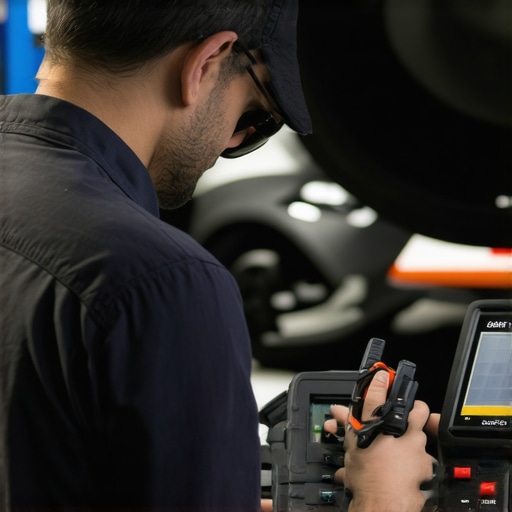
Visual representation of a technician performing dynamic calibration on an electronic vehicle brake system, using specialized diagnostic tools in a controlled environment.
Reassessing Engine Tune-Ups in the Era of Smart Vehicles
The traditional spark plug replacement now extends into comprehensive system verifications, including camshaft position sensors, fuel injection timing, and exhaust gas recirculation (EGR) efficiency. Smart vehicles, equipped with intricate sensor arrays and vehicle-to-everything (V2X) communication modules, necessitate a nuanced approach. Firmware updates for ECUs and recalibration of adaptive features must be synchronized with physical repairs to avoid discrepancies that could trigger warning lights or reduce fuel economy. An insightful guideline published in the Journal of Automotive Diagnostics suggests that integrating V2X system checks into routine tune-ups enhances diagnostic confidence and overall vehicle resilience.
How Can Ongoing Education Elevate the Skill Set for Diagnosing Complex Automotive Electronic Systems?
Continuous learning is essential to keep pace with rapid technological advancements. Participating in manufacturer-specific training, industry certifications like ASE’s Advanced Level specialties, and engaging with online professional forums cultivate a dynamic knowledge base. These platforms often feature case studies on resolving unique electronic faults, fostering a community-driven repository of solutions that push industry standards upward. For instance, mastering the nuances of CAN bus communications and software-specific diagnostics empowers technicians to resolve issues swiftly and accurately, minimizing customer downtime and ensuring compliance with safety standards.
Explore further the latest educational resources and industry insights at AutoCare Hub’s professional development section. Would you like to share your experiences or seek expert advice on tackling complex electronic system repairs? Your participation helps shape the future of automotive excellence.
Harnessing Next-Generation Diagnostics to Tackle Brake System Jitters
As automotive electronic integration deepens, brake diagnostics now demand a sophisticated approach that transcends traditional methods. Technicians must interpret complex CAN bus data, sensor feedback, and control module logs to identify root causes of issues like erratic pedal response or ABS activation anomalies. Utilizing high-resolution diagnostic scanners equipped with vehicle-specific protocols allows for pinpoint precision, minimizing guesswork and ensuring comprehensive repairs. Staying abreast of firmware updates and calibration procedures is essential for maintaining system integrity, preventing misdiagnoses, and ensuring vehicle safety.
Beyond Static Calibration: Embracing Dynamic Brake Sensor Tuning
Static calibration techniques, once standard, now give way to dynamic calibration methods that consider real-world driving conditions. These procedures account for variables like temperature fluctuations, hardware tolerances, and load differences, providing a more accurate alignment of sensors such as wheel speed and brake pedal position sensors. Implementing dynamic calibration not only enhances immediate repair outcomes but also promotes long-term system stability, reducing the likelihood of false fault codes or intermittent warning lights. Mastery of these advanced techniques positions technicians to deliver meticulous, future-proof service.
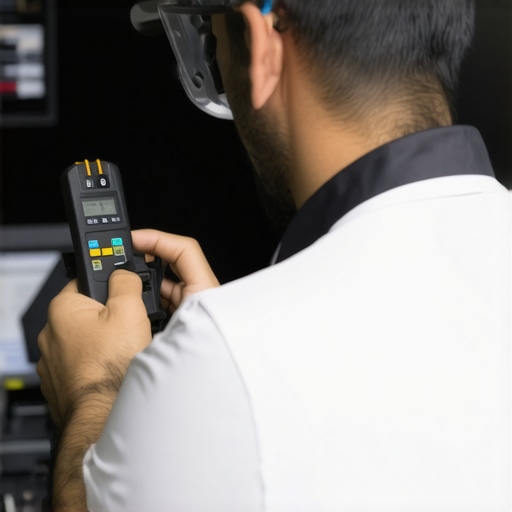
Illustration of a technician performing dynamic calibration of an electronic brake sensor using a specialized diagnostic device during vehicle testing.
Tuning Engine Electronics for Emission Compliance and Performance
Modern engine tune-ups demand an intricate balance between hardware checks and software configurations, especially within the scope of stringent emission standards. Replacing spark plugs is merely the starting point; it necessitates recalibrating sensors such as oxygen sensors, mass airflow sensors, and updating ECU firmware to ensure optimal combustion efficiency. This holistic approach mitigates common pitfalls like incomplete combustion or excessive emissions, which are particularly problematic in vehicles equipped with V2X communication modules or advanced emission control systems. A nuanced understanding of these interconnected systems empowers technicians to deliver repairs that uphold both environmental standards and driving experience.
How Does Mastering Vehicle Network Architectures Elevate Diagnostic Precision?
Proficiency in vehicle network architectures—particularly CAN (Controller Area Network) and LIN (Local Interconnect Network)—is pivotal for accurate diagnostics in complex automotive systems. Deep knowledge enables technicians to interpret multi-layered data streams, recognize communication faults, and isolate electronic anomalies effectively. Mastery of network troubleshooting reduces unnecessary repairs and ensures compliance with manufacturer specifications, ultimately safeguarding warranty coverage and driver safety. Engaging with specialized training programs and detailed vehicle schematics forms the foundation for achieving this level of diagnostic mastery.
Advance your expertise by exploring resources from SAE International and industry-leading automotive electronics courses. Your commitment to continuous specialization propels your service quality and positions your shop as an industry innovator. Want to delve deeper? Share your experiences or ask expert questions to refine your diagnostic skills and set new standards in automotive care.
Elevate Your Expertise with Cutting-Edge Strategies
In the fast-paced world of automotive repair, staying ahead requires more than routine procedures.
Master diagnostics with real-time data analysis
Adopt dynamic calibration practices for electronic systems
Integrate machine learning insights into daily operations
Prioritize continuous education on vehicle electronic architectures
Curated Resources to Expand Your Automotive Thinking
- SAE International’s Vehicle Electronics Courses: Comprehensive training on modern vehicle networks and diagnostic protocols, vital for high-level technicians.
- Automotive Electronics Council Reports: Industry analyses highlighting recent advancements and predictive analytics integration in automotive systems.
- Industry Expert Webinars and Workshops: Real-world insights from leaders pushing the boundaries of automotive repair technology.
- AutoCare Hub’s Professional Development Section: Up-to-date articles and courses designed for ongoing mastery in auto repair diagnostics and electronic system management.
- Peer-Reviewed Journals on Automotive Data Analytics: Deep dives into how big data and machine learning reshape maintenance paradigms.
Reflections on the Road Ahead in Auto Repair
The precision and innovation embedded in modern brake and engine management systems demand that industry professionals continuously refine their expertise. Recognizing the importance of advanced diagnostics, dynamic calibration, and predictive data insights allows technicians to not just fix vehicles but to elevate their craft, contributing to safer, more reliable automobiles. Sharing your insights or exploring further educational avenues enriches this evolving landscape. Engage with industry communities and leverage authoritative resources to transform challenges into opportunities for mastery and excellence.