
The expectation after investing in a fresh set of tires is a smooth, center-line drive, yet many motorists find themselves fighting a persistent drift. Professional auto repair experts recognize that directional instability is rarely a one-dimensional problem involving only the rubber. It is an intricate interplay between tire construction, suspension kinematics, and even the braking system’s hydraulic state. When a car drifts right despite new tires, we must look beyond the obvious to identify the mechanical ‘ghost’ influencing the steering rack. This phenomenon often suggests that while the contact patches are new, the underlying architecture responsible for maintaining their orientation has been compromised or was never correctly calibrated.
Fresh Rubber Can’t Mask Worn Chassis Components
Any experienced mechanic knows that new tires provide maximum grip, which can ironically highlight existing suspension flaws. If your ball joints or bushings are soft, the increased traction of new tread can amplify a pull that was previously muffled by worn, sliding rubber. This is why a comprehensive tune up of the undercar components is vital. Look closely for 3 tire wear patterns that prove your alignment shop is lazy, as these often manifest shortly after installation if the initial setup was flawed. Worn control arm bushings, in particular, allow the wheel to shift backward under load, creating a dynamic caster change that no static alignment machine will catch. Furthermore, beyond simple toe adjustments, caster and camber imbalances are the primary architects of a steady drift. While ‘toe’ wears tires, ‘camber’ and ‘caster’ pull the car. If your right-side camber is more positive than the left, the car will naturally fall toward the side with the most lean. A sophisticated shop will use a total alignment approach, ensuring the rear thrust angle is perfectly squared with the front.
Radial Pull and the Hidden Defect of Brand New Tires
It is a frustrating reality that sometimes the tires themselves are the culprit. Radial pull occurs when the internal steel belts of a tire are not perfectly centered during the manufacturing process. This creates a cone-shaped rolling effect rather than a perfect cylinder. To diagnose this, a technician will swap the front tires from left to right; if the drift changes direction, you have a defective tire. This phenomenon often confuses drivers who assume brand-new parts must be perfect. Furthermore, if you notice that your steering wheel shakes even after a high speed balance, the issue might be a combination of radial force variation and poor seating on the rim. According to technical standards set by the Society of Automotive Engineers (SAE), even minor deviations in internal belt tension can lead to significant directional instability that overrides traditional alignment settings.
Why your car still pulls to the left after a professional alignment?
This question frequently arises in expert forums when standard solutions fail. The answer often lies in ‘road crown’ compensation or a subtle brake service issue. If a caliper is not fully retracting on one side, it creates a constant drag that mimics a steering pull. You can read more about why your car still pulls to the left after a professional alignment to see how ‘memory steer’—caused by overtightened steering components or binding strut bearings—might be the real villain. If you suspect your brakes are to blame, checking for heat differential on the rotors after a drive is a professional-grade diagnostic step. If you’re tired of guessing, find a skilled mechanic who utilizes advanced diagnostic tools to look at the vehicle as a holistic system rather than just a set of four wheels.
Brake Calipers That Refuse to Let Go
Beyond the suspension, the braking system frequently acts as a silent saboteur of straight-line tracking. A phenomenon often mistaken for poor alignment is localized brake drag. Even a slight seized slide pin or a collapsed rubber brake hose can prevent a caliper from fully releasing, creating a continuous frictional pull toward one side. This is particularly common in modern vehicles equipped with Electronic Park Brakes (EPB). If you have recently had work done, you might need to stop 2026 brake drag with a 12 electronic caliper reset to ensure the computer isn’t maintaining residual pressure on the pads. Furthermore, if you notice why your new brake pads squeal after a professional local install, it could be a sign that the hardware is binding, which contributes to that annoying lateral drift. An expert technician will perform a ‘roll test’ on a level surface to see if the car moves freely, identifying resistance that an alignment rack simply cannot see.
Does your car’s electronic brain think you’re turning when you’re going straight?
In the era of Electric Power Steering (EPS), a mechanical alignment is only half the battle. If the Steering Angle Sensor (SAS) is not reset to zero after the wheels are aligned, the EPS motor may apply a constant ‘assist’ to one side, believing it is helping you navigate a curve. This digital phantom pull is a leading cause of frustration for drivers of late-model vehicles. To address this, a top-rated mechanic will use a bidirectional scan tool to recalibrate the center point. It is also critical to verify if your 2026 brake drag is a 25 EPB calibration error, as these interconnected systems often share data. According to research published by the National Highway Traffic Safety Administration (NHTSA), electronic stability control and steering assist systems must be precisely calibrated to prevent unintended steering inputs that could compromise vehicle safety.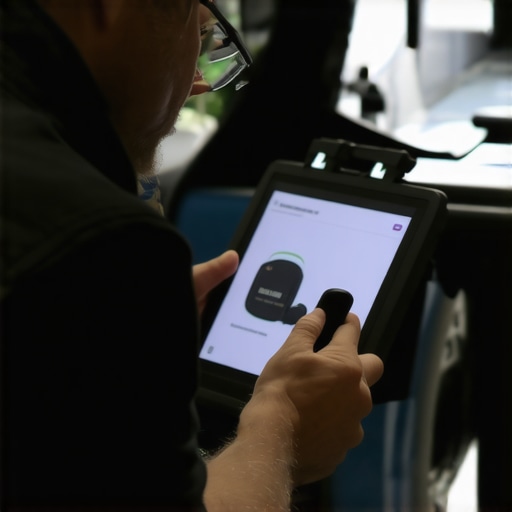
Torque Imbalance and the Transmission Factor
Sometimes the pull isn’t related to the steering or brakes at all, but rather how power is delivered to the pavement. On front-wheel-drive vehicles, unequal half-shaft lengths can cause ‘torque steer,’ but a more subtle issue involves the transmission and its grounding. A loose ground can cause erratic sensor readings that affect how the differential distributes power. Implementing a 12 transmission ground wire fix for weird shifting problems can sometimes stabilize the powertrain’s influence on the front wheels. If the drift only occurs under acceleration, the issue likely lies within the drivetrain rather than the tire carcass. Identifying these nuances requires a systematic approach that moves beyond the standard tire shop checklist. Have you noticed your car pulling specifically when you hit the gas, or is it a constant drift at cruising speeds? Join the conversation in the comments below to share your diagnostic journey or read our deep dive into finding a specialist who understands these complex interactions.
Hidden Chassis Damage and the Geometry of the Unibody
While mechanical and hydraulic factors dominate the conversation, the structural integrity of the vehicle frame itself often harbors secrets that a standard four-wheel alignment cannot solve. ‘Diamonding’—a condition where one side of the chassis is pushed slightly forward or backward relative to the other—creates a situation where the axles are no longer parallel. This structural skewing forces the tires to work against each other to maintain a forward trajectory. According to technical training modules from I-CAR (Inter-Industry Conference on Auto Collision Repair), even a minor impact that does not result in visible body damage can shift unibody points enough to induce a permanent pull. This is why a technician might suggest a frame measurement if the vehicle has a known history of curb strikes or minor accidents that were never professionally assessed.
Can a bent wheel hub cause a pull if the tire is perfectly balanced?
The answer lies in the distinction between static balance and geometric runout. A wheel can spin without vibration on a balancer, yet still possess ‘lateral runout’—a side-to-side wobble. If the wheel hub or the rim itself is slightly bent, the tire’s footprint on the road is constantly shifting its center of pressure. This oscillation can manifest as a subtle, rhythmic pull that fluctuates with vehicle speed. To diagnose this, an expert will use a dial indicator to measure the hub’s face for trueness. If you find your car behaves differently at 40 mph versus 70 mph, the geometry of the rotating assembly is likely more relevant than the alignment angles themselves.
The Invisible Tug of Lane Keep Assist Calibration
In the sophisticated landscape of modern automotive technology, the drift you feel might be a software-driven correction rather than a mechanical failure. Advanced Driver Assistance Systems (ADAS) rely on forward-facing cameras and radar to identify lane markings. If the camera mounting bracket is slightly jarred or if a windshield replacement was not followed by a dynamic calibration, the system may ‘see’ the lane center incorrectly. The Electronic Power Steering (EPS) then applies a subtle, persistent torque to ‘correct’ the vehicle’s position. This digital intervention feels identical to a mechanical pull.  When the mechanical alignment is perfect but the car still migrates, a technician must verify the ‘zero point’ of the camera system. If you are experiencing this ‘ghost in the machine’ sensation, consider having your ADAS suite checked for diagnostic trouble codes that do not trigger a dashboard light but affect steering feel.
How Underbody Aerodynamics Influence Highway Drift
At highway speeds, the aerodynamic profile of the vehicle becomes a major player in how it tracks. A loose underbody splash shield or a slightly hanging bumper cover can create asymmetrical lift or drag. This air pressure differential acts like a sail, pushing the car toward the side with less resistance. This is especially prevalent in electric vehicles and high-efficiency models where undercar airflow is tightly managed for range optimization. Mechanics often overlook these plastic components, assuming they are merely cosmetic, but their role in directional stability is significant above 60 mph. Investigating the underside of your vehicle for loose fasteners or missing aero-tabs is a low-cost step that often yields surprising results. As we look further into the relationship between aerodynamic load and tire contact patch pressure
Hydraulic Steering Gears That Fight Your Input
While modern vehicles often utilize electric assist, millions of cars still rely on traditional hydraulic steering racks where internal bypass issues can mimic a bad alignment. If the internal spool valve—the component responsible for directing pressurized fluid—becomes off-center or develops a microscopic leak, the rack may provide ‘assist’ even when the steering wheel is held perfectly straight. This results in a ‘power pull’ that feels like a constant, forceful tug toward one side. Unlike a tire-related drift, this hydraulic phantom is persistent regardless of road crown. Diagnosing this requires a pressure test of the steering system to ensure the rack isn’t fighting itself. An expert auto repair technician will often look for ‘balance’ in the hydraulic pressure; if the pressure is higher on one side of the piston while the wheel is centered, the rack requires replacement or professional rebuilding.
Could your steering rack be fighting its own hydraulic pressure?
This specific failure mode is often overlooked because it doesn’t show up on a standard alignment printout. It manifests as a pull that remains identical even after swapping tires from left to right. If your mechanic has already confirmed that the caster and camber are within spec, and your tires are brand new, the internal integrity of the steering gear is the next logical frontier. This is especially true if the pull feels ‘heavy’ or if the steering wheel doesn’t return to center with the same speed from both directions.
Don’t Tighten Suspension Bolts While the Wheels Are Hanging
A common yet critical error during a tune up or suspension refresh is ‘clocking’ the bushings incorrectly. Most suspension bushings are made of bonded rubber that is designed to twist, not rotate. If a technician tightens the control arm bolts while the vehicle is on a frame-contact lift with the wheels hanging, the bushings are locked in a fully extended position. Once the car is lowered, the rubber is subjected to a constant, massive torsional load. This ‘pre-load’ acts like an auxiliary spring, pushing the car away from the side with the most tension. According to the Tire Industry Association (TIA), proper installation procedures require all suspension pivot points to be torqued only when the vehicle is at its natural ‘ride height.’ If your car started pulling specifically after you had new control arms or struts installed, this mechanical memory is the likely culprit.
How Non-Factory Wheel Offset Sabotages Steering Geometry
The aesthetic appeal of aftermarket wheels often comes at the cost of steering stability. ‘Scrub radius’ is the distance between the steering axis intersection and the center of the tire’s contact patch. When you install wheels with a different offset than the manufacturer intended, you alter this distance. A significantly positive or negative scrub radius makes the vehicle hypersensitive to braking forces and road imperfections. 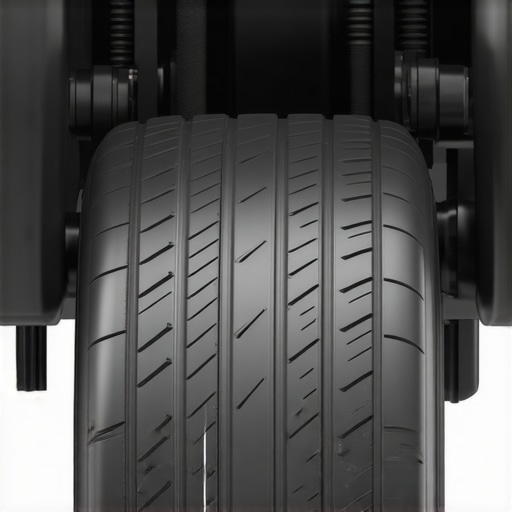 If one side of the car has slightly more brake drag or a different tire pressure, the exaggerated scrub radius will amplify that minor difference into a major pull. This is why even a brake service that seems perfect can’t fix a pull if the wheels themselves have pushed the suspension geometry outside of its design envelope. Before assuming your alignment is wrong, verify that your wheel offset matches the factory specifications. Have you checked your wheel’s ‘ET’ number lately, or are you running spacers that might be throwing your tracking off? Share your setup in the comments so we can help you calculate your scrub radius.
Expert Insights & Advanced Considerations
Watch Out for ‘Memory Steer’ in Binding Components
When a vehicle displays a persistent pull, experts often look for ‘memory steer,’ where components like upper strut mounts or ball joints bind. This creates a friction-induced resistance that refuses to return to center, making it feel as though the car drifts right despite new tires. Performing a thorough tune up of the steering linkage is the only way to ensure the rack is free from mechanical interference.
Don’t Tighten Suspension Bolts While the Wheels Hang
A common mistake that leads to directional instability is ‘pre-loading’ the rubber bushings. If a technician torques control arm bolts while the car is on a frame lift, the bushings twist unnaturally once the weight is back on the ground. This creates an auxiliary spring effect that pushes the car to one side. If you suspect this, consult a skilled mechanic who understands the importance of ride-height torquing to maintain a straight track.
Your Electronic Power Steering Needs a Digital Reset
Modern Electric Power Steering (EPS) systems use sensors to define the ‘straight-ahead’ position. If the mechanical alignment changes but the Steering Angle Sensor (SAS) isn’t recalibrated, the motor may apply a constant, phantom torque. This is a common culprit when you stop 2026 brake drag with a 12 electronic caliper reset or perform a front-end alignment. Digital calibration is just as critical as the wrench work.
Curated Expert Resources
Tire Industry Association (TIA): The definitive authority on tire mounting, balancing, and the nuances of radial pull. Their training modules explain why 3 tire wear patterns that prove your alignment shop is lazy are often the first sign of a deeper geometry issue.
I-CAR (Inter-Industry Conference on Auto Collision Repair): An essential resource for understanding how unibody ‘diamonding’ and frame misalignment affect vehicle tracking, especially in cars with a history of minor impacts.
Society of Automotive Engineers (SAE): For those seeking a deep dive into the physics of scrub radius and how aftermarket wheel offsets can sabotage factory steering geometry.
Final Expert Perspective
Resolving the issue when a car drifts right despite new tires requires looking at the vehicle as an integrated system of hydraulics, electronics, and precision geometry. While fresh rubber is a great start, it often exposes existing flaws in the chassis or calibration. By identifying whether the pull is mechanical, digital, or structural, you can ensure a safer and more efficient drive. If your vehicle continues to fight your input, it may be time to find a mechanic who specializes in ADAS and advanced steering diagnostics. Have you encountered a ‘ghost pull’ that defied a standard alignment? Join the conversation below and share your diagnostic breakthroughs with the community.