
Navigating the Complexity of Hidden Exhaust System Failures
In the realm of advanced auto repair, identifying a compromised exhaust manifold without a full teardown requires an analytical mind and a keen understanding of thermodynamics. The manifold is subjected to extreme thermal cycles, expanding and contracting with every ignition sequence. Over time, this leads to structural fatigue that manifests as hairline fractures. A seasoned mechanic knows that these leaks are often masked by heat shields, making them invisible to the casual observer. However, neglecting these early warning signs can lead to warped cylinder heads, erratic tune up results, and compromised oxygen sensor readings, which eventually degrade fuel efficiency and power delivery.
Expert diagnostics go beyond visual inspections. While a standard tune up checklist might overlook the manifold if it is not screaming, an authority in the field looks for the intersection of acoustic patterns and thermal anomalies. An exhaust leak upstream of the catalytic converter can introduce fresh oxygen into the exhaust stream, tricking the ECU into adding more fuel, which leads to a rich condition and fouled spark plugs.
Tactical Listening During the Cold Start Window
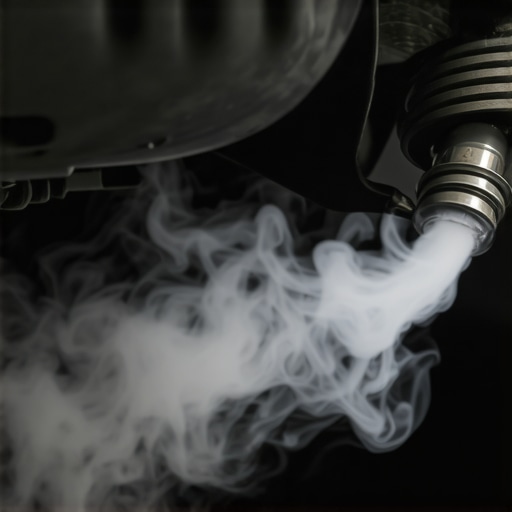
The most effective non-invasive diagnostic occurs during the first sixty seconds of a cold start. Because of the varying rates of thermal expansion between different metals, a crack in a cast-iron manifold is often widest when the metal is cold. As the engine reaches operating temperature, the metal expands, often temporarily sealing the gap and silencing the symptom. This is why a client might complain of a ‘ticking’ noise that miraculously vanishes after a few miles of driving. A professional mechanic uses this window to pinpoint the leak using a simple length of vacuum hose as a stethoscope, or by utilizing a theatrical smoke machine introduced through the tailpipe while the engine is off.
Why Does the Ticking Sound Disappear Once the Engine Warms Up?
This phenomenon is rooted in material science. Cast iron manifolds have a high coefficient of thermal expansion; as the molecular structure vibrates with heat, the gap in the fracture closes. If you suspect this is happening, it is vital to perform a fuel rail pressure test or check your short-term fuel trims. High positive trim numbers at idle that stabilize at higher RPMs are a classic signature of an unmetered air leak, often stemming from a cracked manifold or a failing gasket. For more complex issues, exploring mechanic tips for diagnosing problems can provide the technical edge needed for a definitive fix.
Identify Carbon Tracks and Soot Residue Without Disassembly
Even with the heat shield in place, physics leaves clues. High-pressure exhaust gases carrying carbon particulates will find any path of least resistance. Look for fine, grayish-black soot deposits around the edges of the heat shield or on nearby components like the alternator or steering shaft. These ‘carbon tracks’ are the fingerprints of a leak. According to research published in the Journal of Failure Analysis and Prevention, thermal fatigue is the primary driver of manifold failure in modern high-compression engines. Identifying these tracks early can save you from a costly auto repair bill later on.
When performing these checks, it is also a prudent time to evaluate other critical safety systems. For instance, integrated brake service strategies can be performed while the vehicle is on the lift for exhaust inspection, ensuring that both the propulsion and stopping systems are in peak condition. If you notice a rough idle that persists after checking the manifold, consider investigating hidden vacuum leaks which often mimic the symptoms of exhaust issues.
If you have identified a suspicious sound but cannot locate the source, contribute your findings to our community or explore our guide on car longevity through regular tune-ups to stay ahead of mechanical failure.
Stop Chasing Ghosts When the Oxygen Sensor Reports Lean
One of the most frequent errors in modern auto repair is replacing a perfectly functional oxygen sensor because the diagnostic trouble code (DTC) indicates a lean condition. An expert understands that the sensor is merely a messenger; if a manifold leak exists, atmospheric air is drawn into the exhaust stream during the negative pressure pulses between cylinder firings. This ‘false air’ tricks the Powertrain Control Module (PCM) into thinking the combustion process lacks fuel. In response, the PCM increases the injector pulse width, inadvertently creating a rich condition that the sensor cannot rectify. This cycle often mimics a failing mass airflow sensor, making it critical to cross-reference your findings with a MAF sensor fix before condemning the sensors themselves.
Can a Pin-Sized Manifold Leak Actually Destroy Your Catalytic Converter?
The short answer is a resounding yes. When the PCM overcompensates for the detected oxygen by dumping excess fuel into the cylinders, not all of that fuel burns completely. The unburnt hydrocarbons eventually reach the catalytic converter, where they ignite on the precious metal substrate. This raises the internal temperature of the converter far beyond its design parameters, leading to a melted honeycomb structure and catastrophic failure. According to technical papers from SAE International (Society of Automotive Engineers), sustained thermal overstress from upstream exhaust leaks is a leading cause of premature catalyst degradation in high-efficiency engines. If you find your vehicle struggling with emissions, it may not be the pipe itself, but rather why your vehicle still fails emissions despite hardware replacements.
Master the Art of Extracting Heat-Seized Manifold Studs
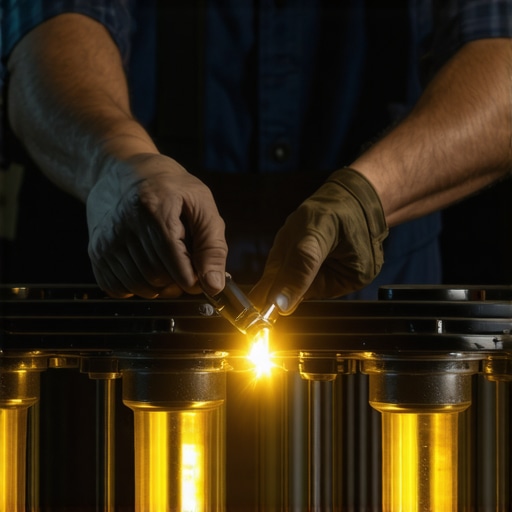
The transition from diagnosis to repair is where the real challenge begins, specifically regarding the hardware. Manifold studs are notorious for becoming brittle due to thousands of heat cycles. Attempting to force a seized bolt often results in a snapped stud flush with the cylinder head—a nightmare scenario for any mechanic. To mitigate this risk, professionals employ induction heaters or specific penetrants applied over several days. If a stud does fail, using a high-quality centering guide for drilling is the only way to save the head without a full removal. This level of precision is why choosing a skilled mechanic is paramount; an amateur might turn a three-hour gasket swap into a multi-day engine teardown.
Furthermore, during any manifold service, it is the perfect time to verify the integrity of the secondary air injection system and the O2 heater circuits. A comprehensive O2 heater test ensures that the feedback loop closes quickly after start-up, preventing the very fuel-trim issues that cause manifold stress. If you have ever battled a seized manifold bolt only to have it snap, tell us about your diagnostic wins in the comments below or check out our tune-up strategies to save money and prevent these expensive headaches before they start.
Select the Right Gasket or Face the Repeat Repair
In the high-stakes world of advanced auto repair, the choice between a basic composite gasket and a Multi-Layer Steel (MLS) variant often dictates whether a vehicle returns to the shop within six months. MLS gaskets, engineered with several layers of spring steel and coated with a resilient elastomer like Viton, are designed to handle the ‘scrubbing’ motion that occurs when an aluminum cylinder head and a cast-iron manifold expand at different rates. A budget-conscious mechanic might reach for a single-layer fiber gasket, but these often lack the recovery characteristics needed to maintain a seal during the extreme temperature fluctuations of a modern engine. When the seal fails, it doesn’t just create noise; it compromises the entire tune up by allowing ambient air to seep into the exhaust stream during deceleration pulses, confusing the engine’s fueling strategy.
Stop Trusting Your Ears Alone for Subtle Exhaust Leaks
While the old-school trick of using a length of hose to find a leak is a staple of the trade, truly elite diagnostics leverage ultrasonic technology. An ultrasonic leak detector can pick up the high-frequency turbulence of a pinhole leak that is completely masked by the mechanical clatter of the valvetrain or the whir of the cooling fan. This level of precision is vital for turbocharged vehicles, where even a microscopic leak upstream of the turbine can cause significant boost lag and erratic wastegate duty cycles. If you find your vehicle’s performance feels ‘soft’ despite a clean scan tool report, an ultrasonic sweep is the professional way to ensure your exhaust energy is actually reaching the turbo instead of bleeding into the engine bay.
How Does Excessive Backpressure Shorten Your Manifold’s Lifespan?
Backpressure is far more than a performance bottleneck; it is a catalyst for structural degradation. When a downstream component, such as a resonator or a muffler, suffers an internal collapse, the exhaust gases are forced to dwell longer within the manifold. This creates a localized ‘heat soak’ effect. According to detailed studies in the International Journal of Pressure Vessels and Piping, sustained thermal stasis at these elevated temperatures leads to rapid grain growth in the cast-iron matrix, making the metal significantly more brittle and prone to catastrophic cracking. If you suspect a restriction, measuring backpressure at the O2 sensor port is a critical step before performing any other brake service or engine maintenance, as a blocked exhaust will eventually cook the engine from the inside out.
Why Multi-Layer Steel Outperforms Composite Gaskets in High-Heat Engines
The engineering behind MLS gaskets allows them to act like a spring, maintaining constant tension between the mating surfaces even as they shift. This is particularly important for high-compression engines where combustion pressures can briefly ‘lift’ the manifold away from the head. If your previous mechanic used a composite gasket on a high-performance engine, the material likely charred and blew out under these pressure spikes. To avoid this, always verify that your replacement hardware includes Grade 10.9 studs or higher to ensure the clamping force is maintained through thousands of heat cycles. Before you commit to a full replacement, consider reviewing our guide on tune-up strategies to save money to see if your hardware can be salvaged. Monitoring your fuel trims through an OBDII interface can provide real-time feedback on whether your new gasket is actually holding the seal under load.
Resurface the Metal to Kill the Leak for Good
Even if you replace the gasket, a manifold that has warped by more than 0.005 inches will eventually fail again. A skilled mechanic doesn’t just slap a new seal on; they use a machinist’s straightedge and feeler gauges to check for flatness across the entire mating surface. If the warp is significant, the manifold must be surfaced at a machine shop to ensure a true seal. This precision is what separates a long-lasting auto repair from a temporary fix that results in a recurring ‘ticking’ sound only weeks later. 
Stop Radiant Heat from Cooking Your Starter Motor
Exhaust manifolds operate at temperatures that can exceed 1,200 degrees Fahrenheit. Without proper shielding, this intense heat can bake the surrounding components, leading to premature failure of the starter motor, melted wiring harnesses, or degraded plastic connectors. When performing a comprehensive tune up, it is vital to inspect the integrity of these heat shields. If you are upgrading to aftermarket headers, high-performance thermal blankets offer superior insulation compared to thin stamped-steel factory versions. This preventative step is just as critical for long-term reliability as a routine brake service or oil change, as it preserves the integrity of the vehicle’s complex electrical architecture.
Why Does a Tiny Manifold Crack Often Trigger False Engine Knock?
Modern engines use sensitive knock sensors to detect pre-ignition by listening for specific frequencies. An exhaust leak can produce a high-frequency rhythmic snapping sound that the Powertrain Control Module (PCM) interprets as mechanical knock. When this occurs, the engine retards ignition timing to protect itself, resulting in a sluggish feel and a noticeable drop in fuel economy. Many DIY tune up attempts fail to solve these performance issues because the technician assumes a spark or fuel problem, failing to realize an acoustic phantom from a cracked manifold is tricking the computer.
Upgrade Your Hardware to Survive the Next 100,000 Miles
The choice of fasteners is often the weakest link in the exhaust system. Factory studs are frequently made of carbon steel, which becomes brittle after years of heat-cycling. When a manifold is removed, replacing the old hardware with stainless steel or even titanium studs can prevent future breakages and make subsequent repairs far easier. According to a technical study published in Case Studies in Engineering Failure Analysis, the catastrophic fracture of exhaust fasteners is primarily driven by ‘creep’—the tendency of a solid material to move slowly or deform permanently under the influence of persistent mechanical stresses and heat. High-grade fasteners maintain their clamping force even under these extreme conditions, ensuring the gasket remains compressed. If your vehicle is exhibiting these symptoms, it is time to look beyond a standard auto repair shop and find a specialist who understands these metallurgical nuances. Check out our specialized guides on keeping your engine healthy and master the diagnostics that keep your car on the road for the long haul.
Expert Insights & Advanced Considerations
Why Your Knock Sensor Might Be Lying to the PCM
It is a common diagnostic trap: a vehicle pulls timing and records knock when the fuel quality is perfect and the engine is mechanically sound. High-frequency acoustic energy from a cracked manifold mimics the signature of detonation. If you find yourself chasing a phantom misfire, perform an O2 heater test and verify exhaust integrity before blaming the knock sensor. This acoustic resonance is the primary reason why many DIYers fail to solve performance issues despite multiple parts replacements.
Stop Snapping Studs by Respecting Thermal Cycles
The most expensive part of a manifold repair isn’t the gasket; it’s the four hours spent drilling out a snapped Grade 8 stud. Professional mechanic techniques involve using localized induction heating rather than an open flame, which can warp thin-wall heads. When reassembling, always use high-temperature anti-seize on stainless hardware to ensure the next technician doesn’t inherit a nightmare. Following these auto repair cost-saving tips can turn a high-risk job into a routine service.
Stainless Steel vs. Cast Iron in High-Compression Environments
While cast iron is the traditional choice for its vibration damping, modern engines frequently use stainless steel headers to reach light-off temperatures faster. However, the higher coefficient of expansion in stainless often puts more stress on the fasteners. Knowing which material you are working with determines the torque sequence and the type of Multi-Layer Steel gasket required to prevent repeat failures.
Curated Expert Resources
SAE International Technical Papers: These documents provide the definitive data on thermal fatigue and metallurgical failure in automotive exhaust systems. If you want to understand the physics behind the crack, start here.
iATN (International Automotive Technicians Network): A peer-reviewed platform where the world’s most elite technicians share real-world case studies on complex exhaust failures. It is an essential tool for any mechanic looking to sharpen their diagnostic edge.
Motor Age Technical Archives: Specifically, their series on advanced fuel trim analysis is vital for identifying false air leaks that originate at the manifold. This is the bridge between a simple tune up and true master-level diagnostics.
Final Expert Perspective
Mastering the intricacies of exhaust system health is about more than silencing a tick; it is about preserving the delicate balance of the engine’s management system. A single air leak can trigger a cascade of failures, from fouled plugs to melted catalytic converters. When you approach auto repair with a focus on precision—using the right gaskets, verifying surface flatness, and selecting superior hardware—you ensure the longevity of the entire powertrain. Whether you are performing a routine safe auto repair or a high-performance upgrade, the details matter. If your car is still acting up, it might be worth investigating why your vehicle still fails emissions to see if the issue is deeper. Do you have a story about a hidden leak that stumped the pros? Share your diagnostic wins or reach out for more advanced technical guides.