The automotive service industry operates on exceptionally tight margins, making the ubiquitous ‘Free Brake Inspection’ a curious economic anomaly. From a professional engineering standpoint, time is the most valuable commodity in any service bay. When a facility offers a comprehensive safety check for zero dollars, it necessitates an alternative revenue stream to offset the labor costs of removing wheels and measuring technical tolerances. This economic reality often shifts the focus of a mechanic away from objective diagnostics and toward aggressive sales quotas, where every inspection is viewed as a high-probability conversion event.
The Hidden Price Tag on Your Complimentary Brake Check
In many high-volume auto repair centers, the free inspection serves as a ‘loss leader’—a service provided at a loss to attract customers who can then be upsold on more profitable repairs. A thorough evaluation should include measuring rotor thickness with a micrometer, checking for lateral runout, and testing the boiling point of the hydraulic fluid. However, during a complimentary check, these precise steps are often bypassed in favor of a cursory visual look. This lack of depth frequently leads to ‘blanket recommendations’ where pads and rotors are replaced regardless of their actual remaining service life, simply to ensure the ticket meets a specific profit margin.
When Loss Leaders Become Profit Centers
The danger for the consumer lies in the ‘while you are here’ psychology. Once a vehicle is on the lift with the wheels removed, the customer is in a vulnerable position. Predatory shops may leverage safety concerns to pressure drivers into immediate action. According to safety data from the National Highway Traffic Safety Administration (NHTSA), brake failures contribute to a small but significant percentage of accidents, but this fact is often used as a scare tactic to sell components that still have thousands of miles of utility left. To navigate these high-pressure environments, it is essential to know your road to reliable auto care and how to identify shops that value transparency over transaction volume.
How Do You Separate Honest Assessment from Sales Pitch?
The most effective way to distinguish between a necessary brake service and a sales pitch is to demand empirical evidence. An authoritative shop will provide you with digital photos of your brake components alongside the manufacturer’s minimum specifications. If a technician claims your rotors are ‘warped’ without using a dial indicator to measure runout, or if they recommend a full replacement without providing millimeter measurements of the friction material, you are likely being steered toward an unnecessary expense. Before committing to a high-ticket invoice, take the time to audit your local mechanic after a recent brake service to ensure their findings align with industry standards.
Protect Your Wallet from the Pad Slapping Trap
Another risk associated with low-cost or free inspections is the ‘pad slap’—the practice of installing new brake pads on old, unresurfaced rotors. While this might seem like a way to save money during a tune up, it often leads to brake squeal, reduced stopping power, and premature wear. A skilled professional understands the thermal dynamics of the braking system and knows that the friction material must properly bed into a smooth rotor surface for optimal safety. To avoid these common pitfalls and ensure your vehicle remains safe without breaking the bank, explore these brake service strategies that save you money and extend brake life. Finding a partner for your vehicle’s health requires vetting; knowing how to choose a skilled mechanic you can trust is the first step in avoiding the ‘free’ trap.
Stop Paying for Components Your Car Doesn’t Need
Precision in the service bay is often the first casualty of high-volume business models that rely on complimentary checkups. When a facility prioritizes car count over diagnostic accuracy, nuanced details—such as the cleanliness of the hub-to-rotor mating surface—are frequently ignored. Skipping the 10-minute hub scrub that stops brand new brake pads from squealing is a common shortcut in ‘free’ service environments. This neglect allows rust and scale buildup to create lateral runout, which eventually feels like a warped rotor, prompting the shop to recommend another premature replacement. An expert mechanic knows that the foundation of a brake service is not just the new pads, but the surgical preparation of the mounting surfaces to ensure parallel alignment. If your technician isn’t talking about runout, they aren’t providing a complete diagnosis.
Don’t Let Modern Electronics Inflate Your Repair Invoice
As vehicle systems become increasingly integrated, the line between a mechanical failure and a software glitch blurs. Many 2025 and 2026 models utilize Electronic Parking Brakes (EPB) that require a specific digital ‘service mode’ for even basic maintenance. A predatory shop might misdiagnose a simple calibration error as a mechanical seizing of the caliper, leading to an invoice hundreds of dollars higher than necessary. It is worth investigating if is your 2026 brake drag a 25 EPB calibration error before agreeing to replace expensive hydraulic hardware. Sophisticated diagnostics require the right tools and the willingness to look beyond the surface, a trait often absent in ‘express’ lanes designed for speed rather than technical depth.
Why Does Your Brake Pedal Feel Spongy After a Professional Service?
Hydraulic integrity is the lifeblood of your stopping power, yet it is one of the most misunderstood aspects of auto repair. The presence of air or degraded fluid can compromise safety long before the pads wear thin. According to technical standards published by SAE International, brake fluid is hygroscopic, meaning it actively absorbs moisture from the atmosphere, which lowers its boiling point and causes internal corrosion. If you notice 3 reasons your fresh brake fluid turned black in less than a month, it is a clear indicator of systemic contamination or a failure to perform a proper flush during the last visit. A professional tune up should always account for the chemical state of these fluids to prevent expensive master cylinder failures down the road. High-quality shops use refractometers to test moisture content rather than relying on a simple visual check.
Better Maintenance Habits Save More Than Quick Coupons
The key to long-term savings isn’t finding the cheapest entry-level service; it’s implementing tune-up strategies to save money on auto repairs that focus on preventative care rather than reactive fixes. By shifting your mindset from ‘finding a deal’ to ‘maintaining a system,’ you reduce the likelihood of emergency failures that leave you at the mercy of the nearest available shop. If you want to ensure your vehicle is being handled with the expertise it deserves, review the ultimate tune-up checklist for every car owner to stay ahead of the curve and keep your service history transparent. Do you have a story about a free inspection that turned into a major repair? Share your experience in the comments below or suggest a topic you would like us to dive into next to help the community stay informed and safe on the road.
Stop Blaming Warp When It Is Actually Cementite Formation
Most drivers describe a pulsating steering wheel as ‘warped rotors,’ but from a metallurgical perspective, physical warping of a heavy cast-iron disc is exceedingly rare under normal driving conditions. What you are likely feeling is Disc Thickness Variation (DTV) caused by uneven friction material transfer. When a vehicle is held at a complete stop with overheated brakes—common after a panic stop or spirited canyon driving—the pads can leave a ‘footprint’ of material on the rotor. Over time, this patch reaches a critical temperature and undergoes a phase transformation into cementite, an incredibly hard and abrasive iron carbide. This material is harder than the rest of the rotor surface, creating a high spot that no amount of traditional ‘turning’ on a lathe can fully rectify. A knowledgeable mechanic knows that once cementite has formed, the rotor’s structural integrity is compromised, and replacement is the only engineering-sound solution to restore a smooth pedal feel.
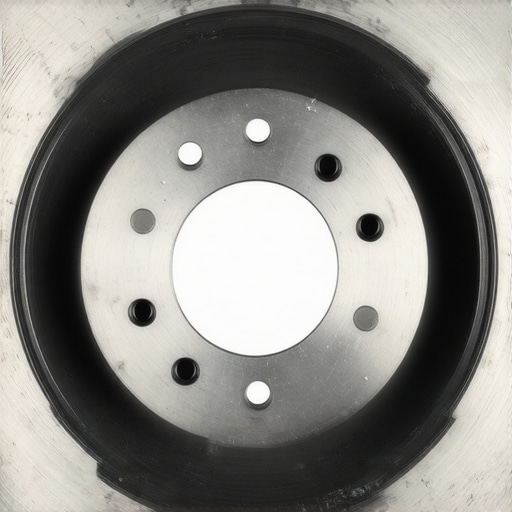
Why Does a High-Quality Brake Job Still Squeak in the Morning?
Morning brake noise is often a sophisticated interplay between ambient humidity and the specific semi-metallic compound of your pads. This phenomenon, often called ‘morning sickness’ in the industry, occurs when a thin layer of flash rust forms on the rotor surface overnight. However, if the squeal persists, it typically points to a failure in the brake service process—specifically the neglect of harmonic dampening. High-frequency vibrations are a natural byproduct of friction; the role of the shims and specialized ceramic grease on the back of the pads is to shift these vibrations outside the range of human hearing. When a shop rushes through a tune up, they often reuse old, fatigued shims or apply low-grade petroleum-based lubricants that dissolve under high heat, leaving the braking system to scream every time the friction surfaces meet.
Petroleum Grease is Killing Your Caliper Boot Seals
A frequent error found in ‘budget’ or ‘free’ inspections is the use of incorrect lubricants on caliper slide pins. The rubber boots and seals in a modern braking system are typically made of Ethylene Propylene Diene Monomer (EPDM). If a technician uses a standard chassis grease or any petroleum-based product, the EPDM will swell, soften, and eventually degrade. This causes the caliper to bind, leading to ‘tapered wear’ where one end of the pad is significantly thinner than the other. An expert auto repair facility will exclusively use 100% synthetic silicone-based lubricants, which are chemically inert to EPDM. This technical nuance is the difference between a brake system that lasts 50,000 miles and one that requires a total overhaul within a year due to seized components. According to engineering white papers from Brembo, even microscopic amounts of contamination in the lubricant can drastically increase the thermal load on the caliper piston, eventually leading to hydraulic failure.
Regenerative Braking and Why Your Hybrid Rotors Rust Faster
Owners of Electric Vehicles (EVs) and hybrids face a unique paradox: their brakes last longer, but they fail differently. Because these vehicles use ‘regenerative braking’ to capture energy, the mechanical friction brakes are rarely engaged with significant force. This lack of use allows moisture and road salt to sit on the rotor surfaces longer than on a traditional internal combustion vehicle, leading to deep-pitting corrosion. If the mechanical system isn’t occasionally ‘exercised’ through a firm stop, the rotors can develop a layer of scale that reduces effective surface area by 30% or more. This makes routine tune up checks for hybrids even more critical, as the pads may have 90% life left, but the hardware could be seizing from inactivity. Understanding the specific software-driven logic of these systems is vital for modern maintenance; for instance, you might wonder if is your 2026 brake drag a 25 EPB calibration error or just a result of a salt-crusted slide pin. To stay ahead of these complex issues, it is helpful to look at tune-up strategies to save money on auto repairs that address the specific needs of high-voltage powertrains.
The most deceptive failure in an aging hydraulic system isn’t a visible leak, but rather the internal collapse of a rubber brake hose. Over decades of thermal cycling, the inner liner of a flexible line can delaminate, creating a physical flap that acts as a check valve. This allows high-pressure fluid to reach the caliper when you step on the pedal but prevents it from returning once you let go. The result is a brake that stays partially applied, overheating the rotor and leading to ‘phantom’ drag that many shops misdiagnose as a bad caliper. A seasoned mechanic knows to check for this by briefly opening the bleeder screw when the wheel is locked; if the wheel suddenly spins free, the hose is the culprit, not the expensive metal hardware.
Why Do High-Performance Brake Pads Sound So Harsh on Commuter Cars?
Enthusiasts often upgrade to ‘track-ready’ pads thinking they are buying more safety, but they frequently end up with a noisy, dusty mess. Performance friction materials are designed to operate at specific temperature ranges far above what is seen in stop-and-go traffic. According to the National Institute for Automotive Service Excellence (ASE), using a high-mu (coefficient of friction) race pad on a daily driver can actually increase stopping distances when the brakes are cold. These pads require ‘bedding-in’—a process of high-speed stops to transfer a layer of film to the rotor—which is nearly impossible to maintain in city driving. Without that film, the pads ‘scrub’ the rotor surface, creating the high-pitched squeal that defines a mismatched brake service strategy.
Don’t Ignore the Subtle Softness in Your Master Cylinder
While many owners focus on the wheels, the master cylinder is the brain of the hydraulic system. Internal seals can fail without leaking a single drop of fluid on the floor. If you notice your brake pedal slowly sinking toward the floorboard while holding a steady stop at a red light, the internal primary or secondary cups are likely bypassing fluid. This is a critical safety failure that ‘free’ visual inspections often miss because there is no external mess to point at. A professional auto repair tech will use a pressure gauge to verify that the cylinder is maintaining consistent psi across both circuits. This level of precision ensures that a tune up covers the hydraulic core, not just the consumable friction components.
Modern ABS Modules Demand More Than a Cheap Code Reader
When an ABS light illuminates, the tendency is to assume a wheel speed sensor has failed. However, in the current landscape of vehicle electronics, the issue is often a failure in the electronic control unit (ECU) or a clogged solenoid valve within the hydraulic modulator. Generic OBD-II scanners rarely provide the bidirectional control necessary to cycle these valves for testing. To truly diagnose a modern system, your technician needs factory-level software that can perform ‘automated bleeds’ and individual component activations. If your shop isn’t using these tools, they are likely just guessing with your money. To ensure you aren’t being taken for a ride, investigate these brake service strategies that save you money and extend brake life and demand a digital health report of your vehicle’s computer systems. What is the most confusing diagnostic answer a shop has ever given you? Let us know in the comments below so we can help clarify the technical jargon for the next time you visit the service bay.
Expert Insights & Advanced Considerations
Lifetime Warranty Pads Often Hide Destructive Friction Compounds
A common trap in the auto repair industry involves lifetime brake pad warranties. While the pads themselves might be replaced for free, they are often made of harder, more abrasive materials that accelerate wear on your expensive rotors. A professional mechanic knows that balanced wear between pads and rotors is the goal; otherwise, you are just trading a $60 pad set for a $400 rotor job every year. To ensure you are not falling for these gimmicks, you should learn how to spot a fake mechanic near me before they touch your car.
Verify Your Rotor Measurements Only When the Metal is Cold
Thermal expansion can significantly alter the thickness and runout readings of a brake rotor. If a technician measures your brakes immediately after a test drive, the heat-swollen metal may hide underlying variations. For a truly accurate brake service diagnosis, the vehicle should sit until the components reach ambient temperature. This level of precision is what separates a high-volume shop from a specialized boutique. You can further maximize your brake service efficiency with these tips to ensure every measurement counts.
#IMAGE_PLACE_HOLDER_E#
Stop Brake Pulsation With a Simple Indexing Kit
Before you agree to replace rotors that supposedly have runout, ask about indexing. By rotating the rotor relative to the hub and using a shim kit, a technician can often cancel out runout without replacing parts. You can stop 2026 brake pulsation with a 15 rotor indexing kit instead of spending hundreds on new cast iron. This is the difference between an honest tune up and a parts-changing sales floor.
Curated Expert Resources
ASE Certification Portal: This is the gold standard for verifying the technical competency of your technician. Look for A5 (Brakes) and X1 (Exhaust Systems) certifications to ensure they have the foundational knowledge required for modern systems.
SAE International Technical Papers: For those who want to understand the metallurgical science of cementite and friction coefficients, SAE provides peer-reviewed data used by automotive engineers worldwide.
The Motorist Assurance Program (MAP): This organization sets the industry standards for what truly constitutes a required repair versus a suggested one. If you suspect why your new brake pads squeal after a professional local install, cross-referencing MAP standards can provide the leverage you need.
Final Expert Perspective
Navigating the complex world of modern auto repair requires a shift from passive consumer to informed advocate. The free inspection is rarely free, as it often trades diagnostic depth for sales pressure. By demanding empirical measurements, understanding the chemistry of your hydraulic fluid, and knowing when to insist on advanced procedures like hub scrubbing and rotor indexing, you protect both your safety and your wallet. A proper brake service should be a transparent engineering exercise, not a high-pressure transaction. Whether you are performing a seasonal tune up or addressing a sudden vibration, remember that technical precision is the only way to ensure long-term reliability. We invite you to share your most frustrating shop experiences below—your insights help us build a more transparent community for every driver on the road.