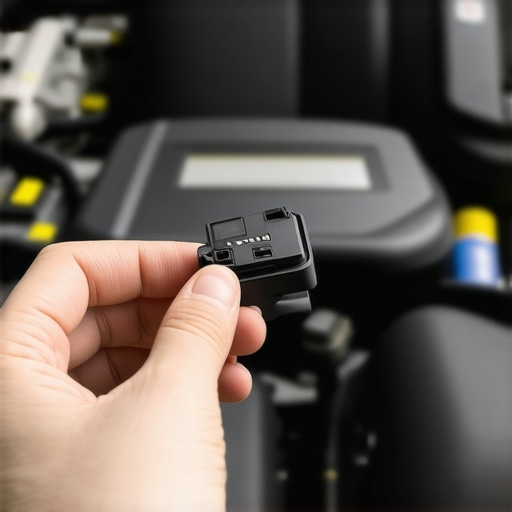
When a vehicle stumbles at a stoplight, the immediate instinct for many drivers—and even some entry-level technicians—is to fear catastrophic engine failure, such as compression loss or timing synchronization issues. However, an analytical approach to modern engine management reveals that a rough idle is frequently a symptom of corrupted data within the feedback loop rather than a mechanical breakdown. The internal combustion engine relies on a precise stoichiometric ratio, and when a single sensor provides erratic voltage signals to the Engine Control Unit (ECU), the entire combustion cycle is compromised. Often, if your idle stays rough after replacing every spark plug in the kit, the problem lies not in the spark, but in the measurement of the air-fuel mixture itself.
Stop Chasing Ghosts with Expensive Hardware Swaps
The most common error in contemporary auto repair is the systemic replacement of high-cost components like fuel pumps or ignition coils without verifying the sensor inputs that govern their behavior. A Manifold Absolute Pressure (MAP) sensor or a Mass Air Flow (MAF) sensor, often available for a fraction of the cost of a single fuel injector, is responsible for communicating air density to the ECU. If these sensors are contaminated or failing, the ECU may dump excess fuel into the cylinders, causing the characteristic ‘hunting’ idle or vibration. Mastering mechanic-level diagnostics involves using a scan tool to monitor ‘Live Data’ rather than just reading trouble codes. By observing the Short Term Fuel Trim (STFT), an expert can immediately see if the engine is compensating for a perceived air leak or a sensor malfunction. Implementing tune up strategies to save money on auto repairs starts with this data-centric philosophy, ensuring that the repair addresses the root cause rather than just the symptom.
Why does the ECU misinterpret air density signals?
This is a complex inquiry often debated in technical forums: how can a sensor be functional enough to avoid a ‘Check Engine Light’ but failed enough to ruin idle quality? The answer lies in signal ‘skewing’ or ‘drift.’ A sensor may still operate within its electrical parameters but provide a voltage that is five percent off from reality. This deviation is enough to cause a lean misfire at idle where vacuum pressure is highest. According to research from the Society of Automotive Engineers (SAE), sensor signal integrity is paramount for maintaining emission standards and idle stability. In many cases, the 15 dollar MAF sensor fix—which involves a specialized solvent cleaning or a simple O-ring replacement—can recover lost performance and smooth out the idle without requiring a single major tool. If you are dealing with persistent stumbling, you should apply these mechanic tips for diagnosing common auto problems before authorizing a full engine teardown.
Mastering the Voltage Drop Test for Signal Integrity
Beyond the sensor itself, the electrical path it travels is a frequent point of failure that is overlooked during a standard tune up. A corroded ground wire or a loose connector pin can introduce resistance, causing the ECU to receive a low-voltage signal that mimics a lean condition. Professional-grade brake service and engine work both require a similar level of attention to detail regarding the integrity of the vehicle’s electrical and hydraulic circuits. For instance, a technician might find that a $5 vacuum hose or a $15 sensor is the only thing standing between a smooth-running engine and a vehicle that feels like it is about to stall. If you want to refine your own diagnostic skills or ensure your technician is using advanced logic, consider how finding an intake leak using a 5 dollar bottle of soapy water can provide more clarity than a thousand dollars’ worth of speculative part-swapping. We encourage readers to share their most surprising ‘cheap fix’ stories in professional forums to help build a more transparent industry knowledge base.
Look Beyond the Scan Tool for Tiny Air Leaks
While digital diagnostics provide the framework, the physical reality of vacuum pressure often tells a different story. A microscopic crack in a rubber boot or a weathered gasket can introduce ‘unmetered air’ into the combustion chamber, bypass the MAF sensor, and confuse the ECU. This specific type of failure often results in the 7 dollar vacuum hose leak that tricked your mechanic into a costly tune up. In these scenarios, the fuel trims will show a lean condition at idle that magically disappears as engine RPM increases. This is because the volume of leaked air becomes insignificant relative to the total air intake at higher speeds. To catch these, an expert uses a smoke machine or even a propane trace to find the exact entry point where the atmosphere is winning the battle against the engine’s vacuum. This level of precision is what separates a parts-changer from a true diagnostician.

Can a faulty ground strap actually mimic a failing transmission or engine misfire?
The answer is a resounding yes, and it is perhaps the most frustrating ‘ghost’ in the machine for many vehicle owners. Modern cars are essentially rolling networks of computers that rely on a clean, stable return path for electricity. If a ground strap is corroded or loose, it creates electrical ‘noise’ that can manifest as phantom misfire codes or erratic shifting. Often, the 20 dollar ground strap that solves mystery engine misfires is the only component required to restore total system harmony. This is a critical check during a high-level tune up because the ECU cannot distinguish between a legitimate mechanical failure and a voltage fluctuation caused by a poor connection. If you have been chasing a stumble that only occurs under heavy electrical load, such as when the headlights and AC are on, you are likely dealing with a ground-loop issue rather than a fuel delivery problem.
Oxygen Sensors Are Not Just Emission Compliance Tools
Many drivers view the oxygen (O2) sensor as a nuisance that triggers the check engine light solely for environmental reasons. However, from a performance standpoint, the pre-catalytic converter O2 sensor is the primary throttle for fuel economy and power. These sensors have a limited lifespan and tend to ‘grow lazy’ over time, reacting slower to changes in exhaust gas composition. According to technical bulletins from Delphi Technologies, a slow-switching sensor can reduce fuel economy by up to 15% before it even triggers a diagnostic trouble code. This is why why a 2026 tune up fails without this 25 dollar o2 heater test, as the heating element inside the sensor is what allows it to enter ‘closed loop’ operation quickly. Without a functional heater, the engine stays in ‘open loop’ longer, running rich and coating your new spark plugs in carbon soot.
Stop the Thermal Gremlins Before They Stop You
Heat is the ultimate enemy of automotive electronics. A component like an ignition coil or a crank position sensor might test perfectly fine in a cold garage but fail intermittently once the engine reaches operating temperature. This thermal expansion causes hairline fractures in the internal copper windings to separate, breaking the circuit. This phenomenon explains why your engine stumbles only during left-hand turns or other specific maneuvers where heat soak and centrifugal force combine to expose a weak connection. If you have experienced a ‘no-start’ condition that only happens after the car has been driven for twenty minutes, focus your auto repair efforts on heat-sensitive sensors rather than the fuel pump. Have you ever had a mystery engine symptom that only appeared when the weather got hot? Join our community discussion below and share how you finally tracked down the culprit to help other drivers avoid the same headaches.
VVT Phasers Need Clean Oil to Save Your Idle
While electronic sensors get most of the attention during a modern tune up, the mechanical-hydraulic interface of Variable Valve Timing (VVT) is often the silent culprit behind a staggering engine. VVT systems rely on precise oil pressure to rotate the camshafts relative to the crankshaft, optimizing valve overlap for either power or efficiency. If the oil is contaminated or the wrong viscosity, the VVT solenoids cannot move the phasers quickly enough. This results in the engine ‘over-advancing’ the timing at a stop, creating a chugging sensation that feels remarkably like a dead cylinder misfire. Most high-mileage engines develop sludge in the microscopic screens protecting these solenoids, meaning a simple oil flush is sometimes more effective than a thousand-dollar auto repair bill for new ignition components.
Can the Wrong Engine Oil Weight Mimic a Mechanical Failure?
This is a question that stumps even seasoned mechanic professionals when dealing with late-model vehicles using multi-viscosity synthetic oils. If a vehicle specifies 0W-20 and you or a cut-rate shop substitutes 10W-30, the internal tolerances of the timing phasers may not allow the oil to drain or fill at the rate the ECU expects. This lag creates a ‘phase error’ where the valves stay open too long during the intake stroke at low RPMs. According to technical data from Underhood Service, even a slight deviation in hydraulic response time can trigger a P0011 or P0014 code, leading owners to believe they need a new timing chain when they actually just need the correct lubricant. If your idle only gets rough after the engine is fully warmed up, check your oil viscosity records before assuming the worst.
Scrub the Carbon Out of Your Intake Strategy
Modern ‘drive-by-wire’ systems have eliminated the traditional Idle Air Control (IAC) valve in favor of an electronic throttle body that stays slightly cracked open to maintain idle. Over time, PCV gases and oil vapor bake onto the edges of the butterfly valve, creating a ring of carbon that restricts this tiny air gap. The ECU will attempt to compensate by increasing the ‘duty cycle’ of the motor to push the valve further open, but eventually, it hits a hard limit. When this happens, the idle will dip so low the car shakes, only to be jerked back up by a frantic ECU intervention. This ‘hunting’ is a classic sign that your tune up should have included a manual cleaning of the throttle bore. Using a lint-free rag and a specialized cleaner can reset this baseline, but be warned: some vehicles require a ‘throttle relearn’ procedure via a scan tool afterward to recognize the new, clean airflow parameters.
Why a Brake Pedal Press Might Be Hiding Your Vacuum Leak
It is easy to forget that your brake service and engine performance are linked by a thick rubber hose connected to the intake manifold. The brake booster is essentially a giant vacuum reservoir divided by a rubber diaphragm. If that diaphragm develops a pinhole leak, it becomes an unmetered air source that only activates when you apply the brakes. This is why some drivers notice a rough idle specifically when sitting at a red light with their foot on the pedal, but the engine smooths out the moment they shift into park or release the brake. Diagnosing this requires a vacuum gauge and a bit of isolation logic—pinch the booster hose with a pair of pliers; if the idle smooths out instantly, you have found your leak. This level of integrated thinking is what defines an expert auto repair approach, as it looks at the vehicle as a holistic system rather than a collection of isolated parts. Check your oil dipstick right now; if the color looks like dark chocolate, your VVT solenoids are already fighting a losing battle against sludge.
While the mechanical health of the cylinders is often the focus, the subtle nuances of fuel delivery timing and volume frequently hide in the shadows of a ‘passed’ diagnostic test. Even when a fuel pump maintains perfect pressure at the rail, the individual efficiency of each injector remains a variable that standard OBD-II scanners rarely capture. A single injector with a partial internal restriction—perhaps a microscopic bit of debris that bypassed the filter—can lead to a lean condition in only one cylinder. This ‘cylinder-to-cylinder’ variation causes a rhythmic vibration at idle that feels remarkably like a failing engine mount. To diagnose this with professional precision, a mechanic must perform an injector balance test, measuring the pressure drop of each individual injector to ensure they are within a 5% tolerance of one another.
Stop Assuming All Injectors Fire Equally
In the world of high-performance auto repair, looking at the total fuel trim is only the first step. If the ECU sees a lean condition, it adds fuel to all cylinders, which might make the problem cylinder run better while causing the others to run rich and foul their tune up components. This ‘fuel trim split’ is common in V-configuration engines where one bank struggles while the other overcompensates. Identifying this requires analyzing the spark plug porcelain color across all cylinders; a snowy white plug next to a tan one is a dead giveaway of localized fuel starvation. 
Can a failing alternator actually corrupt your ECU’s logic?
This technical phenomenon, known as AC ripple, is one of the most elusive ghosts in modern auto repair. An alternator is designed to produce Alternating Current (AC) which is then converted to Direct Current (DC) by a diode bridge. When one of these diodes fails, a ‘ripple’ of AC voltage enters the vehicle’s electrical system. While the battery might still charge and the lights might stay bright, this AC noise interferes with the low-voltage square wave signals used by the crankshaft and camshaft sensors. According to diagnostic specialists at Pico Technology, AC ripple can cause the ECU to miscalculate ignition timing by milliseconds—enough to create a stumble that no amount of parts-swapping will fix. Testing for this requires a digital multimeter set to AC volts; any reading over 0.5V AC at the battery terminals indicates a failing alternator that is ‘poisoning’ your sensor data.
Why Hidden Exhaust Blockages Kill Your Idle Quality
A sophisticated tune up strategy must also account for what happens after combustion. If the exhaust cannot exit the engine efficiently due to a partially melted catalytic converter or a collapsed internal muffler baffle, the ‘spent’ gases remain in the combustion chamber. This dilutes the incoming fresh air-fuel mixture, effectively acting like an uncommanded EGR (Exhaust Gas Recirculation) event. The result is an engine that feels sluggish and vibrates at idle because it is literally choking on its own breath. A simple way to verify this without expensive tools is to remove the upstream oxygen sensor; if the engine suddenly idles smoothly with the sensor hole acting as a temporary exhaust vent, your catalytic converter is the culprit. Ensuring your exhaust path is clear is just as vital as any brake service or oil change for maintaining long-term vehicle health.
Before you commit to another round of sensor replacements, take a moment to hook up an oscilloscope or a high-speed multimeter to your charging system. Are you seeing a clean DC signal, or is electrical noise sabotaging your diagnostic efforts? We want to hear about the most complex ‘ghost’ you have chased—post your findings in the comments below to help the community refine their diagnostic logic.
When a vehicle stumbles at a stoplight, the immediate instinct for many drivers—and even some entry-level technicians—is to fear catastrophic engine failure, such as compression loss or timing synchronization issues. However, an analytical approach to modern engine management reveals that a rough idle is frequently a symptom of corrupted data within the feedback loop rather than a mechanical breakdown. The internal combustion engine relies on a precise stoichiometric ratio, and when a single sensor provides erratic voltage signals to the Engine Control Unit (ECU), the entire combustion cycle is compromised. Often, if your idle stays rough after replacing every spark plug in the kit, the problem lies not in the spark, but in the measurement of the air-fuel mixture itself.
Stop Chasing Ghosts with Expensive Hardware Swaps
The most common error in contemporary auto repair is the systemic replacement of high-cost components like fuel pumps or ignition coils without verifying the sensor inputs that govern their behavior. A Manifold Absolute Pressure (MAP) sensor or a Mass Air Flow (MAF) sensor, often available for a fraction of the cost of a single fuel injector, is responsible for communicating air density to the ECU. If these sensors are contaminated or failing, the ECU may dump excess fuel into the cylinders, causing the characteristic ‘hunting’ idle or vibration. Mastering mechanic-level diagnostics involves using a scan tool to monitor ‘Live Data’ rather than just reading trouble codes. By observing the Short Term Fuel Trim (STFT), an expert can immediately see if the engine is compensating for a perceived air leak or a sensor malfunction. Implementing tune up strategies to save money on auto repairs starts with this data-centric philosophy, ensuring that the repair addresses the root cause rather than just the symptom.
Why does the ECU misinterpret air density signals?
This is a complex inquiry often debated in technical forums: how can a sensor be functional enough to avoid a ‘Check Engine Light’ but failed enough to ruin idle quality? The answer lies in signal ‘skewing’ or ‘drift.’ A sensor may still operate within its electrical parameters but provide a voltage that is five percent off from reality. This deviation is enough to cause a lean misfire at idle where vacuum pressure is highest. According to research from the Society of Automotive Engineers (SAE), sensor signal integrity is paramount for maintaining emission standards and idle stability. In many cases, the 15 dollar MAF sensor fix—which involves a specialized solvent cleaning or a simple O-ring replacement—can recover lost performance and smooth out the idle without requiring a single major tool. If you are dealing with persistent stumbling, you should apply these mechanic tips for diagnosing common auto problems before authorizing a full engine teardown.
Mastering the Voltage Drop Test for Signal Integrity
Beyond the sensor itself, the electrical path it travels is a frequent point of failure that is overlooked during a standard tune up. A corroded ground wire or a loose connector pin can introduce resistance, causing the ECU to receive a low-voltage signal that mimics a lean condition. Professional-grade brake service and engine work both require a similar level of attention to detail regarding the integrity of the vehicle’s electrical and hydraulic circuits. For instance, a technician might find that a $5 vacuum hose or a $15 sensor is the only thing standing between a smooth-running engine and a vehicle that feels like it is about to stall. If you want to refine your own diagnostic skills or ensure your technician is using advanced logic, consider how finding an intake leak using a 5 dollar bottle of soapy water can provide more clarity than a thousand dollars’ worth of speculative part-swapping. We encourage readers to share their most surprising ‘cheap fix’ stories in professional forums to help build a more transparent industry knowledge base.
Look Beyond the Scan Tool for Tiny Air Leaks
While digital diagnostics provide the framework, the physical reality of vacuum pressure often tells a different story. A microscopic crack in a rubber boot or a weathered gasket can introduce ‘unmetered air’ into the combustion chamber, bypass the MAF sensor, and confuse the ECU. This specific type of failure often results in the 7 dollar vacuum hose leak that tricked your mechanic into a costly tune up. In these scenarios, the fuel trims will show a lean condition at idle that magically disappears as engine RPM increases. This is because the volume of leaked air becomes insignificant relative to the total air intake at higher speeds. To catch these, an expert uses a smoke machine or even a propane trace to find the exact entry point where the atmosphere is winning the battle against the engine’s vacuum. This level of precision is what separates a parts-changer from a true diagnostician.
Can a faulty ground strap actually mimic a failing transmission or engine misfire?
The answer is a resounding yes, and it is perhaps the most frustrating ‘ghost’ in the machine for many vehicle owners. Modern cars are essentially rolling networks of computers that rely on a clean, stable return path for electricity. If a ground strap is corroded or loose, it creates electrical ‘noise’ that can manifest as phantom misfire codes or erratic shifting. Often, the 20 dollar ground strap that solves mystery engine misfires is the only component required to restore total system harmony. This is a critical check during a high-level tune up because the ECU cannot distinguish between a legitimate mechanical failure and a voltage fluctuation caused by a poor connection. If you have been chasing a stumble that only occurs under heavy electrical load, such as when the headlights and AC are on, you are likely dealing with a ground-loop issue rather than a fuel delivery problem.
Oxygen Sensors Are Not Just Emission Compliance Tools
Many drivers view the oxygen (O2) sensor as a nuisance that triggers the check engine light solely for environmental reasons. However, from a performance standpoint, the pre-catalytic converter O2 sensor is the primary throttle for fuel economy and power. These sensors have a limited lifespan and tend to ‘grow lazy’ over time, reacting slower to changes in exhaust gas composition. According to technical bulletins from Delphi Technologies, a slow-switching sensor can reduce fuel economy by up to 15% before it even triggers a diagnostic trouble code. This is why why a 2026 tune up fails without this 25 dollar o2 heater test, as the heating element inside the sensor is what allows it to enter ‘closed loop’ operation quickly. Without a functional heater, the engine stays in ‘open loop’ longer, running rich and coating your new spark plugs in carbon soot.
Stop the Thermal Gremlins Before They Stop You
Heat is the ultimate enemy of automotive electronics. A component like an ignition coil or a crank position sensor might test perfectly fine in a cold garage but fail intermittently once the engine reaches operating temperature. This thermal expansion causes hairline fractures in the internal copper windings to separate, breaking the circuit. This phenomenon explains why your engine stumbles only during left-hand turns or other specific maneuvers where heat soak and centrifugal force combine to expose a weak connection. If you have experienced a ‘no-start’ condition that only happens after the car has been driven for twenty minutes, focus your auto repair efforts on heat-sensitive sensors rather than the fuel pump. Have you ever had a mystery engine symptom that only appeared when the weather got hot? Join our community discussion below and share how you finally tracked down the culprit to help other drivers avoid the same headaches.
VVT Phasers Need Clean Oil to Save Your Idle
While electronic sensors get most of the attention during a modern tune up, the mechanical-hydraulic interface of Variable Valve Timing (VVT) is often the silent culprit behind a staggering engine. VVT systems rely on precise oil pressure to rotate the camshafts relative to the crankshaft, optimizing valve overlap for either power or efficiency. If the oil is contaminated or the wrong viscosity, the VVT solenoids cannot move the phasers quickly enough. This results in the engine ‘over-advancing’ the timing at a stop, creating a chugging sensation that feels remarkably like a dead cylinder misfire. Most high-mileage engines develop sludge in the microscopic screens protecting these solenoids, meaning a simple oil flush is sometimes more effective than a thousand-dollar auto repair bill for new ignition components.
Can the Wrong Engine Oil Weight Mimic a Mechanical Failure?
This is a question that stumps even seasoned mechanic professionals when dealing with late-model vehicles using multi-viscosity synthetic oils. If a vehicle specifies 0W-20 and you or a cut-rate shop substitutes 10W-30, the internal tolerances of the timing phasers may not allow the oil to drain or fill at the rate the ECU expects. This lag creates a ‘phase error’ where the valves stay open too long during the intake stroke at low RPMs. According to technical data from Underhood Service, even a slight deviation in hydraulic response time can trigger a P0011 or P0014 code, leading owners to believe they need a new timing chain when they actually just need the correct lubricant. If your idle only gets rough after the engine is fully warmed up, check your oil viscosity records before assuming the worst.
Scrub the Carbon Out of Your Intake Strategy
Modern ‘drive-by-wire’ systems have eliminated the traditional Idle Air Control (IAC) valve in favor of an electronic throttle body that stays slightly cracked open to maintain idle. Over time, PCV gases and oil vapor bake onto the edges of the butterfly valve, creating a ring of carbon that restricts this tiny air gap. The ECU will attempt to compensate by increasing the ‘duty cycle’ of the motor to push the valve further open, but eventually, it hits a hard limit. When this happens, the idle will dip so low the car shakes, only to be jerked back up by a frantic ECU intervention. This ‘hunting’ is a classic sign that your tune up should have included a manual cleaning of the throttle bore. Using a lint-free rag and a specialized cleaner can reset this baseline, but be warned: some vehicles require a ‘throttle relearn’ procedure via a scan tool afterward to recognize the new, clean airflow parameters.
Why a Brake Pedal Press Might Be Hiding Your Vacuum Leak
It is easy to forget that your brake service and engine performance are linked by a thick rubber hose connected to the intake manifold. The brake booster is essentially a giant vacuum reservoir divided by a rubber diaphragm. If that diaphragm develops a pinhole leak, it becomes an unmetered air source that only activates when you apply the brakes. This is why some drivers notice a rough idle specifically when sitting at a red light with their foot on the pedal, but the engine smooths out the moment they shift into park or release the brake. Diagnosing this requires a vacuum gauge and a bit of isolation logic—pinch the booster hose with a pair of pliers; if the idle smooths out instantly, you have found your leak. This level of integrated thinking is what defines an expert auto repair approach, as it looks at the vehicle as a holistic system rather than a collection of isolated parts. Check your oil dipstick right now; if the color looks like dark chocolate, your VVT solenoids are already fighting a losing battle against sludge.
While the mechanical health of the cylinders is often the focus, the subtle nuances of fuel delivery timing and volume frequently hide in the shadows of a ‘passed’ diagnostic test. Even when a fuel pump maintains perfect pressure at the rail, the individual efficiency of each injector remains a variable that standard OBD-II scanners rarely capture. A single injector with a partial internal restriction—perhaps a microscopic bit of debris that bypassed the filter—can lead to a lean condition in only one cylinder. This ‘cylinder-to-cylinder’ variation causes a rhythmic vibration at idle that feels remarkably like a failing engine mount. To diagnose this with professional precision, a mechanic must perform an injector balance test, measuring the pressure drop of each individual injector to ensure they are within a 5% tolerance of one another.
Stop Assuming All Injectors Fire Equally
In the world of high-performance auto repair, looking at the total fuel trim is only the first step. If the ECU sees a lean condition, it adds fuel to all cylinders, which might make the problem cylinder run better while causing the others to run rich and foul their tune up components. This ‘fuel trim split’ is common in V-configuration engines where one bank struggles while the other overcompensates. Identifying this requires analyzing the spark plug porcelain color across all cylinders; a snowy white plug next to a tan one is a dead giveaway of localized fuel starvation.
Can a failing alternator actually corrupt your ECU’s logic?
This technical phenomenon, known as AC ripple, is one of the most elusive ghosts in modern auto repair. An alternator is designed to produce Alternating Current (AC) which is then converted to Direct Current (DC) by a diode bridge. When one of these diodes fails, a ‘ripple’ of AC voltage enters the vehicle’s electrical system. While the battery might still charge and the lights might stay bright, this AC noise interferes with the low-voltage square wave signals used by the crankshaft and camshaft sensors. According to diagnostic specialists at Pico Technology, AC ripple can cause the ECU to miscalculate ignition timing by milliseconds—enough to create a stumble that no amount of parts-swapping will fix. Testing for this requires a digital multimeter set to AC volts; any reading over 0.5V AC at the battery terminals indicates a failing alternator that is ‘poisoning’ your sensor data.
Why Hidden Exhaust Blockages Kill Your Idle Quality
A sophisticated tune up strategy must also account for what happens after combustion. If the exhaust cannot exit the engine efficiently due to a partially melted catalytic converter or a collapsed internal muffler baffle, the ‘spent’ gases remain in the combustion chamber. This dilutes the incoming fresh air-fuel mixture, effectively acting like an uncommanded EGR (Exhaust Gas Recirculation) event. The result is an engine that feels sluggish and vibrates at idle because it is literally choking on its own breath. A simple way to verify this without expensive tools is to remove the upstream oxygen sensor; if the engine suddenly idles smoothly with the sensor hole acting as a temporary exhaust vent, your catalytic converter is the culprit. Ensuring your exhaust path is clear is just as vital as any brake service or oil change for maintaining long-term vehicle health.
Before you commit to another round of sensor replacements, take a moment to hook up an oscilloscope or a high-speed multimeter to your charging system. Are you seeing a clean DC signal, or is electrical noise sabotaging your diagnostic efforts? We want to hear about the most complex ‘ghost’ you have chased—post your findings in the comments below to help the community refine their diagnostic logic.
Expert Insights and Advanced Performance Strategy
Stop Overlooking the Volumetric Efficiency Gap
Even a perfectly calculated fuel map cannot compensate for physical wear on camshaft lobes or carbon-restricted intake ports. When diagnostic data suggests a lean condition but no air leaks are present, an expert looks at the Volumetric Efficiency (VE). If the engine cannot breathe, the ECU’s math becomes inherently flawed. For those struggling with persistent codes, learning how to clear a stubborn misfire code that new coils cant fix often requires looking at mechanical breathing rather than just spark.
Pin Tension Matters More Than Continuity
A standard continuity test is the most overused and misleading tool in the mechanic‘s arsenal. A wire can show continuity with a single strand of copper, but it will fail under the load of high-frequency digital signals. Professional diagnostics require ‘pin-fit’ testing to ensure that female terminals haven’t widened over time. This is especially vital when dealing with the 14 dollar ground strap fix that stops ghost shifting problems, where a loose connection creates the very ‘electrical noise’ that destroys idle quality.
Correlation Is Not Always Causation in ECU Logic
When an O2 sensor reports a lean mixture, it is often reacting to a misfire (unburned oxygen) rather than a lack of fuel. Blindly trusting the primary sensor without cross-referencing with secondary data is how costly mistakes happen. Developing a robust auto repair strategy means verifying the sensor’s environment before condemning the sensor itself.
Authority Resources for Master Technicians
IATN Research Archives: This is the premier network for professional technicians to share peer-reviewed case studies on complex drivability issues. It is the gold standard for moving beyond basic forum advice.
Pico Technology Waveform Library: Essential for anyone using an oscilloscope. Comparing your live sensor data against known-good waveforms is the only way to catch ‘lazy’ sensors before they trigger a light.
ASE L1 Certification Prep Materials: These guides offer a deep dive into advanced engine performance that goes far beyond what is covered in a standard tune up or oil change manual.
The Diagnostic Methodology Shift
Moving from a ‘parts-swapper’ to a true diagnostician requires a fundamental shift in how you view auto repair. By prioritizing data integrity over hardware replacement, you ensure that every tune up addresses the actual root cause of engine instability. Whether you are performing a complex brake service or hunting a phantom misfire, the goal is always system harmony. We invite you to follow our essential tune up tips to boost your cars performance in 2025 and share your own technical breakthroughs with the community. Finding a path to reliable performance starts with finding the right mechanic who values logic over guesswork.