
Airflow Management and the Crisis of the Stationary Vehicle
In the world of professional automotive diagnostics, few symptoms are as telling as an engine that remains cool at highway speeds but spikes in temperature at a red light. An internal combustion engine is a thermal management nightmare that relies heavily on airflow to dissipate waste heat. While traveling at speed, the vehicle benefits from the ram-air effect, where high-pressure air is forced through the radiator. However, once you come to a stop, the system transitions to an active cooling state. If your gauge begins to climb, a professional mechanic will immediately suspect a failure in the cooling fan assembly or its associated relay. A broken fan shroud or a failing electric motor eliminates the necessary pressure drop across the radiator fins, causing heat to soak into the block almost instantly.
How Impeller Degradation Stalls Coolant Velocity
While many drivers assume a thermostat is at fault, a more technical analysis often reveals a lack of coolant velocity. At idle, the engine’s RPM is at its lowest point, meaning a belt-driven water pump is spinning at its minimum speed. If the internal vanes of the pump have suffered from cavitation or corrosion, they may not move enough fluid to reach the heat exchanger efficiently at these low rotations. This specific issue is why a comprehensive tune up should include a visual inspection of the coolant’s clarity and pH levels. According to technical standards established by SAE International, maintaining precise coolant flow rates is critical to preventing localized boiling within the cylinder head’s cooling jackets, which can lead to micro-cracking and eventual head gasket failure.
Could a Clogged Radiator Core be Throttling Your Thermal Exchange?
Internal scaling is the silent killer of cooling efficiency. Over years of operation, mineral deposits can narrow the narrow passages within the radiator core. While the system may have just enough capacity to stay cool while the water pump is under load, the restricted flow becomes an insurmountable bottleneck at idle. This thermal lag is a frequent topic in auto repair forums, where technicians use thermal imaging to identify cold spots on a radiator’s surface. If your car is exhibiting these symptoms, it is often a sign that neglected maintenance is finally catching up. Integrating a cooling system flush alongside your next brake service is a strategic move to ensure both the stopping and cooling systems of your vehicle are operating at peak safety levels.
Stop the Heat Before Your Cylinder Head Warps
Ignoring a rising temperature needle is a gamble with your engine’s structural integrity. Modern aluminum engines have very little tolerance for thermal expansion beyond their design limits. If you notice your vehicle struggling to maintain a steady temperature while parked, it is imperative to contact a specialist for a pressure test. Diagnosing these issues early is part of the essential tune up tips that keep your vehicle on the road rather than in the scrap yard. You can also take proactive steps, such as learning how to clean your radiator fins, to ensure that external debris isn’t compounding an internal flow problem. Acting now prevents a simple sensor or fan replacement from escalating into a catastrophic engine rebuild.
Don’t Let a Lazy Relay Trick Your Temperature Gauge
Modern cooling systems often utilize complex logic to manage thermal loads, frequently employing Pulse Width Modulation (PWM) to vary fan speeds based on real-time data. When your vehicle is idling, the Engine Control Unit (ECU) is the primary conductor of this thermal orchestra. It relies on the Engine Coolant Temperature (ECT) sensor to provide accurate voltage signals. If this sensor’s resistance drifts—even without triggering a check engine light—the fans may engage too late or not at all. This digital hesitation is remarkably similar to how the 15 sensor that fixes your rough idle in minutes can masquerade as a mechanical failure when it is actually an electronic signaling error. If you notice your temperature rising only when the vehicle stops moving, the first step is verifying that the ECU is actually commanding the fans to spin.
Is Your Fan Relay Clicking but Failing the Load Test?
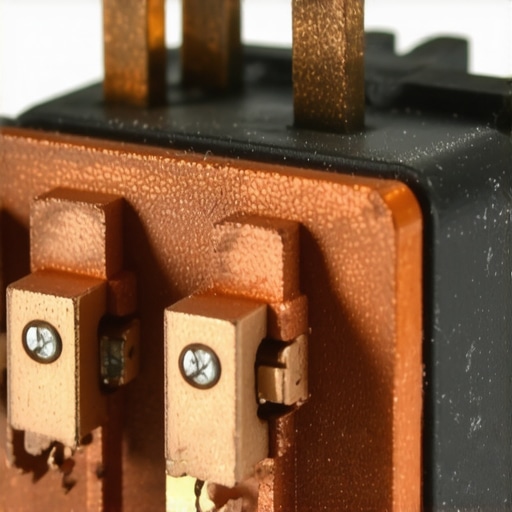
Professional technicians often encounter relays that make a healthy ‘clicking’ sound but fail to deliver the necessary amperage to the fan motor. Over hundreds of cycles, the internal copper contacts within a relay can develop carbon tracking or pitting, which increases electrical resistance. While a multimeter might show 12 volts at the fan plug, the circuit collapses under the actual load of the motor. This is a classic diagnostic trap. Following auto repair cost saving tips from industry experts, you should always perform a load test using a sealed-beam headlight or a dedicated power probe to ensure the circuit can actually carry work-performing current. Replacing a five-dollar relay is a much better alternative than assuming the fan motor itself has burned out.
How Trapped Air Turns Your Engine Into a Pressure Cooker
One of the most overlooked causes of overheating at idle is the presence of air pockets within the cooling passages. Air is an exceptionally poor conductor of heat compared to a water-glycol mix. If the system was recently opened for a repair and not properly ‘burped,’ a bubble can become trapped near the thermostat or the cylinder head. This air lock prevents the thermostat from sensing the actual coolant temperature, causing it to remain closed while the engine overheats. This phenomenon is highly analogous to the hidden brake line error that makes bleeding impossible, where trapped gas compresses and negates the physical force of the fluid. Experts at Car and Driver have noted that even a small amount of aeration can reduce the efficiency of the thermal transfer by over 30%, which becomes most apparent when there is no ram-air helping the radiator.
The Symbiotic Relationship Between Your AC and Cooling Fans
It is a common diagnostic trick to turn on the air conditioning when a car starts to get hot. In most modern vehicles, engaging the AC compressor sends a manual override signal to the ECU to turn the cooling fans on high. This is because the AC condenser, located directly in front of the radiator, generates immense heat that must be cleared immediately. If your car stays cool with the AC on but overheats with it off, you have effectively narrowed the problem down to the fan control circuit or the ECT sensor logic. Understanding these interdependencies is a key part of why your car stumbles when you turn the ac on, as the sudden electrical and mechanical load requires the engine to adjust its idle air control and cooling strategy simultaneously. Have you encountered a mystery overheat that only happened in the drive-thru? Share your experience in the comments or find a local pro using our guide on how to choose a skilled mechanic you can trust to get a definitive diagnosis.
While the computer logic and fan relays are common culprits, the physical integrity of the pressurized loop often fails in subtle ways. Consider the radiator cap—a component frequently dismissed as a simple lid. In reality, it is a calibrated spring-loaded valve designed to maintain a specific cooling system pressure, typically between 12 and 16 PSI. According to technical resources from the Gates Corporation, for every pound of pressure applied to the system, the boiling point of the coolant rises by approximately three degrees Fahrenheit. If the rubber seal on your cap has perished or the spring has lost its tension, the system cannot maintain pressure, allowing the coolant to boil at a much lower temperature during the high-heat, low-airflow environment of an idling engine.
Does a faulty expansion tank cap cause overheating at idle?
Yes, and the symptoms are often identical to a failing water pump or a clogged core. On many modern European vehicles, the pressurized cap is located on the plastic expansion tank rather than the radiator itself. If this cap fails to hold the rated pressure, you will see localized boiling around the exhaust ports of the cylinder head. This creates steam pockets that displace liquid coolant, leading to an immediate and dangerous spike on your dashboard gauge while you are stopped. If you suspect this is happening, a quick pressure test of the cap—not just the system—is the most cost-effective first step in any auto repair strategy.#IMAGE_PLACE_HOLDER_C#
Suction Side Sabotage and the Mystery of the Flattened Hose
Beyond the cap, the physical architecture of your cooling hoses plays a vital role in fluid velocity. The lower radiator hose is the ‘suction side’ of the water pump. Under the high-demand conditions of a hot engine, the water pump creates a significant vacuum to pull fluid through the radiator. To prevent the hose from flattening like a straw under this pressure, many manufacturers include a stainless steel wire reinforcement inside the hose. If this internal spring corrodes or if an aftermarket hose lacks this reinforcement, the hose can partially collapse as the engine warms up. This restriction is nearly impossible to see from above while the car is moving, but at idle, the reduced flow can quickly lead to heat soak.
Transmission Heat Creep Can Overwhelm Your Radiator
Don’t overlook the secondary heat sources that share your radiator’s real estate. Most automatic transmissions use a heat exchanger submerged in one of the radiator tanks to cool the transmission fluid. If your transmission is slipping or the fluid is degraded, it generates excessive thermal energy that is dumped directly into the engine’s cooling loop. This is a common reason why a vehicle might overheat at a drive-thru after a long period of stop-and-go driving. This ‘thermal bleed’ underscores why a complete tune up should always include a check of your transmission fluid health. When the transmission runs hot, the engine’s radiator is forced to work double duty, often exceeding its capacity to dissipate heat without the benefit of 60-mph wind speeds. Identifying these subtle heat transfer failures requires a systematic approach that looks beyond the obvious fan motor, as the interaction between hydraulic pressure and heat soak…
Stray Voltage Can Silently Erode Your Cooling Core
Experienced technicians often look beyond mechanical failures to investigate the chemical and electrical balance of the coolant. Electrolysis occurs when a poor engine ground forces electrical current to seek a path through the radiator fluid. This creates a miniature galvanic cell, stripping ions from the aluminum radiator tubes and depositing them elsewhere. Over time, this leads to microscopic pinholes that leak just enough pressure to cause overheating at idle without leaving a visible puddle. Professional auto repair shops use a digital multimeter to measure the DC voltage between the coolant and the battery ground; anything over 0.1 volts indicates a significant grounding issue that could be sabotaging your thermal management.
Why a Partially Seized Thermostat Defies Standard Testing
Many DIY enthusiasts assume a thermostat is binary—either it works or it doesn’t. However, specialized diagnostics often reveal “lazy” thermostats that suffer from wax pellet degradation. These units may open fully at 210°F, but they react too slowly to the rapid temperature spikes seen when a vehicle transitions from highway speeds to a dead stop. This hysteresis creates a dangerous thermal lag. According to diagnostic specialists at Pico Technology, using an oscilloscope to track temperature sensors alongside fan PWM signals can reveal these subtle mechanical delays that a simple “boil test” in a kitchen pot might miss.
Can an Overcharged AC System Force an Engine to Overheat at Idle?
It is a paradox often encountered in high-performance or modified vehicles: the air conditioning is too cold, yet the engine is running too hot. If the AC system is overcharged with refrigerant, the compressor works against excessive head pressure, which significantly increases the temperature of the AC condenser. Since the condenser sits directly in front of the radiator, it acts as a “heat curtain,” pre-heating the air before it ever reaches the engine’s cooling fins. At idle, when airflow is already at a premium, this extra 20 to 30 degrees of ambient heat can be the tipping point that causes a mechanic to pull their hair out looking for a non-existent coolant leak.
#IMAGE_PLACE_HOLDER_D#
Stop the Scalping and Start Scoping Your Sensor Data
If you have already replaced the fan and the water pump but the needle still climbs, it is time to move into the realm of advanced data logging. A “phantom overheat” can sometimes be traced back to a corroded connector at the ECT sensor, adding resistance to the circuit and tricking the ECU into thinking the engine is hotter than it actually is—or vice versa. This is where a high-quality tune up evolves into a deep-dive diagnostic session. Rather than throwing parts at the problem, engage a specialist who understands the nuances of sensor scaling. Are you tired of guesswork? Check out our guide on how to choose a skilled mechanic you can trust to find a shop equipped with the right telemetry tools to solve your cooling crisis once and for all.
Airflow Management and the Crisis of the Stationary Vehicle
In the world of professional automotive diagnostics, few symptoms are as telling as an engine that remains cool at highway speeds but spikes in temperature at a red light. An internal combustion engine is a thermal management nightmare that relies heavily on airflow to dissipate waste heat. While traveling at speed, the vehicle benefits from the ram-air effect, where high-pressure air is forced through the radiator. However, once you come to a stop, the system transitions to an active cooling state. If your gauge begins to climb, a professional mechanic will immediately suspect a failure in the cooling fan assembly or its associated relay. A broken fan shroud or a failing electric motor eliminates the necessary pressure drop across the radiator fins, causing heat to soak into the block almost instantly.
How Impeller Degradation Stalls Coolant Velocity
While many drivers assume a thermostat is at fault, a more technical analysis often reveals a lack of coolant velocity. At idle, the engine’s RPM is at its lowest point, meaning a belt-driven water pump is spinning at its minimum speed. If the internal vanes of the pump have suffered from cavitation or corrosion, they may not move enough fluid to reach the heat exchanger efficiently at these low rotations. This specific issue is why a comprehensive tune up should include a visual inspection of the coolant’s clarity and pH levels. According to technical standards established by SAE International, maintaining precise coolant flow rates is critical to preventing localized boiling within the cylinder head’s cooling jackets, which can lead to micro-cracking and eventual head gasket failure.
Could a Clogged Radiator Core be Throttling Your Thermal Exchange?
Internal scaling is the silent killer of cooling efficiency. Over years of operation, mineral deposits can narrow the narrow passages within the radiator core. While the system may have just enough capacity to stay cool while the water pump is under load, the restricted flow becomes an insurmountable bottleneck at idle. This thermal lag is a frequent topic in auto repair forums, where technicians use thermal imaging to identify cold spots on a radiator’s surface. If your car is exhibiting these symptoms, it is often a sign that neglected maintenance is finally catching up. Integrating a cooling system flush alongside your next brake service is a strategic move to ensure both the stopping and cooling systems of your vehicle are operating at peak safety levels.
Stop the Heat Before Your Cylinder Head Warps
Ignoring a rising temperature needle is a gamble with your engine’s structural integrity. Modern aluminum engines have very little tolerance for thermal expansion beyond their design limits. If you notice your vehicle struggling to maintain a steady temperature while parked, it is imperative to contact a specialist for a pressure test. Diagnosing these issues early is part of the essential tune up tips that keep your vehicle on the road rather than in the scrap yard. You can also take proactive steps, such as learning how to clean your radiator fins, to ensure that external debris isn’t compounding an internal flow problem. Acting now prevents a simple sensor or fan replacement from escalating into a catastrophic engine rebuild.
Don’t Let a Lazy Relay Trick Your Temperature Gauge
Modern cooling systems often utilize complex logic to manage thermal loads, frequently employing Pulse Width Modulation (PWM) to vary fan speeds based on real-time data. When your vehicle is idling, the Engine Control Unit (ECU) is the primary conductor of this thermal orchestra. It relies on the Engine Coolant Temperature (ECT) sensor to provide accurate voltage signals. If this sensor’s resistance drifts—even without triggering a check engine light—the fans may engage too late or not at all. This digital hesitation is remarkably similar to how the 15 sensor that fixes your rough idle in minutes can masquerade as a mechanical failure when it is actually an electronic signaling error. If you notice your temperature rising only when the vehicle stops moving, the first step is verifying that the ECU is actually commanding the fans to spin.
Is Your Fan Relay Clicking but Failing the Load Test?
Professional technicians often encounter relays that make a healthy ‘clicking’ sound but fail to deliver the necessary amperage to the fan motor. Over hundreds of cycles, the internal copper contacts within a relay can develop carbon tracking or pitting, which increases electrical resistance. While a multimeter might show 12 volts at the fan plug, the circuit collapses under the actual load of the motor. This is a classic diagnostic trap. Following auto repair cost saving tips from industry experts, you should always perform a load test using a sealed-beam headlight or a dedicated power probe to ensure the circuit can actually carry work-performing current. Replacing a five-dollar relay is a much better alternative than assuming the fan motor itself has burned out.
How Trapped Air Turns Your Engine Into a Pressure Cooker
One of the most overlooked causes of overheating at idle is the presence of air pockets within the cooling passages. Air is an exceptionally poor conductor of heat compared to a water-glycol mix. If the system was recently opened for a repair and not properly ‘burped,’ a bubble can become trapped near the thermostat or the cylinder head. This air lock prevents the thermostat from sensing the actual coolant temperature, causing it to remain closed while the engine overheats. This phenomenon is highly analogous to the hidden brake line error that makes bleeding impossible, where trapped gas compresses and negates the physical force of the fluid. Experts at Car and Driver have noted that even a small amount of aeration can reduce the efficiency of the thermal transfer by over 30%, which becomes most apparent when there is no ram-air helping the radiator.
The Symbiotic Relationship Between Your AC and Cooling Fans
It is a common diagnostic trick to turn on the air conditioning when a car starts to get hot. In most modern vehicles, engaging the AC compressor sends a manual override signal to the ECU to turn the cooling fans on high. This is because the AC condenser, located directly in front of the radiator, generates immense heat that must be cleared immediately. If your car stays cool with the AC on but overheats with it off, you have effectively narrowed the problem down to the fan control circuit or the ECT sensor logic. Understanding these interdependencies is a key part of why your car stumbles when you turn the ac on, as the sudden electrical and mechanical load requires the engine to adjust its idle air control and cooling strategy simultaneously. Have you encountered a mystery overheat that only happened in the drive-thru? Share your experience in the comments or find a local pro using our guide on how to choose a skilled mechanic you can trust to get a definitive diagnosis.
While the computer logic and fan relays are common culprits, the physical integrity of the pressurized loop often fails in subtle ways. Consider the radiator cap—a component frequently dismissed as a simple lid. In reality, it is a calibrated spring-loaded valve designed to maintain a specific cooling system pressure, typically between 12 and 16 PSI. According to technical resources from the Gates Corporation, for every pound of pressure applied to the system, the boiling point of the coolant rises by approximately three degrees Fahrenheit. If the rubber seal on your cap has perished or the spring has lost its tension, the system cannot maintain pressure, allowing the coolant to boil at a much lower temperature during the high-heat, low-airflow environment of an idling engine.
Does a faulty expansion tank cap cause overheating at idle?
Yes, and the symptoms are often identical to a failing water pump or a clogged core. On many modern European vehicles, the pressurized cap is located on the plastic expansion tank rather than the radiator itself. If this cap fails to hold the rated pressure, you will see localized boiling around the exhaust ports of the cylinder head. This creates steam pockets that displace liquid coolant, leading to an immediate and dangerous spike on your dashboard gauge while you are stopped. If you suspect this is happening, a quick pressure test of the cap—not just the system—is the most cost-effective first step in any auto repair strategy.#IMAGE_PLACE_HOLDER_C#
Suction Side Sabotage and the Mystery of the Flattened Hose
Beyond the cap, the physical architecture of your cooling hoses plays a vital role in fluid velocity. The lower radiator hose is the ‘suction side’ of the water pump. Under the high-demand conditions of a hot engine, the water pump creates a significant vacuum to pull fluid through the radiator. To prevent the hose from flattening like a straw under this pressure, many manufacturers include a stainless steel wire reinforcement inside the hose. If this internal spring corrodes or if an aftermarket hose lacks this reinforcement, the hose can partially collapse as the engine warms up. This restriction is nearly impossible to see from above while the car is moving, but at idle, the reduced flow can quickly lead to heat soak.
Transmission Heat Creep Can Overwhelm Your Radiator
Don’t overlook the secondary heat sources that share your radiator’s real estate. Most automatic transmissions use a heat exchanger submerged in one of the radiator tanks to cool the transmission fluid. If your transmission is slipping or the fluid is degraded, it generates excessive thermal energy that is dumped directly into the engine’s cooling loop. This is a common reason why a vehicle might overheat at a drive-thru after a long period of stop-and-go driving. This ‘thermal bleed’ underscores why a complete tune up should always include a check of your transmission fluid health. When the transmission runs hot, the engine’s radiator is forced to work double duty, often exceeding its capacity to dissipate heat without the benefit of 60-mph wind speeds. Identifying these subtle heat transfer failures requires a systematic approach that looks beyond the obvious fan motor, as the interaction between hydraulic pressure and heat soak…
Stray Voltage Can Silently Erode Your Cooling Core
Experienced technicians often look beyond mechanical failures to investigate the chemical and electrical balance of the coolant. Electrolysis occurs when a poor engine ground forces electrical current to seek a path through the radiator fluid. This creates a miniature galvanic cell, stripping ions from the aluminum radiator tubes and depositing them elsewhere. Over time, this leads to microscopic pinholes that leak just enough pressure to cause overheating at idle without leaving a visible puddle. Professional auto repair shops use a digital multimeter to measure the DC voltage between the coolant and the battery ground; anything over 0.1 volts indicates a significant grounding issue that could be sabotaging your thermal management.
Why a Partially Seized Thermostat Defies Standard Testing
Many DIY enthusiasts assume a thermostat is binary—either it works or it doesn’t. However, specialized diagnostics often reveal “lazy” thermostats that suffer from wax pellet degradation. These units may open fully at 210°F, but they react too slowly to the rapid temperature spikes seen when a vehicle transitions from highway speeds to a dead stop. This hysteresis creates a dangerous thermal lag. According to diagnostic specialists at Pico Technology, using an oscilloscope to track temperature sensors alongside fan PWM signals can reveal these subtle mechanical delays that a simple “boil test” in a kitchen pot might miss.
Can an Overcharged AC System Force an Engine to Overheat at Idle?
It is a paradox often encountered in high-performance or modified vehicles: the air conditioning is too cold, yet the engine is running too hot. If the AC system is overcharged with refrigerant, the compressor works against excessive head pressure, which significantly increases the temperature of the AC condenser. Since the condenser sits directly in front of the radiator, it acts as a “heat curtain,” pre-heating the air before it ever reaches the engine’s cooling fins. At idle, when airflow is already at a premium, this extra 20 to 30 degrees of ambient heat can be the tipping point that causes a mechanic to pull their hair out looking for a non-existent coolant leak.
#IMAGE_PLACE_HOLDER_D#
Expert Insights & Advanced Considerations
Stop Chasing Ghosts and Test for Thermal Lag
Many enthusiasts waste funds replacing water pumps when the actual culprit is a thermostat suffering from hysteresis. Unlike a total failure, a lazy thermostat reacts too slowly to temperature shifts, creating a dangerous lag when you exit the highway. Integrating precise temperature logging as part of your tune up strategies to save money on auto repairs can catch this before it warps your cylinder head.
Your Fan Speed Might Be Lying to You
Pulse Width Modulation (PWM) fan controls are a diagnostic trap. Your scan tool might show a 90% fan command, but if the motor’s internal brushes are worn, the actual airflow is negligible. One of the best mechanic tips diagnosing common auto problems is to manually verify the physical resistance and amperage draw of the fan motor rather than trusting the digital request from the computer.
The Battery Ground That Melts Your Radiator from Within
Stray electrical current seeking a path through your coolant is a recipe for chemical erosion. If your main engine ground is corroded, the cooling loop becomes a wire, leading to pinhole leaks that drop system pressure at idle. This invisible threat is as critical as ensuring the 15 sensor that fixes your rough idle in minutes is functioning, as both represent the delicate balance between electrical integrity and mechanical performance.
Curated Expert Resources
SAE International Technical Library
The gold standard for engineering data regarding radiator heat dissipation rates and coolant fluid dynamics under low-RPM conditions.
Gates Corporation Knowledge Center
An essential resource for understanding the physics of pressure caps and suction-side hose collapse, providing deep dives into cooling system architecture.
Pico Technology Case Studies
Professional-grade oscilloscope data that demonstrates how to identify failing fan relays and lazy sensors through high-frequency electrical analysis.
Final Expert Perspective
Solving an overheat at idle requires moving beyond the “parts cannon” and embracing systematic diagnostics. Whether it is a lazy thermostat, a failing fan relay, or neglected internal scaling, the goal is to restore the thermal equilibrium your engine needs when the ram-air stops. Taking proactive steps like learning how to clean your radiator fins without damaging the core is a great start, but persistent issues deserve professional telemetry. If you are struggling with a heat-soak mystery, use our guide on how to choose a skilled mechanic you can trust to find a technician equipped for advanced thermal analysis. Do you have a story of a cooling gremlin that nearly cost you an engine? Share your experience in the comments below.