The Physics of Exhaust Fatigue: Why Rubber Alone Isn’t the Solution
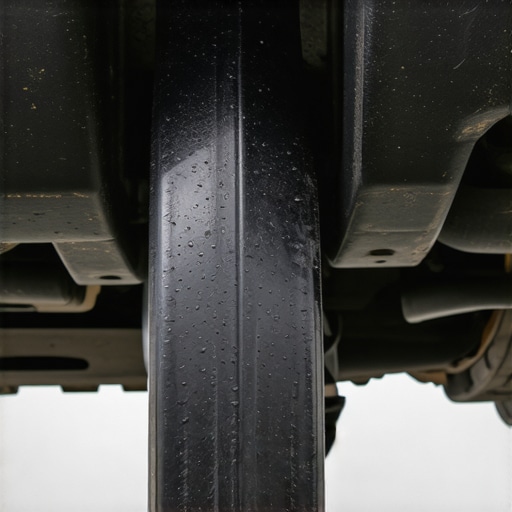
When an exhaust hanger snaps repeatedly within a few months, it is rarely a coincidence or a manufacturing defect in the rubber itself. From a master technician’s perspective, a recurring hanger failure is a loud signal that the kinetic energy of the exhaust system is out of balance. Most drivers view the exhaust as a static component, but it is a dynamic assembly subjected to intense thermal expansion, engine torque, and road-induced vibration. If the system cannot move within its designed tolerances, the weakest link—usually the hanger—will bear the brunt of the force until it inevitably fatigues and shears. This is often the result of improper installation or failing to account for the vehicle’s unique oscillation patterns during a standard auto repair.
Hidden Engine Mount Failures Are the Real Hanger Killers
One of the most overlooked causes of premature exhaust component failure is the degradation of engine or transmission mounts. Your engine is designed to “roll” slightly under acceleration, but when a mount loses its dampening properties, that movement becomes excessive. This torque is transferred directly through the downpipe and into the rest of the exhaust stream. When searching for a skilled mechanic you can trust, ensure they perform a “torque test” to see if the engine’s movement is snapping those hangers like brittle twigs. Without addressing the root cause during a routine tune up, you are simply replacing the fuse without fixing the short circuit. Professional diagnostics look at the powertrain as a holistic unit rather than a collection of isolated parts.
Could Your Recent Performance Upgrades Be Stressing the System?
If you have recently installed a high-flow exhaust or stiffer suspension, the original hanger mounting points may no longer be adequate. Aftermarket systems often have different weight distributions or resonant frequencies compared to OEM components. When these frequencies align with specific engine RPMs, they create “standing waves” of vibration that crystallize the rubber compounds in the hangers. This is why a comprehensive service should always include a visual inspection of the entire underside for witness marks or signs of metal-on-metal contact. According to standards established by the Society of Automotive Engineers (SAE), vibration isolation is critical to preventing component failure in high-heat environments. If you’re noticing these vibrations, you might also want to investigate why your steering wheel shakes at exactly 55 mph as it could point to a shared harmonic issue.
Thermal Expansion and the Danger of Improper Alignment
Steel expands when it heats up, and an exhaust system can grow by as much as half an inch from the manifold to the tailpipe during a long drive. If the hangers were installed while the system was cold and under tension, they will be stretched beyond their elastic limit once the metal expands. This constant tension, combined with the heat-soak from the catalytic converter, accelerates the dry-rotting of the rubber. Proper brake service and general maintenance often require the same attention to detail—precision alignment of moving parts to prevent premature wear. If you are struggling with recurring issues, you might find that specific tune-up strategies can save you money by identifying these alignment errors before they lead to structural failures.
If you suspect your vehicle’s vibration issues go deeper than just a tailpipe rattle, consider exploring our guide on the hub scrub technique that stops brake vibrations. For those looking to optimize every aspect of their vehicle’s safety and mechanical integrity, reviewing advanced brake service strategies is a logical next step in professional-grade car care.
The Critical Role of the Flex Pipe in Stress Reduction
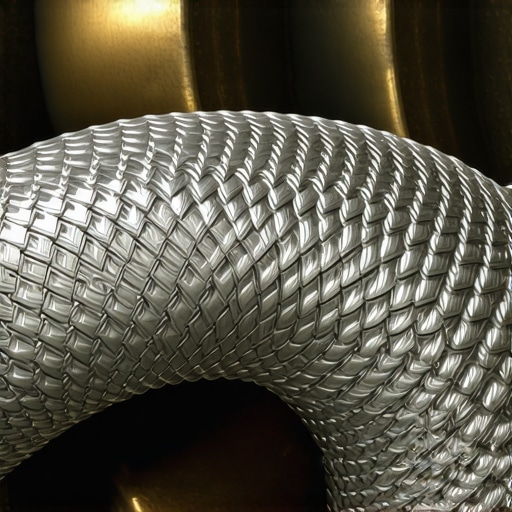
When you look under the car, the flex pipe—that braided stainless steel section—is often the first line of defense against hanger failure. If this section loses its flexibility due to internal carbon buildup or external fraying, the exhaust becomes a rigid lever. This leverage applies massive force to the rubber insulators further down the line. A seasoned pro knows that mechanic tips for diagnosing common auto problems always start with testing the range of motion in the flex joint. If it doesn’t pivot, your hangers don’t stand a chance against the engine’s natural rocking motion during gear shifts.
Stop Ignoring the Corrosive Impact of Road Salt
In regions where winter brings road salt and brine, the degradation of exhaust hangers is significantly accelerated. Salt crystals penetrate the microscopic pores of the rubber, leading to a process called osmotic dehydration. This makes the rubber brittle and prone to cracking under the weight of the muffler. During a high-level auto repair, a technician should look for ‘chalking’ on the rubber surface. Even if the hanger isn’t snapped yet, this structural compromise means it can no longer dampen the high-frequency vibrations that lead to cabin drone. Addressing this early is as crucial for vehicle longevity as knowing the 15-dollar air filter mistake that kills your fuel economy; it is about preventing small expenses from snowballing into major structural repairs.
Could a Failing Fuel Pump Be Shaking Your Exhaust Apart?
It sounds disconnected, but the way your engine runs directly affects the lifespan of your exhaust mounting hardware. A lean misfire, often caused by a failing fuel delivery system, creates a specific rhythmic shudder that resonates through the entire pipe. If you are trying to diagnose a bad fuel pump, pay attention to the tailpipe. Violent pulsations at idle are a primary cause of hanger fatigue. This mechanical stress is often accompanied by electronic warnings; for instance, understanding why your check engine light blinks only at highway speeds can reveal the intermittent misfires that are literally shaking your exhaust system to pieces. Correcting the combustion issue is the only way to stop the physical destruction of the hangers.
Upgrade to Industrial Grade Polyurethane for Heavy Duty Support
For vehicles that frequently tow or operate in extreme environments, standard EPDM rubber hangers may simply be insufficient. Upgrading to polyurethane hangers offers a higher durometer rating, meaning they provide much firmer support and better resistance to oil and chemical exposure. However, this stiffness comes with a trade-off: increased NVH (Noise, Vibration, and Harshness) transfer to the chassis. The National Institute for Automotive Service Excellence (ASE) emphasizes that component life is often dictated by the health of the surrounding ecosystem; a failing hanger is rarely an isolated event and usually points to an underlying imbalance. If you’ve noticed a strange rattling that only happens on cold starts, share your experience in the comments below or read our checklist on the ultimate tune-up checklist to see what else might be loose under your hood.
Why Heavy Catalytic Converters Snap Hangers Without Warning
Modern emissions equipment, especially manifold-integrated converters, adds significant cantilevered weight to the front of the exhaust stream. When the secondary support bracket—often a rigid metal tab—fractures from thermal fatigue or corrosion, the entire weight of the converter shifts onto the first set of rubber hangers. These components are designed for vibration dampening, not primary structural load-bearing. This shift in the center of gravity creates a pendulum effect, where the exhaust sways with much higher kinetic energy during cornering or hard braking. If you are performing a comprehensive auto repair, ignoring these brackets is a recipe for a recurring rattle. A technician should verify that the weight is distributed according to the original chassis design specifications rather than just replacing the sheared rubber. Ensuring these heavy components are properly supported is just as vital as a precise brake service for maintaining overall vehicle balance.
Can a misaligned rear differential cause your exhaust to snap?
It is a nuanced issue often missed during a standard tune up, but drivetrain geometry plays a massive role in exhaust longevity. When the bushings in your rear differential housing perish, the differential ‘pumpkin’ can tilt upward under load. This movement can physically pinch the exhaust pipe against the frame or overextend the rear hangers beyond their elastic limit. This is particularly common in rear-wheel-drive vehicles where clearances around the axle are razor-thin. Identifying this requires a multi-point inspection that looks beyond the pipe itself. If you have been chasing a mystery thud during gear changes, it might not be the exhaust at all, but rather the drivetrain’s movement pulling the hangers to their breaking point. This is why mechanic-led diagnostics must include a load-test to see how components shift under actual driving pressure.
Find the Phantom Rattle with Wireless Chassis Ears
Sometimes a visual inspection simply isn’t enough to identify which specific hanger or bracket is the culprit. Advanced diagnostics often involve the use of wireless chassis ears—specialized microphones clipped to various points along the exhaust and frame. By monitoring these frequencies through headphones while the vehicle is on a load-bearing dyno, a pro can isolate exactly which component is failing under specific torque conditions. This level of precision is what separates a basic service from a professional-grade diagnostic session. According to the Equipment and Tool Institute (ETI), the adoption of electronic diagnostic aids has significantly reduced ‘parts-cannon’ repairs, where parts are replaced blindly in hopes of a fix. If your local shop isn’t using acoustics to diagnose your vibration, they might be guessing at your expense.
Eliminate the 3,000 RPM Drone Through Mass Dampers
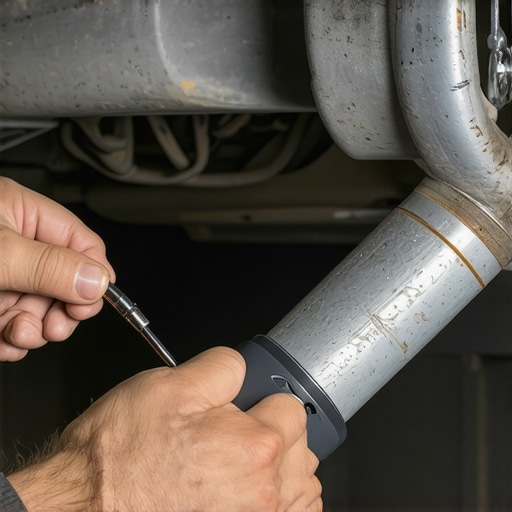
If you have ever felt a buzzing through your seat at a specific engine speed, you are experiencing harmonic resonance. Car manufacturers often combat this by bolting a heavy lead or steel weight, known as a mass damper, directly to the exhaust pipe. These dampers are tuned to the specific resonant frequency of the engine and transmission. If this weight falls off due to rust, the resulting vibrations will quickly destroy even the highest quality polyurethane hangers. When you are looking for auto repair solutions for cabin drone, check for the presence of these weights. Before you consider replacing the entire system, check out our deep dive on diagnostic tips for mysterious clunks and rattles to ensure you aren’t overlooking a missing damper. Properly addressing resonance is a sophisticated part of exhaust maintenance that goes far beyond simple tune up procedures.
Don’t Let Heat Shields Bake Your New Rubber Mounts
Aftermarket or loose heat shields can do more than just rattle; they can act as thermal reflectors that focus intense heat directly onto your exhaust hangers. Standard EPDM rubber begins to vulcanize and turn brittle when exposed to temperatures exceeding 300 degrees Fahrenheit for prolonged periods. If a shield is bent or missing, the radiant heat from the catalytic converter can ‘cook’ a nearby hanger in a matter of weeks. A technician should ensure that all shielding is properly contoured to deflect heat away from sensitive rubber components. This level of detail ensures that your maintenance efforts aren’t undone by a simple piece of bent aluminum. In the world of high-performance car care, managing thermal soak is a constant battle that requires as much attention as a high-end brake service.
Stop Letting Fluid Leaks Dissolve Your Mounting Hardware
The silent assassin of rubber hangers isn’t always heat; sometimes, it’s the fluids meant to keep your engine running. Petroleum-based products like motor oil, power steering fluid, and transmission oil act as solvents against standard EPDM (Ethylene Propylene Diene Monomer) rubber. If you have a slow leak from a valve cover gasket or a weeping power steering hose, that fluid often travels down the engine block and drips directly onto the forward exhaust hangers. Over time, the rubber swells, softens, and loses its structural memory, leading to a catastrophic shear. During a professional auto repair, a mechanic should never just replace the hanger; they must trace the fluid trail to ensure the new mount isn’t immediately compromised by chemical saturation. Preventing this degradation is a hallmark of high-level vehicle stewardship.
The Aerodynamic Drag You Can’t See Under the Chassis
As vehicle speeds increase, the airflow beneath the car creates significant pressure differentials. High-performance cars or those with large aftermarket mufflers often experience ‘exhaust lift,’ where wind caught by the canister pulls the entire system upward or sideways at highway speeds. This aerodynamic load puts a constant, high-frequency strain on the rear hangers that is never present during a stationary tune up. If the hangers are not oriented to counteract these lateral forces, the rubber will eventually tear at the mounting eyelet. Professional racers often utilize safety wire or secondary tethers to limit this travel, but for a daily driver, ensuring that the exhaust tips are tucked properly within the bumper’s air-pocket can reduce this invisible stress. This level of aerodynamic consideration is just as crucial as a precision brake service when maintaining stability at speed.
Why do some heavy-duty exhaust hangers use internal metal chains?
In specialized off-road or industrial applications, you may encounter ‘fail-safe’ hangers that feature an internal reinforcement chain or a woven steel core embedded within the rubber. These are designed to prevent the exhaust from dropping onto the pavement if the rubber fails due to extreme articulation or impact. While these provide unmatched security, they require a very specific installation angle to prevent the internal metal from clashing against the mounting pins, which would create a metallic ringing noise. According to the Manufacturers of Emission Controls Association (MECA), maintaining the physical alignment of the catalyst and the downstream sensors is vital for emissions compliance. If your vehicle undergoes heavy vibration, these reinforced hangers might be the upgrade your mechanic recommends to prevent expensive downpipe damage.
The Leverage Effect of Heavy Tailpipe Extensions
Many truck owners install heavy, chrome-plated steel tips to enhance their vehicle’s aesthetics, but these additions act as weights at the end of a long lever. A two-pound tip installed 12 inches away from the last hanger can effectively double the static load on that rubber mount. Over every bump, that weight oscillates, creating a whipping motion that can eventually crack the weld where the hanger bracket meets the pipe. When you are looking for auto repair solutions for a recurring pipe fracture, check the weight of your accessories. Distributing that load by adding an auxiliary hanger closer to the exit point can save the entire system from fatigue failure. It is this attention to mechanical leverage that separates a generic fix from an engineered solution.
Have you noticed your exhaust tips sitting lower than they used to, or perhaps an annoying thud when you hit a pothole? Don’t wait for the pipe to drag on the asphalt. Take a moment to inspect your hangers for signs of stretching or chemical softening today. If you’ve found a creative way to stabilize a custom exhaust setup, share your tips in the comments below or check out our other guides for more professional-grade maintenance secrets.
The Physics of Exhaust Fatigue: Why Rubber Alone Is Not the Solution
When an exhaust hanger snaps repeatedly within a few months, it is rarely a coincidence or a manufacturing defect in the rubber itself. From a master technician’s perspective, a recurring hanger failure is a loud signal that the kinetic energy of the exhaust system is out of balance. Most drivers view the exhaust as a static component, but it is a dynamic assembly subjected to intense thermal expansion, engine torque, and road-induced vibration. If the system cannot move within its designed tolerances, the weakest link—usually the hanger—will bear the brunt of the force until it inevitably fatigues and shears. This is often the result of improper installation or failing to account for the vehicle’s unique oscillation patterns during a standard auto repair.
Hidden Engine Mount Failures Are the Real Hanger Killers
One of the most overlooked causes of premature exhaust component failure is the degradation of engine or transmission mounts. Your engine is designed to “roll” slightly under acceleration, but when a mount loses its dampening properties, that movement becomes excessive. This torque is transferred directly through the downpipe and into the rest of the exhaust stream. When searching for a skilled mechanic you can trust, ensure they perform a “torque test” to see if the engine’s movement is snapping those hangers like brittle twigs. Without addressing the root cause during a routine tune up, you are simply replacing the fuse without fixing the short circuit. Professional diagnostics look at the powertrain as a holistic unit rather than a collection of isolated parts.
Could Your Recent Performance Upgrades Be Stressing the System?
If you have recently installed a high-flow exhaust or stiffer suspension, the original hanger mounting points may no longer be adequate. Aftermarket systems often have different weight distributions or resonant frequencies compared to OEM components. When these frequencies align with specific engine RPMs, they create “standing waves” of vibration that crystallize the rubber compounds in the hangers. This is why a comprehensive service should always include a visual inspection of the entire underside for witness marks or signs of metal-on-metal contact. According to standards established by the Society of Automotive Engineers (SAE), vibration isolation is critical to preventing component failure in high-heat environments. If you’re noticing these vibrations, you might also want to investigate why your steering wheel shakes at exactly 55 mph as it could point to a shared harmonic issue.
Thermal Expansion and the Danger of Improper Alignment
Steel expands when it heats up, and an exhaust system can grow by as much as half an inch from the manifold to the tailpipe during a long drive. If the hangers were installed while the system was cold and under tension, they will be stretched beyond their elastic limit once the metal expands. This constant tension, combined with the heat-soak from the catalytic converter, accelerates the dry-rotting of the rubber. Proper brake service and general maintenance often require the same attention to detail—precision alignment of moving parts to prevent premature wear. If you are struggling with recurring issues, you might find that specific tune-up strategies can save you money by identifying these alignment errors before they lead to structural failures.
If you suspect your vehicle’s vibration issues go deeper than just a tailpipe rattle, consider exploring our guide on the hub scrub technique that stops brake vibrations. For those looking to optimize every aspect of their vehicle’s safety and mechanical integrity, reviewing advanced brake service strategies is a logical next step in professional-grade car care.
The Critical Role of the Flex Pipe in Stress Reduction
When you look under the car, the flex pipe—that braided stainless steel section—is often the first line of defense against hanger failure. If this section loses its flexibility due to internal carbon buildup or external fraying, the exhaust becomes a rigid lever. This leverage applies massive force to the rubber insulators further down the line. A seasoned pro knows that mechanic tips for diagnosing common auto problems always start with testing the range of motion in the flex joint. If it doesn’t pivot, your hangers don’t stand a chance against the engine’s natural rocking motion during gear shifts.
Stop Ignoring the Corrosive Impact of Road Salt
In regions where winter brings road salt and brine, the degradation of exhaust hangers is significantly accelerated. Salt crystals penetrate the microscopic pores of the rubber, leading to a process called osmotic dehydration. This makes the rubber brittle and prone to cracking under the weight of the muffler. During a high-level auto repair, a technician should look for ‘chalking’ on the rubber surface. Even if the hanger isn’t snapped yet, this structural compromise means it can no longer dampen the high-frequency vibrations that lead to cabin drone. Addressing this early is as crucial for vehicle longevity as knowing the 15-dollar air filter mistake that kills your fuel economy; it is about preventing small expenses from snowballing into major structural repairs.
Could a Failing Fuel Pump Be Shaking Your Exhaust Apart?
It sounds disconnected, but the way your engine runs directly affects the lifespan of your exhaust mounting hardware. A lean misfire, often caused by a failing fuel delivery system, creates a specific rhythmic shudder that resonates through the entire pipe. If you are trying to diagnose a bad fuel pump, pay attention to the tailpipe. Violent pulsations at idle are a primary cause of hanger fatigue. This mechanical stress is often accompanied by electronic warnings; for instance, understanding why your check engine light blinks only at highway speeds can reveal the intermittent misfires that are literally shaking your exhaust system to pieces. Correcting the combustion issue is the only way to stop the physical destruction of the hangers.
Upgrade to Industrial Grade Polyurethane for Heavy Duty Support
For vehicles that frequently tow or operate in extreme environments, standard EPDM rubber hangers may simply be insufficient. Upgrading to polyurethane hangers offers a higher durometer rating, meaning they provide much firmer support and better resistance to oil and chemical exposure. However, this stiffness comes with a trade-off: increased NVH (Noise, Vibration, and Harshness) transfer to the chassis. The National Institute for Automotive Service Excellence (ASE) emphasizes that component life is often dictated by the health of the surrounding ecosystem; a failing hanger is rarely an isolated event and usually points to an underlying imbalance. If you’ve noticed a strange rattling that only happens on cold starts, share your experience in the comments below or read our checklist on the ultimate tune-up checklist to see what else might be loose under your hood.
Why Heavy Catalytic Converters Snap Hangers Without Warning
Modern emissions equipment, especially manifold-integrated converters, adds significant cantilevered weight to the front of the exhaust stream. When the secondary support bracket—often a rigid metal tab—fractures from thermal fatigue or corrosion, the entire weight of the converter shifts onto the first set of rubber hangers. These components are designed for vibration dampening, not primary structural load-bearing. This shift in the center of gravity creates a pendulum effect, where the exhaust sways with much higher kinetic energy during cornering or hard braking. If you are performing a comprehensive auto repair, ignoring these brackets is a recipe for a recurring rattle. A technician should verify that the weight is distributed according to the original chassis design specifications rather than just replacing the sheared rubber. Ensuring these heavy components are properly supported is just as vital as a precise brake service for maintaining overall vehicle balance.
Can a misaligned rear differential cause your exhaust to snap?
It is a nuanced issue often missed during a standard tune up, but drivetrain geometry plays a massive role in exhaust longevity. When the bushings in your rear differential housing perish, the differential ‘pumpkin’ can tilt upward under load. This movement can physically pinch the exhaust pipe against the frame or overextend the rear hangers beyond their elastic limit. This is particularly common in rear-wheel-drive vehicles where clearances around the axle are razor-thin. Identifying this requires a multi-point inspection that looks beyond the pipe itself. If you have been chasing a mystery thud during gear changes, it might not be the exhaust at all, but rather the drivetrain’s movement pulling the hangers to their breaking point. This is why mechanic-led diagnostics must include a load-test to see how components shift under actual driving pressure.
Find the Phantom Rattle with Wireless Chassis Ears
Sometimes a visual inspection simply isn’t enough to identify which specific hanger or bracket is the culprit. Advanced diagnostics often involve the use of wireless chassis ears—specialized microphones clipped to various points along the exhaust and frame. By monitoring these frequencies through headphones while the vehicle is on a load-bearing dyno, a pro can isolate exactly which component is failing under specific torque conditions. This level of precision is what separates a basic service from a professional-grade diagnostic session. According to the Equipment and Tool Institute (ETI), the adoption of electronic diagnostic aids has significantly reduced ‘parts-cannon’ repairs, where parts are replaced blindly in hopes of a fix. If your local shop isn’t using acoustics to diagnose your vibration, they might be guessing at your expense.
Eliminate the 3,000 RPM Drone Through Mass Dampers
If you have ever felt a buzzing through your seat at a specific engine speed, you are experiencing harmonic resonance. Car manufacturers often combat this by bolting a heavy lead or steel weight, known as a mass damper, directly to the exhaust pipe. These dampers are tuned to the specific resonant frequency of the engine and transmission. If this weight falls off due to rust, the resulting vibrations will quickly destroy even the highest quality polyurethane hangers. When you are looking for auto repair solutions for cabin drone, check for the presence of these weights. Before you consider replacing the entire system, check out our deep dive on mechanic tips for diagnosing common auto problems to ensure you aren’t overlooking a missing damper. Properly addressing resonance is a sophisticated part of exhaust maintenance that goes far beyond simple tune up procedures.
Don’t Let Heat Shields Bake Your New Rubber Mounts
Aftermarket or loose heat shields can do more than just rattle; they can act as thermal reflectors that focus intense heat directly onto your exhaust hangers. Standard EPDM rubber begins to vulcanize and turn brittle when exposed to temperatures exceeding 300 degrees Fahrenheit for prolonged periods. If a shield is bent or missing, the radiant heat from the catalytic converter can ‘cook’ a nearby hanger in a matter of weeks. A technician should ensure that all shielding is properly contoured to deflect heat away from sensitive rubber components. This level of detail ensures that your maintenance efforts aren’t undone by a simple piece of bent aluminum. In the world of high-performance car care, managing thermal soak is a constant battle that requires as much attention as a high-end brake service.
Stop Letting Fluid Leaks Dissolve Your Mounting Hardware
The silent assassin of rubber hangers isn’t always heat; sometimes, it’s the fluids meant to keep your engine running. Petroleum-based products like motor oil, power steering fluid, and transmission oil act as solvents against standard EPDM rubber. If you have a slow leak from a valve cover gasket or a weeping power steering hose, that fluid often travels down the engine block and drips directly onto the forward exhaust hangers. Over time, the rubber swells, softens, and loses its structural memory, leading to a catastrophic shear. During a professional auto repair, a mechanic should never just replace the hanger; they must trace the fluid trail to ensure the new mount isn’t immediately compromised by chemical saturation. Preventing this degradation is a hallmark of high-level vehicle stewardship.
The Aerodynamic Drag You Can’t See Under the Chassis
As vehicle speeds increase, the airflow beneath the car creates significant pressure differentials. High-performance cars or those with large aftermarket mufflers often experience ‘exhaust lift,’ where wind caught by the canister pulls the entire system upward or sideways at highway speeds. This aerodynamic load puts a constant, high-frequency strain on the rear hangers that is never present during a stationary tune up. If the hangers are not oriented to counteract these lateral forces, the rubber will eventually tear at the mounting eyelet. Professional racers often utilize safety wire or secondary tethers to limit this travel, but for a daily driver, ensuring that the exhaust tips are tucked properly within the bumper’s air-pocket can reduce this invisible stress. This level of aerodynamic consideration is just as crucial as a precision brake service when maintaining stability at speed.
Why do some heavy-duty exhaust hangers use internal metal chains?
In specialized off-road or industrial applications, you may encounter ‘fail-safe’ hangers that feature an internal reinforcement chain or a woven steel core embedded within the rubber. These are designed to prevent the exhaust from dropping onto the pavement if the rubber fails due to extreme articulation or impact. While these provide unmatched security, they require a very specific installation angle to prevent the internal metal from clashing against the mounting pins, which would create a metallic ringing noise. According to the Manufacturers of Emission Controls Association (MECA), maintaining the physical alignment of the catalyst and the downstream sensors is vital for emissions compliance. If your vehicle undergoes heavy vibration, these reinforced hangers might be the upgrade your mechanic recommends to prevent expensive downpipe damage.
The Leverage Effect of Heavy Tailpipe Extensions
Many truck owners install heavy, chrome-plated steel tips to enhance their vehicle’s aesthetics, but these additions act as weights at the end of a long lever. A two-pound tip installed 12 inches away from the last hanger can effectively double the static load on that rubber mount. Over every bump, that weight oscillates, creating a whipping motion that can eventually crack the weld where the hanger bracket meets the pipe. When you are looking for auto repair solutions for a recurring pipe fracture, check the weight of your accessories. Distributing that load by adding an auxiliary hanger closer to the exit point can save the entire system from fatigue failure. It is this attention to mechanical leverage that separates a generic fix from an engineered solution.
Expert Insights and Advanced Considerations
Stop the chemical breakdown before it starts
Many technicians overlook the relationship between internal engine health and external hardware. If your car is suffering from excessive oil consumption, it could be dissolving your hangers from the inside out. Following the 14-dollar PCV valve fix can prevent the misting that often settles on exhaust mounts, drastically extending the life of your auto repair investments.
Identify hidden harmonic vibrations
When a hanger fails without obvious physical damage, it is usually a frequency issue. Much like how a steering wheel shakes at 55 mph due to balance errors, an exhaust pipe has a resonant point. If your hangers keep snapping, a mechanic should check for missing mass dampers or misaligned engine mounts that allow these vibrations to reach destructive amplitudes.
Prioritize durometer ratings in high-stress zones
Not all hangers are created equal. For high-heat areas near the catalytic converter, specify a higher durometer (stiffness) rating during your next tune up. Using a standard soft rubber in a high-torque application is a primary reason for premature failure. High-performance polyurethane is the industry standard for vehicles that see heavy towing or track use.
Highly Recommended Resources for Professionals
ASE Test Prep G1 Guide: This is the gold standard for understanding how to perform a multi-point auto repair inspection that includes the exhaust ecosystem and drivetrain alignment.
SAE International Technical Papers: For those who want the raw data on vibrational isolation and thermal expansion of stainless steel alloys used in modern exhaust systems.
Equipment and Tool Institute (ETI) Diagnostic Manuals: Essential for learning how to use wireless chassis ears to isolate rattles that only appear under specific engine loads or road speeds.
A Final Word on Exhaust Ecosystem Longevity
Solving recurring exhaust hanger failure requires looking beyond the rubber and treating the vehicle as a unified mechanical system. Whether it is addressing a chemical leak, correcting engine mount torque, or upgrading to industrial-grade polyurethane, a precise auto repair approach saves time and money. By integrating these professional mechanic strategies into your regular tune up and brake service routine, you ensure a quieter, safer, and more reliable drive. We invite you to share your most difficult vibration diagnostic stories in the comments or consult our technical library for more advanced automotive maintenance secrets.