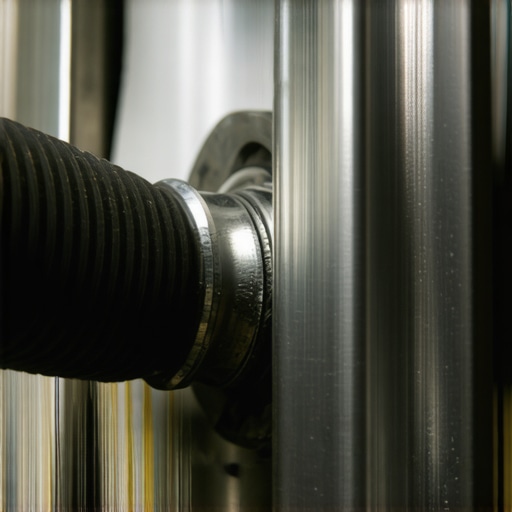
The phenomenon of brake pulsation is one of the most frequently misdiagnosed issues in the modern service bay. While many drivers—and even some entry-level technicians—immediately point toward ‘warping,’ the metallurgical reality of cast-iron rotors makes physical warping under normal driving conditions exceedingly rare. Instead, what most motorists experience is Disc Thickness Variation (DTV), a condition born from lateral runout. When the rotor is not perfectly parallel to the wheel hub, it wobbles as it rotates, striking the brake pads twice per revolution. Over time, this creates thin spots in the metal, leading to that rhythmic shudder. The solution isn’t always a new set of parts; often, it is a $10 hub cleaning procedure that restores the mating surface to factory tolerances.
Stop Chasing Warped Rotors and Look at the Hub
Achieving a vibration-free brake service requires more than just swapping pads. A professional mechanic understands that the interface between the rotor and the wheel hub is where most ‘warping’ complaints actually begin. Even a few thousandths of an inch of rust scale or debris on the hub can translate into significant runout at the outer edge of the rotor. This is precisely why your new brake rotors still pulse after a professional install. By utilizing a hub cleaning kit—essentially a specialized abrasive pad that fits over the wheel studs—you can strip away corrosion in seconds, ensuring the rotor sits perfectly true against the hub face.
The $10 Tool That Outperforms High-End Diagnostic Scanners
In the world of auto repair, we often look for high-tech solutions to mechanical problems. However, a stainless steel wire brush or a hub-scrub tool is arguably the most valuable asset for brake longevity. When you bypass this step, you risk creating a ‘shadow’ wear pattern that will inevitably destroy the next set of rotors you purchase. This precision-focused approach is highlighted in our guide on brake service secrets: how to boost safety and longevity. According to technical standards established by SAE International regarding friction material transfer, maintaining clean mating surfaces is critical for preventing lateral runout and ensuring consistent pad-to-rotor contact. It is a fundamental part of any comprehensive tune up for the braking system.
Why Does My Brake Pedal Pulse Only After the Shop Fixed It?
This is a common frustration for drivers. Often, the installation of new, high-quality rotors on a dirty, corroded hub actually exacerbates the runout problem. The new, flat surface highlights the hub’s imperfection more dramatically than the old, worn-down rotor did. To avoid this, savvy car owners should look for auto repair cost saving tips from industry experts that emphasize preventative cleaning over part-hanging. If your technician isn’t using a hub-scrub tool during your service, they are likely leaving performance on the table. For more insights on professional-grade maintenance, you can check our brake maintenance hacks to prevent costly failures to see how small investments in labor save hundreds in parts. If you are experiencing persistent vibrations despite multiple repairs, it might be time to contact us to consult with a specialist who understands the physics of runout and the importance of precision mating surfaces.Beyond the hub-to-rotor interface, the most overlooked mechanical failure in a modern braking system is caliper slider stagnation. If a mechanic only swaps the pads and rotors without servicing the guide pins, the caliper cannot float freely. This leads to uneven pressure, localized heat spikes, and premature glazing. This is a primary reason why your new brake pads squeal after a professional local install. High-temperature silicone lubricant is non-negotiable here; petroleum-based greases will swell the rubber boots, locking the pins in place and causing the brakes to drag. You can find more on the simple move that fixes a sticky brake caliper in our technical library. 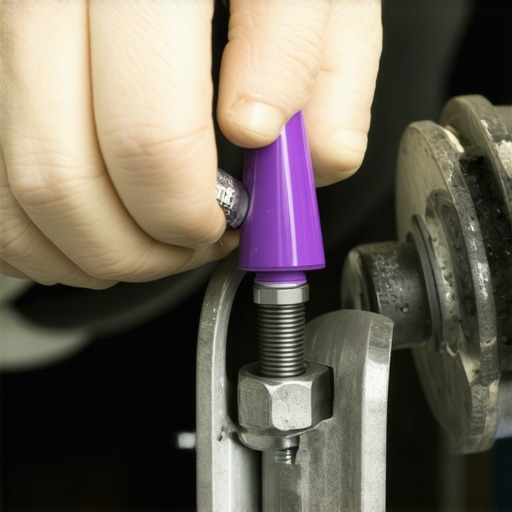
Don’t Let Stiff Caliper Pins Ruin an Expensive Brake Job
When pins are neglected, the inner pad often wears at twice the rate of the outer pad. This isn’t just a part-wear issue; it’s a safety hazard that increases stopping distances and puts unnecessary strain on the master cylinder. To ensure the highest level of auto repair, every slide pin should be removed, cleaned of old, oxidized grease, and inspected for pitting. According to technical data from Akebono Brake Corporation, the transfer layer—the thin film of friction material that bonds to the rotor—is highly sensitive to surface contaminants and uneven pressure. Without smooth caliper movement, this transfer layer never forms correctly, leading to the very pulsations we previously discussed. Using how a $6 can of brake cleaner saves your new pads from early glazing techniques ensures that the friction surfaces remain chemically pure during the critical bedding-in process.
Why Most Tune-Ups Fail to Address Hydraulic Contamination
Many drivers view a tune up as strictly an engine-related event, focusing on spark plugs and filters. However, a true expert views the vehicle as a holistic system. The hydraulic integrity of your brakes is just as vital for performance as a clean air filter. When you consider that brake fluid is hygroscopic—meaning it actively absorbs moisture from the atmosphere—the danger becomes clear. Over time, this water content causes internal corrosion in the ABS pump and calipers. You should regularly how to test your brake fluid for water content at home to catch this before it compromises your safety.
Is Your Brake Fluid Secretly Rotting Your Calipers From the Inside Out?
If you notice your brake pedal feels ‘spongy’ after a long drive, the culprit is likely water in the fluid reaching its boiling point and turning into gas. Unlike liquid fluid, gas is compressible, which is why the pedal sinks. This is often misdiagnosed as a failing master cylinder, leading to expensive and unnecessary replacements. By implementing brake service strategies that save you money and extend brake life, you can avoid these pitfalls through simple fluid flushes every two years. Have you ever had a brake job that felt ‘off’ just weeks later, or do you have a specific squeak you can’t solve? Share your experience in the comments below or let us know if you’ve tried testing your own fluid at home.
Why Stainless Steel Hardware is the Non-Negotiable Hero of Quiet Brakes
Most drivers focus exclusively on the friction material, but a professional mechanic knows that the small stainless steel clips—the brake hardware—are what truly dictate the success of the job. Over thousands of miles, these clips lose their tension and become victims of ‘rust jacketing,’ where corrosion forms underneath the clip and pushes it against the brake pad ear. This leads to the pad sticking, which causes uneven wear and that high-pitched squeal that plagues so many auto repair jobs. If you aren’t replacing these clips with every single pad change, you are essentially building a house on a crumbling foundation. The Friction Materials Standards Institute (FMSI) emphasizes that hardware integrity is vital for maintaining the correct ‘air gap’ between the pad and the rotor when the brakes are released. This gap ensures that the pads don’t drag, preventing the localized overheating that leads to Disc Thickness Variation. 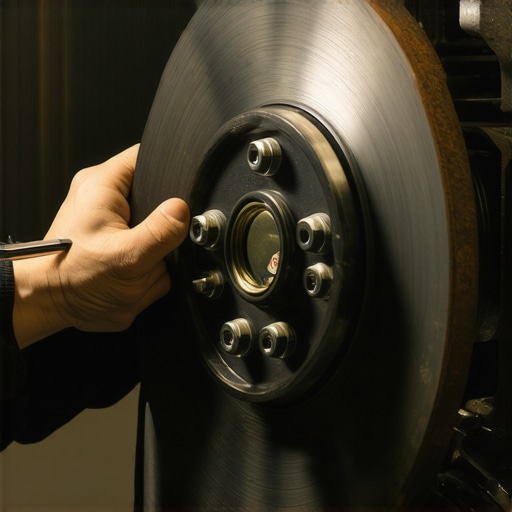
How a Loose Wheel Bearing Tricks You Into Buying New Rotors
Sometimes, the source of a pulsating brake pedal isn’t the brake system at all; it is the wheel bearing. Even if a bearing isn’t making the classic growling noise, it may have developed enough play to allow the entire hub assembly to tilt slightly under load. This tilt introduces lateral runout that mimics the feeling of a warped rotor perfectly. When you apply the brakes, the pads attempt to straighten the wobbling rotor, sending a rhythmic vibration back through the hydraulic lines to your foot. Before you commit to an expensive brake service, insist that your technician performs a dial indicator test on the hub itself. If the hub has more than .002 inches of runout, no amount of new rotors will fix the vibration. This level of diagnostic precision is what separates a true specialist from a generalist who simply ‘hangs parts’ until the problem disappears. This is a critical component of any advanced tune up for a high-performance or heavy-use vehicle.
Can a tiny amount of wheel bearing play feel like a warped rotor?
Yes, and this is perhaps the most common ‘ghost’ vibration in the industry. Because the rotor diameter is much larger than the bearing diameter, even a microscopic amount of movement at the center is magnified significantly at the outer edge of the braking surface. This ‘stacking of tolerances’ means that a hub that is slightly out of spec, combined with a rotor that is also slightly out of spec, results in a massive vibration. If you have replaced your rotors multiple times and the shake returns within 3,000 miles, the issue is almost certainly the hub or the bearing. Have you ever felt a vibration that only appears when the brakes are hot? Share your symptoms in the comments, as this often points to a specific metallurgical expansion issue rather than a simple mechanical misalignment.
Master the Bedding-In Process to Save Your Friction Layer
The final, and perhaps most critical, step of any auto repair involving new pads and rotors is the bedding-in or ‘burnishing’ procedure. This isn’t just about ‘testing’ the brakes; it is a chemical process that transfers a uniform layer of friction material from the pad to the surface of the rotor. Without this layer, you are essentially rubbing raw metal against raw ceramic or semi-metallic material, which generates extreme, uncontrolled heat. To do this correctly, you must perform a series of controlled stops from 45 mph down to 10 mph in quick succession, never allowing the vehicle to come to a complete stop until the cycle is finished. This prevents ‘pad imprinting,’ where a hot pad sits on a stationary rotor and leaves a thick deposit of material in one spot—a leading cause of future pulsations. Many enthusiasts find that following a strict bedding protocol can increase the lifespan of their brake service by up to 30%. However, as vehicles evolve, the rise of Electronic Parking Brakes (EPB) has introduced a new layer of complexity to these standard procedures, requiring specialized software just to retract the calipers for service. If you’re working on a modern car with an EPB, skipping the ‘service mode’ step can result in immediate and costly damage to the caliper motors…Modern vehicles equipped with Electronic Parking Brakes (EPB) require a digital handshake before any physical work begins. Attempting to compress the caliper piston without activating ‘service mode’ through a scan tool—or a specific sequence of dashboard button presses—often results in the catastrophic failure of the internal screw motor. This isn’t just an inconvenience; it is a high-stakes error that turns a routine pad replacement into a multi-hundred dollar caliper replacement. Precision here is paramount, as the computer must calibrate the air gap once the new pads are installed to ensure the auto-hold and emergency brake functions operate within milliseconds of intent. 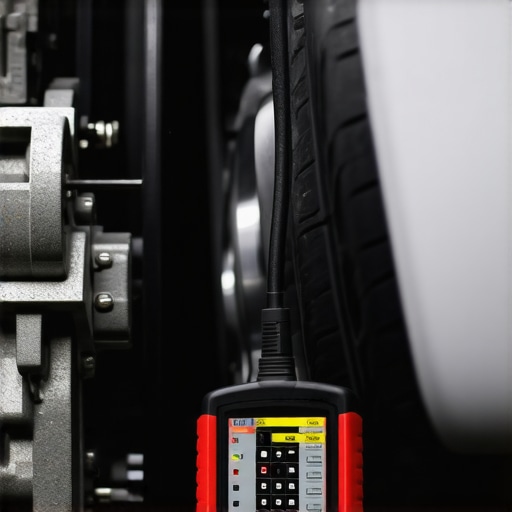
How Regenerative Braking Quietly Destroys Your Rotors
While hybrids and EVs are praised for efficiency, their braking systems face a unique paradox. Because the electric motor handles most of the deceleration through regenerative braking, the physical friction brakes are rarely used. This lack of friction leads to a phenomenon known as ‘surface oxidation’ or ‘rust jacking.’ Without the regular ‘scrubbing’ action of a standard brake service, moisture settles on the rotor face, creating deep pits of corrosion that eventually lead to heavy pulsations and reduced stopping power in emergencies. A professional mechanic must look past the pad thickness—which might look brand new—and inspect the structural integrity of the rotor surface for these hidden thermal and corrosive weaknesses.
Copper-Free Pads Change the Sound of Your Commute
Environmental regulations are fundamentally shifting how friction materials are manufactured. The transition to copper-free pads, mandated by various state laws, has introduced a new challenge for auto repair shops: increased NVH (Noise, Vibration, and Harshness). Copper was traditionally used to dissipate heat and dampen noise; without it, manufacturers are turning to complex ceramic blends that require even more precise installation. According to technical bulletins from the Brake Manufacturers Council (BMC), using the incorrect lubricant or failing to replace hardware with these new friction formulas can lead to resonant frequencies that the older copper-rich pads used to mask.
Why do hybrid vehicles suffer from rotor corrosion faster than gas-guzzlers?
The answer lies in the lack of heat. In a traditional internal combustion vehicle, the brakes reach operating temperatures that evaporate moisture and clear away light surface rust almost every time you drive. In a hybrid, the rotors often stay cold for entire trips. This allows atmospheric moisture to penetrate the cast iron, leading to ‘black spotting’—localized areas of hard iron carbide that do not wear at the same rate as the rest of the rotor. This disparity is a primary driver of long-term DTV. If you drive a hybrid, performing a few ‘firm’ stops once a week in a safe area can help keep those surfaces clean.
Stop Ignoring the Brake Booster’s Silent Vacuum Leaks
A final frontier in advanced braking is the health of the vacuum booster. A subtle leak in the diaphragm can lead to a ‘hard’ pedal that many owners mistake for glazed pads. If your tune up doesn’t include a vacuum decay test, you’re missing a critical safety metric. A failing booster forces the driver to apply more physical pressure, which can lead to uneven pad engagement and heat spotting. Are you dealing with a mysterious ‘hard pedal’ or a dashboard warning light that only appears during cold starts? Join the conversation in our community forum or reach out to our team to help diagnose those high-tech hydraulic gremlins before they become a safety hazard.The phenomenon of brake pulsation is one of the most frequently misdiagnosed issues in the modern service bay. While many drivers—and even some entry-level technicians—immediately point toward ‘warping,’ the metallurgical reality of cast-iron rotors makes physical warping under normal driving conditions exceedingly rare. Instead, what most motorists experience is Disc Thickness Variation (DTV), a condition born from lateral runout. When the rotor is not perfectly parallel to the wheel hub, it wobbles as it rotates, striking the brake pads twice per revolution. Over time, this creates thin spots in the metal, leading to that rhythmic shudder. The solution isn’t always a new set of parts; often, it is a $10 hub cleaning procedure that restores the mating surface to factory tolerances.
Stop Chasing Warped Rotors and Look at the Hub
Achieving a vibration-free brake service requires more than just swapping pads. A professional mechanic understands that the interface between the rotor and the wheel hub is where most ‘warping’ complaints actually begin. Even a few thousandths of an inch of rust scale or debris on the hub can translate into significant runout at the outer edge of the rotor. This is precisely why your new brake rotors still pulse after a professional install. By utilizing a hub cleaning kit—essentially a specialized abrasive pad that fits over the wheel studs—you can prevent future vibrations.
The $10 Tool That Outperforms High-End Diagnostic Scanners
In the world of auto repair, we often look for high-tech solutions to mechanical problems. However, a stainless steel wire brush or a hub-scrub tool is arguably the most valuable asset for brake longevity. This precision-focused approach is highlighted in our guide on brake service secrets: how to boost safety and longevity. According to technical standards regarding friction material transfer, maintaining clean mating surfaces is critical for preventing lateral runout and ensuring consistent pad-to-rotor contact. It is a fundamental part of any comprehensive tune up for the braking system.
Why Does My Brake Pedal Pulse Only After the Shop Fixed It?
This is a common frustration for drivers. Often, the installation of new, high-quality rotors on a dirty, corroded hub actually exacerbates the runout problem. To avoid this, savvy car owners should look for auto repair cost saving tips from industry experts that emphasize preventative cleaning. If your technician isn’t using a hub-scrub tool during your service, they are likely leaving performance on the table. For more insights, you can check our brake maintenance hacks to prevent costly failures to see how small investments in labor save hundreds in parts. Beyond the hub-to-rotor interface, the most overlooked mechanical failure is caliper slider stagnation. If a mechanic only swaps the pads and rotors without servicing the guide pins, the caliper cannot float freely. This leads to uneven pressure and is a primary reason why your new brake pads squeal after a professional local install. High-temperature silicone lubricant is non-negotiable here. You can find more on the simple move that fixes a sticky brake caliper in our technical library.
Don’t Let Stiff Caliper Pins Ruin an Expensive Brake Job
When pins are neglected, the inner pad often wears at twice the rate of the outer pad. This isn’t just a part-wear issue; it’s a safety hazard that increases stopping distances. To ensure the highest level of auto repair, every slide pin should be removed and cleaned. According to technical data, the transfer layer—the thin film of friction material that bonds to the rotor—is highly sensitive to uneven pressure. Without smooth caliper movement, this transfer layer never forms correctly. Using how a $6 can of brake cleaner saves your new pads from early glazing techniques ensures that the friction surfaces remain chemically pure during the critical bedding-in process.
Why Most Tune-Ups Fail to Address Hydraulic Contamination
Many drivers view a tune up as strictly an engine-related event. However, a true expert views the vehicle as a holistic system. The hydraulic integrity of your brakes is just as vital. When you consider that brake fluid is hygroscopic—meaning it actively absorbs moisture—the danger becomes clear. You should regularly how to test your brake fluid for water content at home to catch this before it compromises your safety.
Is Your Brake Fluid Secretly Rotting Your Calipers From the Inside Out?
If you notice your brake pedal feels ‘spongy’ after a long drive, the culprit is likely water in the fluid. This is often misdiagnosed as a failing master cylinder. By implementing brake service strategies that save you money and extend brake life, you can avoid these pitfalls through simple fluid flushes every two years.
Why Stainless Steel Hardware is the Non-Negotiable Hero of Quiet Brakes
Most drivers focus exclusively on the friction material, but a professional mechanic knows that the small stainless steel clips dictate the success of the job. Over thousands of miles, these clips lose their tension and become victims of ‘rust jacketing.’ If you aren’t replacing these clips with every single pad change, you are essentially building a house on a crumbling foundation.
How a Loose Wheel Bearing Tricks You Into Buying New Rotors
Sometimes, the source of a pulsating brake pedal isn’t the brake system at all; it is the wheel bearing. Even if a bearing isn’t making the classic growling noise, it may allow the entire hub assembly to tilt slightly. Before you commit to an expensive brake service, insist that your technician performs a dial indicator test. This level of diagnostic precision is what separates a true specialist from a generalist.
Master the Bedding-In Process to Save Your Friction Layer
The final step of any auto repair involving new pads and rotors is the bedding-in procedure. This is a chemical process that transfers a uniform layer of friction material. Many enthusiasts find that following a strict bedding protocol can increase the lifespan of their brake service by up to 30%. However, modern vehicles with Electronic Parking Brakes (EPB) introduce new complexity.
How Regenerative Braking Quietly Destroys Your Rotors
While hybrids and EVs are efficient, their braking systems face a unique paradox. Because the physical friction brakes are rarely used, they suffer from ‘rust jacking.’ A professional mechanic must look past the pad thickness and inspect the structural integrity of the rotor surface.
Expert Insights & Advanced Considerations
The Thermal Paradox of Drilled and Slotted Rotors
Many drivers purchase performance rotors for the aesthetic, but a seasoned mechanic understands that for daily driving, the reduced metal mass can actually increase the risk of DTV by limiting the rotor’s heat-sink capacity. In high-traffic urban environments, standard solid or vented rotors often provide superior thermal stability.
Why Copper-Free Transitions Demand Higher Installation Precision
Without the lubricating properties of copper, modern ceramic blends are far less forgiving of mounting errors. This is why you must maximize your brake service efficiency with these tips to ensure that the hardware is seated perfectly to prevent resonant noise frequencies.
The Invisible Impact of Brake Hose Expansion
A firm pedal doesn’t just come from the calipers; it depends on the integrity of the flexible lines. Over time, internal rubber degradation allows the hoses to expand under pressure, absorbing the hydraulic force intended for the pistons. Always include a hose expansion test during a comprehensive tune up for older vehicles.
Curated Expert Resources
SAE International Technical Papers: These documents offer the definitive metallurgical data on cast iron rotor composition and thermal cracking thresholds. The FMSI Guide: A critical database for professionals to identify exact friction formulas and backing plate dimensions for international vehicle platforms. Brake Manufacturers Council (BMC) Technical Library: An essential resource for understanding the latest environmental mandates and their impact on noise mitigation.
Final Expert Perspective
Modern brake service has transitioned from a basic mechanical replacement to a high-precision calibration task. The difference between a lifetime of silent, smooth stopping and a recurring vibration nightmare lies in the thousandths of an inch found on the hub face and the chemical integrity of the fluid. To ensure your vehicle remains a benchmark of reliability, follow the ultimate tune up checklist for every car owner and prioritize the small, high-impact details like hub cleaning and hardware replacement. If you have questions about a persistent vibration or need a diagnostic second opinion, we invite you to contact us to consult with our technical specialists.