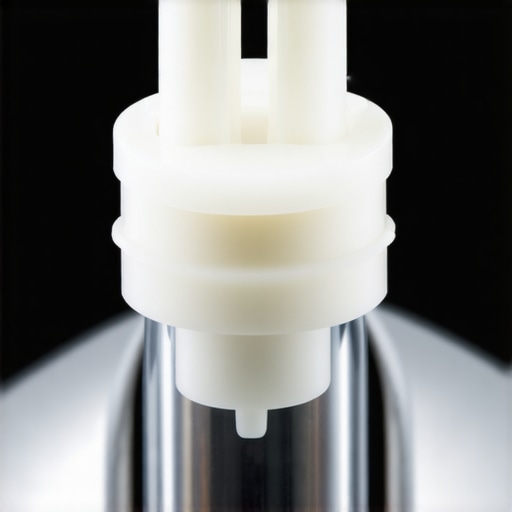
Mechanical entropy is an unavoidable reality for any vehicle equipped with a manual gearbox. Over decades of operation, the tactile connection between the driver and the transmission inevitably degrades, often manifesting as excessive horizontal play or a distinct lack of centering tension. While many drivers fear a failing synchronizer or internal transmission damage, the reality is frequently far less catastrophic. The culprit is almost always found within the external linkage assembly—specifically, the failure of small polymer bushings or retaining clips that maintain the structural integrity of the shift lever’s fulcrum. Identifying these minor failures early is a cornerstone of professional tune-up strategies to save money on auto repairs.
Shifters Lose Precision When This Tiny Clip Fails
The primary point of failure in modern manual linkages is the pivot ball socket and the corresponding retaining clips. These components are typically manufactured from high-density nylon or similar thermoplastics, chosen for their self-lubricating properties. However, as noted in technical research published by the Society of Automotive Engineers (SAE), these polymers are subject to thermal degradation and mechanical fatigue over thousands of shift cycles. When the $9 plastic clip or bushing at the base of the shifter snaps or wears thin, it introduces several millimeters of unintended movement. This ‘slop’ translates to inches of play at the shift knob, making it difficult to find gates and increasing the risk of a mis-shift. Mastering the replacement of these small parts is one of the most effective mechanic tips for diagnosing common auto problems before they lead to drivetrain damage.
Why Does Your Gearbox Feel Like a Spoon in Soup?
This common industry descriptor refers to a shifter that lacks any defined resistance when in neutral. If you can move your gear lever three inches in either direction while it is ostensibly ‘centered,’ the mechanical connection to the selector rods has been compromised. In most front-wheel-drive vehicles, the cable ends utilize a small plastic clip or ‘C-clip’ to secure the cable to the transmission-side bracket. If this clip falls off or vibrates loose, the cable housing moves rather than the inner wire, resulting in that characteristic vague sensation. If you find yourself in this situation, you can often execute a DIY repair by learning how to fix a loose shifter with a 6 bushing, which follows the same mechanical principles as the clip replacement.
Stop Overpaying Your Mechanic for Linkage Problems
Dealerships and less scrupulous repair shops will often quote customers for a full shift cable replacement or even a new shifter assembly when only a tiny plastic interface has failed. This can turn a sub-ten-dollar repair into a $500 invoice. An expert approach involves stripping the center console to inspect the base of the lever first. If the clips are intact at the cabin side, the investigation must move to the engine bay where the cables meet the transmission. Replacing just the clip or the carrier bushing restores the factory-spec tolerances without the need for specialized tools. This level of granular diagnostic work is what separates a technician from a mere parts-changer. To ensure your vehicle remains in peak condition beyond the gearbox, consider integrating these essential tune-up tips to boost your car’s performance in 2025 into your maintenance schedule.
The shift linkage exists in a high-thermal-stress zone where ambient temperatures can fluctuate by hundreds of degrees within a single drive cycle. Proximity to the exhaust manifold means the nylon components frequently exceed their stable operating temperatures, leading to a process known as thermal embrittlement. This is why a gear lever might feel perfectly functional during a cold morning but become sloppy or rubbery after an hour of highway driving. Understanding this relationship between heat and mechanical precision is a core part of the essential guide to auto repair. If you notice that your vehicle is struggling to find gears particularly after a long trip, the issue may not be internal; it is often the external cable ends expanding or the clips losing their tension. 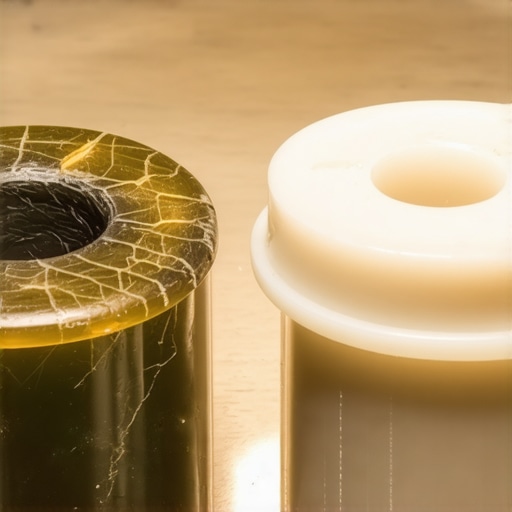
Does Your Shifter Fight Back Only When the Temperature Drops?
Many drivers confuse linkage issues with synchronizer failure when the weather turns cold. If you find that the stick is physically difficult to move until the car warms up, you are likely dealing with contaminated lubricant or moisture trapped inside the shifter cable bellows. According to the Bosch Automotive Handbook, the internal friction of control cables increases exponentially if the lubricant film is compromised by particulate matter or oxidation. This mechanical drag creates a heavy, unresponsive feel that often resolves itself as engine bay heat thins the grease. However, ignoring this symptom can lead to snapping the very clips we discussed earlier. In extreme cases, check if 3 signs your transmission fluid is actually burning are present, as extreme internal heat can also migrate outward and damage the external linkage seals. To mitigate this, a $20 fluid swap that can save a slipping transmission can often improve shift quality from the inside out, reducing the force you need to apply to the external clips.
Differentiate Between Cable Stretch and Clip Failure
Not all slop is caused by a broken clip. In vehicles with higher mileage, the inner braided steel cable of the shift mechanism can undergo permanent deformation, commonly referred to as cable stretch. While the clips might be holding the housing firmly in place, the cable itself has lengthened just enough to prevent full engagement of the gear selector. This is a nuanced distinction that requires a two-person diagnostic approach: one person moving the shifter inside the cabin while another observes the movement at the transmission bracket. If the clip moves even slightly within the bracket, the clip is the culprit. If the bracket stays still but the gear doesn’t engage, the cable or the internal selector is to blame. This diagnostic precision is similar to troubleshooting an automatic where you might seek a $20 fix for a transmission that hunts for gears. By isolating the external linkage from the internal gearbox health, you prevent unnecessary labor costs. Have you ever tried a home-brew fix for a loose shifter? Share your results in the comments—we are always looking for community-tested engineering hacks. For those experiencing resistance in specific gears, investigate the simple reason your transmission shifts hard when it is cold to rule out external environmental factors before pulling the gearbox.
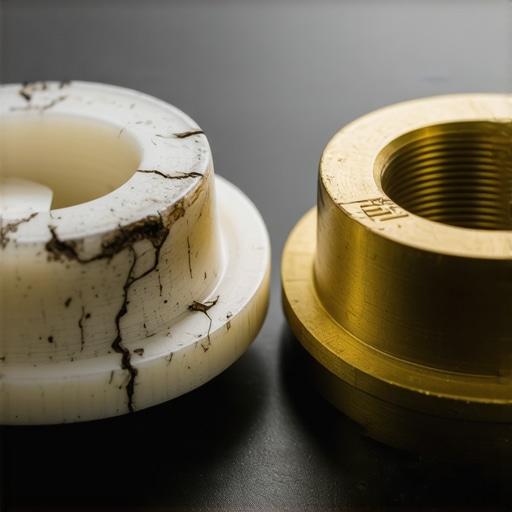
The transition from factory-spec components to performance-oriented hardware often hinges on material science. Original Equipment Manufacturers (OEMs) typically prioritize the dampening of Noise, Vibration, and Harshness (NVH) over pure tactile feedback. This is achieved by using soft rubber or low-durometer plastics in the linkage points. However, as these materials age, they lose their structural memory. Upgrading to solid bushings made from brass or Delrin—a high-performance acetal homopolymer—eliminates the squishy sensation entirely. When you remove the compliance of rubber, every millimeter of hand movement translates directly into gear engagement. This modification is frequently discussed in performance circles as a necessary precursor to more aggressive brake service fundamentals for performance driving, where precise downshifting is non-negotiable.
Can a short-throw shifter kit actually damage your transmission?
While many enthusiasts rush to install short-throw kits to reduce the distance between gears, there is a mechanical trade-off that is rarely addressed in marketing brochures. By shortening the lever above the pivot point or lengthening it below, you are altering the mechanical advantage. This requires more physical force to overcome the resistance of the synchronizers. According to the DuPont technical data for Delrin acetal resin, the material’s high fatigue resistance is excellent for these applications, but the increased stress on the remaining plastic components in the linkage can accelerate fatigue failure. If the driver “slams” gears with a short-throw kit, the internal shift forks may eventually bend or the synchronizer rings can experience premature wear. To prevent this, ensure your gearbox is healthy by checking if signs of transmission failure and how to fix it are present before increasing the leverage strain.
Adjust the Centering Spring Like a Pro
A common oversight during a linkage refresh is the centering spring tension. If your shifter stays leaned over toward the fifth-gear gate instead of snapping back to the center, the internal or external return springs have likely lost their preload. On many cable-actuated systems, there is a specific adjustment nut or a threaded rod on the selector tower. Adjusting this requires putting the transmission into a “service mode” using a locking pin—often a simple 5mm drill bit or a specialized tool—to hold the shifter in a perfect neutral 12 o’clock position. Once locked, the cable tension is released and reset, ensuring that the “home” position of the lever aligns perfectly with the “home” position of the selector forks inside the case. This alignment process is as critical as any complete guide to car tune-ups because it prevents the slight “drag” that occurs when a shifter is partially pre-loading a shift fork.
Why You Should Never Ignore a Squeaky Lever
A squeak is more than an annoyance; it is the sound of friction-induced heat destroying your remaining bushings. Most modern shift assemblies are lubricated for life with a white lithium or silicone-based grease. Over time, road grit infiltrates the shifter boot and mixes with this grease to create an abrasive grinding paste. If you hear a high-pitched chirp when moving between second and third, it is time to clean and re-lubricate the pivot ball. Using the wrong lubricant here can be catastrophic; petroleum-based greases can actually cause certain plastics to swell and seize. Always opt for a high-quality urea-based grease or specialized synthetic lubricants recommended by the manufacturer. If you have managed to silence a stubborn linkage noise, jump into the forum or leave a comment below to tell us which lubricant worked best for your specific make and model. Precision here directly impacts how much force is transferred to the master cylinder and clutch assembly, which is why keeping an eye on common brake problems and how to fix them is often a parallel task for the meticulous DIYer.
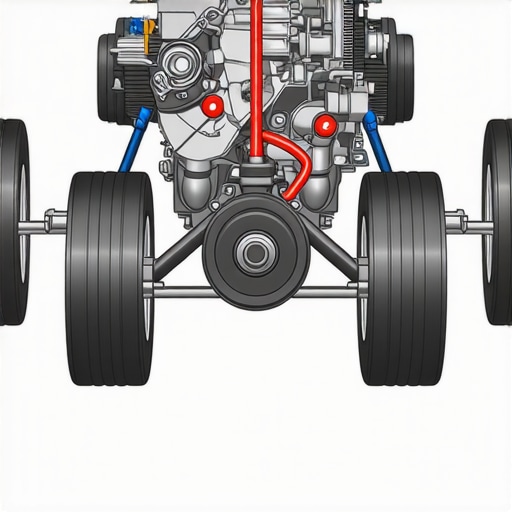
Beyond the tactile feedback of the lever itself, a master-level diagnostic approach requires examining the macro-environment of the powertrain. Excessive engine movement is a frequent, yet overlooked, contributor to premature linkage wear. When the rubber in your motor or transmission mounts degrades, the entire engine-transmission unit pitches forward and aft during acceleration and deceleration. This parasitic movement exerts a constant, unintended tug on the shift cables, forcing the internal wire to scrape against the housing with every throttle input. This phenomenon not only accelerates “cable stretch” but also puts undue lateral pressure on the shifter clips, eventually snapping them. Upgrading to stiffer polyurethane mounts can often restore a crisp shift feel more effectively than any brake service fundamentals for performance driving, as it stabilizes the foundation upon which the linkage operates.
Worn Engine Mounts Steal Your Shift Precision
If you experience a “pop out” of gear only under heavy load, the culprit is rarely the gearbox internals. Instead, the engine is likely rotating so far on its mounts that the shift cable is physically pulled out of its seated position. This mechanical interference creates a feedback loop where the driver applies more force to keep the car in gear, further straining the delicate plastic bushings. To combat this, technicians use a pry bar to check for more than a quarter-inch of deflection in the mounts. This rigorous inspection process is a staple in mechanic tips for diagnosing common auto problems that defy a simple visual check of the shifter base.
Is your gear position sensor causing a phantom limp mode?
Modern manual transmissions are no longer purely mechanical; they are integrated into the vehicle’s electronic architecture through Hall-effect sensors or potentiometer-based gear position sensors. These sensors tell the ECU exactly which gate is selected to manage idle speeds, hill-start assist, and active rev-matching. When a linkage becomes sloppy due to a failing clip, the lever may not move the internal selector far enough to trigger the sensor, even if the gear is physically engaged. This mismatch can trigger a Check Engine Light (CEL) or a “limp mode” where the engine reduces power to protect the drivetrain. Consulting the American Society for Testing and Materials (ASTM) standards on electrical contact lubricants can help you choose the right dielectric grease to prevent oxidation in these sensitive sensor connectors during a linkage overhaul.
Combat Shear Stress with Synthetic Grease
The choice of lubricant within the shifter housing is a matter of chemical compatibility. The high shear forces present at the pivot ball require a grease that maintains its viscosity without “bleeding” out of the joint. Low-quality greases will separate into oil and thickener under the friction of rapid shifting, leaving the plastic-on-metal contact points dry and prone to galling. A high-performance synthetic grease with a high “drop point” ensures that even on the hottest summer days, the lubrication stays where it’s needed. This level of attention to detail is what defines tune-up strategies to save money on auto repairs, as preventing wear is always cheaper than replacing the assembly. Before you close up the center console, ensure every moving interface is coated in a film of moisture-resistant lubricant to prevent future corrosion. Have you noticed a change in your shifter’s effort after a long highway stint? Tell us about your experience in the comments, and don’t forget to check out our essential tune-up tips to boost your car’s performance in 2025 for more drivetrain optimization secrets.
Expert Insights & Advanced Considerations
Don’t Let Lever Geometry Ruin Your Syncros
Increasing leverage through a short-shifter kit might feel faster, but it significantly raises the internal torque applied to the shift forks. If your bushings are already soft, you are effectively masking a mechanical deficiency with brute force. It is far better to perform a ultimate tune-up checklist for every car owner procedure on the linkage first to see if the factory throw was actually the problem. Often, restoring the original crispness removes the desire for aftermarket modification entirely.
Comparing Delrin and Brass for the Ultimate Feel
While brass bushings offer a literal bolt-action feel, they transfer high-frequency vibration directly into your palm. For a daily driver, Delrin (acetal) provides the perfect middle ground between the mushy OEM rubber and the harshness of metal. This decision mirrors how one might approach brake service fundamentals for performance driving, balancing aggressive response with street-legal comfort. Acetal components maintain dimensional stability even when exposed to the high temperatures found near the transmission tunnel.
Linkage Precision is a Critical Safety Requirement
A missed shift is not just embarrassing; in a high-speed merging scenario, a money shift can result in catastrophic engine failure. Ensuring your clips are seated correctly is as vital as knowing when to know you need brake service now. A secure linkage ensures that the driver’s intent is perfectly translated to the wheels without hesitation.
Curated Expert Resources
To advance beyond basic DIY repairs, consult the following authoritative materials: SAE International Technical Papers offer deep dives into the tribology of shift cables and lubricant degradation. The DuPont Design Guide for Acetal Resins is essential for anyone considering custom-machined bushings, providing data on friction coefficients. Finally, always cross-reference your work with a Factory Service Manual (FSM), which contains the exact centering pin specifications for your specific vehicle.
Reclaim the Tactile Joy of Your Gearbox
The mechanical connection between a driver and their machine should be transparent and rewarding. By addressing failing clips and worn bushings early, you avoid the escalating costs associated with internal gearbox repairs and maintain a precise manual shifter linkage. #IMAGE_PLACEHOLDER_E# Mastering these small components is a hallmark of tune-up strategies to save money on auto repairs that keep your vehicle performing at its peak. We invite you to share your most difficult linkage diagnostic stories in the comments or reach out via our contact us page to discuss advanced drivetrain setups with our community of specialists.