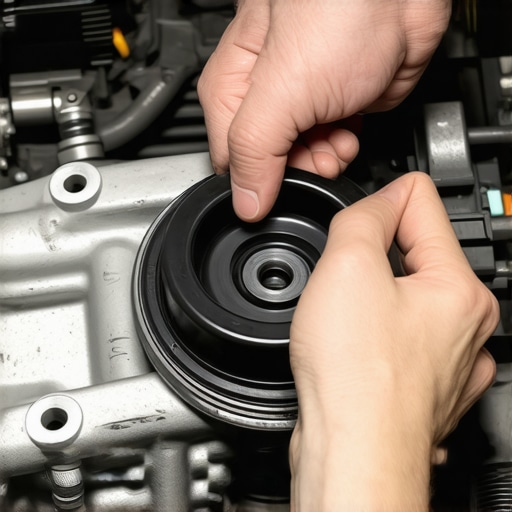
Experienced technicians recognize that a persistent, acrid scent of burning oil in the cabin is rarely a sign of catastrophic engine failure, but rather a diagnostic beacon pointing directly to the top-end of the cylinder head. The valve cover gasket, a simple rubber or cork seal, is the most common culprit behind this olfactory nuisance. When these seals fail due to prolonged thermal cycling, oil seeps onto the scorching exhaust manifold, vaporizing instantly into the ventilation system. Addressing this issue through proactive auto repair strategies not only improves the driving experience but prevents long-term damage to electrical connectors and sensitive sensors located in the engine bay.
The Engineering Reality of Thermal Stress on Engine Seals
Modern engines operate at significantly higher temperatures than their predecessors to maximize fuel efficiency and reduce emissions. This increased heat load accelerates the hardening and shrinking of the valve cover gasket. Once the material loses its elasticity—a process known as vulcanization—it can no longer accommodate the minute vibrations and expansions of the metal surfaces it is designed to seal. A skilled mechanic knows that a leak here often mimics a more serious head gasket failure or a failing PCV valve system, which can increase crankcase pressure and force oil past even relatively new seals.
Does a Minor Oil Seep Pose a Genuine Fire Risk?
While a few drops of oil on the driveway are a nuisance, oil dripping directly onto a catalytic converter or exhaust manifold can reach its flash point under high-load conditions. Automotive safety data suggests that fluid leaks onto hot surfaces are a primary cause of non-collision engine fires. Beyond the fire hazard, the smoke produced contains carbon monoxide and other volatile organic compounds that degrade the air quality inside the vehicle. For this reason, identifying a leak during a routine tune up is a critical safety protocol. According to the technical experts at the National Institute for Automotive Service Excellence (ASE), maintaining the integrity of fluid seals is paramount for both vehicle longevity and passenger safety.
Precision Installation Techniques for the $12 Solution
The trick to a permanent fix lies not just in buying the $12 replacement part, but in the preparation of the mating surfaces. You must ensure the cylinder head edge is surgically clean and free of old RTV silicone or gasket fragments. Over-tightening the valve cover bolts is a common amateur error; using a calibrated torque wrench to reach specific manufacturer specifications is the only way to ensure even pressure across the gasket. This precision is similar to the care required during a high-end brake service, where component alignment dictates the success of the repair. If you are noticing mysterious oil loss or foul smells, contact our team of experts for a professional diagnostic consultation today.
The Hidden Connection Between Oil Leaks and Misfires
On many modern overhead cam engines, the valve cover gasket also seals the spark plug wells. When these inner seals fail, the wells fill with engine oil, effectively submerging the ignition coils and spark plug boots. This leads to electrical tracking and mystery misfires that standard diagnostic scanners might misinterpret as bad ignition components. Before replacing expensive electronics, a thorough inspection of the gasket integrity can often resolve the root cause for a fraction of the cost.
The chemical interaction between synthetic engine oil and EPDM rubber is a slow-motion disaster for your cooling and drive systems. Once oil saturates a rubber hose or belt, it causes the material to soften and swell—a condition known as ‘sponging.’ This is why we often see a cascade of failures following a neglected valve cover leak. If you have recently noticed a screeching sound under the hood, you might need to learn how to fix a squeaky serpentine belt without using spray, as most aerosol conditioners only mask the underlying oil contamination. Addressing the root cause is the only way to ensure the long-term reliability of your vehicle’s accessory drive.
Why Your Drive Belts Are Failing Long Before Their Time
Neglecting a minor seep often leads to more than just a dirty driveway; it compromises the structural integrity of every rubber component in the engine bay. Modern serpentine belts are designed to last upwards of 100,000 miles, but that lifespan is cut in half when oil acts as a lubricant on the pulley surfaces. This creates heat-generating friction that glazes the belt, leading to premature cracking. A seasoned pro knows that mechanic tips for diagnosing common auto problems often start with following the path of a fluid leak to see what else it has ‘poisoned.’ Replacing the belt without fixing the gasket is a classic example of treating the symptom rather than the disease.
Can a Failing Gasket Actually Destroy Your Alternator?
The alternator is frequently positioned directly beneath the valve cover on many four-cylinder and V6 engine configurations. When oil steadily drips into the alternator housing, it coats the internal copper windings and the carbon brushes. This oil film attracts road grit and dust, creating a conductive, abrasive paste that accelerates brush wear and can eventually lead to a total charging system failure. According to the Car Care Council, unaddressed fluid leaks are one of the most frequent contributors to ‘domino effect’ repairs that turn a simple gasket swap into a thousand-dollar ordeal. Proactive maintenance is always cheaper than reactive repair.
Track Down Ghost Leaks With Ultraviolet Precision
When an engine is covered in years of accumulated grime, identifying the exact origin of a fresh leak is nearly impossible through visual inspection alone. Experts use a specific diagnostic protocol involving a fluorescent UV dye added to the oil system. After running the engine for a short period, a technician uses an ultraviolet light to trace the luminous trail back to its source. This prevents the ‘parts cannon’ approach, where unnecessary components are replaced in hopes of stumbling upon the fix. This level of accuracy is essential because auto repair myths debunked often reveal that what looks like a rear main seal leak is frequently just a valve cover drip running down the back of the engine block.
The Crucial Link Between Crankcase Pressure and Seal Life
Before you commit to a gasket replacement, you must verify that the engine’s breathing system is functioning correctly. A clogged PCV valve system creates a pressurized environment inside the engine that literally pushes oil out of the weakest point—usually the valve cover gasket. If the PCV system is blocked, even a brand-new gasket will begin to leak within weeks. Always integrate a full system check into your auto repair routine to ensure you aren’t fighting a losing battle against internal pressure. Furthermore, don’t overlook the potential for a spark plug boot error caused by oil saturation, which can mimic much more expensive ignition failures. Have you ever dealt with a leak that just wouldn’t quit? Share your experience in the comments below or ask our experts for a second opinion on your diagnostic results.
Stop Using Vinegar-Cure Silicone on Your Modern Engine
Many weekend warriors grab the first tube of RTV they see at the local parts store, often a generic blue or clear silicone. This is a mistake that can haunt your engine’s electronics for years. Standard acetoxy-cure silicones release acetic acid—the source of that sharp vinegar smell—as they cure. This acid is highly corrosive to copper and can migrate through the wiring harness to poison oxygen sensors, leading to erratic fuel trims and failed emissions tests. A professional mechanic insists on sensor-safe, oxime-cure RTV, specifically engineered for the high-vibration environment of a modern cylinder head. This distinction is what separates a repair that lasts a decade from one that triggers a check engine light in six months. Always allow the sealant to skin over according to the manufacturer’s window before mating the surfaces to ensure a robust, flexible bead.
Can High-Mileage Oil Actually Stop a Gasket Leak?
The short answer is almost always no. High-mileage motor oils contain seal swell additives—chemical esters designed to migrate into the molecular structure of rubber seals to restore some elasticity. While this might temporarily slow a weep from a soft nitrile seal on an older pushrod engine, it is virtually powerless against a valve cover gasket that has already undergone vulcanization and become as brittle as glass. In fact, over-relying on these chemical ‘fixes’ can sometimes soften other critical seals, like your front main seal or oil pan gasket, to the point of structural failure. It is far more cost-effective to perform a proper auto repair than to gamble with the chemistry of your engine’s internal components. If the rubber is cracked, no amount of additive will bridge the physical gap.
Why Surface Finish Decides the Fate of Your New Gasket
Expert-level sealing isn’t just about how clean the metal is; it’s about the micro-texture of the mating surfaces. In the world of precision engineering, this is measured as Roughness Average (Ra). According to technical specifications from Victor Reinz, a leading global gasket manufacturer, a surface that is polished too smooth can be just as problematic as one that is too rough. A mirror finish prevents the gasket material from biting into the metal, leading to gasket displacement or ‘squish-out’ under high crankcase pressure. Conversely, deep gouges from a generic metal scraper create micro-channels that oil will eventually find. Using a plastic scraper and a specialized chemical solvent is the only way to preserve the factory-machined Ra value and ensure the gasket stays exactly where you seated it.
How Heat Warps Your Valve Cover and Ruins the Seal
We often focus on the gasket itself, but the valve cover is a dynamic component that expands and contracts at a different rate than the aluminum cylinder head. Composite or plastic valve covers are particularly prone to ‘thermal set’ or permanent warping after years of extreme heat cycles. If you install a brand-new gasket on a cover that has bowed even half a millimeter in the center, you are almost guaranteed a comeback leak. Technicians use a precision straightedge to check for flatness across the mounting flange. If the cover is warped, no amount of torque will force it back into a permanent seal. This attention to detail is as vital as the calibration used in a professional brake service to prevent rotor pulsation. Think you’ve got a persistent leak that just won’t quit? Consult our master technicians to ensure your next repair is your last, especially before you consider more invasive engine work.
The Critical Role of Torque Sequence in Gasket Longevity
Applying the correct torque to valve cover bolts is not just about the final number on the wrench; it is about the path you take to get there. Most manufacturers specify a ‘center-out’ spiral pattern to gradually move any slack in the gasket toward the outer edges. Skipping this step often results in a ‘pinch point’ where the gasket bunches up, creating a microscopic gap that will eventually weep. Furthermore, many modern engines utilize shoulder bolts that are designed to bottom out at a specific depth. If you ignore the sequence or reuse bolts that have stretched beyond their elastic limit, you risk uneven clamping force that can crack a plastic cover or snap a bolt head off inside the cylinder head.
While mechanical precision during installation is non-negotiable, the chemical environment inside the crankcase plays an equally decisive role in the longevity of your top-end seals. Modern full-synthetic lubricants are engineered with aggressive detergent packages designed to keep internal components pristine, yet these same additives can inadvertently accelerate the degradation of older elastomer formulations. For enthusiasts running high-performance or high-mileage vehicles, the choice of oil viscosity is more than just a matter of fuel economy; it is a matter of maintaining the interfacial tension required to prevent weepage at the gasket boundary.
The Hidden Trade-off of Using Thin Oils in High-Mileage Engines
The industry-wide shift toward ultra-low viscosity oils, such as 0W-16 and 0W-20, has revolutionized cold-start protection and CAFE ratings. However, in engines with significant thermal history, these thinner fluids possess a higher capillary action, allowing them to migrate through microscopic surface irregularities that a traditional 10W-30 would effectively bridge. This is particularly evident in the “ghost leaks” that appear shortly after switching to a high-detergency synthetic oil. The oil isn’t creating the leak; it is simply uncovering a failure in the gasket’s structural integrity that was previously masked by carbonaceous deposits.
Does Low-Viscosity Lubricant Accelerate Seal Weepage Under High Load?
Technically, the viscosity itself does not “eat” the gasket, but the high solvency of modern Group IV and V base stocks can strip away the protective varnish that often acts as a secondary seal on aging engines. When this happens, the rubber is exposed to raw chemical interaction without the buffer of localized deposits. Experts at SAE International have documented how specific ester-based additives can lead to seal shrinkage or excessive swelling depending on the polymer’s saturation levels. Understanding this chemical synergy is vital before you decide to “clean” an old engine with aggressive flushes, as you might inadvertently dissolve the very material holding your oil inside the block.
How Excessive Blow-By Pressure Turns Your Engine Into a Pressure Cooker
Even the most robust gasket cannot withstand a failing piston ring scenario. As engines age, combustion gases blow past the rings and enter the crankcase, creating a positive pressure environment that far exceeds the design limits of a standard valve cover seal. If your PCV valve system is already struggling, this excess pressure will find the path of least resistance. Often, a technician will replace a leaking gasket only to have the new one fail within months because the underlying “blow-by” issue was never addressed. This highlights the necessity of a comprehensive leak-down test during any significant auto repair diagnostic phase.
Protect Your Intake Valves from Oil Vapor Contamination
In Gasoline Direct Injection (GDI) engines, a leaking valve cover gasket or a compromised internal baffle can lead to oil vapors being sucked directly into the intake manifold. Unlike port-injected engines, there is no fuel spray to wash these oily deposits off the intake valves. The result is “carbon choking,” which kills performance and fuel economy. A proactive tune up should always include an inspection of the intake tract for signs of oil pooling. If you are noticing a loss of power alongside that familiar burning smell, reach out to our diagnostic team to prevent expensive walnut blasting services later. Have you checked your oil levels lately? A sudden drop without a visible puddle usually means your engine is “breathing” its own oil through a compromised seal.
Expert Insights & Advanced Considerations
Thermal Imaging Reveals Hidden Hot Spots
While UV dye is excellent for pinpointing an active leak, an infrared camera reveals the thermal stress patterns that cause gaskets to fail prematurely. High-performance engines often suffer from restricted airflow near the rear of the cylinder head, creating localized heat zones that harden rubber seals faster than the front of the block. Addressing these hot spots is a hallmark of an advanced auto repair strategy.
Don’t Reuse Those Fatigued Bolts
Many modern valve cover fasteners are engineered with a specific tensile strength meant for a single installation cycle. Reusing these shoulder bolts can result in false torque readings where the bolt bottomed out but failed to apply even pressure across the gasket surface. During a comprehensive tune up, a master technician will often replace the hardware to prevent a comeback leak.
Wait for the RTV Sealant to Cure
The biggest mistake in DIY repairs is starting the engine too soon after applying silicone. If you pour fresh oil over a wet RTV bead at the cylinder head joints, you risk emulsifying the sealant before it forms a structural bond. For a permanent fix, the vehicle should ideally sit for 24 hours to ensure the chemical bond is impervious to crankcase pressure. This patience is what separates a driveway fix from the work of a skilled mechanic.
Curated Expert Resources
SAE International Technical Papers: These documents offer the deepest dive into elastomer science and how heat cycles affect nitrile and EPDM rubber at a molecular level.
ASE Training Guides: Use these to understand the standardized diagnostic logic used for professional certification in engine repair.
Manufacturer Service Bulletins: These provide specific torque patterns and gasket revisions that aren’t found in generic repair manuals, making them essential for high-level mechanic tips for diagnosing common auto problems.
Final Expert Perspective
#IMAGE_PLACEHOLDER_E#
Successfully managing engine oil leaks is a balance of mechanical precision and chemical awareness. By moving beyond the symptom and treating the root causes—like excessive crankcase pressure and thermal warping—you safeguard the long-term reliability of your vehicle. A high-quality auto repair saves you thousands by protecting sensitive components like your alternator and serpentine belts from oil-induced failure. If you’re struggling with a recurring leak, contact our team today to schedule a precision diagnostic and ensure your engine stays clean and reliable.