Stop chasing ghosts with expensive scanners and focus on dielectric integrity
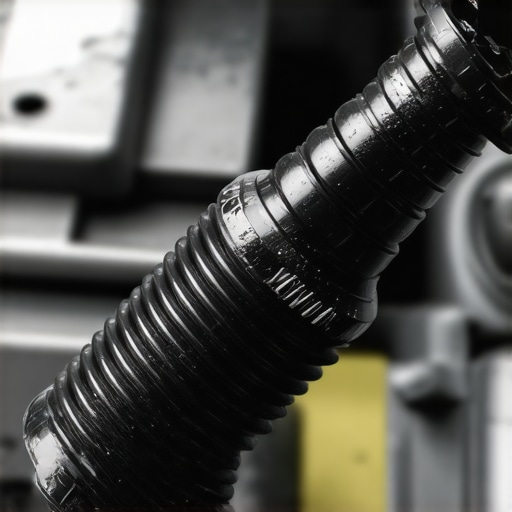
Modern engine diagnostics often fall into the trap of over-reliance on digital data, overlooking the physical degradation of high-voltage components. When a driver experiences a stumble or a mystery misfire under load, the immediate instinct is to blame expensive sensors or complex fuel delivery systems. However, the root cause frequently lies in the humble ignition coil boot—a $12 rubber component that serves as the last line of defense between 30,000 volts and the engine block. A failure in this dielectric barrier causes arcing, where the electrical charge takes the path of least resistance to ground rather than jumping the spark plug gap. A seasoned mechanic knows that secondary ignition leaks are often invisible to the naked eye but can cripple engine performance.
Why does your engine only misfire under heavy load?
Many drivers notice that their vehicle idles perfectly but stumbles the moment they merge onto a highway. This phenomenon occurs because cylinder pressure increases during acceleration, which in turn increases the electrical resistance required for the spark to jump the plug gap. If the spark plug boot has developed a tiny crack or ‘carbon track,’ the high voltage will find it easier to punch through the rubber than to fire the plug. This is why a standard tune up that only involves changing plugs—while ignoring the boots—often fails to resolve deep-seated driveability issues.
How carbon tracking ruins a perfect tune up
Carbon tracking is a permanent, conductive path burned into the surface of the ceramic insulator or the inside of the rubber boot. Once this path is established, the component is effectively ruined. Even if you install brand-new spark plugs, the old boot will quickly contaminate the new ceramic, leading to a repeat failure within weeks. During any professional auto repair, it is imperative to use dielectric grease to seal the boot-to-plug connection, preventing moisture and contaminants from facilitating this electrical bypass. According to technical documentation from NGK Spark Plugs, insulation failure in the spark plug boot is a primary cause of voltage leakage which leads to engine misfires and eventual coil failure.
Physical inspection beats a code reader every time
While an OBD-II scanner might point you toward a specific cylinder via a P0301 or P0304 code, it won’t tell you *why* the misfire is happening. Expert technicians utilize mechanic tips such as ‘stress testing’ the ignition system with a load or using a spray bottle of water to reveal arc-over in the shop. If you are struggling with performance issues, ensure you are following essential tune up tips to catch these small but critical failures before they damage your catalytic converter. Professional maintenance isn’t just about engines; remember that brake service is equally vital for overall vehicle safety and longevity.
Look at fuel trims before you swap more parts
While physical inspections of ignition components are vital, the digital breadcrumbs left in the engine control unit (ECU) tell a parallel story. Too many car owners get stuck in a loop of ‘parts-cannon’ diagnostics, replacing expensive components until a problem disappears. Instead, analyzing your short-term and long-term fuel trims can pinpoint if the engine is gasping for air or drowning in gasoline. A positive fuel trim exceeding 10% often indicates the ECU is adding extra fuel to compensate for unmetered air entering the system. In many cases, the 7-dollar vacuum hose leak is a more likely culprit for a rough idle than a failing fuel pump or a faulty computer.
Is your ECU compensating for a mechanical failure you can’t see?
When an engine develops a small vacuum leak, the ECU attempts to maintain the stoichiometric ratio by increasing injector pulse width. This adjustment might hide the symptom at highway speeds, but it often manifests as a stumble at stoplights or a subtle vibration in the steering wheel. If you suspect a leak, you don’t necessarily need a smoke machine; many experts utilize the 5-dollar soapy water trick to identify bubbles around intake gaskets or vacuum lines. Identifying these mechanical discrepancies early prevents the ECU from running in a skewed state that eventually clogs your catalytic converter and fouls your brand-new spark plugs.
The hidden cost of neglecting sensor hygiene
Modern vehicles rely on a constant feedback loop from Oxygen (O2) and Mass Air Flow (MAF) sensors. These components are the ‘eyes’ of the engine, but they are prone to contamination from oil vapor and road dust. According to technical engineering data from Delphi Technologies, O2 sensors can become ‘lazy’ over time, failing to switch rapidly between rich and lean readings long before they actually trigger a check engine light. This sluggishness results in a noticeable drop in throttle response and fuel efficiency. You can often verify this yourself by learning how to test your own O2 sensor using a basic multimeter to check for consistent voltage swings.
Before committing to a major overhaul, consider that performance restoration can be surprisingly affordable. Often, how to recover your mpg starts with a simple cleaning of the MAF sensor wires or replacing a clogged filter. Neglecting a 15-dollar air filter mistake can force the engine to work harder, increasing internal temperatures and accelerating oil breakdown. By integrating these high-level diagnostic checks into your routine, you move from reactive repairs to proactive maintenance. If you’ve found these diagnostic shortcuts helpful, share this guide with a fellow enthusiast or check out our breakdown of brake service strategies that save you money to keep your entire vehicle running as efficiently as possible.
Stop Blaming Electronics When Your Oil Is the Real Culprit
While cleaning a MAF sensor provides an immediate fix for many, the intricate dance between mechanical hardware and electronic control often stumbles at the intersection of lubrication and logic. Variable Valve Timing (VVT) systems rely on precise oil pressure to actuate cam phasers, shifting the engine’s breathing characteristics in real-time. If you have neglected oil changes or used the wrong viscosity, the resulting ‘stiction’ in the VVT solenoid can mimic a severe ignition misfire or a failing fuel injector. The ECU expects a specific camshaft position based on its command, and when the hardware lags due to sludge or varnish, the timing deviation triggers a limp-mode event that many unseasoned enthusiasts misdiagnose as a computer failure.
Can electromagnetic interference create phantom misfire codes?
One of the most maddening scenarios for any technician is the ‘ghost misfire’—a code that moves from cylinder to cylinder with no physical evidence of failure. This is often the result of Radio Frequency Interference (RFI) or electromagnetic ‘noise’ bleeding into the sensor wiring harness. According to technical specifications provided by Robert Bosch GmbH, the signal-to-noise ratio in modern Hall-effect sensors is so tight that even minor electromagnetic interference (EMI) from a failing alternator diode can induce false triggers in the ignition sequence. If your scanner shows erratic RPM spikes while the engine sounds steady, you are not looking at a mechanical skip; you are seeing the ECU struggling to filter out electrical garbage before it calculates the next spark event.
Fix Your Grounding Straps to Save Your Sensors
Electricity always seeks the path of least resistance, but in a vehicle’s chassis, that path can become blocked by corrosion, paint, or loose bolts. A high-resistance ground at the engine block forces the current to find ‘alternative’ routes, often back-feeding through sensitive sensor return lines. This tiny voltage offset—sometimes as low as 200 millivolts—is enough to skew the data from your coolant temperature sensor (ECT), making the ECU believe the engine is colder than it actually is. Furthermore, without a clean ground, the high-voltage spikes from the ignition coils have no clear path to the battery, often creating a feedback loop that degrades the driver circuits inside the PCM. Consequently, the computer stays in ‘open-loop’ mode, dumping excess fuel and destroying your fuel economy. Before you replace another expensive sensor, performing a simple voltage drop test on your main grounding straps can reveal why your digital data feels so unreliable.
Why Your Crankshaft Sensor Might Be Lying to You
The Crankshaft Position (CKP) sensor is the conductor of the engine’s orchestra, but its performance depends entirely on the physical integrity of the reluctor wheel and the harmonic balancer. In many high-mileage engines, the rubber dampener within the harmonic balancer begins to degrade, allowing the outer ring to wobble or slip. This minute physical oscillation is picked up by the CKP sensor as a variation in crankshaft speed, which the ECU interprets as a misfire. You might spend hundreds on new coils and plugs, only to find that the ‘misfire’ was actually a mechanical vibration masquerading as an electrical fault. This is why a comprehensive mechanic tips session always includes a visual check of the drive pulleys while the engine is under load. If you want to dive deeper into how these mechanical failures impact your long-term reliability, checking out our guide on the essential guide to auto repair is a great next step to building a bulletproof diagnostic routine. As the reluctor wheel passes the sensor tip, the magnetic field generates a square wave signal that must remain perfectly crisp to ensure the timing of the next stroke remains millisecond-accurate…
Don’t Let Your Turbo Waste Energy Through a Pin-Sized Hole
When you move beyond basic rotation and spark, you enter the realm of forced induction and digital communication, where the margins for error shrink significantly. For owners of turbocharged vehicles, a ‘ghost’ loss of power is rarely the turbocharger itself failing; it is more likely a boost leak occurring at a plastic coupling or a dry-rotted intercooler hose. While a standard tune up might catch a dirty air filter, it won’t reveal a hairline fracture in a charge pipe that only opens under 15 psi of pressure. Expert diagnostics require a boost leak tester—a simple tool that pressurizes the intake tract while the engine is off—allowing you to hear the hiss of escaping performance. According to technical bulletins from Garrett Motion, even a minor leak forces the turbocharger to overspeed to maintain target boost, which leads to premature bearing failure and excessive heat soak.
Can a saturating EVAP canister actually cause your fuel trims to go wild?
Many technicians overlook the Evaporative Emission (EVAP) system when hunting for driveability issues, assuming it only handles gas tank fumes. However, a purge valve that sticks slightly open acts like a persistent vacuum leak that the ECU cannot account for. If the charcoal canister is saturated with raw fuel—often from ‘topping off’ the gas tank—the purge cycle will pull liquid fuel into the intake, causing a sudden, massive rich condition. This creates a confusing diagnostic profile where the car fluctuates between lean and rich codes without a clear mechanical cause. Bringing your vehicle to a mechanic who understands the duty cycle of the purge solenoid is essential for resolving these intermittent ‘check engine’ light puzzles.
Wipe the ECU’s Memory to Save Your New Components
One of the most common mistakes in modern auto repair is failing to reset the Keep Alive Memory (KAM) after replacing a sensor. Your engine control unit ‘learns’ to compensate for aging parts by skewing its fuel maps over thousands of miles. If you install a brand-new MAF sensor but don’t clear the adaptive learning values, the ECU will apply its old, skewed compensation data to the new, accurate signal. This often results in poor idling or stalling immediately after a repair, leading owners to believe the new part is defective. A professional-grade scanner is required to perform a ‘reset adaptives’ command, ensuring the computer begins its learning process from a clean slate rather than clinging to the ‘ghosts’ of the failed hardware.
Stop Trusting Digital Gauges When Your CAN-Bus Is Screaming
In the age of multiplexed wiring, your dashboard is merely a television screen showing what the computer thinks is happening. If the twisted-pair wiring of the Controller Area Network (CAN-Bus) suffers from a high-resistance connection or a short-to-ground, the data packets become corrupted. This manifests as ‘U-series’ codes—network communication errors that can shut down the power steering, disable the ABS, or put the transmission into a permanent limp mode. Diagnosing these requires an oscilloscope to visualize the square waves of the data stream; if the high and low signals aren’t perfect mirror images, you aren’t looking at a bad sensor, but a ‘noisy’ network. If you want to take control of your vehicle’s health and move beyond basic parts-swapping, dive into our specialized guides on advanced diagnostics to see how the pros solve the most maddening electronic mysteries.
Expert Insights & Advanced Considerations
Stop the cycle of misfires by gapping your plugs correctly
Many technicians rely on the ‘pre-gapped’ promise from manufacturers, but rough handling during shipping often knocks ground electrodes out of alignment. A gap that is even 0.005 inches too wide significantly increases the firing voltage requirement, putting undue stress on the coil. By verifying the gap before installation, you prevent the 8-dollar spark plug gapping error that can lead to premature coil failure and wasted fuel.
Kill phantom oil consumption with a simple valve check
If you find yourself adding a quart of oil every thousand miles without any visible leaks, the culprit is often the PCV system rather than worn piston rings. A clogged or restricted valve fails to properly regulate crankcase pressure, forcing oil vapor into the combustion chamber. Implementing the 14-dollar PCV valve fix is one of the most effective ways to stabilize oil levels and keep your intake valves clean.
Use an oscilloscope to find the invisible electrical leaks
When a scanner shows no codes but the engine feels ‘off,’ a lab scope becomes your most powerful tool. By probing the primary and secondary ignition circuits, you can see the ‘spark line’ and the ‘burn time’ in microseconds. This level of detail allows you to tell if your ignition coil is failing by identifying internal insulation breakdowns that digital scanners simply cannot detect.
Curated Expert Resources
IATN (International Automotive Technicians Network): A premier collective of master technicians worldwide sharing real-world fix data and complex case studies that go far beyond standard service manuals.
ScannerDanner (Engine Performance Diagnostics): An essential resource for those who want to master the art of using an oscilloscope and multimeter to solve electrical ‘no-start’ and driveability puzzles.
Mitchell 1 / ALLDATA: The industry standard for wiring diagrams and TSB (Technical Service Bulletin) databases, providing the exact specifications needed for factory-level repairs.
The mindset shift that defines a master technician
True mastery of **auto repair** isn’t about memorizing part numbers or having the most expensive scanner; it is about understanding the fundamental physics of the internal combustion engine. By shifting your focus from the digital codes to the physical realities of dielectric integrity, fuel trims, and grounding paths, you can solve issues that leave others guessing. Whether you are performing a routine tune up or chasing a complex CAN-Bus failure, remember that the hardware always tells the truth, even when the software is confused. We invite you to dive deeper into our advanced troubleshooting series or reach out with your most challenging diagnostic questions to join our community of technical experts.