
The Physics of Hydraulic Depletion and Your Safety
In the specialized world of auto repair, a receding brake fluid level is more than a maintenance nuisance; it is a critical indicator of hydraulic compromise. Unlike engine oil, which can be consumed via combustion, a brake system is a hermetically sealed hydraulic loop. Under ideal conditions, the fluid level should only drop very gradually as the brake service life of your pads reaches its end. However, when the reservoir level hits the ‘low’ mark prematurely, it suggests either a breach in the pressure lines or an internal seal failure that demands immediate mechanic intervention. Understanding the subtle nuances of fluid dynamics is essential for any high-level diagnostic process.
How to Tell if Pad Wear is Stealing Your Reservoir Level
As your brake pads thin out, the caliper pistons must extend further to maintain contact with the rotors. This displacement is filled by the fluid from the reservoir. This is often the hidden reason your brake fluid keeps disappearing in a way that appears non-threatening. A seasoned technician will evaluate the remaining friction material before topping off the system. If you add fluid to a system with worn pads, you risk a messy overflow during your next brake service when the pistons are compressed. For those looking to verify this at home, you can find the simple way to check your brake pad thickness through the rim without specialized tools.
Is Your Master Cylinder Secretly Leaking into the Vacuum Booster?
One of the most complex scenarios a professional faces is the ‘phantom’ leak. If you see no puddles on your driveway, but the level continues to fall, the master cylinder’s rear seal may have failed. This allows fluid to be sucked directly into the brake booster by engine vacuum, where it is subsequently vaporized and burned in the combustion chamber. This sophisticated failure mode often leaves no external trace. A common mechanic tip for diagnosing common auto problems like this involves unbolting the master cylinder from the booster to check for moisture at the interface. According to the National Highway Traffic Safety Administration (NHTSA), maintaining hydraulic integrity is paramount, as even a small internal leak can lead to a catastrophic loss of stopping power under emergency loads.
The Peripheral Vulnerabilities Often Overlooked by Generalists
Beyond the master cylinder, technicians must examine the entire chassis for ‘weeping’ connections. Aged rubber flex-lines can develop micro-fractures, and brake calipers can leak through the piston seals when the bore becomes pitted by moisture. This is why you should occasionally test your brake fluid for water content at home, as hygroscopic fluid accelerates internal corrosion. If you find your pedal feel changing along with the fluid drop, you must act quickly. If you suspect your system is compromised, consult our guide on when to know you need brake service now to avoid a complete brake failure. Integrating these brake maintenance hacks to prevent costly failures into your routine ensures that a slow drop doesn’t turn into a fast disaster.
Internal Bypassing in ABS Modulators and Control Valves
The evolution of modern vehicle safety has added layers of complexity that even seasoned DIYers might find daunting. A primary culprit in modern auto repair for mysterious pressure loss is the Anti-lock Braking System (ABS) modulator. Within this unit, small solenoid valves manage the flow of fluid to prevent wheel lockup. If one of these internal valves fails to seat properly, fluid can bypass its intended path, resulting in a ‘soft’ pedal even if the external lines are bone dry. This internal leak is notoriously difficult to track without a bi-directional scan tool that can perform an automated bleed or valve test. When you are looking for brake service strategies that save you money and extend brake life, ensuring your ABS module is properly flushed is a critical, yet often neglected, step.
The Silent Threat of Chemical Degradation and Vapor Lock
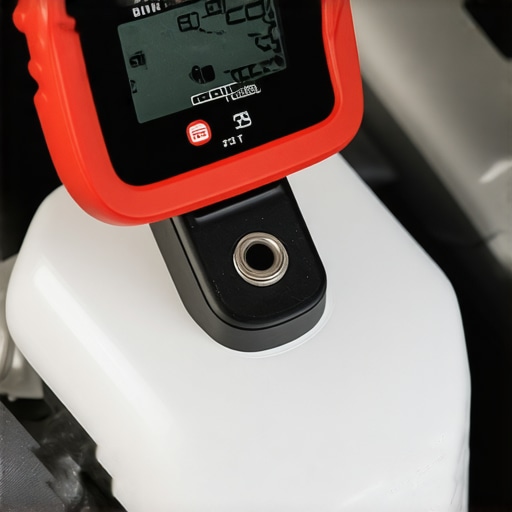
While we often focus on fluid quantity, the chemical quality of your brake fluid is equally vital for stopping power. Because brake fluid is hygroscopic, it absorbs moisture from the atmosphere through microscopic pores in the rubber hoses. Once the water content exceeds 3%, the boiling point of the fluid drops significantly. Under heavy use, such as descending a steep grade or stop-and-go traffic, the water in the fluid turns into steam. Unlike liquid, gas is compressible, which leads to a terrifying loss of braking force. According to the Car Care Council, more than 20% of vehicles on the road have brake fluid in need of replacement due to moisture contamination. This is precisely why your brake pedal goes to the floor after a long drive, as the system is fighting gas pockets rather than moving hydraulic pistons. To mitigate this risk, you should learn how to test your brake fluid for water content at home using a simple electronic tester.
Why Does Your Brake Pedal Turn to Mush During Mountain Descents?
This specific phenomenon is usually attributed to ‘brake fade,’ a combination of mechanical pad glazing and hydraulic boiling. As the rotors reach extreme temperatures, heat transfers into the caliper pistons and then into the fluid. If your fluid is old, it simply cannot handle the thermal load. A professional mechanic will recommend a high-quality DOT 4 fluid for vehicles frequently used in hilly terrain to provide a higher dry and wet boiling point. If you notice this sensation, it is an immediate signal that your system’s integrity is compromised and requires a full flush, not just a top-off. Have you checked your fluid’s color lately? Share your findings or ask about the best fluid types for your specific vehicle in the comments below.
Identifying Corrosion in Rigid Brake Lines
In regions where road salt is common, the steel hard-lines running along the chassis are prone to oxidation. These lines often rust from the inside out or behind mounting brackets where moisture is trapped. A pinhole leak in a rigid line can be hard to spot because the fluid may only spray out under the high pressure of active braking. If you find yourself wondering the hidden reason your brake fluid keeps disappearing, a thorough inspection of the undercarriage with a bright light is mandatory. Look for ‘wet’ spots or dark staining on the frame rails. Ignoring a crusty line is a recipe for total hydraulic failure. For those performing their own inspections, using the 10 hub scrub that stops brake vibrations can also provide a great opportunity to get a close look at your caliper connections and flex-lines.
Stop Searching the Pavement and Look Under the Dust Boots
When an auto repair professional cannot find a drip on the garage floor, the next step is peeling back the rubber dust boots on the wheel cylinders or caliper pistons. In many drum brake setups, a wheel cylinder can leak slowly enough that the fluid is trapped behind the boot, soaking the brake shoes in a hazardous slurry of hydraulic oil and friction dust. This doesn’t just lower your reservoir; it compromises the mechanical grip of the rear axle. This type of ‘contained’ leak is a common reason for erratic braking behavior under heavy loads. If you have ever felt your car pull to one side during a tune up test drive, an oily shoe is a prime suspect. Do not wait for a puddle to form; if your level is dropping, a physical inspection behind the seals is the only way to ensure 100% system integrity.
Why Your Dash Light Flickers Only During Hard Cornering
This is a classic ‘canary in the coal mine’ scenario for modern drivers. The brake fluid level sensor is a simple float switch designed to trip when the volume reaches a critical minimum. However, on a long, sweeping curve or a sudden sharp turn, centrifugal force pushes the remaining fluid to one side of the reservoir. If your fluid is already low due to pad wear or a micro-leak, the float drops momentarily, triggering a flash of the red brake light. This isn’t a ghost in the machine; it is a literal warning that your safety margin is effectively zero. According to the Society of Automotive Engineers (SAE International) in their J1703 standard, maintaining the specific volume and chemical stability of fluid is non-negotiable for high-pressure performance. If you see that light, even for a second, it is time to stop and evaluate your hydraulic health before your next brake service.
The Internal Failure That Turns Your ABS Into a Fluid Trap
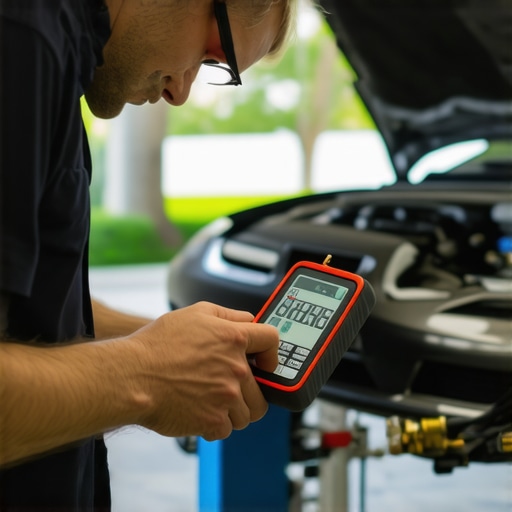
In sophisticated anti-lock braking systems, the hydraulic control unit (HCU) contains an accumulator—a small chamber designed to store pressurized fluid for rapid-fire valve modulation. These accumulators often use a nitrogen-charged diaphragm. If the diaphragm ruptures, brake fluid will fill the space usually occupied by gas. This creates a mysterious drop in the reservoir level with no external signs of a leak. This is a mechanic‘s nightmare because the system remains sealed, yet the fluid is ‘missing.’ Identifying this requires monitoring the HCU behavior during an ABS-active stop. If the pump runs excessively or the pedal feel is inconsistent, the ‘leak’ is actually an internal displacement. This is a prime example of why high-level diagnostics often require more than just a flashlight and a wrench.
How a Faulty Proportioning Valve Skews Your Stopping Power
The proportioning valve is the gatekeeper of your car’s balance, ensuring that the front brakes (which do most of the work) receive more pressure than the rears. When these valves suffer from internal seal bypass, they don’t just lose pressure; they can trap fluid in the ‘wrong’ side of the circuit or leak into the valve’s own atmospheric vent. A failing valve can cause the rear wheels to lock up prematurely or, conversely, not contribute at all, drastically increasing your stopping distance. When you are looking for ways to improve your safety, pay attention to the ‘dive’ of your car’s nose. If the front end dips excessively while the rear feels light and disconnected, your proportioning valve might be the culprit behind that slowly receding fluid level. Next time you have the wheels off for a brake service, take a moment to trace the lines back to the valve and check for ‘damp’ fittings that suggest a slow, pressurized weep.
Stop Ignoring the Copper Content in Your Lines
In the hierarchy of auto repair, identifying a visual leak is a elementary skill. However, a truly advanced mechanic looks deeper into the chemical state of the hydraulic medium itself. As the protective anti-corrosive additives in brake fluid deplete, the fluid becomes acidic, leading to galvanic corrosion of the internal steel lines. This process leaches copper into the fluid. High copper levels are a precursor to internal component failure, acting as an abrasive that destroys sensitive seals in the master cylinder and ABS valves. According to the Motorist Assurance Program (MAP), once copper concentrations exceed 200 parts per million, the fluid is no longer providing adequate protection and must be replaced to prevent latent hydraulic failures. Monitoring this chemical degradation allows for proactive brake service before a seal actually ruptures.
How Electronic Parking Brakes Complicate Hydraulic Maintenance
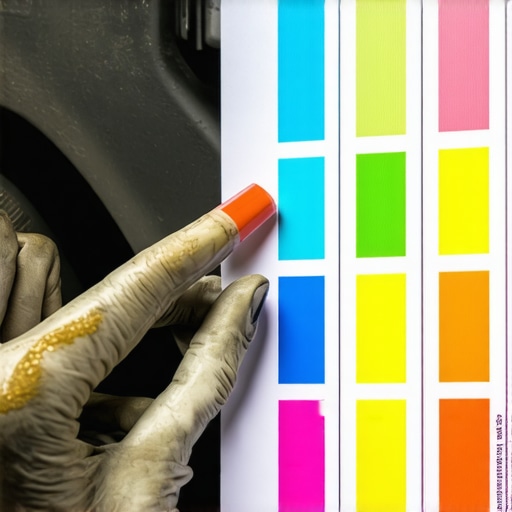
Modern vehicles equipped with Electronic Parking Brakes (EPB) introduce a unique variable into the equation of fluid displacement. Unlike traditional cable-actuated systems, EPB systems use electric motors to drive the caliper pistons. During a standard tune up or pad replacement, if the technician does not use a diagnostic scan tool to put the system into ‘service mode,’ the internal screw mechanism can be damaged when the pistons are retracted. This often leads to a scenario where the fluid level appears incorrect because the pistons are not properly indexed. Furthermore, if an EPB motor fails, it can cause the caliper to drag slightly, generating extreme heat that can boil the fluid locally without triggering a dash warning until the pedal goes soft. Precision in these electronic-hydraulic hybrids is non-negotiable for long-term safety.
Is Your Fluid’s Boiling Point High Enough for Your Driving Style?
Not all brake fluids are created equal, and choosing the wrong one can lead to mysterious pressure loss during spirited driving. While DOT 3 was the standard for decades, many high-performance or heavy-duty vehicles now require DOT 4 or even DOT 5.1 due to their higher ‘wet’ boiling points. The ‘wet’ boiling point is the temperature at which the fluid will turn to gas after it has absorbed 3.7% water by volume. If you frequently tow or drive in stop-and-go traffic, a standard mechanic might top you off with DOT 3, but this could leave you vulnerable to vapor lock. DOT 5.1 is particularly useful for modern ABS and Stability Control systems because it maintains a lower viscosity at cold temperatures, allowing the high-speed solenoids to react faster. Matching your fluid’s thermal capacity to your driving environment is a critical component of a professional brake service strategy.
Why Bench Bleeding is the Only Way to Save a New Master Cylinder
When a master cylinder is replaced, the most common mistake made by DIYers and hurried generalists is failing to ‘bench bleed’ the unit before installation. Because the master cylinder is mounted at a slight angle in the engine bay, air can become trapped in the end of the bore, where traditional pedal-bleeding cannot reach it. This trapped air compresses every time you hit the pedal, giving the illusion of a leak or a faulty part. A master technician uses a specialized kit to loop the fluid from the output ports back into the reservoir on the workbench until every micro-bubble is purged. This ensures that when the part is finally installed, the hydraulic circuit is truly solid. Integrating these brake maintenance hacks to prevent costly failures starts with ensuring that air never enters the primary pressure chambers in the first place. Are you experiencing a spongy pedal even after multiple bleeds? Tell us your vehicle model in the comments, and we can help you troubleshoot the specific bleeding sequence required for your ABS module.
The Physics of Hydraulic Depletion and Your Safety
In the specialized world of auto repair, a receding brake fluid level is more than a maintenance nuisance; it is a critical indicator of hydraulic compromise. Unlike engine oil, which can be consumed via combustion, a brake system is a hermetically sealed hydraulic loop. Under ideal conditions, the fluid level should only drop very gradually as the brake service life of your pads reaches its end. However, when the reservoir level hits the ‘low’ mark prematurely, it suggests either a breach in the pressure lines or an internal seal failure that demands immediate mechanic intervention. Understanding the subtle nuances of fluid dynamics is essential for any high-level diagnostic process.
How to Tell if Pad Wear is Stealing Your Reservoir Level
As your brake pads thin out, the caliper pistons must extend further to maintain contact with the rotors. This displacement is filled by the fluid from the reservoir. This is often the hidden reason your brake fluid keeps disappearing in a way that appears non-threatening. A seasoned technician will evaluate the remaining friction material before topping off the system. If you add fluid to a system with worn pads, you risk a messy overflow during your next brake service when the pistons are compressed. For those looking to verify this at home, you can find the simple way to check your brake pad thickness through the rim without specialized tools.
Is Your Master Cylinder Secretly Leaking into the Vacuum Booster?
One of the most complex scenarios a professional faces is the ‘phantom’ leak. If you see no puddles on your driveway, but the level continues to fall, the master cylinder’s rear seal may have failed. This allows fluid to be sucked directly into the brake booster by engine vacuum, where it is subsequently vaporized and burned in the combustion chamber. This sophisticated failure mode often leaves no external trace. A common mechanic tip for diagnosing common auto problems like this involves unbolting the master cylinder from the booster to check for moisture at the interface. According to the National Highway Traffic Safety Administration (NHTSA), maintaining hydraulic integrity is paramount, as even a small internal leak can lead to a catastrophic loss of stopping power under emergency loads.
The Peripheral Vulnerabilities Often Overlooked by Generalists
Beyond the master cylinder, technicians must examine the entire chassis for ‘weeping’ connections. Aged rubber flex-lines can develop micro-fractures, and brake calipers can leak through the piston seals when the bore becomes pitted by moisture. This is why you should occasionally test your brake fluid for water content at home, as hygroscopic fluid accelerates internal corrosion. If you find your pedal feel changing along with the fluid drop, you must act quickly. If you suspect your system is compromised, consult our guide on when to know you need brake service now to avoid a complete brake failure. Integrating these brake maintenance hacks to prevent costly failures into your routine ensures that a slow drop doesn’t turn into a fast disaster.
Internal Bypassing in ABS Modulators and Control Valves
The evolution of modern vehicle safety has added layers of complexity that even seasoned DIYers might find daunting. A primary culprit in modern auto repair for mysterious pressure loss is the Anti-lock Braking System (ABS) modulator. Within this unit, small solenoid valves manage the flow of fluid to prevent wheel lockup. If one of these internal valves fails to seat properly, fluid can bypass its intended path, resulting in a ‘soft’ pedal even if the external lines are bone dry. This internal leak is notoriously difficult to track without a bi-directional scan tool that can perform an automated bleed or valve test. When you are looking for brake service strategies that save you money and extend brake life, ensuring your ABS module is properly flushed is a critical, yet often neglected, step.
The Silent Threat of Chemical Degradation and Vapor Lock
While we often focus on fluid quantity, the chemical quality of your brake fluid is equally vital for stopping power. Because brake fluid is hygroscopic, it absorbs moisture from the atmosphere through microscopic pores in the rubber hoses. Once the water content exceeds 3%, the boiling point of the fluid drops significantly. Under heavy use, such as descending a steep grade or stop-and-go traffic, the water in the fluid turns into steam. Unlike liquid, gas is compressible, which leads to a terrifying loss of braking force. According to the Car Care Council, more than 20% of vehicles on the road have brake fluid in need of replacement due to moisture contamination. This is precisely why your brake pedal goes to the floor after a long drive, as the system is fighting gas pockets rather than moving hydraulic pistons. To mitigate this risk, you should learn how to test your brake fluid for water content at home using a simple electronic tester.
Why Does Your Brake Pedal Turn to Mush During Mountain Descents?
This specific phenomenon is usually attributed to ‘brake fade,’ a combination of mechanical pad glazing and hydraulic boiling. As the rotors reach extreme temperatures, heat transfers into the caliper pistons and then into the fluid. If your fluid is old, it simply cannot handle the thermal load. A professional mechanic will recommend a high-quality DOT 4 fluid for vehicles frequently used in hilly terrain to provide a higher dry and wet boiling point. If you notice this sensation, it is an immediate signal that your system’s integrity is compromised and requires a full flush, not just a top-off. Have you checked your fluid’s color lately? Share your findings or ask about the best fluid types for your specific vehicle in the comments below.
Identifying Corrosion in Rigid Brake Lines
In regions where road salt is common, the steel hard-lines running along the chassis are prone to oxidation. These lines often rust from the inside out or behind mounting brackets where moisture is trapped. A pinhole leak in a rigid line can be hard to spot because the fluid may only spray out under the high pressure of active braking. If you find yourself wondering the hidden reason your brake fluid keeps disappearing, a thorough inspection of the undercarriage with a bright light is mandatory. Look for ‘wet’ spots or dark staining on the frame rails. Ignoring a crusty line is a recipe for total hydraulic failure. For those performing their own inspections, using the 10 hub scrub that stops brake vibrations can also provide a great opportunity to get a close look at your caliper connections and flex-lines.
Stop Searching the Pavement and Look Under the Dust Boots
When an auto repair professional cannot find a drip on the garage floor, the next step is peeling back the rubber dust boots on the wheel cylinders or caliper pistons. In many drum brake setups, a wheel cylinder can leak slowly enough that the fluid is trapped behind the boot, soaking the brake shoes in a hazardous slurry of hydraulic oil and friction dust. This doesn’t just lower your reservoir; it compromises the mechanical grip of the rear axle. This type of ‘contained’ leak is a common reason for erratic braking behavior under heavy loads. If you have ever felt your car pull to one side during a tune up test drive, an oily shoe is a prime suspect. Do not wait for a puddle to form; if your level is dropping, a physical inspection behind the seals is the only way to ensure 100% system integrity.
Why Your Dash Light Flickers Only During Hard Cornering
This is a classic ‘canary in the coal mine’ scenario for modern drivers. The brake fluid level sensor is a simple float switch designed to trip when the volume reaches a critical minimum. However, on a long, sweeping curve or a sudden sharp turn, centrifugal force pushes the remaining fluid to one side of the reservoir. If your fluid is already low due to pad wear or a micro-leak, the float drops momentarily, triggering a flash of the red brake light. This isn’t a ghost in the machine; it is a literal warning that your safety margin is effectively zero. According to the Society of Automotive Engineers (SAE International) in their J1703 standard, maintaining the specific volume and chemical stability of fluid is non-negotiable for high-pressure performance. If you see that light, even for a second, it is time to stop and evaluate your hydraulic health before your next brake service.
The Internal Failure That Turns Your ABS Into a Fluid Trap
In sophisticated anti-lock braking systems, the hydraulic control unit (HCU) contains an accumulator—a small chamber designed to store pressurized fluid for rapid-fire valve modulation. These accumulators often use a nitrogen-charged diaphragm. If the diaphragm ruptures, brake fluid will fill the space usually occupied by gas. This creates a mysterious drop in the reservoir level with no external signs of a leak. This is a mechanic‘s nightmare because the system remains sealed, yet the fluid is ‘missing.’ Identifying this requires monitoring the HCU behavior during an ABS-active stop. If the pump runs excessively or the pedal feel is inconsistent, the ‘leak’ is actually an internal displacement. This is a prime example of why high-level diagnostics often require more than just a flashlight and a wrench.
How a Faulty Proportioning Valve Skews Your Stopping Power
The proportioning valve is the gatekeeper of your car’s balance, ensuring that the front brakes (which do most of the work) receive more pressure than the rears. When these valves suffer from internal seal bypass, they don’t just lose pressure; they can trap fluid in the ‘wrong’ side of the circuit or leak into the valve’s own atmospheric vent. A failing valve can cause the rear wheels to lock up prematurely or, conversely, not contribute at all, drastically increasing your stopping distance. When you are looking for ways to improve your safety, pay attention to the ‘dive’ of your car’s nose. If the front end dips excessively while the rear feels light and disconnected, your proportioning valve might be the culprit behind that slowly receding fluid level. Next time you have the wheels off for a brake service, take a moment to trace the lines back to the valve and check for ‘damp’ fittings that suggest a slow, pressurized weep.
Stop Ignoring the Copper Content in Your Lines
In the hierarchy of auto repair, identifying a visual leak is a elementary skill. However, a truly advanced mechanic looks deeper into the chemical state of the hydraulic medium itself. As the protective anti-corrosive additives in brake fluid deplete, the fluid becomes acidic, leading to galvanic corrosion of the internal steel lines. This process leaches copper into the fluid. High copper levels are a precursor to internal component failure, acting as an abrasive that destroys sensitive seals in the master cylinder and ABS valves. According to the Motorist Assurance Program (MAP), once copper concentrations exceed 200 parts per million, the fluid is no longer providing adequate protection and must be replaced to prevent latent hydraulic failures. Monitoring this chemical degradation allows for proactive brake service before a seal actually ruptures.
How Electronic Parking Brakes Complicate Hydraulic Maintenance
Modern vehicles equipped with Electronic Parking Brakes (EPB) introduce a unique variable into the equation of fluid displacement. Unlike traditional cable-actuated systems, EPB systems use electric motors to drive the caliper pistons. During a standard tune up or pad replacement, if the technician does not use a diagnostic scan tool to put the system into ‘service mode,’ the internal screw mechanism can be damaged when the pistons are retracted. This often leads to a scenario where the fluid level appears incorrect because the pistons are not properly indexed. Furthermore, if an EPB motor fails, it can cause the caliper to drag slightly, generating extreme heat that can boil the fluid locally without triggering a dash warning until the pedal goes soft. Precision in these electronic-hydraulic hybrids is non-negotiable for long-term safety.
Is Your Fluid’s Boiling Point High Enough for Your Driving Style?
Not all brake fluids are created equal, and choosing the wrong one can lead to mysterious pressure loss during spirited driving. While DOT 3 was the standard for decades, many high-performance or heavy-duty vehicles now require DOT 4 or even DOT 5.1 due to their higher ‘wet’ boiling points. The ‘wet’ boiling point is the temperature at which the fluid will turn to gas after it has absorbed 3.7% water by volume. If you frequently tow or drive in stop-and-go traffic, a standard mechanic might top you off with DOT 3, but this could leave you vulnerable to vapor lock. DOT 5.1 is particularly useful for modern ABS and Stability Control systems because it maintains a lower viscosity at cold temperatures, allowing the high-speed solenoids to react faster. Matching your fluid’s thermal capacity to your driving environment is a critical component of a professional brake service strategy.
Why Bench Bleeding is the Only Way to Save a New Master Cylinder
When a master cylinder is replaced, the most common mistake made by DIYers and hurried generalists is failing to ‘bench bleed’ the unit before installation. Because the master cylinder is mounted at a slight angle in the engine bay, air can become trapped in the end of the bore, where traditional pedal-bleeding cannot reach it. This trapped air compresses every time you hit the pedal, giving the illusion of a leak or a faulty part. A master technician uses a specialized kit to loop the fluid from the output ports back into the reservoir on the workbench until every micro-bubble is purged. This ensures that when the part is finally installed, the hydraulic circuit is truly solid. Integrating these brake maintenance hacks to prevent costly failures starts with ensuring that air never enters the primary pressure chambers in the first place. Are you experiencing a spongy pedal even after multiple bleeds? Tell us your vehicle model in the comments, and we can help you troubleshoot the specific bleeding sequence required for your ABS module.
Expert Insights & Advanced Considerations
Stop Relying on Your Dashboard for Early Warnings
The low-fluid warning light is a reactionary measure, not a diagnostic tool. By the time it illuminates, your reservoir is likely 50% depleted, meaning you have already sacrificed a massive portion of your thermal safety buffer. Experts suggest performing a visual fluid inspection during every regular tune up to detect slow trends in level drop before they become emergencies.
Pressure Testing Beyond the Visual Puddle
Static leaks are easy to find, but dynamic leaks—those that only occur when the system is under 1,500 PSI of pressure—are far more dangerous. If your level is dropping and the car is dry, have a professional perform a pressurized diagnostic. This reveals pinholes in aged flex-lines that only open when the pedal is mashed.
The Stealthy Role of Ambient Humidity
Owners in coastal or humid regions must replace their fluid twice as often as those in arid climates. Water doesn’t just lower the boiling point; it alters the lubricity of the fluid, leading to premature wear of the ABS solenoid seats. This is a cornerstone of advanced brake maintenance hacks to prevent costly failures that saves thousands in modulator replacements.
Curated Expert Resources
SAE International (Standard J1703): This is the definitive technical resource for understanding the chemical properties and performance requirements of non-petroleum brake fluids. It is the global benchmark for safety.
NHTSA Safety Research Portal: Access actual crash data and technical service bulletins related to hydraulic failure modes to stay ahead of manufacturer-specific vulnerabilities.
The Car Care Council: Provides evidence-based maintenance intervals that bridge the gap between simple oil changes and high-level auto repair requirements.
Final Expert Perspective
Maintaining the integrity of a hydraulic system requires more than just topping off a reservoir; it demands a deep understanding of fluid chemistry, pressure dynamics, and electronic component interaction. Whether you are dealing with a phantom leak in the booster or internal bypassing in an ABS modulator, a consistent brake service schedule is your best defense against catastrophic failure. By applying advanced brake service strategies that save you money and extend brake life, you ensure your vehicle remains responsive under any load. If you have experienced a mysterious fluid drop or a soft pedal that regular bleeding couldn’t fix, we invite you to share your diagnostic process or ask our community of professional mechanics for advice below.