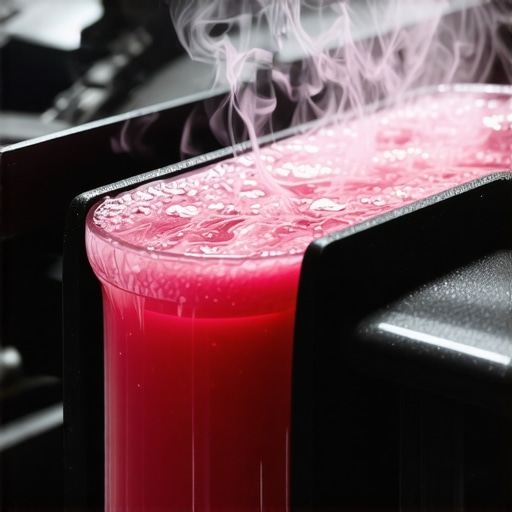
The Phantom Leak: Why Coolant Disappears Under Pressure
In the world of professional auto repair, few diagnostics are as vexing as the invisible coolant loss. When a vehicle’s reservoir level drops consistently, yet the garage floor remains bone-dry, we are no longer looking for a simple split hose. This phenomenon usually points toward internal thermal consumption or high-pressure evaporation that leaves no trace. As an experienced mechanic, the primary goal is to determine if the fluid is being incinerated in the combustion chamber, mixed into the lubrication system, or vented as a gas during specific thermal cycles.
Head Gaskets Don’t Always Fail with a Cloud of White Smoke
The common misconception is that a head gasket failure must result in a massive plume of white exhaust. In reality, a microscopic breach can allow coolant to seep into the cylinder in such small quantities that the catalytic converter effectively masks the resulting steam. Over several weeks, this results in a significant drop in the expansion tank level. Advanced technicians often use a combustion leak test kit to detect CO2 gases within the cooling system, which is a definitive way to identify a failing gasket before it leads to a catastrophic overheat. This level of precision is what separates a standard tune up from a deep-dive diagnostic investigation.
Why Does Your Coolant Only Disappear During Highway Driving?
This specific symptom often points to a pressure-dependent leak. Under high-load conditions, the internal pressure of the cooling system can exceed the rating of a weakened radiator cap or a hairline fracture in a plastic header tank. The coolant escapes as steam, leaving no puddle behind. According to research published by SAE International, cooling system pressures are designed to raise the boiling point of the fluid, but any compromise in the pressure seal allows localized boiling and subsequent fluid loss through the overflow. If you suspect your system is venting gas, checking for a faulty plastic connector or a worn-out cap is the first logical step. Before you authorize an engine teardown, make sure to ask your mechanic specific questions about pressure testing the system while hot.
The Critical Risk of Transmission Cross-Contamination
Perhaps the most dangerous form of invisible coolant loss occurs inside the radiator internal oil cooler. If the barrier between the engine coolant and the transmission fluid fails, the two fluids will swap places. This doesn’t just lower your coolant level; it destroys the friction material in your gearbox. If you notice your brake service technician mentions a strange pink or milky residue during a routine inspection, you might be facing the strawberry milkshake of death. To avoid this, ensuring your cooling system is part of every essential guide to auto repair routine is vital. Identifying these nuances early can save thousands in powertrain replacements. For further expert advice on maintaining vehicle health, consider exploring our insights on how to choose a skilled mechanic you can trust.
Stop Smelling Antifreeze Inside Your Cabin
If you encounter a persistent, sweet odor resembling maple syrup while the heater is running, you are likely witnessing a failing heater core. This component is essentially a miniature radiator buried deep behind your dashboard. When it develops a pinhole leak, the pressurized coolant atomizes into the cabin air. In its early stages, this might only manifest as a mysterious fog on the interior of the windshield that is difficult to wipe away. While some drivers mistake poor airflow for a maintenance issue, often thinking a dirty cabin filter is the culprit, the distinct chemical scent of ethylene glycol is a definitive diagnostic marker. Replacing a heater core is labor-intensive, but ignoring it can lead to soaked floorboards and potential respiratory irritation from breathing in coolant vapors.
Is Your Water Pump Crying Through the Weep Hole?
A common mistake during a standard tune up is assuming a water pump is healthy simply because it isn’t making noise. Expert technicians know to inspect the ‘weep hole,’ a small orifice designed into the pump housing. This hole serves as an early warning system; when the internal mechanical seal begins to fail, it allows a small amount of coolant to escape through this port instead of entering the bearing assembly. If you spot dried, crusty trails of coolant—often blue, pink, or orange depending on the brand—leading away from the pump, the seal is compromised. The National Institute for Automotive Service Excellence (ASE) emphasizes that any evidence of leakage at the weep hole warrants immediate replacement, as a total seal failure can lead to rapid bearing seizure and a snapped serpentine belt, leaving you stranded instantly.
Why the Intake Manifold Might Be Drowning Your Oil
In many modern V-engine configurations, the intake manifold does more than just distribute air; it also channels coolant between the cylinder heads. Over time, the gaskets can degrade due to thermal expansion and contraction, especially if they are made of composite materials. When these gaskets fail internally, they don’t leak onto the ground; instead, they dump coolant directly into the engine’s lifter valley. This is a primary reason why your engine oil looks like a milkshake during a routine dipstick check. This internal contamination destroys the lubricating properties of the oil, leading to catastrophic bearing wear within miles. If you suspect an internal breach, perform an oil analysis or look for a faulty plastic connector that might be masking the true source of the pressure drop.
Don’t Let Electrolysis Eat Your Radiator from the Inside
One of the most overlooked aspects of auto repair is the chemistry of the coolant itself. When coolant becomes old and its pH balance shifts, it can become electrically charged, a process known as electrolysis. This turns your cooling system into a giant battery, where the fluid literally eats away at the soft aluminum of the radiator and heater core. To prevent this, you must adhere to strict maintenance intervals. Knowing how to flush your own cooling system is an essential skill that saves your components from premature rot. If you are looking to manage your vehicle’s health without breaking the bank, consult our auto repair cost saving tips for more professional insights. Have you ever chased a leak that only appeared in the dead of winter? Share your experiences in the comments or suggest what diagnostic mystery we should tackle next!
Stop Chasing Ghosts and Start Testing Your Radiator Cap
In many cases, the most expensive diagnostic errors in auto repair stem from overlooking the simplest mechanical components. The radiator cap is not merely a lid; it is a sophisticated dual-action pressure relief valve. If the spring tension within the cap weakens, it will allow coolant to boil at a lower temperature and vent into the overflow tank prematurely. From there, the fluid often evaporates or overflows onto the road while you are driving, leaving no evidence behind once you park. A seasoned mechanic knows that a cap failing to hold its rated PSI is the leading cause of ‘untraceable’ fluid loss. Before you authorize a head gasket teardown, ensure your technician performs a pressure test specifically on the cap itself using a specialized adapter.
Can a bad thermostat actually cause an invisible coolant leak?
While a thermostat is designed to regulate flow, a partially sticking unit creates localized hotspots within the engine block. These hotspots can cause the coolant to flash-boil into steam, even if the temperature gauge on your dashboard appears to be in the normal range. This sudden increase in internal volume forces the pressure relief valve on your reservoir to open. Because steam is invisible and dissipates instantly, you lose volume without ever seeing a drip. This is why a precision tune up should always include a digital pyrometer check of the upper and lower radiator hoses to ensure the thermostat is cycling correctly and not creating high-pressure spikes that ‘burp’ the system dry during heavy acceleration.
Stop Burping Your Radiator and Start Using a Vacuum Tool
Modern cooling systems are incredibly complex, often featuring multiple heater cores, EGR coolers, and intricate bypass lines that sit higher than the radiator fill point. Attempting to bleed these systems manually often leaves stubborn air pockets trapped in the cylinder heads. These air pockets lead to localized overheating and ‘kettling,’ where the coolant boils violently against the metal surfaces. To prevent this, professional shops now utilize vacuum-fill systems. These tools pull a deep vacuum on the entire cooling circuit, collapsing the hoses and removing every molecule of air before allowing the atmospheric pressure to push fresh coolant into every crevice. According to the technical specifications outlined in ASTM D3306, maintaining the integrity of the coolant mixture is vital for preventing cavitation erosion on water pump impellers, a goal that can only be achieved if the system is free of oxygen-rich air pockets.
If you have ever noticed your heater blowing cold air at a stoplight only to turn hot once you start moving, you are likely feeling the effects of an air pocket caused by a slow, invisible leak. Using a vacuum tool during your next auto repair session ensures that you aren’t just topping off the fluid, but actually restoring the thermal efficiency of the entire engine. For those DIY enthusiasts looking to step up their game, investing in a basic vacuum refill kit is one of the most effective ways to avoid the dreaded ‘air lock’ that kills aluminum engines. If you’re unsure about the state of your system, don’t hesitate to ask your mechanic specific questions about their refilling process.
Turbochargers Are Boiling Your Fluid from the Inside Out
With the industry-wide shift toward smaller, turbocharged engines, the cooling system is under more stress than ever before. Many turbos are liquid-cooled, meaning the engine coolant flows through the bearing housing to prevent the oil from coking after you shut the engine off. However, if the electric after-run pump fails, the heat soak from the turbo can reach temperatures exceeding 900 degrees Fahrenheit. This extreme heat can literally cook the coolant inside the turbo lines, turning it into a gas that vents through the expansion tank. This ‘heat-soak evaporation’ is a common reason for mysterious fluid loss in European and modern domestic SUVs. Monitoring the health of your auxiliary cooling pumps during a routine brake service or oil change is a proactive step that many high-mileage owners overlook.
The Dangerous Myth of the Quick-Fix Leak Sealer
When faced with a persistent leak, the temptation to pour a bottle of ‘stop-leak’ into the radiator is immense. While these products claim to provide a permanent fix, they are often a death sentence for modern, thin-tube radiators and heater cores. These sealants work by reacting with oxygen or temperature changes to form a solid plug. Unfortunately, they cannot distinguish between a hole in your radiator and the narrow passages of your heater core or the critical cooling jackets around your exhaust valves. Once these passages are restricted, the engine’s ability to shed heat is permanently compromised, leading to a cascade of failures that no tune up can reverse. The chemical makeup of these additives often interferes with the corrosion inhibitors…
The chemical makeup of these additives often interferes with the corrosion inhibitors found in specialized OAT (Organic Acid Technology) coolants. When these inhibitors are neutralized, the resulting sludge—often called ‘brown death’ by seasoned mechanics—settles in the radiator’s bottom rows, effectively turning a three-row radiator into a one-row unit. This doesn’t just stop a leak; it chokes the engine’s ability to breathe thermally. Instead of a cheap fix, you’re looking at a full system replacement involving the radiator, heater core, and every rubber hose in the bay.
Plastic Water Outlets and the Nightmare of Thermal Creep
In the quest for weight reduction, manufacturers have replaced robust aluminum housings with glass-reinforced nylon water outlets. These components are notorious for ‘thermal creep,’ a process where the plastic slowly deforms under constant heat-cycling. You might find a leak that only manifests during the ‘cool-down’ phase after the engine is turned off. As the plastic contracts at a different rate than the metal mating surface, a gap opens just wide enough for a few drops to escape. By the time you return to the vehicle, the heat from the block has evaporated the evidence. A true tune up specialist uses a pressure tester on a stone-cold engine to catch these phantoms.
How do you find a leak that only appears during a freezing cold start?
This is the inverse of the usual overheat scenario. In extreme cold, rubber hoses harden and metal clamps lose their tension. This ‘cold leak’ occurs because the seal between the hose and the fitting is compromised until the engine warms up and the rubber softens. If you see blue or orange crust around your hose ends but never see a drip while the car is running, your mechanic should look for witness marks of fluid tracking. Upgrading to constant-tension spring clamps, rather than traditional worm-gear clamps, is often the professional solution for vehicles in northern climates.
EGR Coolers: When Your Exhaust Starts Drinking Your Coolant
For those driving modern diesel or turbocharged gasoline direct injection (GDI) engines, the Exhaust Gas Recirculation (EGR) cooler is a frequent culprit for ‘disappearing’ fluid. This heat exchanger uses engine coolant to lower the temperature of exhaust gases before they are reintroduced into the combustion chamber. If the internal core of the EGR cooler develops a crack, the engine literally ‘inhales’ its own coolant. According to the Technology & Maintenance Council (TMC), EGR cooler failures are among the top causes of progressive engine damage in heavy-duty and light-commercial applications. Because the fluid is vaporized and sent through the exhaust, there is no puddle and often no external sign until the EGR valve itself becomes gummed up with sticky residue.
The Subtle Art of Detecting Cavitation Erosion
Even if your system is sealed perfectly, you can still lose cooling efficiency through cavitation. This occurs when air bubbles collapse against the water pump impeller with such force that they pit the metal. Over time, the impeller vanes can completely disappear, meaning the pump spins but moves no fluid. This leads to localized boiling and subsequent pressure venting. High-level auto repair involves testing the coolant for proper nitrite or molybdate levels to ensure the ‘sacrificial’ layer on the metal surfaces is intact. If your vehicle is approaching the 100,000-mile mark, don’t wait for a breakdown. Reach out to a certified technician today to schedule a comprehensive cooling system analysis and ensure your powertrain survives the next heatwave!
Expert Insights & Advanced Considerations
UV Dye Is Your Best Friend for Small Seepage
While a pressure tester is a standard tool in any auto repair shop, it often fails to replicate the exact vibrations and thermal expansions of a moving vehicle. For those microscopic leaks that only occur at high RPMs, introducing a fluorescent UV dye into the system is the professional gold standard. By running the engine for a few cycles and scanning with a high-intensity blacklight, a mechanic can spot the neon-green ‘crime scene’ left behind by escaping fluid, even if it has already evaporated before you parked. This technique is especially useful for identifying a faulty plastic connector that might only flex and leak while you are accelerating.
Why You Should Not Rely Solely on a Compression Test
Many DIYers assume a compression test will reveal a failing head gasket. However, a gasket can fail between the coolant jacket and the cylinder in a way that only leaks under the high-pressure environment of combustion, not the static pressure of a hand-cranked test. Utilizing a combustion leak test kit is far more definitive. It detects the chemical signature of CO2 in the radiator, providing a high-level diagnostic result that a simple gauge might miss during a standard tune up. If the fluid has already contaminated the crankcase, you will quickly see why your engine oil looks like a milkshake upon inspection.
The Chemistry Trap of Mixing Coolant Colors
It is a common myth that all ‘universal’ coolants are truly safe for every make and model. Mixing Inorganic Additive Technology (IAT) with modern Organic Acid Technology (OAT) can lead to ‘precipitation,’ where the chemicals react to form a gelatinous sludge. This goo settles in the radiator and restricts flow, creating the very localized hotspots that cause invisible steam-venting through the reservoir cap. If you have recently acquired a used car, knowing how to flush your own cooling system is the only way to ensure the internal metallurgy remains protected from this chemical rot.
Curated Expert Resources
SAE International Technical Papers: These documents provide deep-dive engineering data on cooling system thermodynamics and the specific effects of cavitation on high-performance water pumps. ASE (National Institute for Automotive Service Excellence) Study Guides: The definitive standard for diagnostic logic, helping technicians move beyond parts-hanging and into true root-cause analysis for complex auto repair issues. ASTM D3306 Specifications: Essential reading for understanding the chemical requirements of engine coolants and how they prevent corrosion in modern mixed-metal engine blocks.
#IMAGE_PLACEHOLDER_E#
Final Expert Perspective
A ‘phantom’ leak is rarely a mystery when you apply a systematic, science-based approach to auto repair. By recognizing that the cooling system is a pressurized chemical environment, you can look past the lack of puddles and identify the thermal and physical markers of fluid loss. Whether it is a hairline crack in a plastic outlet or an internal breach in an EGR cooler, the solution starts with precision testing rather than guesswork. Always prioritize high-quality diagnostics during every tune up or brake service to keep your powertrain running cool. If you are struggling to find the source of your fluid loss, don’t hesitate to ask your mechanic specific questions about their pressure testing and chemical analysis procedures to ensure a transparent and effective repair plan.