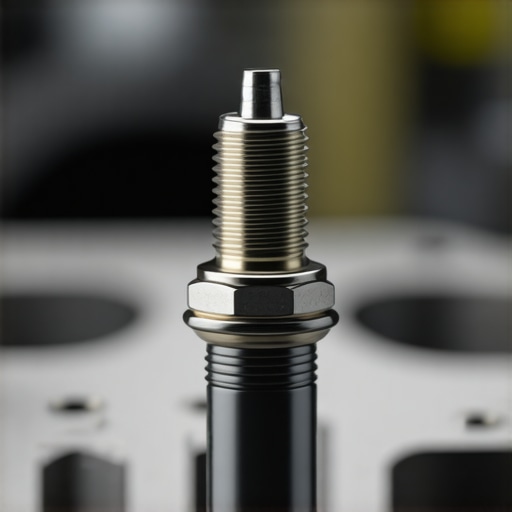
Modern internal combustion engines operate on razor-thin margins of efficiency, where every millisecond of combustion duration and every degree of thermal variance impacts the bottom line. While most drivers view a tune up as a simple replacement of consumables, the elite mechanic understands that performance lives in the nuances of engine geometry. Indexing spark plugs is a sophisticated technique often reserved for racing applications or high-end auto repair, yet its benefits for thermal efficiency and idle stability are universal. By aligning the open side of the spark plug gap toward the intake valves, you ensure the flame kernel is not shielded by the ground electrode, leading to a more complete and rapid burn of the air-fuel mixture.
Stop Leaving Power on the Table with Proper Electrode Alignment
In the realm of advanced vehicle maintenance, achieving peak volumetric efficiency requires more than just following the manufacturer’s torque specs. When a technician performs a comprehensive [essential tune-up](https://autoscarehub.com/essential-tune-up-tips-to-boost-your-cars-performance-in-2025), indexing should be considered a hallmark of professional-level care. The process involves using specialized copper washers of varying thicknesses to ensure that when the plug is seated, the ground electrode is positioned away from the incoming charge. This prevents the ‘shading’ effect, which can cause erratic combustion cycles and minute misfires that standard OBD-II scanners might fail to detect. Much like how precision [brake service](https://autoscarehub.com/brake-service-secrets-how-to-boost-safety-and-longevity) relies on exact tolerances to prevent vibration, indexing relies on geometric alignment to prevent parasitic power loss.
Can a simple turn of a wrench actually improve your fuel atomization?
The short answer is yes, particularly in engines with high-tumble intake ports or direct injection systems. According to technical literature from SAE International, the orientation of the spark gap relative to the flow field within the cylinder significantly influences the early stages of flame development. If the ground electrode blocks the path of the fuel spray or the high-velocity air, the initial spark must work harder to ignite the mixture, resulting in a slower pressure rise. By utilizing [the 10 spark plug gap tool most diyers skip](https://autoscarehub.com/the-10-spark-plug-gap-tool-most-diyers-skip), a technician can mark the plug’s porcelain to track its orientation during installation, ensuring that the ‘open’ side faces the path of least resistance for the flame front.
[image_placeholder]
Professional Techniques for High-Precision Ignition Tuning
Experienced professionals often encounter many [auto repair myths debunked](https://autoscarehub.com/auto-repair-myths-debunked-what-really-matters-for-your-car) regarding indexing, such as the idea that it only matters for 1,000-horsepower dragsters. In reality, modern lean-burn engines are more sensitive to ignition quality than ever before. Proper indexing reduces the ‘quenching’ effect, where the ground electrode absorbs heat from the initial spark, effectively stealing energy that should be going into the combustion process. For the dedicated enthusiast or the master technician, this level of detail separates a standard service from a high-performance calibration. As you refine your ignition system, don’t forget to evaluate other critical systems; exploring [top auto repair trends to watch in 2025](https://autoscarehub.com/top-auto-repair-trends-to-watch-in-2025) can provide further insight into how digital diagnostics are evolving alongside these mechanical traditions. Ready to elevate your vehicle’s performance? Consult a specialist to audit your ignition timing and electrode orientation for a smoother, more responsive drive.
Why Electrical Grounding is the Foundation of Every Clean Spark
Beyond the physical orientation of the spark plug, the integrity of the electrical return path determines the actual energy delivered to the combustion chamber. An elite mechanic knows that even a perfectly indexed plug will underperform if the ignition coil cannot discharge its full potential due to high resistance. This resistance often stems from degraded grounding points. Over time, engine vibrations and thermal cycling cause factory ground straps to fray or oxidize. Replacing a weary cable with [the 12 ground wire that fixes stalling issues](https://autoscarehub.com/the-12-ground-wire-that-fixes-stalling-issues) is not just a repair; it is a fundamental calibration that ensures the ignition system operates at its designed voltage. When the ground path is compromised, the spark duration shortens, and the engine’s ECU may compensate by richening the mixture, leading to carbon buildup and a sluggish throttle response.
Does a microscopic layer of oxidation really cripple your ignition coil’s output?
In high-performance auto repair, the answer is a resounding yes. Technical specialists at NGK Spark Plugs have long emphasized that excessive resistance in the secondary ignition circuit forces the coil to work harder, generating internal heat that eventually leads to insulation breakdown. This subtle voltage drop can manifest as a ‘phantom’ misfire that occurs only under heavy load. Many technicians find that installing [the 14 ground strap that fixes ghost shifting](https://autoscarehub.com/the-14-ground-strap-that-fixes-ghost-shifting) provides the necessary stability for the entire electrical bus, including sensitive transmission sensors. By ensuring a low-impedance path to the battery’s negative terminal, you allow the ignition coil to reach its full saturation point, producing a hotter, more consistent spark that is less likely to be ‘blown out’ by high cylinder pressures.

Synchronize Your Fuel Delivery to Match Your Ignition Precision
Refining the spark is only half the battle; the air-fuel mixture must be equally precise to reap the rewards of advanced indexing. If you have spent time aligning your electrodes but are currently [how to diagnose a bad fuel injector at home](https://autoscarehub.com/how-to-diagnose-a-bad-fuel-injector-at-home), the irregular spray pattern will negate the benefits of a well-timed flame front. Poorly atomized fuel droplets burn slower and less predictably, which often leads to the dreaded ‘ping’ or pre-detonation. Research from Bosch Mobility Solutions indicates that modern high-pressure injectors rely on sub-millisecond signal accuracy, meaning any electrical ‘noise’ in the system can disrupt the lean-burn strategy essential for peak MPG. If you notice your engine struggling during acceleration, it may be [why your engine pings when using cheap gas](https://autoscarehub.com/why-your-engine-pings-when-using-cheap-gas), but the root cause is frequently a combination of poor atomization and weak ignition energy.
A comprehensive tune up should also address the sensors that inform these combustion events. For example, [the 10 cleaning move that saves your MAF sensor](https://autoscarehub.com/the-10-cleaning-move-that-saves-your-maf-sensor) can drastically improve how the ECU calculates the ignition lead, ensuring your mechanical indexing matches the digital timing. If you have recently performed these advanced calibrations, we want to hear your results—did you see a measurable increase in idle vacuum or throttle response? For those still troubleshooting a persistent stumble, utilizing [the 20 scanner that every modern driver should own](https://autoscarehub.com/the-20-scanner-that-every-modern-driver-should-own) can help you monitor live misfire data and short-term fuel trims to confirm that your precision work is paying off in real-world performance.
Stop Ignoring Your Lazy Oxygen Sensors
Even the most meticulously indexed spark plugs and high-voltage grounding kits are at the mercy of the closed-loop feedback system. The oxygen sensor acts as the ‘eyes’ of the ECU, and when these sensors become ‘lazy’—meaning their switching rate slows down due to microscopic soot accumulation—the entire combustion strategy falters. A veteran mechanic knows that an O2 sensor doesn’t always fail catastrophically; more often, it drifts out of its optimal response window. This drift causes the fuel trim to oscillate too widely, creating a ‘searching’ idle and inconsistent power delivery. If you are chasing a ghost in your auto repair journey, check your short-term fuel trims (STFT); if they are swinging wildly beyond +/- 5% at steady-state cruise, your feedback loop is struggling to maintain stoichiometry. While many wait for a dashboard light, proactive replacement at the 100,000-mile mark often restores the crisp throttle response that a standard tune up alone cannot provide.
Is your narrowband sensor lying to your ECU?
Standard narrowband sensors are essentially ‘is-it-rich-or-lean’ switches, whereas high-performance tuning relies on wideband Air-Fuel Ratio (AFR) sensors to provide a linear voltage signal. According to technical bulletins from Denso Automotive, the transition from a traditional zirconia sensor to a planar wideband design was a turning point for emissions and performance. A wideband sensor allows the ECU to target specific lambda values during high-load scenarios rather than just guessing based on a map. When you perform a tune up, upgrading to a high-fidelity wideband controller (if your vehicle supports it or for aftermarket tuning) provides the resolution needed to see if that indexed spark plug is actually allowing for a leaner, more efficient cruise mixture without inducing knock.
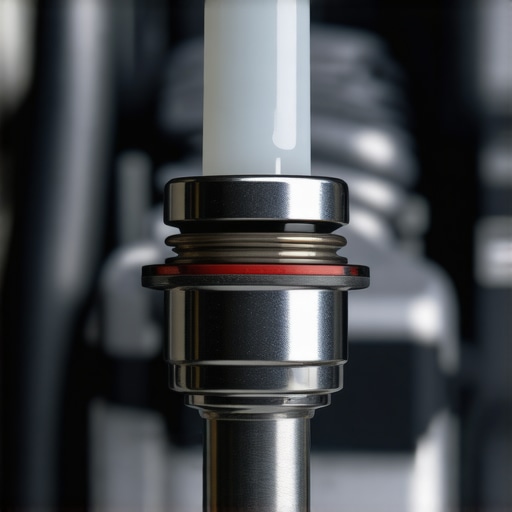
Clean the Chamber by Masterfully Managing Exhaust Backpressure
Precision ignition and fuel delivery reach a hard ceiling if the combustion chamber isn’t properly cleared of spent gases. This is the concept of ‘scavenging,’ where the kinetic energy of the exhaust pulse helps pull the fresh intake charge into the cylinder. If your exhaust system is restrictive or your catalytic converter is partially restricted, the residual heat and inert gases dilute the fresh air-fuel mixture. This dilution increases the required ignition energy—making your mechanic‘s work on the grounding and indexing even more critical. High backpressure also raises the internal cylinder temperature, which can lead to pre-ignition, even if you are using high-octane fuel. Monitoring your exhaust backpressure via the downstream O2 sensor port is a pro-level diagnostic move that reveals why an engine feels ‘choked’ at higher RPMs despite having a fresh tune up. Have you ever checked your backpressure with a vacuum gauge? Share your readings below and let’s see how your setup compares.
How Heat Soak Destroys Your Timing Maps
Temperature is the silent killer of timing precision. Intake Air Temperature (IAT) sensors often suffer from heat soak, especially in heavy traffic, leading the ECU to pull timing to prevent knock. This safety margin, while necessary, kills the responsiveness you worked so hard to gain. Have you ever noticed your car feels significantly faster on a crisp morning? That’s not just dense air; it’s the ECU allowing for more aggressive ignition advance. Consider how [why your car loses power on hot days](https://autoscarehub.com/why-your-car-loses-power-on-hot-days) relates to the thermal efficiency of your cooling system. Ensuring your IAT sensor isn’t heat-soaked by the engine block is a simple but effective modification that keeps your ignition timing exactly where it needs to be for maximum torque. Beyond the intake temperatures, the physical state of your engine oil plays a surprising role in the hydraulic timing of variable valve lift systems. Many drivers overlook how [the 5 engine oil secrets that double engine life](https://autoscarehub.com/the-5-engine-oil-secrets-that-double-engine-life) actually impact the VVT solenoids that control cam phasing, leading to a mechanical lag that no amount of spark indexing can fix.
Stop Trusting Your Master Clock Without Verification
While managing intake temperatures and oil quality is paramount, the precision mechanic must eventually look deeper into the electrical synchronization of the rotating assembly. Your tune up remains incomplete if the ECU receives ‘fuzzy’ data from the crankshaft position (CKP) sensor. This sensor is the master clock of the entire engine; it tells the computer exactly where the pistons are within their stroke. Over years of auto repair, reluctor wheels—the toothed rings the sensor reads—often accumulate microscopic iron filings or suffer from slight run-out. If that signal is even a fraction of a degree off, your meticulously indexed spark will fire at the wrong moment, negating your hard work. Much like [how to diagnose a bad fuel injector at home](https://autoscarehub.com/how-to-diagnose-a-bad-fuel-injector-at-home) requires a keen eye for patterns, verifying CKP health requires looking beyond simple fault codes to the raw signal waveform.
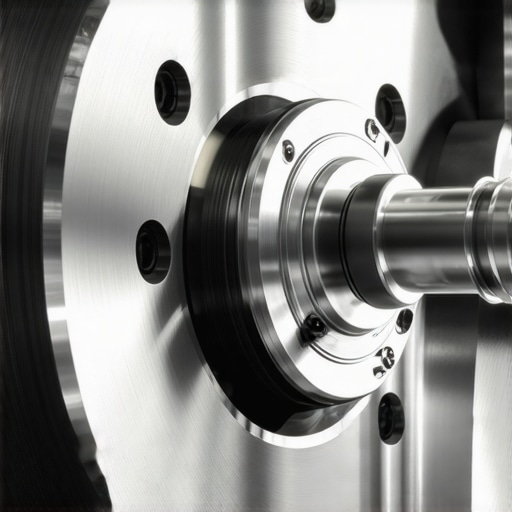
Vibrations That Rob You of Peak Performance
The harmonic balancer is often the most overlooked component in a high-level tune up. Its primary job is to dampen the torsional vibrations of the crankshaft, but as the elastomeric bond degrades over thousands of heat cycles, the outer ring can slip. When this occurs, your physical timing marks no longer align with the internal reality of the engine. This ‘mechanical drift’ causes the ECU to fight against phantom knock, pulling timing and killing your torque curve. Technical experts at Continental Automotive note that modern powertrain control modules are increasingly sensitive to these minute frequency variations. If you are experiencing a persistent vibration or a ‘flat’ feeling in the powerband that standard auto repair diagnostics can’t pinpoint, it is time to inspect the rubber integrity of your damper. A failing balancer doesn’t just vibrate; it introduces ‘noise’ into the crank signal that confuses the ignition strategy.
Can a microscopic crack in your harmonic damper ruin your tune-up?
The reality is that even hairline fractures in the dampening material can shift the resonant frequency of the crankshaft. This shift causes the knock sensor to ‘hear’ a metallic frequency that it interprets as pre-detonation, even when the combustion is stable. This ‘false knock’ triggers the ECU to retard the ignition timing by several degrees, effectively undoing the benefits of your premium fuel and indexed plugs. By upgrading to a high-performance fluid damper, you stabilize the crank’s rotation, allowing the sensors to ‘see’ a clean signal. This is a level of auto repair that moves beyond parts-replacing and into the realm of true engine blue-printing. Have you ever checked your balancer for ‘wobble’ while the engine is at idle? Doing so might reveal why your recent tune up didn’t feel as transformative as expected.
See the Ghost in the Machine with Lab Scope Diagnostics
To truly master the modern engine, one must stop guessing and start measuring. Relying solely on a generic scan tool is like looking at a race through a keyhole. Using a lab scope to monitor the relationship between the cam and crank sensors—known as ‘cam-crank sync’—is the gold standard for any elite mechanic. This test reveals stretched timing chains or worn guides that cause the mechanical timing to lag behind the electrical commands. If your timing is retarded by just three degrees due to chain stretch, you lose significant volumetric efficiency across the entire RPM range. When combined with [the 20 scanner that every modern driver should own](https://autoscarehub.com/the-20-scanner-that-every-modern-driver-should-own), advanced scope diagnostics ensure your engine’s ‘brain’ and ‘heart’ are in perfect harmony. Don’t let a lazy sensor or a stretched belt rob you of the performance you’ve built—grab a diagnostic probe and verify the synchronization of your ignition events today!
Expert Insights & Advanced Considerations
Why spark duration matters more than peak voltage
Many enthusiasts focus on the hottest spark possible, but an elite mechanic knows that the duration of that spark—how long the arc actually stays alive—is often more critical for lean-burn stability than raw voltage. A short, high-voltage burst might fail to ignite a pocket of air-fuel mixture that isn’t perfectly stoichiometric. When you perform an essential tune-up, you aren’t just looking for a spark; you’re looking for a sustained flame kernel that can survive high-velocity intake turbulence.
Stop chasing phantom misfires by cleaning your chassis grounds
Electrical resistance is the silent killer of ignition energy. Even with brand-new coils, a corroded engine block ground will choke the return path, leading to weak combustion. Professional-grade auto repair often involves installing the 12 ground wire that fixes stalling issues to ensure the coil has a low-impedance path back to the battery. This simple addition can stabilize the primary circuit voltage, ensuring every indexed plug receives its full energy quota during high-load scenarios.
Oscilloscopes catch the glitches your scanner misses
A standard OBD-II scanner operates on a relatively slow refresh rate, often missing the microscopic signal dropouts that cause ghost hesitations. Master technicians use lab scopes to view raw waveforms of the crank and cam sensors in real-time. While the 20 scanner that every modern driver should own is a great starting point for data logging, moving toward waveform analysis is what separates a parts-changer from a true engine specialist.
[image_placeholder]
Keep your VVT solenoids happy with high-detergent lubricants
Variable Valve Timing (VVT) relies on precise hydraulic oil pressure to phase the camshafts correctly. If your oil is contaminated with microscopic sludge, the mechanical timing of your engine will lag behind the ECU’s commands, effectively fighting your spark indexing efforts. Understanding the 5 engine oil secrets that double engine life helps you maintain the hydraulic integrity of these solenoids, ensuring your mechanical and electrical timing stay perfectly synchronized.
Curated Expert Resources
For those looking to move beyond the basics, these resources provide the technical depth required for high-level tuning and engine calibration:
- SAE International Technical Papers: The industry standard for peer-reviewed research on internal combustion dynamics and flame front propagation.
- Bosch Mobility Solutions Knowledge Base: Provides in-depth technical data on fuel injector spray patterns and high-pressure fuel system calibration used in modern GDI engines.
- NGK Spark Plug Technical Archive: An essential technical library for understanding heat range selection, metallurgy of high-performance electrodes, and indexing geometry.
- Denso Automotive Sensor Guides: Highly detailed documentation on the transition from narrowband to wideband O2 sensor technology and its impact on stoichiometric feedback loops.
Final Expert Perspective
Achieving peak engine performance is a meticulous game of millimeters and milliseconds. A professional tune up is not merely a checklist of components to replace, but a comprehensive calibration of the ignition, fuel delivery, and mechanical synchronization systems. By moving beyond the surface and addressing nuances like electrode indexing, ground integrity, and sensor switching speeds, you transform a standard auto repair into a high-precision optimization project. Whether you are a dedicated DIYer or a career mechanic, the pursuit of a cleaner, more efficient spark is the key to unlocking hidden torque and fuel efficiency. We invite you to share your own diagnostic breakthroughs—what was the one hidden ghost in your machine that a standard service couldn’t find? Reach out to our community of experts for further technical deep-dives and performance audits.