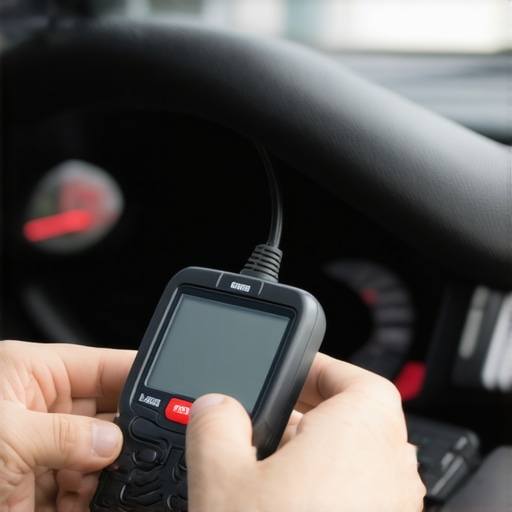
Modern vehicle safety systems are governed by the Supplemental Restraint System (SRS), a complex network of pyrotechnic actuators, impact sensors, and control logic that ensures passenger protection during a collision. When that red airbag icon illuminates your dashboard, it signifies that the diagnostic control module has detected a fault that could potentially disable the entire safety array. Approaching this issue requires more than just a basic reset; it demands a forensic look at the vehicle’s electrical health. While many drivers associate dashboard warnings with a standard [tune up](https://autoscarehub.com/the-ultimate-tune-up-checklist-for-every-car-owner), the SRS system operates on a dedicated priority bus that requires specialized attention.
The Critical Role of Voltage Stability in SRS Logic
The SRS control module is hyper-sensitive to electrical fluctuations. In many modern vehicles, a momentary drop in voltage—often caused by a failing battery or a corroded ground strap—can trigger a persistent fault code. This is why a simple [5-minute battery terminal clean](https://autoscarehub.com/the-5-minute-battery-terminal-clean-that-restores-starting-power) can sometimes resolve ghost codes that appear during cold starts. However, if the light remains, the system has logged a hard fault. Unlike a [brake service](https://autoscarehub.com/brake-service-secrets-how-to-boost-safety-and-longevity) where mechanical wear is visible, airbag faults are often hidden within the clock spring behind the steering wheel or the pretensioners in the seatbelt assemblies. Expert [auto repair](https://autoscarehub.com/the-essential-guide-to-auto-repair-keep-your-vehicle-running-smoothly) protocols dictate that you must never use a multimeter to test the resistance of the airbag itself, as the tiny current from the meter can inadvertently deploy the explosive charge.
[image_placeholder]
Can a Faulty Seatbelt Buckle Cause an Airbag Warning?
Yes, the seatbelt buckle contains a switch that communicates with the SRS module to confirm the passenger is secured before deploying the bag. Over time, debris or liquid spills can interfere with this connection, triggering a fault code. This is a common entry point for a DIY [mechanic](https://autoscarehub.com/how-to-choose-a-skilled-mechanic-you-can-trust) to investigate before assuming the more expensive airbag units have failed. According to safety standards outlined by the National Highway Traffic Safety Administration (NHTSA), any compromise in the communication circuit between the buckle and the module is treated as a critical system failure, necessitating an immediate diagnostic check.
Safe Use of OBD-II Diagnostic Tools for SRS Reset
To safely clear the light, you must utilize an OBD-II scanner capable of reading the SRS subsystem. Most basic scanners only read engine codes, but [the $20 scanner that every modern driver should own](https://autoscarehub.com/the-20-scanner-that-every-modern-driver-should-own) often includes the ability to bridge into the safety modules. The protocol involves reading the specific code (such as B1801 for a clock spring issue), performing the physical repair, and then using the clear function to reset the module’s logic. If you are unsure of the diagnostic data, consulting a [top-rated mechanic](https://autoscarehub.com/how-a-top-rated-mechanic-ensures-safe-auto-repairs-every-time) is vital, as driving with an active SRS light means your airbags will likely not deploy in an accident. If you’ve successfully cleared your codes and want to share your diagnostic experience or learn more about advanced vehicle maintenance, consider contributing your insights to our expert forums.
Why Your Steering Wheel Might Be Severing Safety Connections
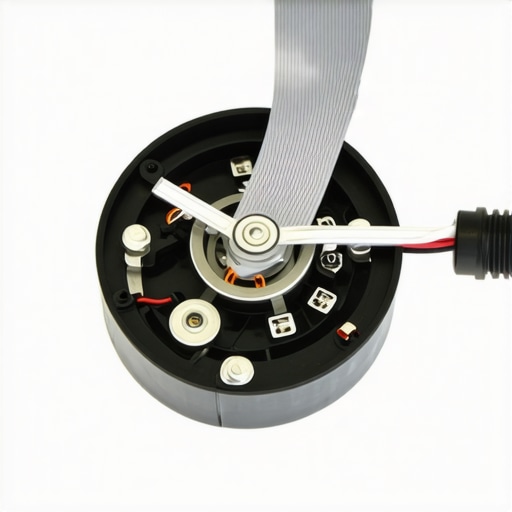
One of the most frequent yet overlooked culprits behind a stubborn SRS light is the steering column’s clock spring. This component is a specialized spiral-wound ribbon cable designed to maintain a constant electrical connection to the driver-side airbag while the wheel rotates. Over time, the internal filaments can fatigue or snap, especially in vehicles with high mileage or those that have undergone steering rack repairs. While a driver might initially suspect mechanical issues similar to how they would [how to diagnose a bad cv axle by driving in circles](https://autoscarehub.com/how-to-diagnose-a-bad-cv-axle-by-driving-in-circles), a failing clock spring often reveals itself through intermittent airbag warnings that flicker when turning the wheel. Because this is a high-precision component, attempting a DIY patch is dangerous; professional [auto repair](https://autoscarehub.com/the-essential-guide-to-auto-repair-keep-your-vehicle-running-smoothly) standards require a full replacement of the assembly to ensure the deployment circuit remains at the exact resistance specified by the manufacturer.
Could Your Passenger Seat Be Triggering the SRS Light?
Modern vehicles utilize an Occupancy Classification System (OCS) to determine the weight and position of a passenger, ensuring the airbag deploys with the appropriate force—or not at all for a child. This system relies on sensitive pressure mats or strain gauges embedded in the seat cushion. If you frequently place heavy objects like grocery bags or laptops on the passenger seat, you can inadvertently calibrate the sensor incorrectly, leading to a persistent fault code. Unlike a standard [tune up](https://autoscarehub.com/the-ultimate-tune-up-checklist-for-every-car-owner) where fluids and filters are the priority, OCS issues require a digital recalibration. According to technical data from the Society of Automotive Engineers (SAE), signal integrity in these occupancy loops is vital, as even a 0.5-ohm deviation can cause the module to enter a fail-safe mode, disabling the passenger-side protection entirely.
Road Salt and the Silent Erosion of Frontal Impact Sensors
In regions where winter driving is common, the external impact sensors located behind the front bumper are at constant risk. These sensors are the front-line triggers for the SRS system, but their location makes them vulnerable to moisture and road salt. Corrosion in the connector pins can mimic a total sensor failure, causing the dashboard light to stay illuminated. This is where many [mechanic tips](https://autoscarehub.com/mechanic-tips-diagnosing-common-auto-problems) emphasize the importance of inspecting the wiring harness before replacing expensive parts. Sometimes, the issue isn’t the sensor itself but a degraded ground. Just as [the $14 ground strap that fixes ghost shifting](https://autoscarehub.com/the-14-ground-strap-that-fixes-ghost-shifting) can resolve transmission issues, ensuring a clean, unoxidized ground for your impact sensors can clear complex SRS fault codes that scanners often misinterpret as hardware failure.
Moving Beyond Simple Logic Resets with Hardwired Repairs
If you have cleared the codes and they return within minutes, you are likely dealing with a “hard fault” that requires physical intervention rather than a software reset. Many [auto repair myths debunked](https://autoscarehub.com/auto-repair-myths-debunked-what-really-matters-for-your-car) claim that disconnecting the battery for thirty minutes will reset all vehicle computers, but the SRS module is specifically designed to retain fault data in non-volatile memory for safety reasons. This ensures that a critical failure cannot be ignored. If you’ve checked your connections and the light persists, it may be time to look at the [the $12 ground wire that fixes stalling issues](https://autoscarehub.com/the-12-ground-wire-that-fixes-stalling-issues) and apply that same diagnostic rigor to your safety module’s power supply. Have you successfully diagnosed a tricky airbag light on your own? Share your story in the comments below or suggest a specific model you’d like us to cover in our next deep dive into safety electronics.
Why Aftermarket Seats Often Break Your Safety Shield
The transition from stock to performance seating is a hallmark of the enthusiast community, but it introduces a significant hurdle for the SRS logic. Most factory seats contain integrated side-impact airbags and occupancy sensors that are integral to the vehicle’s safety loop. When you remove these components, the module detects an open circuit, instantly triggering a hard fault that no basic scan tool can simply ‘mask’ away. While some enthusiasts attempt to bypass this with a specific ohm-rated resistor, this is a precarious ‘hack’ that can lead to unexpected deployment behavior during a side-impact event. Professional auto repair involves more than just tricking the computer; it requires understanding how the logic recalibrates for a missing sensor. If you are struggling with seat-related codes after a swap, checking out our guide on the essential guide to auto repair can help you understand the structural risks involved in safety system modifications.
Does a Stuck Seatbelt Mean the Explosive Charge Fired?
Not necessarily, but it is a distinct possibility that requires immediate forensic inspection. Modern seatbelts use pyrotechnic pretensioners—small explosive charges that pull the belt tight in milliseconds during a crash. Once fired, the assembly is a ‘one-and-done’ component and must be replaced. However, many drivers mistake a mechanically jammed retractor for a deployed pretensioner. If your SRS light is on and the belt is locked, the diagnostic module will usually throw a ‘high resistance’ code if the squib has fired. This is a much more critical issue than a standard tune up concern, as a deployed pretensioner indicates the vehicle may have a hidden accident history that the SRS module has ‘remembered.’ Using an advanced scanner to check the deployment history in the Event Data Recorder (EDR) is the only way to be certain.
The Damp Disaster: When Sunroof Drains Ruin Your Airbag Computer
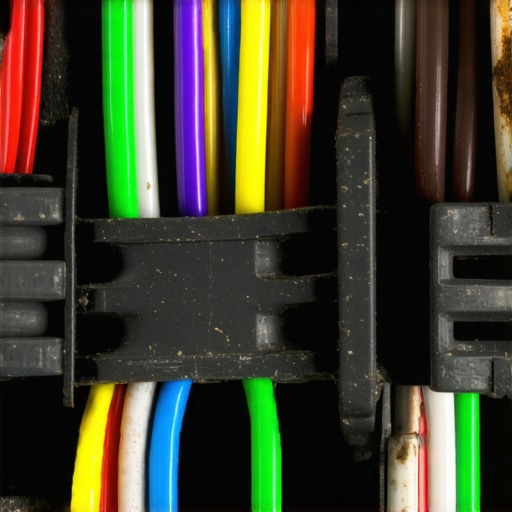
One of the most elusive causes of a persistent SRS light has nothing to do with the airbags themselves and everything to do with plumbing. In many sedans and SUVs, the Airbag Control Unit (ACU) is mounted at the lowest point of the center console—directly beneath where water pools if your sunroof drains become clogged. A slow leak can saturate the carpet and seep into the ACU’s multi-pin connector, causing pin corrosion that creates ‘phantom’ sensor faults. According to technical bulletins from the Inter-Industry Conference on Auto Collision Repair (I-CAR), moisture intrusion in the safety bus can cause cross-talk between the impact sensors and the main controller, leading to a system-wide shutdown. Before you spend thousands on new airbags, ensure your floorboards are bone-dry; a simple 5-minute battery terminal clean won’t fix a submerged computer, but identifying the leak early can save the module from total failure.
Stop Chasing Ghosts: Why Door Harnesses Cause Airbag Lights
If your airbag warning light only flickers when you open the driver-side door, the problem isn’t the bag—it’s the ‘bellows’ wiring harness. The wires connecting the side-impact sensors in the door to the main cabin are subjected to thousands of flex cycles over the life of the vehicle. Eventually, the copper strands inside the insulation fracture. This creates an intermittent high-resistance fault that can drive a mechanic crazy. Unlike a brake service where the hardware is easily inspected, these wire breaks are often invisible to the naked eye. You must use a digital multimeter while wiggling the harness to catch the resistance spike. If you’ve ever dealt with a car that seems possessed by electrical gremlins, you might find that the $14 ground strap that fixes ghost shifting shares a similar logic to fixing these harness failures: it’s all about restoring the path of least resistance. Have you ever noticed your dashboard lights reacting to your door movements? This often overlooked connection point is a primary failure zone in vehicles over ten years old.
The evolution of vehicle electronics has introduced a new layer of complexity to safety diagnostics, particularly as we transition into the era of high-voltage electrification. While older systems were primarily mechanical or simple DC circuits, modern Supplemental Restraint Systems (SRS) are increasingly susceptible to sophisticated failure modes that transcend basic component wear. These ‘ghost’ failures require a specialized understanding of signal integrity that goes far beyond a standard tune up approach.
How Hybrid Powertrains Create Ghost Signals in Your Airbag Logic
In the high-EMI (Electromagnetic Interference) environment of a hybrid or electric vehicle, the SRS wiring harness must be meticulously shielded. If the orange high-voltage cables are routed too closely to the safety bus, or if the shielding has degraded due to vibration, electromagnetic noise can induce a false voltage spike in the airbag sensor lines. This often triggers a ‘signal implausible’ fault code that disappears as soon as the vehicle is turned off, leaving a mechanic scratching their head. Solving this requires more than just swapping parts; it involves checking the integrity of the shielding and ensuring that ground loops haven’t formed between the 12V safety system and the high-voltage chassis ground.
#IMAGE_PLACE_HOLDER_D#
Why Does Your Airbag Light Only Glow on Freezing Mornings?
Temperature-dependent airbag warnings are a classic sign of ‘fretting corrosion’ or poor terminal tension in the SRS connectors. Metal contracts in the cold, and if a connector pin has lost its spring tension, the gap can become wide enough to increase resistance beyond the module’s strict threshold. This is remarkably similar to the logic used when you how to diagnose a bad cv axle by driving in circles—you are looking for specific environmental conditions that replicate the failure. To fix this, high-level auto repair protocols suggest using a stabilized contact enhancer or, in extreme cases, performing a ‘pin-drag test’ to identify the exact terminal that has lost its grip. According to data from the Insurance Institute for Highway Safety (IIHS), the reliability of these connections is paramount, as even a micro-second delay in signal transmission can alter the deployment timing designed to save lives in a high-speed impact.
Stop Guessing and Check the Manufacturer Software Bulletins
Sometimes, the hardware is perfectly fine, but the software logic is over-sensitive. Vehicle manufacturers frequently issue Technical Service Bulletins (TSBs) that provide a software ‘re-flash’ for the SRS module. These updates adjust the diagnostic tolerances for certain sensors that may be prone to false positives. Before you commit to an expensive brake service or other mechanical repairs to solve a dashboard light, verify if your vehicle’s VIN is flagged for an SRS logic update. This is where the $20 scanner that every modern driver should own might fall short, as specialized dealer-level tools are often required to push firmware updates to the safety computer.
Why Resistor Bypasses Are a Gamble with Your Life
In the pursuit of clearing a stubborn light, some DIYers use ‘dummy resistors’ to trick the SRS module into thinking a faulty airbag is present and functional. While this may turn the light off, it effectively creates a blind spot in your safety shield. The SRS module calculates deployment force based on the presence and resistance of every component in the loop. By inserting a static resistor, you are removing the system’s ability to monitor that specific zone, potentially causing other airbags to deploy incorrectly or not at all. Much like how the $14 ground strap that fixes ghost shifting is the correct way to solve an electrical path issue, the only safe way to ‘fix’ a high-resistance code is to restore the actual circuit, never to bypass it. Have you ever encountered a dashboard light that vanished the moment you drove to the shop? Drop a comment with your vehicle’s year and model, and let’s help you decode the mystery.
Expert Insights & Advanced Considerations
The Razor-Thin Margin of Error in Resistance Specs
The SRS module is not just checking for a connection; it is monitoring a specific resistance window, typically between 1.8 and 3.2 ohms. If a connector develops microscopic corrosion, the resistance can climb to 3.5 ohms, which is enough to trigger a fault without the circuit being ‘open.’ This is why utilizing the 12 multi-meter test for your charging system logic is helpful, but you must use a meter with high-impedance protection to avoid accidental deployment. A professional-grade contact cleaner is often more effective than replacing parts when dealing with these ‘soft’ resistance faults.
One Turn Off and You’ve Ruined the Clock Spring
When performing steering rack or column work, failing to lock the steering wheel in the center position is the number one cause of immediate clock spring failure. If the wheel rotates even one full turn while disconnected from the rack, the internal ribbon cable will snap the moment you reach full lock after reassembly. If you notice why your steering wheel is off center after an alignment, check your SRS light immediately; the two issues are frequently linked by a technician who moved the wheel too far during the mechanical adjustment.
Low CCA Ratings Kill Safety Modules Long Before Engines
A battery can have enough amperage to turn the starter but not enough voltage stability to satisfy the SRS module’s self-test during the first three seconds of ignition. If your airbag light only appears during cold starts, your battery’s Cold Cranking Amps (CCA) are likely dropping below the critical 9.6V threshold. Investigating the hidden battery drain that kills cars overnight can reveal why your safety system is flagging errors that aren’t actually hardware failures.
Curated Expert Resources
NHTSA Recall Database: This is the first place every driver should look. Many SRS failures are caused by known manufacturing defects, and the NHTSA provides a searchable portal to see if your airbag light qualifies for a free dealership repair. I-CAR Repairability Technical Support: For those looking for the ‘why’ behind the ‘how,’ I-CAR offers collision-specific technical bulletins that detail how wiring harnesses must be routed to maintain signal integrity. SAE International: The Society of Automotive Engineers publishes the standards for OBD-II safety protocols, providing the deep technical background required for high-level safety module programming.
Final Expert Perspective
The transition from mechanical intuition to digital precision is never more apparent than when diagnosing the Supplemental Restraint System. A single flickering light is a complex signal that the vehicle’s primary safety net is compromised, requiring a diagnostic approach that prioritizes electrical integrity and software logic over simple parts replacement. While the the essential guide to auto repair provides a foundation for vehicle maintenance, SRS issues demand a higher level of scrutiny. For those who want to ensure their vehicle remains a safe environment for their family, knowing how a top-rated mechanic ensures safe auto repairs every time is the best way to bridge the gap between a DIY reset and a factory-spec safety restoration. Have you discovered a unique electrical quirk in your safety system? Reach out to our technical team or join the conversation in our community forums to share your professional insights.