The Dynamics of Belt Tension and Misalignment
Replacing a worn accessory drive component only to be met with an immediate, high-pitched shriek is a common frustration for both DIY enthusiasts and seasoned professionals alike. When a new serpentine belt squeals louder than the old one, it rarely indicates a defective belt. Instead, the increased structural rigidity and fresh grip of a new belt place higher mechanical demands on your accessory drive system, instantly exposing subtle underlying issues that the older, more compliant belt managed to tolerate. Addressing this problem requires looking past the rubber itself and evaluating the entire rotational assembly.
A primary culprit in these scenarios is a failing automatic tensioner or a worn pulley bearing. Over thousands of miles, tensioner springs lose their tempering, resulting in a gradual drop in tension. While your old, glazed belt slid quietly over pulleys with minimal resistance, the new belt grabs the pulley surfaces with high friction. If the tensioner cannot maintain the precise specifications required by the manufacturer, the belt will slip under load, generating significant thermal energy and loud squealing. For a deeper look at diagnosing complex belt behaviors, you can read about the $18 fix for a slipping accessory belt to resolve these tension issues cost-effectively.
Why Does Micro-Misalignment Cause Such Intense Noise?
Even a fraction of a millimeter of pulley misalignment can turn a brand-new belt into an acoustic nightmare. When pulleys are not perfectly coplanar, the ribs of the serpentine belt are forced to enter the pulley grooves at an angle. This lateral offset causes the rubber ribs to scrub against the sides of the pulley channels rather than seating smoothly. According to engineering data published by the Society of Automotive Engineers (SAE), minor pulley misalignment of more than 2 degrees is the leading cause of premature belt wear and persistent noise. If you suspect your belt squeal might actually be coming from another system, such as a failing hydraulic pump, check out the 5-minute trick to stop your power steering from whining.
Furthermore, residual contamination on the pulley faces often ruins new installations. Modern Ethylene Propylene Diene Monomer (EPDM) belts do not show wear by cracking like older chloroprene belts did; instead, they lose material from their ribs, much like a tire tread. This worn rubber, mixed with road grime and oil leaks, bakes into the pulley grooves. When you install a new belt without meticulously scraping these channels clean, the new ribs cannot seat fully, leading to instantaneous slippage. If you want to master more advanced diagnostic techniques, explore our comprehensive mechanic tips for diagnosing common auto problems to keep your vehicle running quietly and efficiently.
Stop Chasing Shadows and Find the Real Pulley Culprit
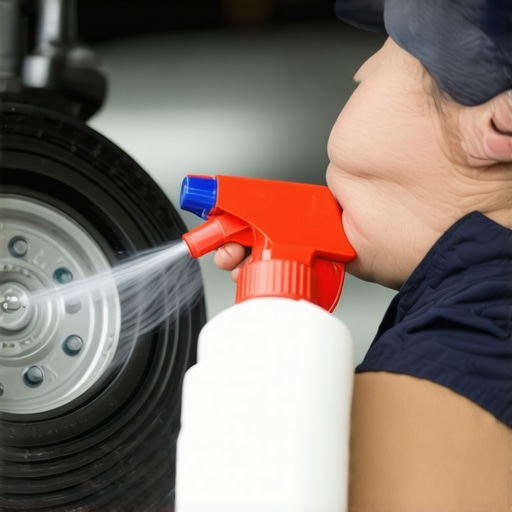
Many vehicle owners mistakenly assume that spraying belt dressing or lubricant onto a noisy serpentine belt will solve their problems permanently. In reality, chemical sprays only mask the underlying mechanical fault and can actually degrade the EPDM rubber compound over time. To locate the actual source of the noise without throwing expensive parts at your car, you must isolate the accessory drive. A simple yet highly effective trick is to perform a water spray test while the engine is idling. By spraying a small mist of water onto the ribbed side of the belt, you can temporarily lubricate the contact surface. If the noise vanishes instantly and then returns as the water evaporates, the issue is almost certainly alignment-related. If the noise does not change, you are likely dealing with a bad bearing inside an idler pulley, the alternator, or the air conditioning compressor clutch.
For those looking to expand their DIY diagnostic toolkit, understanding how minor belt slippage affects electrical output can save hours of troubleshooting. Slipping belts often cause subtle voltage drops that mimic a failing alternator. To learn how to test your electrical system accurately before buying expensive replacement parts, take a look at the $10 multimeter trick for spotting a dying alternator before it strands you. If the charging system checks out, you can safely turn your focus back to the physical pulleys and tensioners.
Is a Squeaking Belt Actually Hiding an Internal Engine Pressure Issue?
What many experienced DIYers fail to realize is that a high-pitched whistling noise coming from the front of the engine bay can easily be misdiagnosed as a squealing belt when the real culprit is crankcase pressure. When a PCV valve fails and clogs, pressure builds up inside the engine block. This pressure seeks the path of least resistance, which is often the front or rear main crankshaft seals. As the pressurized air forces its way past the rubber lips of these spinning seals, it creates a high-frequency whistle that sounds identical to a slipping serpentine belt. If you replace your belt and the noise persists regardless of engine load, you might want to look into the $13 PCV valve that stops your engine from consuming oil to see if crankcase pressure is your true antagonist.
This diagnostic nuance is why professional master technicians emphasize looking at the entire engine ecosystem rather than analyzing symptoms in isolation. According to technical bulletins from the National Institute for Automotive Service Excellence (ASE), misdiagnosing engine seal whistling as accessory belt noise is one of the most common diagnostic errors in independent repair shops today. To avoid these costly missteps, learning how to distinguish between vacuum leaks, seal whistles, and true mechanical friction is paramount for any vehicle owner.
The Critical Role of Alternator Decoupler Pulleys
Modern charging systems frequently utilize an Overrunning Alternator Decoupler (OAD) or an Overrunning Alternator Pulley (OAP) instead of a traditional solid pulley. These specialized pulleys feature an internal one-way clutch and spring mechanism designed to absorb the violent rotational vibrations produced by modern four-cylinder engines. When an OAD seizes internally, it behaves like a solid pulley, transferring all the engine’s torsional vibrations directly into the serpentine belt. This results in extreme belt flutter, tensioner bounce, and an unbearable squealing noise during sharp throttle changes or when the air conditioning clutch engages.
Replacing only the belt on a vehicle with a seized alternator decoupler pulley is a recipe for immediate failure. The new belt will be subjected to violent snapping forces, leading to rapid rib wear and a returning noise within weeks. If you are experiencing similar mysterious noises or vibrations that seem to defy simple fixes, we highly recommend reading our guide on why your engine surges while stopped at a light to rule out idle air control or accessory load issues. Have you ever chased a belt squeal only to find a completely unexpected culprit? Leave a comment below or share this article with a fellow DIYer who is currently fighting a noisy engine bay!
The Anatomy of Alternator Pulley Diagnostics
To accurately diagnose a seized Overrunning Alternator Decoupler (OAD) without specialized diagnostic equipment, you must understand its rotational dynamics. A properly functioning OAD should spin freely in one direction while immediately locking up and driving the alternator rotor in the opposite direction. When the engine is shut down abruptly, you should hear a soft whirring sound as the heavy alternator rotor continues to spin down independently under its own inertia. If the rotor stops instantly along with the crankshaft, the clutch mechanism has welded itself shut, turning the decoupler into a solid pulley.
This locking action places massive kinetic stress on the belt during rapid deceleration. When the automatic transmission shifts gears, or when the driver lets off the throttle quickly, the engine RPM drops faster than the alternator rotor can naturally slow down. Without the slip mechanism of an active OAD, the alternator’s inertia forces the belt to slip over the pulley face, resulting in a short, sharp chirp. Over time, these repeated slip events glaze the pulley surfaces, ensuring that even a brand-new belt will fail to maintain a quiet grip.
How Does Alternator Ripple Voltage Affect Belt Noise?
An overlooked variable in persistent accessory drive squeals is the electrical load demand placed on the alternator. When diode failure occurs inside the alternator rectifier bridge, it creates an excessive AC voltage ripple. This electrical fault forces the alternator to work significantly harder to meet the vehicle’s DC electrical demands, creating immense electromagnetic resistance within the stator. According to technical documentation from The Institute of Electrical and Electronics Engineers (IEEE), this increased magnetic drag dramatically elevates the torque required to spin the alternator shaft, causing the serpentine belt to slip under heavy electrical loads like turning on the rear defroster or headlights.
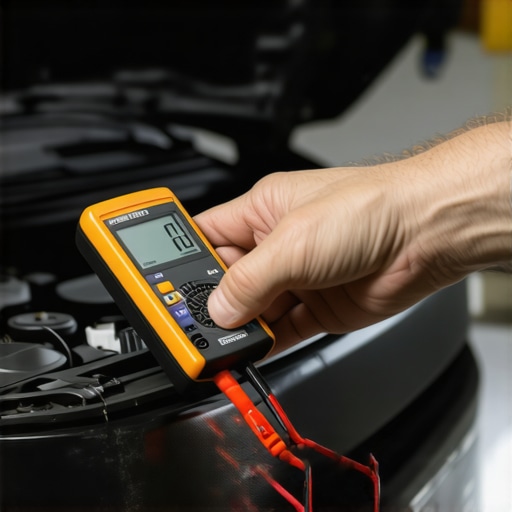
Measuring this ripple voltage requires setting a digital multimeter to AC millivolts and probing the battery terminals while the engine is running under load. A healthy alternator should show less than 50 millivolts of AC ripple. If your readings exceed this threshold, the internal electrical resistance is likely causing mechanical slippage. If you find your vehicle’s electrical components behaving erratically alongside the belt noise, consider reading about the $10 multimeter trick for spotting a dying alternator before it strands you to accurately isolate this electrical-to-mechanical feedback loop.
The Thermal Dynamics of EPDM Belt Slippage
When dealing with modern Ethylene Propylene Diene Monomer (EPDM) belts, understanding thermal dissipation is critical. Unlike older neoprene formulations, which hardened and cracked with age, EPDM rubber is highly resistant to heat-induced cracking. Instead, it wears out similarly to a tire, slowly losing its groove depth. This change in physical profile reduces the surface area contact between the belt ribs and the pulley grooves. When surface contact drops, localized frictional heat spikes rapidly during operation. This localized thermal expansion alters the coefficient of friction of the rubber compound, temporarily silencing the belt when cold, only to trigger a persistent squeal once the engine reaches full operating temperature.
This thermal behavior explains why many drivers complain that their belt only squeaks after driving for fifteen minutes. The heat transfers from the engine block through the metal pulleys, softening the worn rubber compound and reducing its structural rigidity. Under these conditions, the belt stretches slightly, exceeding the compensation limits of a worn automatic tensioner spring.
Micro-Scratches on Pulley Flanges Can Deceive Even Master Technicians
While most mechanics focus on groove depth and alignment, the actual condition of the pulley flange walls is frequently ignored. Over years of service, microscopic debris becomes embedded in the belt, acting like fine-grit sandpaper against the smooth metal sides of the pulley channels. This creates micro-scratches and rough ridges along the vertical walls of the pulley grooves. When you install a fresh, soft EPDM belt, these rough metal surfaces shred the brand-new rubber compound at a microscopic level, producing a high-frequency acoustic resonance that sounds identical to tensioner failure. Cleaning these channels with a soft brass wire brush is an essential step to prevent the new rubber from being immediately scrubbed away.
Why Does a Cold Start Squeal Point Directly to Harmonic Balancer Separation?
Many drivers notice a loud, brief squeal immediately upon starting their vehicle in the morning, which then disappears after a few minutes of idling. While this is often attributed to moisture, it is frequently the early warning sign of a failing harmonic balancer. The harmonic balancer consists of an inner metal hub and an outer pulley ring bonded together by a thick rubber dampening ring. As the rubber bond degrades, the outer ring begins to slip independently of the inner hub under the high rotational load of starting the engine. Once the vehicle warms up and the rotational inertia stabilizes, the two pieces temporarily spin in unison, masking the failure. If you suspect this structural degradation, you can consult technical resources provided by the MEMA Aftermarket Suppliers association regarding the structural inspection of elastomeric engine dampers.
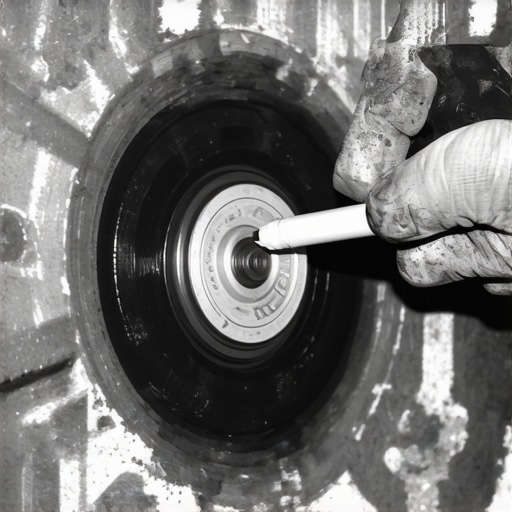
Diagnosing this hidden separation requires a simple visual test. With the engine off, use a paint marker or white chalk to draw a straight line across the face of the harmonic balancer, starting from the inner hub, crossing the rubber ring, and ending at the outer pulley edge. Run the engine until the squeal occurs, then turn it off and inspect the line. If the line is no longer continuous and the segments have shifted out of alignment, the balancer has failed internally and must be replaced immediately to prevent catastrophic engine damage. If you are dealing with other stubborn mechanical issues, learn how to resolve them with our guide on mechanic tips for diagnosing common auto problems.
Expert Insights & Advanced Considerations
The Illusion of the Defective Out-of-the-Box Belt
When a freshly installed belt screams louder than the dry, cracked piece you discarded, it is easy to blame a manufacturing defect. In reality, modern EPDM construction has incredibly high structural memory and lateral stiffness. Unlike older neoprene compounds that conformed to worn, misaligned pulleys, a new EPDM belt resists lateral deflection. This stiffness forces the belt to fight against slightly skewed pulleys, converting that mechanical resistance directly into a high-pitched acoustic vibrations. When diagnosing this, assume the belt is performing exactly as engineered and look for the component failing under its renewed grip.
The Hidden Danger of Degreasing Agents
Using brake cleaner or aggressive solvent degreasers to clean pulley grooves can cause catastrophic, premature failure. While these chemicals clean out embedded grime, they penetrate the sealed bearings of idler pulleys and alternators, washing out the critical high-temperature grease. Once the internal grease is compromised, the bearing will quickly overheat, seize, or develop a rough, noisy rotational path. Stick to a brass wire brush and a mild soapy water solution to clean pulley faces safely.
Why Laser Alignment Tools Beat the Straight-Edge Method
Traditional straight-edge alignment checks are no longer sufficient for modern, high-stress accessory drive configurations. A simple straight-edge only measures coplanar alignment at a single point, failing to detect subtle angular misalignment where a pulley is tilted on its shaft. Utilizing a dedicated laser alignment tool projects a crisp line across multiple pulleys, immediately highlighting both offset and angular deviations that cause persistent squeals. For those looking to master advanced diagnostic techniques, check out our guide on mechanic tips diagnosing common auto problems.
Curated Expert Resources
The Gates Corporation Belt Wear Diagnostic Guide
This resource offers deep technical breakdowns of EPDM wear patterns, including micro-photographs of rib degradation and pulley alignment tolerance specifications. It is indispensable for understanding the exact physics of belt-to-pulley contact.
The Automotive Service Association (ASA) Tech Library
Provides comprehensive bulletins on late-model accessory drive updates, including specific TSBs regarding harmonic balancer separation and updated torque specs for automatic tensioner assemblies.
The Overrunning Alternator Decoupler (OAD) Service Portal
A specialized diagnostic database detailing testing procedures for clutch-style alternator pulleys, explaining how to differentiate between normal rotor coast-down and internal clutch slippage.
Final Expert Perspective
Chasing down a persistent belt squeal requires moving beyond temporary spray fixes and looking at the accessory drive as a highly integrated mechanical system. From subtle pulley misalignments to seized alternator decoupler clutches and failing harmonic balancers, the root cause is almost always structural rather than a simple belt issue. By applying systematic diagnostics—like the water spray test or laser alignment checks—you can eliminate the guesswork and ensure a quiet, reliable repair. If you want to keep your vehicle running in peak condition, explore our essential tune up tips to boost your cars performance in 2025. Have you recently diagnosed a tricky belt noise, or do you have a specific diagnostic trick of your own? We invite you to share your experiences and professional insights in the comments below!