Modern internal combustion engines are marvels of precision, yet they remain vulnerable to the most basic of mechanical oversights. When an owner notices a drop in the oil level on the dipstick or a faint blue haze from the tailpipe, the immediate fear is often a catastrophic failure of the piston rings or valve seals. However, a significant portion of these oil consumption issues stems not from structural engine wear, but from a failure in the Positive Crankcase Ventilation (PCV) system. This relatively inexpensive component is the primary safeguard against the buildup of internal pressure, yet it is frequently neglected during a standard tune up or routine maintenance cycle.
Don’t Assume Your Engine Is Toast When the Oil Level Drops
In a healthy engine, a small amount of combustion gas inevitably leaks past the piston rings into the crankcase. This phenomenon, known as blow-by, contains unburned fuel and water vapor that can contaminate the motor oil and create a corrosive sludge. The PCV valve acts as a one-way street, using the engine’s intake vacuum to pull these gases out of the crankcase and back into the intake manifold to be re-burned. When this valve becomes clogged with carbon deposits or its internal spring loses tension, the delicate balance of pressures is disrupted. High-mileage vehicles are particularly susceptible, as the accumulation of varnish can seize the valve in either the open or closed position, leading to oil being sucked directly into the combustion chamber or forced out through the weakest seals.
How the Positive Crankcase Ventilation System Fights Internal Pressure
When the PCV system fails to evacuate gases effectively, the crankcase becomes pressurized. This pressure searches for the path of least resistance, which is usually your engine’s gaskets and seals. It is a common auto repair scenario to find a leaking rear main seal or valve cover gasket that was actually caused by a $13 valve rather than a faulty gasket. By maintaining a slight vacuum within the crankcase, the system ensures that gaskets are not subjected to undue stress. According to technical standards established by SAE International, proper crankcase ventilation is critical for both emission control and the long-term integrity of the engine’s lubrication system. Professional technicians often utilize mechanic tips diagnosing common auto problems to differentiate between a true mechanical leak and one induced by ventilation failure, saving owners thousands in unnecessary labor.
Can a Sticky Valve Actually Destroy Your Main Seals?
The short answer is yes. If the valve sticks closed, the pressure buildup can blow out oil seals that would otherwise last the life of the vehicle. Conversely, if it sticks open, it can lean out the air-fuel mixture, causing a rough idle and increased oil consumption through the intake plenum. This is why incorporating a check of the ventilation system is a vital part of the essential guide to auto repair. If you are experiencing a sudden drop in fuel economy or a mysterious oil leak, the the $9 pcv valve that stops your engine from consuming oil is often the first place an expert looks before recommending more invasive measures. If you’re unsure whether your vehicle’s idle issues are related to ventilation or ignition, consult our essential tune-up tips to boost your car’s performance for a comprehensive diagnostic approach.
Why Most Technicians Miss the Simplest Solution for Oil Loss
In many modern shops, the emphasis is placed on electronic diagnostics and sensor data. However, the PCV valve is a purely mechanical component that often does not trigger a Check Engine Light until the problem has progressed to a significant vacuum leak. This makes it a “hidden” failure point. An experienced technician understands that a comprehensive brake service or oil change should also involve a visual inspection of the breather hoses. Brittle or collapsed hoses are just as detrimental as a stuck valve, as they restrict the flow of gases and can lead to the same symptoms of oil burning. Ensuring these components are replaced during your scheduled maintenance is a hallmark of high-tier auto repair strategies that prioritize longevity over quick fixes.
The consequences of a saturated ventilation system extend far beyond the crankcase, often manifesting in the intake plenum as a thick, viscous coating of oil. This oil misting can lead to a host of performance issues that even a high-end scanner might misdiagnose as a failing turbocharger or worn-out valve guides. When the PCV valve fails to regulate the flow of crankcase gases, oil is literally pulled into the air stream, where it coats everything from the throttle body to the intake valves. This buildup creates a sticky residue that traps carbon, eventually choking the engine’s ability to breathe.
The Intake Manifold Mess That Mimics a Blown Turbo
In vehicles equipped with turbochargers, the presence of oil in the intake tubes is frequently misidentified as a failing turbo seal. Owners might spend thousands on a replacement only to find the same oil pooling a week later. The reality is that a faulty ventilation system is often the true source, pushing oil vapor through the turbo’s inlet. This is where strategic tune-up strategies to save money on auto repairs become invaluable. By performing a simple clog test on the breather lines, a DIYer or savvy mechanic can rule out the expensive turbo repair in minutes. 
Does Your Exhaust Smell Like Burning Oil or Rotten Eggs?
One of the most telling signs of a compromised PCV system is the odor trailing your vehicle. If the system is stuck open, you may notice a faint blue smoke under heavy acceleration as the engine burns off the excess oil vapor. However, if the issue persists, the unburned hydrocarbons will eventually overwhelm your catalytic converter. This leads to a distinct sulfur smell, which is the hidden reason your exhaust smells like rotten eggs. According to data from Consumer Reports, neglecting these minor mechanical components is a primary driver of premature catalytic converter failure, an auto repair that can easily exceed $2,000 on modern SUVs and trucks.
Stop Chasing Electronic Sensors and Inspect the Physical Lines
Modern engines rely on a delicate balance of air and fuel, monitored by sensitive electronics. When a vacuum leak develops in the PCV circuit, the car’s computer tries to compensate by adjusting the fuel trim, often triggering a System Lean trouble code. Many drivers respond by replacing the oxygen sensors or the Mass Air Flow (MAF) sensor. While you might need to clean your own MAF sensor and restore lost horsepower if it has been contaminated by oil spray, the root cause is frequently a $5 rubber hose that has dry-rotted or collapsed. Indeed, the mechanical reality is often simpler than the computer suggests. While a scanner might point to a lean code, the actual culprit is a cracked rubber elbow hidden behind the engine block. In extreme cases, if the oil mist becomes thick enough to reach the combustion chamber, it can also contaminate the coolant loop if a gasket failure occurs, leading to a situation where your coolant looks like chocolate milk. If you’ve discovered oil where it shouldn’t be during a weekend inspection, drop a comment below and let us know what you found—it might help a fellow driver avoid a massive repair bill.
How Frozen Breather Lines Can Total Your Engine in Minutes
In colder climates, the ventilation system faces a physical threat that many Southern-state mechanics rarely encounter: the freezing of emulsified oil and water. When an engine runs for short durations, it never reaches a temperature high enough to evaporate the moisture that accumulates in the crankcase. This water mixes with oil vapor to create a yellow, milky sludge. If the temperature drops below freezing overnight, this ‘mayonnaise’ can solidify within the PCV hoses, completely blocking the airflow. When you start your car the next morning, the pressure has nowhere to go. This often leads to oil being forcefully ejected through the dipstick tube or, in more severe cases, a catastrophic failure of the camshaft seals. This is why a winter tune up should always involve inspecting the breather hoses for any signs of moisture-laden residue.
Can a Blocked PCV Valve Cause a Sudden Rear Main Seal Blowout?
The short answer is a definitive yes. The rear main seal is designed to keep oil inside the engine while the crankshaft spins at thousands of RPMs, but it is not designed to withstand positive internal pressure. When the ventilation system fails, the crankcase transforms into a pressurized vessel. Since the rear main seal is one of the largest and most vulnerable points of exit, the pressure will often push the lip of the seal outward. This leads to a massive, sudden leak that can drench your driveway and starve the engine of lubrication in a matter of miles. Most owners assume they need a multi-thousand-dollar auto repair to replace the seal, when the actual culprit was a cheap, stuck-closed valve that cost less than a tank of gas. Checking the crankcase vacuum with a dedicated gauge can save you from a misdiagnosis that costs more than the vehicle’s trade-in value.
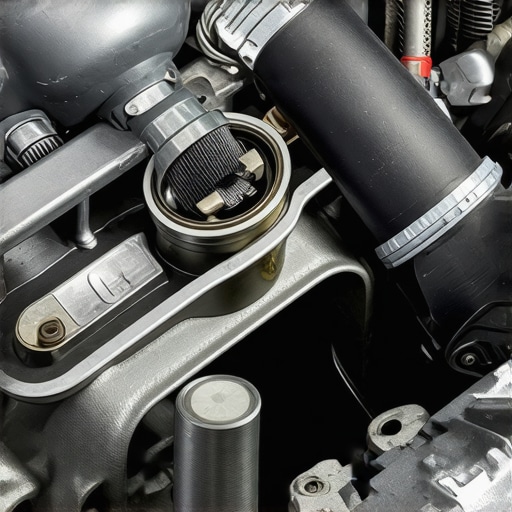
Protect Your Intake Valves from the Curse of Direct Injection
The rise of Gasoline Direct Injection (GDI) has changed the rules of engine longevity. In older port-injected engines, fuel would spray over the intake valves, effectively washing away any oil mist coming from the PCV system. However, in a GDI engine, the fuel is sprayed directly into the combustion chamber, leaving the intake valves dry. This means the oil vapor recirculated by the ventilation system bakes onto the hot valves, forming hard carbon deposits that eventually restrict airflow and cause misfires. This is no longer just a niche performance concern; it is a fundamental design challenge. According to technical documentation from the National Institute for Automotive Service Excellence (ASE), preventing this carbon buildup requires a multi-pronged approach, including the use of high-quality synthetic oils with low volatility and ensuring the ventilation system is operating at peak efficiency. If you find yourself needing a brake service or other routine work, it is the perfect time to have a technician perform an intake tract cleaning to remove these latent deposits.
The Invisible Link Between Crankcase Vapors and Spark Knock
Many drivers are unaware that the air being pulled from the crankcase actually has a lower octane rating than the fuel in the tank. When a PCV valve is malfunctioning and allowing too much oil mist into the combustion chamber, it effectively ‘waters down’ the fuel’s ability to resist pre-ignition. This can lead to persistent engine knocking or ‘pinging,’ especially under heavy load or during high-temperature operation. Modern knock sensors will retard the ignition timing to protect the engine, but this results in a noticeable loss of power and fuel economy. It is a classic case of a mechanical failure being masked by electronic compensation. If your car feels sluggish or lacks its usual punch despite a recent tune up, the issue might not be your spark plugs, but rather a saturated ventilation circuit that is contaminating your air-fuel mixture. Think your engine’s oil consumption is just ‘old age’? Share your symptoms in the comments below, and let’s see if a simple valve swap is the solution you have been looking for.
Stop Carbon Before It Coats Your Intake Valves
While factory PCV setups are adequate for standard commuters, they often fall short in high-performance or heavy-duty applications. This has given rise to a niche but essential aftermarket solution: the oil catch can. These devices intercept the PCV line, allowing oil vapor to condense and collect in a reservoir before the ‘cleaned’ air returns to the intake. For owners of direct-injected vehicles, this modification is often considered more important than a basic tune up because it physically prevents the oily mist from reaching the valves in the first place. Without this barrier, the inevitable carbon ‘coking’ can rob your engine of 15% of its efficiency in as little as 30,000 miles. By the time a driver notices a stumble at idle, the damage usually requires a manual ‘walnut blasting’ service to rectify.
Is the ‘Thumb Test’ Enough to Verify a Failing PCV System?
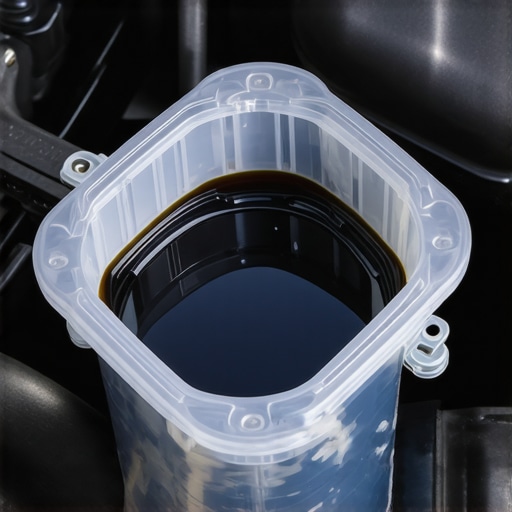
For decades, the standard diagnostic for a mechanic was the ‘shake test’—if the valve rattled, it was assumed to be good. However, in the era of high-precision tolerance, a rattling valve can still be a failing valve. A spring that has lost its tension might still move freely but fail to seal under specific vacuum loads, leading to intermittent lean conditions. A more professional approach involves using a digital manometer to measure the actual ‘crankcase depression’ while the engine is running. If the pressure isn’t within a few inches of water column of the manufacturer’s spec, you are likely looking at a hidden ventilation issue. This level of diagnostic precision is what separates a top-tier auto repair facility from a shop that simply throws parts at a problem until it disappears.
Your Intercooler Might Be Drowning in Excess Oil
In turbocharged vehicles, a malfunctioning ventilation system does more than just burn oil; it can compromise the entire forced induction cooling loop. When the PCV system fails to separate oil mist effectively, that mist travels through the turbo and settles in the lowest point of the system: the intercooler. Over time, a thick layer of oil coats the internal fins of the intercooler, acting as an insulator and drastically reducing its ability to cool the intake air. This results in higher intake air temperatures (IATs), which trigger the ECU to pull timing and reduce power to prevent knock. If you are already having a brake service or other under-car maintenance performed, ask your technician to check the lower intercooler boots for oil pooling—it is a tell-tale sign that your ventilation system is overdue for an overhaul.
Precision Gauges Help You Avoid the Parts Cannon
The temptation to replace every sensor when a ‘System Lean’ code appears is the primary reason car owners overpay for maintenance. By understanding the mechanical relationship between the crankcase and the intake manifold, you can avoid the ‘parts cannon’ approach. According to the Environmental Protection Agency (EPA), maintaining these first-generation emission controls is vital not just for the environment, but for preventing the chemical degradation of the engine’s catalytic components. If you’ve struggled with a mystery oil leak or a persistent check engine light after a recent tune up, tell us about it in the comments below. Our community is here to help you pinpoint the exact source before you spend another dime on unnecessary sensors.
Expert Insights & Advanced Considerations
Stop Relying on the Outdated Rattle Test
While an old-school mechanic might have taught you that a rattling PCV valve is a healthy one, modern tolerances prove otherwise. A valve can rattle and still have a weakened internal spring that fails to seal under the specific vacuum conditions of a high-speed highway cruise. This leads to intermittent lean codes that are a nightmare to diagnose during a standard auto repair visit. Real precision requires measuring crankcase pressure directly with a digital manometer to ensure it falls within factory specifications. For those struggling with idle stability, identifying [the 5 air leak making your car idle like its about to die](https://autoscarehub.com/the-5-air-leak-making-your-car-idle-like-its-about-to-die) is a critical next step.
Why Thicker Oil Won’t Fix a Ventilation Leak
Many owners attempt to mask oil consumption by switching to a heavier weight oil, thinking it won’t slip past the rings. However, if the issue is a pressurized crankcase caused by a failed ventilation system, the heavier oil will simply be forced out of the seals with even more pressure. This is a common mistake in auto repair that leads to blown-out rear main seals. Address the pressure first, and you’ll often find the factory-recommended oil weight works perfectly. You might also consider [the 15 additive that actually helps sticking valves](https://autoscarehub.com/the-15-additive-that-actually-helps-sticking-valves) to clear internal varnish before committing to major repairs.
#IMAGE_PLACEHOLDER_E#
The Performance Case for Aftermarket Catch Cans
In the niche world of performance tuning, particularly with direct-injection engines, the factory PCV system is often supplemented with a catch can. By intercepting the oily mist before it hits the intake valves, you prevent the carbon coking that robs power. It is a proactive step that goes beyond a basic tune up, ensuring that your intake tract stays as clean as the day it left the factory. Furthermore, understanding [why cheap oil filters are costing you horsepower and fuel economy](https://autoscarehub.com/why-cheap-oil-filters-are-costing-you-horsepower-and-fuel-economy) can help you maintain the overall cleanliness of the lubrication circuit.
Curated Expert Resources
SAE International Technical Papers
These documents represent the gold standard for understanding the fluid dynamics of crankcase ventilation and its impact on modern engine longevity. They provide the empirical data that informs every professional technician in the field.
ASE Certification Study Guides
Essential for anyone looking to bridge the gap between hobbyist knowledge and professional-grade auto repair diagnostics. These guides focus on the mechanical interdependencies of engine systems and emission controls.
EPA Emission Standards Database
This resource offers a deep dive into why these systems exist and the chemical impact of oil vapor on expensive catalytic converters, helping you understand the long-term “why” behind your maintenance schedule.
Final Expert Perspective
Maintaining your engine’s ventilation is not just about stopping a leak; it is about preserving the delicate equilibrium of pressure and chemistry that modern powerplants require. A simple $15 part can be the difference between a car that reaches 300,000 miles and one that suffers a premature terminal failure. Whether you are performing a DIY tune up or scheduling a professional brake service, never overlook the small mechanical components that protect your larger investment. Real automotive care is about precision, not just parts replacement. If you suspect an air-related performance drop, learning [how to find an intake leak using only a 5 bottle of soapy water](https://autoscarehub.com/how-to-find-an-intake-leak-using-only-a-5-bottle-of-soapy-water) can save you hours of frustration. What’s the most surprising simple fix you’ve found for a major engine symptom? Share your professional insights in the comments below.