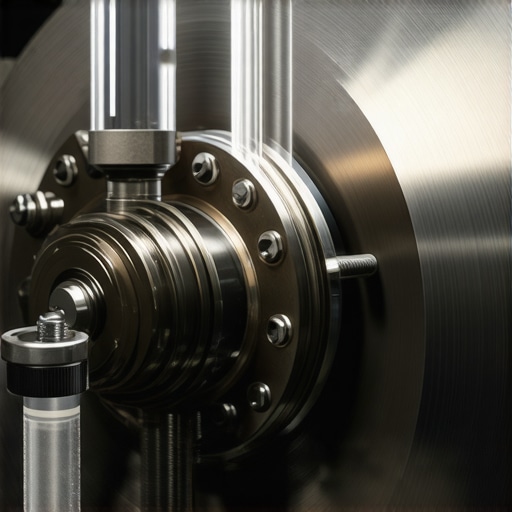
Overcoming Hydraulic Fade After Sustained High-Speed Friction
In the world of high-performance automotive engineering, a spongy brake pedal is not merely an inconvenience; it is a critical indicator of thermodynamic failure within the hydraulic circuit. When you embark on a long drive, your braking system—a complex assembly of calipers, rotors, and pads—converts kinetic energy into thermal energy. Under sustained load, this heat can exceed the operating temperature of the hydraulic fluid, leading to what professionals call ‘brake fade.’ This phenomenon is often the result of vapor lock, where the liquid fluid boils and transitions into a gas. Because gases are compressible, unlike liquids, the pedal loses its firm feedback and feels elastic underfoot.
Expert diagnosis often reveals that the root cause is not the hardware itself but the chemical state of the medium. Integrating robust brake maintenance hacks to prevent costly failures into your routine is essential to ensuring that the system remains sealed against the elements. If your pedal remains soft even after a standard bleed, you may be dealing with internal seal bypass within the master cylinder, a condition that requires a more nuanced approach than a simple pad swap.
Why Moisture Content in DOT Fluid is Your Silent Enemy
Brake fluid is hygroscopic, meaning it actively absorbs moisture from the atmosphere over time. This is why a why regular brake service is key to car safety and longevity focuses heavily on fluid testing. Even a 3% water content can lower the boiling point of DOT 4 fluid by nearly 100 degrees Fahrenheit. On a long-distance haul, that margin of safety disappears, causing the fluid to boil and creating the ‘spongy’ sensation drivers fear. To mitigate this, a professional mechanic should perform a copper strip test or use a digital refractometer to assess the fluid’s integrity before clear failure occurs. The National Highway Traffic Safety Administration (NHTSA) emphasizes that hydraulic system integrity is paramount for preventing collisions related to stopping distance degradation.
Can You Differentiate Between Mechanical Flex and Fluid Vaporization?
Identifying the difference between mechanical failure and hydraulic issues is a hallmark of professional-level diagnostic skill. Mechanical flex occurs when caliper pins seize or when low-quality rubber hoses expand under pressure. Conversely, vaporization occurs when the fluid itself is compromised. If your pedal feels firm while the car is cold but softens as you climb mountain passes or navigate stop-and-go highway traffic, the issue is almost certainly thermal. Many drivers find themselves asking why your brake pedal feels spongy even after a professional bleed, often discovering that the technician failed to address the secondary ABS valves or the master cylinder bench bleed process.
Restoring Pedal Firmness with Advanced Bleeding Protocols
Restoring a rock-solid pedal after heat-induced sponginess requires more than a simple gravity bleed. Advanced technicians utilize pressure bleeding at 15-20 PSI to ensure all micro-bubbles are purged from the intricate channels of the ABS modulator. For those dealing with persistent air pockets, implementing the 11 master cylinder bench bleeding hack for a rock solid brake pedal is a proven method to reset the system to factory specifications. This procedure involves removing the master cylinder and cycling it in a vice to ensure the bore is completely free of trapped air before it ever touches the vehicle’s firewall. For further insights into maximizing your vehicle’s safety and performance metrics, consider reviewing our analytical guide on high-performance brake systems.
Stop Ignoring the Caliper Sliders and Pins
While hydraulic integrity is often blamed for a soft pedal, mechanical drag is a frequently overlooked culprit. If your caliper slide pins are corroded or lack sufficient lubrication, the caliper cannot center itself properly over the rotor. This creates a situation where the piston must travel further to initiate contact, manifesting as ‘dead travel’ at the top of the pedal. Professional technicians know that applying the 12 caliper pin grease tip that ends persistent brake squeal is not just about noise reduction; it is about ensuring the mechanical movement of the caliper is as fluid as the hydraulic pressure behind it. When the pins are seized, the pads wear at an angle, causing a spongy feeling as the piston tries to compress a tapered friction surface against a flat rotor.
Why do your brand new rotors pulse after only a few hundred miles?
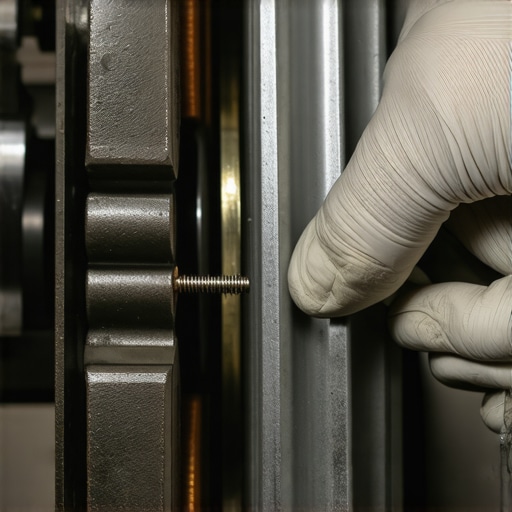
Many drivers mistakenly label a vibrating pedal as ‘warped rotors,’ but in modern automotive metallurgy, rotors rarely warp in the traditional sense. Instead, what you are likely experiencing is DTV (Disc Thickness Variation) caused by uneven pad material transfer. This occurs when a vehicle is brought to a dead stop after high-speed braking, causing the hot pad to ‘stamp’ its chemical footprint onto one spot on the rotor. To prevent this, expert shops utilize the 10 minute hub scrub that stops brand new brake pads from squealing and ensuring a perfectly flat mating surface. If the hub is not cleaned of rust before the new rotor is seated, the tiny amount of runout at the center is magnified at the outer edge, leading to the sensation that why your new brake rotors still pulse after a professional install. Addressing this requires a dial indicator to check for lateral runout, ensuring the assembly is within the standard 0.002-inch tolerance.
Break in Your New Pads Without Glazing the Friction Surface
The first 500 miles after a brake service are the most critical for long-term performance. Fresh friction material needs to be ‘bedded-in’—a process where a uniform layer of pad material is transferred to the rotor face. Skipping this step often leads to surface glazing, where the pads become glassy and lose their coefficient of friction. According to technical bulletins from Brembo, the industry leader in high-performance braking, a proper bedding-in cycle is vital to prevent thermal shock and ensure even material distribution. You can often prevent early surface issues by understanding how a 6 can of brake cleaner saves your new pads from early glazing during the assembly phase. Furthermore, never underestimate the small components; many technicians identify the 8 brake shims most mechanics toss in the trash as the secret to maintaining consistent pedal pressure and thermal isolation.
Brakes Are a Crucial Part of Your Seasonal Tune-Up Strategy
Integrating a deep-dive brake inspection into your broader maintenance schedule is the most effective way to avoid emergency repairs. High-performance stopping power is just as important as engine efficiency, and they often share diagnostic space. For example, tune up strategies to save money on auto repairs should always include a vacuum booster check, as a small leak in the booster can mimic both an engine misfire and a hard brake pedal. If you have noticed a significant change in how your car handles high-load stopping, don’t wait for a warning light. Take the time to research finding the right mechanic your road to reliable auto care to ensure your technician has the diagnostic tools to measure fluid boiling points and rotor runout accurately. Have you ever experienced pedal fade on a long descent? Share your story in the comments or tell us which high-performance pads you trust for your daily driver.
Stop Fighting a Heavy Pedal by Troubleshooting the Vacuum Booster
While much of our focus has remained on the hydraulic fluid and caliper movement, the vacuum booster acts as the critical bridge between your leg strength and the master cylinder’s pressure. A hard, unresponsive pedal—often described as ‘the brick’—usually signals a rupture in the internal rubber diaphragm or a failure in the check valve. This is more than a comfort issue; a failing booster can create a vacuum leak that disrupts the engine’s air-fuel ratio, leading to a rough idle or stalling during braking maneuvers. To diagnose this, perform a simple static test: with the engine off, pump the pedal several times to deplete the vacuum reserve, then hold the pedal down while starting the engine. If the pedal doesn’t drop slightly under your foot, the booster is likely compromised and requires immediate professional attention.
Kill the Mushy Feel with Stainless Steel Braided Hoses
Standard OEM rubber hoses are designed for cost-effectiveness and flexibility, but they are the Achilles’ heel of a high-performance braking system. Under high pressure, these rubber lines actually expand, a phenomenon known as ‘volumetric expansion.’ This expansion absorbs some of the hydraulic force that should be going to the caliper pistons, resulting in a vague, spongy pedal feel. Upgrading to stainless steel braided lines eliminates this expansion by wrapping the internal Teflon or rubber tube in a high-tensile metal weave. This ensures that every ounce of pressure generated by the master cylinder is delivered directly to the pads. Professional racers and track-day enthusiasts consider this the single most effective ‘feel’ upgrade you can perform. If you are serious about precision, check your existing lines for ‘ballooning’ while an assistant applies the brakes—you might be surprised at how much movement you see in aging rubber components.
Can extreme atmospheric pressure changes cause your brakes to fail unexpectedly?
Environmental variables play a more significant role in braking physics than many drivers realize, particularly when it comes to altitude and atmospheric pressure. As you ascend into higher elevations, the ambient pressure drops, which simultaneously lowers the boiling point of any moisture trapped within your brake fluid. A car that performed perfectly at sea level may suddenly experience vapor lock on a high-altitude mountain pass because the fluid’s safety margin has physically shrunk. According to the Society of Automotive Engineers (SAE) Standard J1703, the chemical stability of non-petroleum-based brake fluids is highly dependent on maintaining an equilibrium reflux boiling point above a specific threshold. When you combine reduced atmospheric pressure with the intense heat of a descent, the risk of the fluid transitioning to a compressible gas increases exponentially. This makes regular fluid flushes even more critical for those living in or traveling through mountainous regions.
Master Your Rear Brake Bias for Better Cornering Stability
The distribution of braking force between the front and rear axles—known as brake bias—is essential for vehicle stability, especially during ‘trail braking’ into a corner. Most modern vehicles utilize Electronic Brake-force Distribution (EBD) to manage this, but mechanical proportioning valves still exist in many older or performance-modified setups. If the rear brakes engage too aggressively, the back of the car can become unstable and prone to ‘swapping ends’ under heavy deceleration. Conversely, too much front bias leads to excessive nose-dive and understeer. Expert tuners often adjust this bias based on the vehicle’s weight distribution and tire grip levels. By understanding how your car responds during weight transfer, you can better diagnose whether a ‘squirmy’ feeling under braking is a suspension issue or a hydraulic bias problem that needs recalibration. Take a moment to inspect your rear proportioning valve for leaks or seized linkages next time you are under the chassis; it’s a small component that dictates your car’s entire braking personality.
Electronic Stability Control is Quietly Devouring Your Rear Friction Material
Modern drivers often notice that their rear brake pads vanish twice as fast as their fronts, a complete reversal of historical wear patterns. This isn’t necessarily a mechanical flaw but rather the result of sophisticated software interventions. Systems like Electronic Stability Control (ESC) and Torque Vectoring utilize the rear calipers to correct yaw and tighten cornering lines, often without any input from the driver’s foot. These micro-braking events generate significant heat cycles that never reach the threshold of pedal feedback. To prevent premature wear, high-performance enthusiasts should look for pads with high thermal stability ratings, specifically those designed to handle the frequent, short-duration friction events common in digitally managed chassis.
Will switching to DOT 5 silicone fluid finally end my system corrosion?
While the idea of a non-hygroscopic fluid sounds like the ultimate solution for a long-term project car, DOT 5 silicone fluid is a dangerous choice for any vehicle equipped with Anti-lock Braking Systems (ABS). Silicone fluid tends to aerate when cycled rapidly through the tiny orifices of an ABS pump, leading to a dangerously spongy pedal and unpredictable pressure modulation. For high-performance applications that require extreme boiling points without the risks of silicone, DOT 5.1 is the superior choice. Unlike DOT 5, the 5.1 variant is glycol-based and fully compatible with DOT 3 and 4 systems, providing the high-temperature resilience needed for track days while maintaining the low-viscosity requirements of modern electronic solenoids.
Heat Maps Don’t Lie: Thermal Imaging for Invisible Hydraulic Failures
When traditional pressure testing fails to reveal the source of a pull or a soft pedal, professional-grade thermography becomes an indispensable diagnostic tool. By using a thermal imaging camera after a brief test drive, a technician can instantly see the thermal signature of every wheel end. A rotor that remains significantly cooler than its counterpart on the same axle indicates a seized caliper piston or a collapsed internal lining in a flexible brake hose, acting as a one-way check valve. Conversely, an abnormally hot rotor suggests a dragging pad or a failing master cylinder that isn’t allowing the fluid to return to the reservoir. 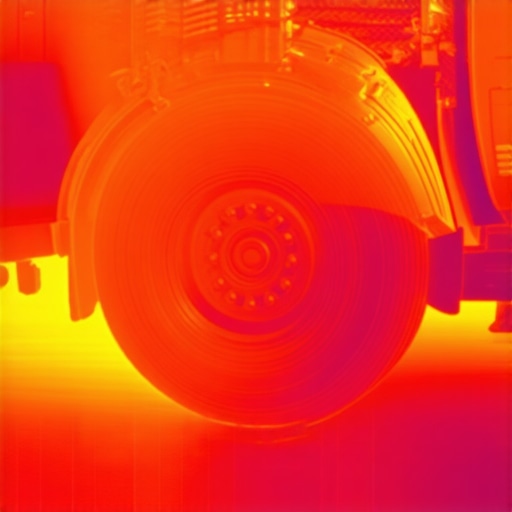 This non-invasive method allows for the identification of hydraulic bottlenecks that a simple visual inspection would never uncover, ensuring that you aren’t just throwing parts at a symptom.
The Hybrid Paradox: Why Braking Less Often Destroys Your Calipers
In the era of electrification, the ‘Hybrid Paradox’ has become a leading cause of brake failure. Regenerative braking handles the vast majority of deceleration, meaning the mechanical friction brakes may sit idle for weeks at a time during city commuting. This lack of use is catastrophic for iron calipers. Moisture and road salt accumulate on the slider pins and piston boots without the heat of friction to evaporate the contaminants. Over time, the calipers seize in place from sheer neglect. According to research published in SAE International Technical Paper 2021-01-0985, the lack of regular friction cycles in EVs and hybrids leads to increased disc oxidation and surface pitting, which significantly degrades emergency stopping performance. Owners of electrified vehicles must perform annual ‘brake services’—not to replace worn pads, but to disassemble, clean, and relubricate the mechanical components to ensure they work when the computer hands over control during a panic stop.
Don’t let digital sensors mask a mechanical decline; take a proactive approach by verifying your system’s thermodynamic health today. If you’ve encountered strange wear patterns on your hybrid or EV, consult an ASE-certified technician who understands the nuances of regenerative blending and electronic parking brake calibration.
Overcoming Hydraulic Fade After Sustained High-Speed Friction
In the world of high-performance automotive engineering, a spongy brake pedal is not merely an inconvenience; it is a critical indicator of thermodynamic failure within the hydraulic circuit. When you embark on a long drive, your braking system—a complex assembly of calipers, rotors, and pads—converts kinetic energy into thermal energy. Under sustained load, this heat can exceed the operating temperature of the hydraulic fluid, leading to what professionals call ‘brake fade.’ This phenomenon is often the result of vapor lock, where the liquid fluid boils and transitions into a gas. Because gases are compressible, unlike liquids, the pedal loses its firm feedback and feels elastic underfoot.
Expert diagnosis often reveals that the root cause is not the hardware itself but the chemical state of the medium. Integrating robust brake maintenance hacks to prevent costly failures into your routine is essential to ensuring that the system remains sealed against the elements. If your pedal remains soft even after a standard bleed, you may be dealing with internal seal bypass within the master cylinder, a condition that requires a more nuanced approach than a simple pad swap.
Why Moisture Content in DOT Fluid is Your Silent Enemy
Brake fluid is hygroscopic, meaning it actively absorbs moisture from the atmosphere over time. This is why a why regular brake service is key to car safety and longevity focuses heavily on fluid testing. Even a 3% water content can lower the boiling point of DOT 4 fluid by nearly 100 degrees Fahrenheit. On a long-distance haul, that margin of safety disappears, causing the fluid to boil and creating the ‘spongy’ sensation drivers fear. To mitigate this, a professional mechanic should perform a copper strip test or use a digital refractometer to assess the fluid’s integrity before clear failure occurs. The National Highway Traffic Safety Administration (NHTSA) emphasizes that hydraulic system integrity is paramount for preventing collisions related to stopping distance degradation.
Can You Differentiate Between Mechanical Flex and Fluid Vaporization?
Identifying the difference between mechanical failure and hydraulic issues is a hallmark of professional-level diagnostic skill. Mechanical flex occurs when caliper pins seize or when low-quality rubber hoses expand under pressure. Conversely, vaporization occurs when the fluid itself is compromised. If your pedal feels firm while the car is cold but softens as you climb mountain passes or navigate stop-and-go highway traffic, the issue is almost certainly thermal. Many drivers find themselves asking why your brake pedal feels spongy even after a professional bleed, often discovering that the technician failed to address the secondary ABS valves or the master cylinder bench bleed process.
Restoring Pedal Firmness with Advanced Bleeding Protocols
Restoring a rock-solid pedal after heat-induced sponginess requires more than a simple gravity bleed. Advanced technicians utilize pressure bleeding at 15-20 PSI to ensure all micro-bubbles are purged from the intricate channels of the ABS modulator. For those dealing with persistent air pockets, implementing the 11 master cylinder bench bleeding hack for a rock solid brake pedal is a proven method to reset the system to factory specifications. This procedure involves removing the master cylinder and cycling it in a vice to ensure the bore is completely free of trapped air before it ever touches the vehicle’s firewall. For further insights into maximizing your vehicle’s safety and performance metrics, consider reviewing our analytical guide on high-performance brake systems.
Stop Ignoring the Caliper Sliders and Pins
While hydraulic integrity is often blamed for a soft pedal, mechanical drag is a frequently overlooked culprit. If your caliper slide pins are corroded or lack sufficient lubrication, the caliper cannot center itself properly over the rotor. This creates a situation where the piston must travel further to initiate contact, manifesting as ‘dead travel’ at the top of the pedal. Professional technicians know that applying the 12 caliper pin grease tip that ends persistent brake squeal is not just about noise reduction; it is about ensuring the mechanical movement of the caliper is as fluid as the hydraulic pressure behind it. When the pins are seized, the pads wear at an angle, causing a spongy feeling as the piston tries to compress a tapered friction surface against a flat rotor.
Why do your brand new rotors pulse after only a few hundred miles?
Many drivers mistakenly label a vibrating pedal as ‘warped rotors,’ but in modern automotive metallurgy, rotors rarely warp in the traditional sense. Instead, what you are likely experiencing is DTV (Disc Thickness Variation) caused by uneven pad material transfer. This occurs when a vehicle is brought to a dead stop after high-speed braking, causing the hot pad to ‘stamp’ its chemical footprint onto one spot on the rotor. To prevent this, expert shops utilize the 10 minute hub scrub that stops brand new brake pads from squealing and ensuring a perfectly flat mating surface. If the hub is not cleaned of rust before the new rotor is seated, the tiny amount of runout at the center is magnified at the outer edge, leading to the sensation that why your new brake rotors still pulse after a professional install. Addressing this requires a dial indicator to check for lateral runout, ensuring the assembly is within the standard 0.002-inch tolerance.
Break in Your New Pads Without Glazing the Friction Surface
The first 500 miles after a brake service are the most critical for long-term performance. Fresh friction material needs to be ‘bedded-in’—a process where a uniform layer of pad material is transferred to the rotor face. Skipping this step often leads to surface glazing, where the pads become glassy and lose their coefficient of friction. According to technical bulletins from Brembo, the industry leader in high-performance braking, a proper bedding-in cycle is vital to prevent thermal shock and ensure even material distribution. You can often prevent early surface issues by understanding how a 6 can of brake cleaner saves your new pads from early glazing during the assembly phase. Furthermore, never underestimate the small components; many technicians identify the 8 brake shims most mechanics toss in the trash as the secret to maintaining consistent pedal pressure and thermal isolation.
Brakes Are a Crucial Part of Your Seasonal Tune-Up Strategy
Integrating a deep-dive brake inspection into your broader maintenance schedule is the most effective way to avoid emergency repairs. High-performance stopping power is just as important as engine efficiency, and they often share diagnostic space. For example, tune up strategies to save money on auto repairs should always include a vacuum booster check, as a small leak in the booster can mimic both an engine misfire and a hard brake pedal. If you have noticed a significant change in how your car handles high-load stopping, don’t wait for a warning light. Take the time to research finding the right mechanic your road to reliable auto care to ensure your technician has the diagnostic tools to measure fluid boiling points and rotor runout accurately. Have you ever experienced pedal fade on a long descent? Share your story in the comments or tell us which high-performance pads you trust for your daily driver.
Stop Fighting a Heavy Pedal by Troubleshooting the Vacuum Booster
While much of our focus has remained on the hydraulic fluid and caliper movement, the vacuum booster acts as the critical bridge between your leg strength and the master cylinder’s pressure. A hard, unresponsive pedal—often described as ‘the brick’—usually signals a rupture in the internal rubber diaphragm or a failure in the check valve. This is more than a comfort issue; a failing booster can create a vacuum leak that disrupts the engine’s air-fuel ratio, leading to a rough idle or stalling during braking maneuvers. To diagnose this, perform a simple static test: with the engine off, pump the pedal several times to deplete the vacuum reserve, then hold the pedal down while starting the engine. If the pedal doesn’t drop slightly under your foot, the booster is likely compromised and requires immediate professional attention.
Kill the Mushy Feel with Stainless Steel Braided Hoses
Standard OEM rubber hoses are designed for cost-effectiveness and flexibility, but they are the Achilles’ heel of a high-performance braking system. Under high pressure, these rubber lines actually expand, a phenomenon known as ‘volumetric expansion.’ This expansion absorbs some of the hydraulic force that should be going to the caliper pistons, resulting in a vague, spongy pedal feel. Upgrading to stainless steel braided lines eliminates this expansion by wrapping the internal Teflon or rubber tube in a high-tensile metal weave. This ensures that every ounce of pressure generated by the master cylinder is delivered directly to the pads. Professional racers and track-day enthusiasts consider this the single most effective ‘feel’ upgrade you can perform. If you are serious about precision, check your existing lines for ‘ballooning’ while an assistant applies the brakes—you might be surprised at how much movement you see in aging rubber components.
Can extreme atmospheric pressure changes cause your brakes to fail unexpectedly?
Environmental variables play a more significant role in braking physics than many drivers realize, particularly when it comes to altitude and atmospheric pressure. As you ascend into higher elevations, the ambient pressure drops, which simultaneously lowers the boiling point of any moisture trapped within your brake fluid. A car that performed perfectly at sea level may suddenly experience vapor lock on a high-altitude mountain pass because the fluid’s safety margin has physically shrunk. According to the Society of Automotive Engineers (SAE) Standard J1703, the chemical stability of non-petroleum-based brake fluids is highly dependent on maintaining an equilibrium reflux boiling point above a specific threshold. When you combine reduced atmospheric pressure with the intense heat of a descent, the risk of the fluid transitioning to a compressible gas increases exponentially. This makes regular fluid flushes even more critical for those living in or traveling through mountainous regions.
Master Your Rear Brake Bias for Better Cornering Stability
The distribution of braking force between the front and rear axles—known as brake bias—is essential for vehicle stability, especially during ‘trail braking’ into a corner. Most modern vehicles utilize Electronic Brake-force Distribution (EBD) to manage this, but mechanical proportioning valves still exist in many older or performance-modified setups. If the rear brakes engage too aggressively, the back of the car can become unstable and prone to ‘swapping ends’ under heavy deceleration. Conversely, too much front bias leads to excessive nose-dive and understeer. Expert tuners often adjust this bias based on the vehicle’s weight distribution and tire grip levels. By understanding how your car responds during weight transfer, you can better diagnose whether a ‘squirmy’ feeling under braking is a suspension issue or a hydraulic bias problem that needs recalibration. Take a moment to inspect your rear proportioning valve for leaks or seized linkages next time you are under the chassis; it’s a small component that dictates your car’s entire braking personality.
Electronic Stability Control is Quietly Devouring Your Rear Friction Material
Modern drivers often notice that their rear brake pads vanish twice as fast as their fronts, a complete reversal of historical wear patterns. This isn’t necessarily a mechanical flaw but rather the result of sophisticated software interventions. Systems like Electronic Stability Control (ESC) and Torque Vectoring utilize the rear calipers to correct yaw and tighten cornering lines, often without any input from the driver’s foot. These micro-braking events generate significant heat cycles that never reach the threshold of pedal feedback. To prevent premature wear, high-performance enthusiasts should look for pads with high thermal stability ratings, specifically those designed to handle the frequent, short-duration friction events common in digitally managed chassis.
Will switching to DOT 5 silicone fluid finally end my system corrosion?
While the idea of a non-hygroscopic fluid sounds like the ultimate solution for a long-term project car, DOT 5 silicone fluid is a dangerous choice for any vehicle equipped with Anti-lock Braking Systems (ABS). Silicone fluid tends to aerate when cycled rapidly through the tiny orifices of an ABS pump, leading to a dangerously spongy pedal and unpredictable pressure modulation. For high-performance applications that require extreme boiling points without the risks of silicone, DOT 5.1 is the superior choice. Unlike DOT 5, the 5.1 variant is glycol-based and fully compatible with DOT 3 and 4 systems, providing the high-temperature resilience needed for track days while maintaining the low-viscosity requirements of modern electronic solenoids.
Heat Maps Don’t Lie: Thermal Imaging for Invisible Hydraulic Failures
When traditional pressure testing fails to reveal the source of a pull or a soft pedal, professional-grade thermography becomes an indispensable diagnostic tool. By using a thermal imaging camera after a brief test drive, a technician can instantly see the thermal signature of every wheel end. A rotor that remains significantly cooler than its counterpart on the same axle indicates a seized caliper piston or a collapsed internal lining in a flexible brake hose, acting as a one-way check valve. Conversely, an abnormally hot rotor suggests a dragging pad or a failing master cylinder that isn’t allowing the fluid to return to the reservoir. This non-invasive method allows for the identification of hydraulic bottlenecks that a simple visual inspection would never uncover, ensuring that you aren’t just throwing parts at a symptom.
The Hybrid Paradox: Why Braking Less Often Destroys Your Calipers
In the era of electrification, the ‘Hybrid Paradox’ has become a leading cause of brake failure. Regenerative braking handles the vast majority of deceleration, meaning the mechanical friction brakes may sit idle for weeks at a time during city commuting. This lack of use is catastrophic for iron calipers. Moisture and road salt accumulate on the slider pins and piston boots without the heat of friction to evaporate the contaminants. Over time, the calipers seize in place from sheer neglect. According to research published in SAE International Technical Paper 2021-01-0985, the lack of regular friction cycles in EVs and hybrids leads to increased disc oxidation and surface pitting, which significantly degrades emergency stopping performance. Owners of electrified vehicles must perform annual ‘brake services’—not to replace worn pads, but to disassemble, clean, and relubricate the mechanical components to ensure they work when the computer hands over control during a panic stop.
Don’t let digital sensors mask a mechanical decline; take a proactive approach by verifying your system’s thermodynamic health today. If you’ve encountered strange wear patterns on your hybrid or EV, consult an ASE-certified technician who understands the nuances of regenerative blending and electronic parking brake calibration.
Expert Insights & Advanced Considerations
Master Cylinder Bypass Happens Without External Leaks
If your pedal slowly sinks to the floor while stopped but you see no puddles on the ground, you are likely experiencing an internal seal bypass. This occurs when fluid slips past the primary piston cup within the master cylinder bore. Identifying this requires a static pressure test, a critical step often missed in a standard spongy brake pedal diagnosis.
Copper Contamination is the True Metric of Fluid Failure
While moisture is the famous enemy, copper levels in your fluid are the real indicator of internal line corrosion. As inhibitors wear out, the copper braising in your lines leaches into the fluid, accelerating the degradation of ABS valves. Professionals use expert mechanic tips to test for copper specifically to prevent expensive modulator failures.
Modern ABS Systems Demand Low Viscosity Fluid
Vehicles equipped with advanced stability control often require DOT 4 Class 6 fluid. This low-viscosity variant allows the ABS pump to modulate pressure at millisecond intervals during cold starts. Using standard fluid can result in a wooden pedal feel and slower reaction times, which is why brake service secrets emphasize checking the master cylinder cap specifications precisely.
Authoritative Resources for Precision Braking
SAE International Technical Papers
This resource provides the metallurgical and chemical data used by manufacturers to set service intervals. It is the definitive source for understanding fluid reflux boiling points and friction coefficients.
NHTSA Safety Recalls Database
Always cross-reference your VIN here to ensure your spongy pedal isn’t related to a known manufacturing defect in the vacuum booster or hydraulic control unit.
Brembo Technical Bulletins
Brembo offers the industry’s most detailed guides on thermal management and the proper procedure for bedding-in high-performance rotors to prevent lateral runout.
Maintain Your Stopping Power for the Long Haul
Ensuring your vehicle stops as reliably as it starts requires more than just changing pads; it requires a deep understanding of thermodynamic health. From utilizing the 11 master cylinder bench bleeding hack to conducting regular chemical fluid analysis, professional-grade brake maintenance is a safeguard against the unpredictable. By prioritizing these advanced protocols, you protect both your vehicle’s longevity and your own safety on the road. Have you noticed a change in your pedal feedback lately? We invite you to share your diagnostic experiences or reach out to a trusted professional to verify your system integrity today.