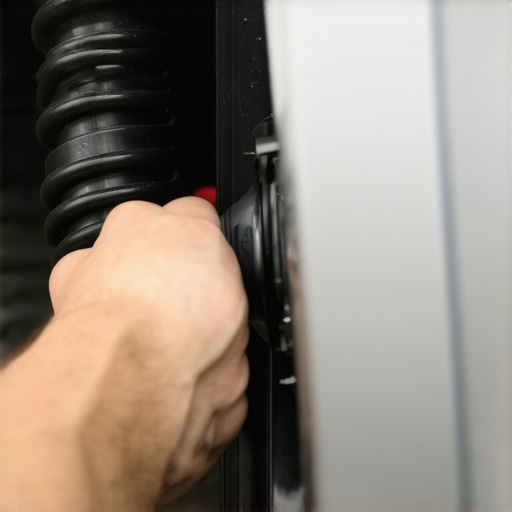
Why Kinematic Feedback Trumps Digital Diagnostics in Suspension Analysis
The suspension system is far more than a luxury designed for passenger comfort; it is a critical kinetic management framework that ensures the tire’s contact patch maintains consistent friction with the pavement. When dampers—colloquially known as shocks or struts—lose their ability to modulate spring oscillation, the vehicle’s safety envelope contracts significantly. While a professional mechanic may utilize expensive vibration-sensing equipment, the reality is that the most catastrophic failure modes are detectable through careful kinetic observation and visual forensics. Mastering these self-diagnostic techniques allows an owner to preemptively address handling decay before it necessitates a more expensive auto repair or leads to loss of control during emergency maneuvers.
Spot the Scalloped Tread Pattern That Signals Damping Failure
One of the most definitive indicators of a depleted shock absorber is found on the tires rather than the suspension hardware itself. Cupping, or scalloping, manifests as a rhythmic series of high and low spots worn into the tire tread. This occurs when a worn damper fails to suppress the vertical energy of the wheel, causing it to bounce microscopically as it travels. These mechanic-vetted diagnostic signs are often the first physical evidence of internal valve degradation. If you notice a rhythmic humming noise at highway speeds, your tires may already be reflecting the rhythmic failure of your suspension’s energy dissipation capabilities.
Why Your Car Dives Like a U-Boat Under Heavy Braking
Vehicle dynamics dictate that weight shifts forward during deceleration, but a healthy suspension should manage this transition gracefully. If the front end of your vehicle pitches forward aggressively—a phenomenon known as nose-dive—your struts have likely surpassed their service life. This isn’t just a comfort issue; it significantly increases stopping distance by unloading the rear tires. This is why a sophisticated brake service should always be paired with a suspension audit; even the most advanced friction materials cannot compensate for a chassis that cannot maintain its level plane. According to the Society of Automotive Engineers (SAE), damping efficiency is a primary factor in the efficacy of modern electronic stability control systems.
Is Your Vehicle Still Shaking Long After the Bump Is Gone?
A functional suspension system should settle almost immediately after encountering a road irregularity. If you experience harmonic oscillation—where the vehicle continues to bounce two or three times after a pothole or expansion joint—the internal hydraulic seals have likely failed. To test this, you can perform a static bounce test by applying heavy pressure to one corner of the vehicle and releasing it. A healthy car should return to ride height and stop moving instantly. If it continues to cycle, your shocks are functionally dead. While a standard tune up focuses on the efficiency of the engine, suspension health is what determines if that power can actually be safely applied to the road.
Identify Hydraulic Seepage Before the Next Pothole
A visual inspection of the damper body can provide the final evidence needed for a diagnosis. While a light film of oil, often called misting, is a common result of normal operation, any sign of liquid hydraulic fluid dripping down the side of the strut housing is a terminal symptom. Once the pressurized nitrogen gas or hydraulic fluid escapes the cylinder, the unit can no longer provide the resistance necessary to control the coil springs. If you suspect your suspension issues are impacting your stopping distance or steering precision, consider auditing your recent brake service to ensure total system harmony and safety.
While dampers are the primary actors in ride quality, the integrity of the secondary components often dictates the precision of your steering and the overall stability of the chassis. If your car continues to drift toward the shoulder even after a technician has performed a precision front-end alignment, the culprit is rarely the software on the alignment rack. Instead, you are likely dealing with a shifted belt within a tire or a subtle deformation in a lower control arm. This phenomenon is common enough that many drivers overlook it until it compromises their safety during a high-speed maneuver. To understand the physics behind this, you can investigate why your car still pulls to the left after a professional alignment to see how dynamic forces override static adjustments. Identifying these nuances is what separates a standard driver from one who truly knows how to choose a skilled mechanic capable of diagnosing phantom steering issues.
The Silent Failure of Rubber Bushings and Control Arms
The rubber bushings in your control arms serve as the vital joints of your vehicle, providing the necessary articulation while dampening road harshness. Over time, thermal cycles and road salt cause this rubber to crack and lose its elasticity. When this happens, the suspension geometry changes significantly under load, leading to ‘ghost’ steering inputs where the car seems to follow cracks in the road or ‘wander’ at highway speeds. It is a subtle degradation that often leads to frustration; for example, some owners mistakenly believe they have a powertrain issue, similar to how one might misdiagnose why their idle stays rough after replacing every spark plug. In reality, a hardened or collapsed bushing can transmit engine vibration directly into the cabin, mimicking a mechanical misfire through the steering column and floorboards.
Could a Worn Ball Joint Be Masking a Failing Wheel Bearing?
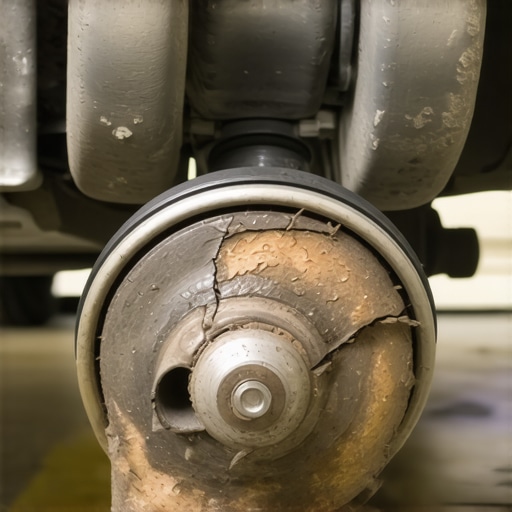
The interconnected nature of the wheel hub assembly means that a clunking sound or a rhythmic vibration can have multiple mechanical origins. A loose ball joint allows the entire steering knuckle to shift under load, which can sometimes mask—or even exacerbate—the symptoms of a failing wheel bearing. If you are experiencing a rhythmic growl that changes frequency when you gently swerve left or right, do not assume it is merely the tire compound. This mechanical interplay is complex; even a high-speed shop balance cannot fix a vibration rooted in a loose steering knuckle or a failing CV axle. Expert analysis by publications like Car and Driver suggests that suspension geometry is so sensitive that even a few millimeters of play in a ball joint can increase lateral tire wear by as much as 20% over a single season.
Stop the Vibration Before It Destroys Your Steering Rack
Neglecting a vibrating suspension is a recipe for a massive repair bill. Persistent oscillation doesn’t just wear out your tires; it sends shockwaves through the tie-rod ends and into the steering rack’s internal seals. Once these seals fail, you are looking at a full rack replacement rather than a simple component swap. This is why auto repair cost-saving tips always prioritize the replacement of ‘small’ parts like sway bar links and bushings before they take down the larger, more expensive assemblies. If you have recently noticed a new rattle when traversing uneven pavement, have you checked your sway bar bushings lately? Share your most difficult-to-diagnose suspension noise in the comments below, or read up on the top auto repair trends to watch in 2025 to stay ahead of modern vehicle maintenance needs.
Keep Your Chassis Flat with Fresh Sway Bar Links
While the shocks and struts manage vertical oscillation, the anti-roll bar—commonly known as the sway bar—is the primary component responsible for mitigating lateral body roll during cornering. This thick torsion spring connects the left and right sides of your suspension, forcing the vehicle to remain level by transferring the upward force of the outer wheel to the inner wheel. However, the sway bar itself rarely fails; it is the sacrificial end-links and rubber bushings that degrade first. When these links develop play, you will hear a distinct ‘clunk’ when traversing speed bumps or entering driveways at an angle. For those looking to optimize their vehicle’s responsiveness, upgrading to polyurethane bushings can provide a sharper steering feel, though at the cost of increased road noise. If you suspect your handling is becoming ‘mushy,’ inspecting these pivot points is a foundational step in any professional auto repair strategy.
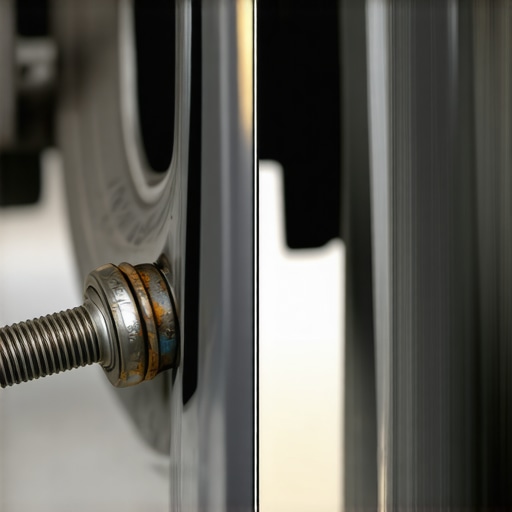
Beyond the simple mechanical connection, the sway bar’s efficacy is dictated by its diameter and the leverage exerted by the end-links. A snapped link effectively disconnects the bar, leading to dangerous amounts of body lean that can trip your stability control sensors. If you are already performing a brake service, it takes only a moment to grasp the sway bar and check for vertical movement in the links. This proactive check ensures that your vehicle maintains a stable contact patch when you need to swerve to avoid an obstacle.
Why Unsprung Mass Is the Enemy of a Smooth Ride
In the world of advanced chassis engineering, the ratio of sprung to unsprung mass is the holy grail of ride quality. Sprung mass is everything supported by the springs (the engine, the body, you), while unsprung mass includes the wheels, tires, brakes, and part of the suspension arms. The heavier your wheels and tires are, the more kinetic energy the shock absorbers must dissipate every time you hit a bump. This is why heavy, oversized aftermarket wheels often ruin the ride quality of a perfectly good car. A heavier wheel has a higher moment of inertia, making it harder for the suspension to quickly react to road changes. According to technical data from the National Highway Traffic Safety Administration (NHTSA), maintaining original equipment wheel weights is essential for preserving the factory-engineered safety margins of the braking and suspension systems.
Can a Blown Strut Actually Trigger an ABS Warning Light?
The short answer is yes, though the connection is indirect. Modern Anti-lock Braking Systems (ABS) rely on wheel speed sensors to detect if a tire is about to lock up. If a damper is completely failed, the wheel will ‘hop’ or lose contact with the road surface during heavy braking on uneven pavement. This rapid change in wheel speed—from spinning to stopped to spinning again as it bounces—confuses the ABS module. The system may interpret this erratic data as a sensor failure or a mechanical fault, illuminating the warning light. This illustrates why a comprehensive mechanic-led diagnostic must look beyond the error code; the root cause is often a mechanical failure in the damping system rather than an electronic sensor glitch. If you have been chasing a phantom ABS light, it might be time to stop looking at the wiring and start looking at your struts.
Never Reuse Torque-to-Yield Bolts During a Suspension Overhaul
One of the most common mistakes in DIY suspension work—and even among some lower-tier auto repair shops—is the reuse of ‘stretch’ bolts, technically known as Torque-to-Yield (TTY) fasteners. These bolts are designed to be tightened until they permanently deform, providing a specific clamping force that prevents the suspension geometry from shifting under extreme loads. Once a TTY bolt has been stretched, its structural integrity is compromised. Reusing it can lead to the bolt snapping or loosening over time, which can result in a catastrophic failure of a control arm or subframe. Always consult your factory service manual during a suspension tune up to identify which fasteners require mandatory replacement. Ensuring every bolt is torqued to the exact angle specified is what differentiates a lasting repair from a temporary fix that could leave you stranded.
As we dive deeper into the interaction between these mechanical components and the modern electronic aids that govern them, the complexity of the modern chassis becomes clear. The transition from pure mechanical grip to computer-assisted stability relies entirely on the health of the hardware we have discussed. If your vehicle feels disconnected or ‘loose’ at high speeds, the solution rarely lies in a simple software update.
Don’t Let Your Adaptive Damping Turn Into a Chassis Nightmare
While traditional passive dampers are becoming a rarity in luxury and performance segments, the shift toward Adaptive Damping Control (ADC) and magnetic ride systems introduces a new layer of diagnostic complexity. These systems utilize internal solenoids or magneto-rheological fluid to adjust valving in milliseconds, reacting to road inputs before the driver can even register a bump. However, when an electronic damper fails, it often fails in a ‘default-firm’ mode. This creates a ‘logging truck’ ride quality that places immense stress on every other suspension component, from the shock towers to the steering rack. A specialized mechanic must look beyond fluid leaks; they now require a bidirectional scan tool to verify that the electronic control module is sending the correct pulse-width modulated (PWM) signal. If you have performed a recent tune up but the car still feels brittle over expansion joints, the issue likely resides in the digital handshake between your chassis sensors and the damping actuators.
Why Does Your Lane-Keep Assist Malfunction After a Simple Suspension Drop?
The most modern evolution of suspension failure involves your vehicle’s Advanced Driver Assistance Systems (ADAS). If your struts have lost even half an inch of ride height due to spring fatigue or the installation of incorrect aftermarket parts, the pitch of your forward-facing camera and radar sensors is permanently altered. This slight deviation can lead to erratic ‘phantom braking’ or lane-departure warnings that trigger without a clear obstacle. This is why a precision brake service in 2025 often requires a full recalibration of the vehicle’s sensor suite to account for the new static ride height. According to the National Institute for Automotive Service Excellence (ASE), the integration of mechanical suspension health and electronic sensor alignment is now the most critical frontier in modern auto repair safety. Ignoring this synergy can lead to safety systems that intervene incorrectly during an emergency maneuver.

Why Mismatched Spring Rates Are the Silent Killers of New Dampers
One often overlooked factor in the quest for a ‘planted’ feel is the relationship between spring rate and the damper’s rebound stroke. Many enthusiasts and budget-conscious drivers frequently install stiffer lowering springs while retaining factory struts—a move that effectively turns the damper into a pogo stick. Because the factory valving is not designed to control the higher stored energy of a stiff spring, the vehicle becomes ‘under-damped.’ This leads to a jittery ride that eventually destroys the internal seals and valve stacks of the shock. In a professional auto repair environment, this is known as ‘over-springing,’ and it is a surefire way to compromise high-speed stability and increase tire wear. When auditing your suspension, always ensure that your shocks’ rebound curves are matched to the specific oscillation frequency of your springs to avoid premature component death.
Stop Fighting Your Steering Wheel During High-G Cornering
If you experience a ‘darty’ sensation or an inconsistent steering weight when entering a curve, you may be dealing with dynamic toe-change, often called ‘bump steer.’ This occurs when the steering rack and the control arms move in different arcs as the suspension compresses. While some bump steer is engineered into vehicles for stability, excessive amounts are usually caused by worn-out inner tie-rod ends or sagging subframe bushings. This mechanical instability cannot be solved by a simple wheel alignment; it requires a deep dive into the chassis geometry. Are you dealing with a mysterious vibration or a steering pull that only appears under heavy lateral load? Share your diagnostic struggles in the comments below, and let’s troubleshoot your chassis geometry together to ensure your vehicle handles as the engineers intended.
Why Kinematic Feedback Trumps Digital Diagnostics in Suspension Analysis
The suspension system is far more than a luxury designed for passenger comfort; it is a critical kinetic management framework that ensures the tire’s contact patch maintains consistent friction with the pavement. When dampers—colloquially known as shocks or struts—lose their ability to modulate spring oscillation, the vehicle’s safety envelope contracts significantly. While a professional mechanic may utilize expensive vibration-sensing equipment, the reality is that the most catastrophic failure modes are detectable through careful kinetic observation and visual forensics. Mastering these self-diagnostic techniques allows an owner to preemptively address handling decay before it necessitates a more expensive auto repair or leads to loss of control during emergency maneuvers.
Spot the Scalloped Tread Pattern That Signals Damping Failure
One of the most definitive indicators of a depleted shock absorber is found on the tires rather than the suspension hardware itself. Cupping, or scalloping, manifests as a rhythmic series of high and low spots worn into the tire tread. This occurs when a worn damper fails to suppress the vertical energy of the wheel, causing it to bounce microscopically as it travels. These mechanic-vetted diagnostic signs are often the first physical evidence of internal valve degradation. If you notice a rhythmic humming noise at highway speeds, your tires may already be reflecting the rhythmic failure of your suspension’s energy dissipation capabilities.
Why Your Car Dives Like a U-Boat Under Heavy Braking
Vehicle dynamics dictate that weight shifts forward during deceleration, but a healthy suspension should manage this transition gracefully. If the front end of your vehicle pitches forward aggressively—a phenomenon known as nose-dive—your struts have likely surpassed their service life. This isn’t just a comfort issue; it significantly increases stopping distance by unloading the rear tires. This is why a sophisticated brake service should always be paired with a suspension audit; even the most advanced friction materials cannot compensate for a chassis that cannot maintain its level plane. According to the Society of Automotive Engineers (SAE), damping efficiency is a primary factor in the efficacy of modern electronic stability control systems.
Is Your Vehicle Still Shaking Long After the Bump Is Gone?
A functional suspension system should settle almost immediately after encountering a road irregularity. If you experience harmonic oscillation—where the vehicle continues to bounce two or three times after a pothole or expansion joint—the internal hydraulic seals have likely failed. To test this, you can perform a static bounce test by applying heavy pressure to one corner of the vehicle and releasing it. A healthy car should return to ride height and stop moving instantly. If it continues to cycle, your shocks are functionally dead. While a standard tune up focuses on the efficiency of the engine, suspension health is what determines if that power can actually be safely applied to the road.
Identify Hydraulic Seepage Before the Next Pothole
A visual inspection of the damper body can provide the final evidence needed for a diagnosis. While a light film of oil, often called misting, is a common result of normal operation, any sign of liquid hydraulic fluid dripping down the side of the strut housing is a terminal symptom. Once the pressurized nitrogen gas or hydraulic fluid escapes the cylinder, the unit can no longer provide the resistance necessary to control the coil springs. If you suspect your suspension issues are impacting your stopping distance or steering precision, consider auditing your recent brake service to ensure total system harmony and safety.
While dampers are the primary actors in ride quality, the integrity of the secondary components often dictates the precision of your steering and the overall stability of the chassis. If your car continues to drift toward the shoulder even after a technician has performed a precision front-end alignment, the culprit is rarely the software on the alignment rack. Instead, you are likely dealing with a shifted belt within a tire or a subtle deformation in a lower control arm. This phenomenon is common enough that many drivers overlook it until it compromises their safety during a high-speed maneuver. To understand the physics behind this, you can investigate why your car still pulls to the left after a professional alignment to see how dynamic forces override static adjustments. Identifying these nuances is what separates a standard driver from one who truly knows how to choose a skilled mechanic capable of diagnosing phantom steering issues.
The Silent Failure of Rubber Bushings and Control Arms
The rubber bushings in your control arms serve as the vital joints of your vehicle, providing the necessary articulation while dampening road harshness. Over time, thermal cycles and road salt cause this rubber to crack and lose its elasticity. When this happens, the suspension geometry changes significantly under load, leading to ‘ghost’ steering inputs where the car seems to follow cracks in the road or ‘wander’ at highway speeds. It is a subtle degradation that often leads to frustration; for example, some owners mistakenly believe they have a powertrain issue, similar to how one might misdiagnose why their idle stays rough after replacing every spark plug. In reality, a hardened or collapsed bushing can transmit engine vibration directly into the cabin, mimicking a mechanical misfire through the steering column and floorboards.
Could a Worn Ball Joint Be Masking a Failing Wheel Bearing?
The interconnected nature of the wheel hub assembly means that a clunking sound or a rhythmic vibration can have multiple mechanical origins. A loose ball joint allows the entire steering knuckle to shift under load, which can sometimes mask—or even exacerbate—the symptoms of a failing wheel bearing. If you are experiencing a rhythmic growl that changes frequency when you gently swerve left or right, do not assume it is merely the tire compound. This mechanical interplay is complex; even a high-speed shop balance cannot fix a vibration rooted in a loose steering knuckle or a failing CV axle. Expert analysis by publications like Car and Driver suggests that suspension geometry is so sensitive that even a few millimeters of play in a ball joint can increase lateral tire wear by as much as 20% over a single season.
Stop the Vibration Before It Destroys Your Steering Rack
Neglecting a vibrating suspension is a recipe for a massive repair bill. Persistent oscillation doesn’t just wear out your tires; it sends shockwaves through the tie-rod ends and into the steering rack’s internal seals. Once these seals fail, you are looking at a full rack replacement rather than a simple component swap. This is why auto repair cost-saving tips always prioritize the replacement of ‘small’ parts like sway bar links and bushings before they take down the larger, more expensive assemblies. If you have recently noticed a new rattle when traversing uneven pavement, have you checked your sway bar bushings lately? Share your most difficult-to-diagnose suspension noise in the comments below, or read up on the top auto repair trends to watch in 2025 to stay ahead of modern vehicle maintenance needs.
Keep Your Chassis Flat with Fresh Sway Bar Links
While the shocks and struts manage vertical oscillation, the anti-roll bar—commonly known as the sway bar—is the primary component responsible for mitigating lateral body roll during cornering. This thick torsion spring connects the left and right sides of your suspension, forcing the vehicle to remain level by transferring the upward force of the outer wheel to the inner wheel. However, the sway bar itself rarely fails; it is the sacrificial end-links and rubber bushings that degrade first. When these links develop play, you will hear a distinct ‘clunk’ when traversing speed bumps or entering driveways at an angle. For those looking to optimize their vehicle’s responsiveness, upgrading to polyurethane bushings can provide a sharper steering feel, though at the cost of increased road noise. If you suspect your handling is becoming ‘mushy,’ inspecting these pivot points is a foundational step in any professional auto repair strategy.
Why Unsprung Mass Is the Enemy of a Smooth Ride
In the world of advanced chassis engineering, the ratio of sprung to unsprung mass is the holy grail of ride quality. Sprung mass is everything supported by the springs (the engine, the body, you), while unsprung mass includes the wheels, tires, brakes, and part of the suspension arms. The heavier your wheels and tires are, the more kinetic energy the shock absorbers must dissipate every time you hit a bump. This is why heavy, oversized aftermarket wheels often ruin the ride quality of a perfectly good car. A heavier wheel has a higher moment of inertia, making it harder for the suspension to quickly react to road changes. According to technical data from the National Highway Traffic Safety Administration (NHTSA), maintaining original equipment wheel weights is essential for preserving the factory-engineered safety margins of the braking and suspension systems.
Can a Blown Strut Actually Trigger an ABS Warning Light?
The short answer is yes, though the connection is indirect. Modern Anti-lock Braking Systems (ABS) rely on wheel speed sensors to detect if a tire is about to lock up. If a damper is completely failed, the wheel will ‘hop’ or lose contact with the road surface during heavy braking on uneven pavement. This rapid change in wheel speed—from spinning to stopped to spinning again as it bounces—confuses the ABS module. The system may interpret this erratic data as a sensor failure or a mechanical fault, illuminating the warning light. This illustrates why a comprehensive mechanic-led diagnostic must look beyond the error code; the root cause is often a mechanical failure in the damping system rather than an electronic sensor glitch. If you have been chasing a phantom ABS light, it might be time to stop looking at the wiring and start looking at your struts.
Never Reuse Torque-to-Yield Bolts During a Suspension Overhaul
One of the most common mistakes in DIY suspension work—and even among some lower-tier auto repair shops—is the reuse of ‘stretch’ bolts, technically known as Torque-to-Yield (TTY) fasteners. These bolts are designed to be tightened until they permanently deform, providing a specific clamping force that prevents the suspension geometry from shifting under extreme loads. Once a TTY bolt has been stretched, its structural integrity is compromised. Reusing it can lead to the bolt snapping or loosening over time, which can result in a catastrophic failure of a control arm or subframe. Always consult your factory service manual during a suspension tune up to identify which fasteners require mandatory replacement. Ensuring every bolt is torqued to the exact angle specified is what differentiates a lasting repair from a temporary fix that could leave you stranded.
Don’t Let Your Adaptive Damping Turn Into a Chassis Nightmare
While traditional passive dampers are becoming a rarity in luxury and performance segments, the shift toward Adaptive Damping Control (ADC) and magnetic ride systems introduces a new layer of diagnostic complexity. These systems utilize internal solenoids or magneto-rheological fluid to adjust valving in milliseconds, reacting to road inputs before the driver can even register a bump. However, when an electronic damper fails, it often fails in a ‘default-firm’ mode. This creates a ‘logging truck’ ride quality that places immense stress on every other suspension component, from the shock towers to the steering rack. A specialized mechanic must look beyond fluid leaks; they now require a bidirectional scan tool to verify that the electronic control module is sending the correct pulse-width modulated (PWM) signal. If you have performed a recent tune up but the car still feels brittle over expansion joints, the issue likely resides in the digital handshake between your chassis sensors and the damping actuators.
Why Does Your Lane-Keep Assist Malfunction After a Simple Suspension Drop?
The most modern evolution of suspension failure involves your vehicle’s Advanced Driver Assistance Systems (ADAS). If your struts have lost even half an inch of ride height due to spring fatigue or the installation of incorrect aftermarket parts, the pitch of your forward-facing camera and radar sensors is permanently altered. This slight deviation can lead to erratic ‘phantom braking’ or lane-departure warnings that trigger without a clear obstacle. This is why a precision brake service in 2025 often requires a full recalibration of the vehicle’s sensor suite to account for the new static ride height. According to the National Institute for Automotive Service Excellence (ASE), the integration of mechanical suspension health and electronic sensor alignment is now the most critical frontier in modern auto repair safety.
Expert Insights and Advanced Considerations
The ADAS Calibration Trap After Height Changes
Modern safety suites depend on a fixed chassis pitch. If your ride height changes due to component failure or the natural sag of older springs, your cameras begin looking at the wrong patch of road. This synergy between physical stance and digital safety is why a standard tune up in 2025 now requires a scanner as much as a wrench. Failing to address these micro-adjustments can lead to unpredictable safety system interventions. For more on maintaining this balance, see why regular tune ups are key to car longevity in the modern era.
Stop Reusing One-Time Fasteners During Strut Swaps
Torque-to-Yield (TTY) bolts are designed to stretch once to provide their maximum clamping force. Reusing them is a dangerous shortcut that compromises the structural integrity of your auto repair. Always demand new hardware during any major suspension overhaul to prevent bolt fatigue and potential catastrophic component detachment at highway speeds.
Curated Expert Resources
National Institute for Automotive Service Excellence (ASE)
This is the gold standard for technician certification, offering technical benchmarks and study guides that define what it means to be a truly skilled mechanic in a high-tech landscape.
Society of Automotive Engineers (SAE) International
The definitive source for technical papers on vehicle dynamics, providing deep dives into damping physics and the kinetic management of unsprung mass for high-performance applications.
NHTSA Safety Research Databases
An essential tool for understanding how suspension failure rates correlate with real-world collision statistics and the efficacy of modern electronic stability control programs.
Final Expert Perspective
Maintaining a vehicle’s handling isn’t just about ride quality; it is the cornerstone of active safety. From the simple visual check of a tire’s tread to the complex digital handshake of an adaptive damping system, every chassis component must work in harmony. Whether you are scheduling a routine brake service or a full suspension restoration, the ultimate goal is consistent friction and predictable dynamics. If you’ve encountered a “ghost” vibration or a steering pull that defied standard logic, your next step is finding the right partner. Learn how to choose a skilled mechanic who understands the complex physics behind your steering wheel. #IMAGE_PLACEHOLDER_E#