
The Physics of Suspension Decay and Why Struts are Critical
Suspension systems are the unsung heroes of vehicle dynamics, balancing the contradictory requirements of cabin comfort and high-speed handling. When we discuss a tune up or general auto repair, the focus often drifts toward the powertrain, yet the damping system—specifically the struts—is what keeps the tires in contact with the asphalt. A strut is not merely a shock absorber; it is a structural member of the suspension that supports the vehicle’s mass and dictates the geometry of the wheel alignment. According to research published by the Society of Automotive Engineers (SAE), damping degradation often goes unnoticed by drivers because the human brain gradually adapts to the loss of control over thousands of miles. This subtle decay can lead to catastrophic failure in emergency maneuvers if not identified early.
Spotting Blown Dampers Before Your Tires Suffer
The most immediate indicator of failing struts is a shift in the vehicle’s pitch and roll characteristics. If you notice the nose of your car diving significantly during a routine brake service or even light stopping, your front struts have likely lost their ability to control the spring’s stored energy. This leads to increased stopping distances and uneven load distribution across the chassis. You can often tell if your struts are actually blown by observing the rebound rate after hitting a dip; a healthy strut should settle the car almost instantly. If the chassis continues to oscillate or feel floaty, the internal valving is compromised. This lack of control is a primary reason for why new tires wear out in months, as the tire is allowed to bounce uncontrollably rather than maintain a steady contact patch.
Does Your Steering Wheel Shake Specifically During High-Speed Maneuvers?
A common mistake is attributing every vibration to a mechanic-diagnosed wheel balance issue. However, “cupping” or “scalloping” on the tire tread is a definitive sign that the strut is failing to keep the tire pressed firmly against the road. This creates a rhythmic bouncing that wears the rubber in irregular patches. If you find that your steering wheel shakes when you brake at high speeds, it might not just be warped rotors; it could be the suspension’s inability to dampen the vibration of the braking force. Inspect your tires for these patterns regularly to determine if your suspension geometry is being compromised by internal component failure.
The Bounce Test and Hydraulic Integrity
Professional technicians use the bounce test as a preliminary diagnostic tool before ever putting a car on the lift. By applying heavy downward force to one corner of the vehicle and releasing it, you can measure the dampening response in real-time. A single bounce is the standard for a healthy system; anything more indicates a lack of hydraulic resistance. While performing this, check the strut body for signs of wetness. While a light film of oil can be normal over years of use, pooling liquid suggests a total seal failure that requires immediate intervention. If you are handling your own maintenance, knowing how to find the source of a mystery suspension clunk can save you hundreds in diagnostic fees. Always replace struts in pairs to ensure even handling and braking response. For more professional-grade maintenance strategies, explore our guide on essential tune-up tips to boost performance in 2025.
Stop Chasing Ghosts: Why Your Clunk Isn’t Always the Strut
While struts are often the primary suspect in ride quality issues, the surrounding hardware is frequently the actual culprit behind persistent cabin noise. Control arm bushings and ball joints act as the pivot points for your entire front end, and when the rubber perishes or the grease dries out, you will hear metal-on-metal impact that mimics a blown strut. If you hear steering noises that mean your car is unsafe, it is vital to inspect the lateral links. A worn ball joint allows for excessive movement, which can eventually lead to a catastrophic separation of the steering knuckle from the chassis. A quick visual check for torn boots or leaking grease can prevent a situation where you need to spot a failing cv axle or other drivetrain components that take the brunt of the stress when suspension geometry fails.
Is Your Vehicle Stability Control Fighting a Losing Battle Against Worn Components?
Modern Electronic Stability Control (ESC) and Anti-lock Braking Systems (ABS) rely on predictable tire contact and suspension damping to function correctly. When your struts or bushings are compromised, the computer may struggle to calculate the necessary brake pressure or throttle reduction because the mechanical platform is unstable. According to data from the National Highway Traffic Safety Administration (NHTSA), mechanical failures—including suspension and tire degradation—contribute significantly to loss-of-control accidents. An expert-level auto repair strategy involves checking your system for hidden fault codes; often, a flickering traction control light is a symptom of a mechanical oscillation the system can’t overcome. Using the $20 scanner that every modern driver should own can help you identify if your vehicle’s safety sensors are struggling with underlying hardware wear.
Why You Can’t Skip the Alignment Rack After Suspension Work
Replacing any major suspension component effectively resets the geometry of your vehicle. Even if you carefully mark your cam bolts, the manufacturing tolerances of new parts differ from the ones they replace. If you find that your steering wheel is off-center after an alignment, or if the car pulls to one side, the technician may have missed a secondary wear point like a tie rod end or a shifted subframe. High-precision handling requires every angle—toe, camber, and caster—to be within a fraction of a degree. Neglecting this step leads to accelerated tire wear and increased fuel consumption due to the ‘scrubbing’ effect of the rubber dragging against the road. When reassembling your front end, ensuring you properly torque lug nuts without a professional gun is also critical to prevent warping the rotor hat, which can introduce a secondary vibration that feels like a suspension failure. Have you experienced a mystery clunk that refused to go away? Share your diagnostic journey in the comments below to help fellow drivers navigate complex suspension repairs.
The Thermal Dynamics of High-Performance Damping
In heavy-duty or performance applications, the heat generated within a strut during rapid cycling can cause hydraulic fluid to foam, a phenomenon known as aeration. This significantly reduces damping force and can lead to a ‘fading’ feeling after long drives on rough roads. Professional-grade mechanic advice often suggests upgrading to monotube shocks for vehicles that frequently tow or see track use, as their design dissipates heat much more efficiently than standard twin-tube units. This is a crucial part of a comprehensive tune up for high-performance vehicles. Identifying these thermal limits early allows you to choose replacements that won’t fail prematurely under heavy loads, ensuring your vehicle remains predictable and safe in all driving conditions.
Stop Aeration with High-Pressure Nitrogen Gas Charging
Building upon the thermal challenges of standard damping, the evolution of the monotube strut represents a significant leap in maintaining hydraulic integrity under duress. In a standard twin-tube setup, the constant movement of the piston can cause the hydraulic fluid to mix with air, leading to a ‘spongy’ feel and a dramatic loss in damping effectiveness. High-performance auto repair often involves upgrading to gas-charged units where a high-pressure nitrogen charge is separated from the oil by a floating piston. This design exerts constant pressure on the fluid, effectively raising its vapor point and preventing the formation of bubbles even during aggressive brake service maneuvers or high-speed cornering. By eliminating aeration, the strut provides a consistent resistance curve, ensuring that your wheel alignment settings translate into predictable steering input rather than vague chassis movement.
Why Your Ride Quality Changes When the Mercury Drops
Drivers often wonder: does cold weather actually damage my suspension, or is it just a temporary change in feel? The answer lies in the fundamental fluid dynamics of the hydraulic oil inside your struts. As temperatures plummet, the viscosity of the oil increases significantly, making it harder for the fluid to pass through the precision-machined valves of the piston. This results in a much stiffer ride during the first few miles of a commute. Conversely, as the strut works and generates internal friction, the oil thins out, returning the vehicle to its intended damping rate. Understanding this thermal cycle is a key part of professional mechanic-level diagnostics; if a vehicle remains excessively stiff even after a long drive, it often indicates that the internal valving has become clogged or the fluid has degraded beyond its functional life. Ensuring your tune up includes a cold-start suspension assessment can reveal issues that a warm-shop inspection might miss.
Find the Ghost in the Machine Through Bushing Deflection Analysis
Even the most expensive struts cannot compensate for perishing elastomeric components. Every suspension arm is anchored by rubber or polyurethane bushings that are designed to isolate the cabin from road noise while maintaining structural rigidity. Over time, these components suffer from ‘compliance’—a polite engineering term for the rubber becoming too soft or tearing. According to technical documentation from ZF Aftermarket (Sachs), bushing deflection can alter dynamic toe and camber by several degrees under heavy load, rendering your static wheel alignment useless the moment the car is in motion. This ‘ghost’ movement is often what causes a car to feel nervous on the highway despite having new tires and a fresh alignment sheet. To test for this, an expert technician will use a pry bar to check for excessive play in the control arms while the vehicle is under a load-simulating jack.
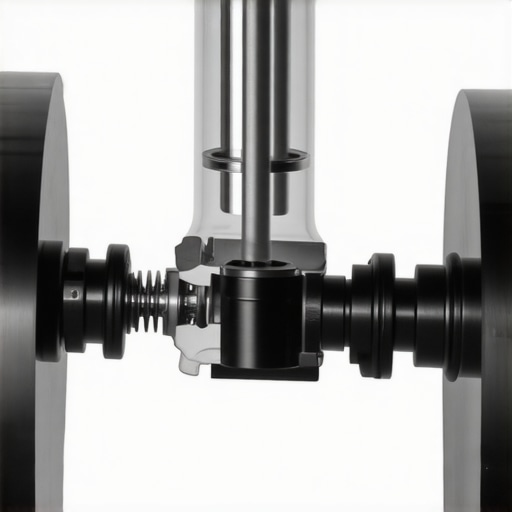
Identifying these micro-failures early prevents the ‘cascading wear’ effect, where a loose bushing allows for vibrations that eventually blow out the seals on your new struts. If you are serious about maintaining a factory-fresh feel, you must look beyond the obvious leaks and start measuring the deflection in your lateral links. Are you noticing a subtle ‘thump’ when you transition from acceleration to braking? This is often the first warning shot from a failing subframe or control arm bushing. Taking the time to perform a comprehensive ‘shake-down’ of the front end is a hallmark of elite auto repair. For a deeper dive into how these components interact with your steering rack, you should consider a specialized inspection of your tie-rod ends and steering knuckles before the next seasonal change. High-performance driving demands that every link in the chain is under tension and free of play, so don’t settle for a simple visual check when your safety and handling are on the line.
Why Your Sway Bar Links Fail Long Before the Struts Do
Suspension maintenance extends far beyond the primary dampers. The anti-roll bar—or sway bar—relies on small, articulated links to transfer lateral force during cornering and maintain chassis level. Because these links utilize miniature ball-and-socket joints often protected only by thin rubber boots, they are frequently the first victims of road salt and environmental debris. A failing link produces a distinctive metallic ‘clacking’ or ‘rattle’ over small, repetitive bumps, a sound that is notoriously misdiagnosed as a catastrophic strut failure. When performing a routine brake service, an expert mechanic will always check for vertical play in these links while the suspension is loaded. A snapped or excessively loose link won’t just degrade your handling; it can swing freely and puncture a tire or sever a brake line, turning a routine auto repair into a high-stakes emergency.
Is your aftermarket wheel setup actually killing your suspension?
Upgrading to wider tires or wheels with aggressive offsets is a popular way to ‘tune up’ a car’s aesthetic, but it fundamentally alters the ‘scrub radius’—the geometric distance between the steering axis and the center of the tire’s contact patch. According to technical research from Tenneco (Monroe), increasing this leverage ratio puts significantly higher lateral stress on the strut’s internal guide bushings and the upper mounting hardware. This additional leverage accelerates internal friction and heat, leading to premature seal leakage and ‘piston slap’ within the strut housing. If you have modified your vehicle’s stance, you must shorten your inspection intervals to ensure the increased mechanical load isn’t fatiguing the strut towers or compromising the integrity of the steering knuckles.
Electronic Dampers Demand More Than a Simple Visual Check
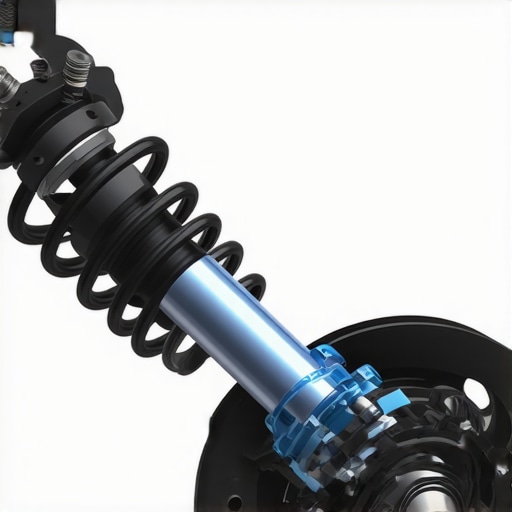
Modern luxury and high-performance vehicles often feature Adaptive Variable Suspension (AVS) or Magneride systems that transcend traditional hydraulic logic. These systems don’t just rely on static valving; they utilize electromagnetic coils or high-speed internal solenoids to adjust damping rates in milliseconds based on sensor input. While a traditional mechanic might only look for visible fluid leaks, an advanced auto repair specialist must use an oscilloscope or a high-end diagnostic scan tool to monitor current draw and solenoid response times. If the internal coil shorts or the fluid becomes contaminated, the strut may default to its firmest ‘fail-safe’ setting, creating a bone-jarring ride quality that no standard wheel alignment can rectify. These systems are deeply integrated with the vehicle’s stability control, meaning a failure here can disable critical safety features.
Stop Ignoring the Strut Mount and Bearing Plate
The upper termination of the strut assembly is just as critical as the damping unit itself. The strut mount houses a specialized bearing that allows the entire assembly to pivot as you manipulate the steering rack. When this bearing seizes due to moisture ingress or the rubber isolator collapses, drivers experience a phenomenon known as ‘memory steer’—where the vehicle fails to naturally return to center after a turn. This isn’t merely an inconvenience; it causes persistent driver fatigue and erratic lane tracking at highway speeds. During a comprehensive seasonal tune up, ensuring these mounts are free of binding is paramount for safety. If you hear a ‘boing’ or a rhythmic snapping noise when turning the wheel while stationary, your bearing plate has likely failed, and simply replacing the strut without the mount will not resolve the issue. Don’t let a subtle suspension clunk turn into a costly safety hazard; dive deeper into our technical library or consult with a certified chassis specialist to verify your vehicle’s structural integrity before your next long-distance haul.
Expert Insights & Advanced Considerations
Why Your Steering Response Fails Long Before the Strut Seals Leak
True experts know that damping force is only half the battle; the rate of fluid transition through the piston determines your ability to hold a line mid-corner. If you find your car diving under load, it is often a sign of internal bypass failure that no visual check will ever catch. Regular auto repair focus should include checking for aeration in the hydraulic fluid. For a deeper look, see how to tell if your struts are actually blown before you commit to expensive parts.
Stop Chasing Ghosts and Test for Bushing Deflection
Static alignment sheets often lie. A car can be perfectly in spec on the rack but lose its geometry under the stress of 60 mph cornering due to perished rubber bushings. This “dynamic toe shift” is why many drivers experience a car that wanders. You can learn mechanic tips for diagnosing common problems to separate these bushing issues from actual strut failure. High-mileage vehicles specifically benefit from a pry-bar stress test rather than a simple visual inspection.
Don’t Let Memory Steer Ruin Your Handling
When a strut mount bearing seizes, the spring itself must twist to accommodate steering input. This creates “memory steer,” where the car refuses to track straight after a turn. This is a critical safety issue often overlooked during a routine tune up. If you notice steering noises that mean your car is unsafe, the upper bearing plate is the most likely culprit.
Curated Expert Resources
SAE International Technical Papers: The gold standard for understanding vehicle dynamics and damping coefficients. Highly recommended for those who want to understand the math behind the ride.
ZF Aftermarket Technical Portal: Provides OEM-level service bulletins and diagnostic procedures for advanced damping systems like AVS and CDC.
NHTSA Safety Research: Essential for tracking mechanical failure trends and understanding the real-world impact of suspension degradation on braking distances.
Monroe Tech Training: Offers practical, technician-focused insights into the thermal limits of standard versus gas-charged damping systems.
Final Expert Perspective
Mastering your vehicle’s handling requires looking beyond the shock absorber as an isolated part and seeing it as a critical pillar of your chassis geometry. Effective auto repair is about proactive diagnostics—identifying the micro-failures in bushings and mounts before they cascade into catastrophic strut failure. By maintaining this structural integrity, you ensure your car remains a predictable tool for safety rather than an unstable platform. If you have mastered a difficult suspension diagnostic or found a clever way to save money on auto repairs, we want to hear your story. Drop a comment below and share your technical journey with our community of dedicated drivers.