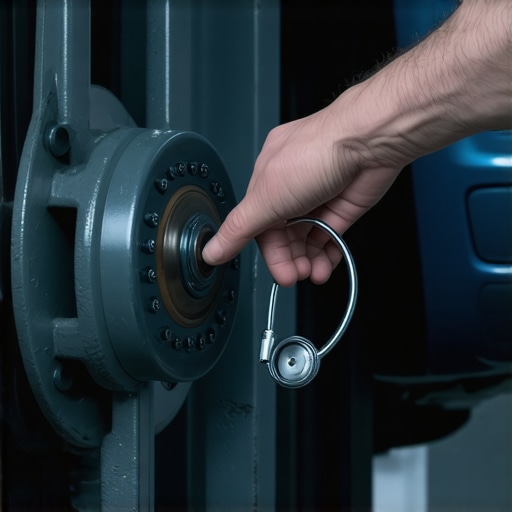
Expertise in modern vehicle maintenance is often erroneously equated with the possession of expensive, proprietary diagnostic software. While an OBD-II scanner is essential for sensor-related faults, the veteran mechanic knows that structural and mechanical integrity—such as the condition of a wheel hub assembly—requires a more tactile, physics-based approach. The gap between a high-ticket auto repair invoice and a successful DIY fix often narrows down to a single, low-cost instrument: the mechanic’s stethoscope. By leveraging acoustic resonance, car owners can bypass the guesswork that leads to unnecessary parts replacement.
Diagnostic Accuracy Beyond Expensive Scanners
[image_placeholder] The traditional tune up has evolved beyond spark plugs and air filters; it now encompasses the health of the entire drivetrain and safety systems. When a persistent hum develops at highway speeds, most drivers assume a costly brake service or tire replacement is imminent. However, a failing wheel bearing exhibits specific frequency patterns that a standard computer cannot always isolate. According to industry standards maintained by organizations like the National Institute for Automotive Service Excellence (ASE), physical verification remains the gold standard for rotating assembly health. By placing a stethoscope on the steering knuckle or the hub carrier while the wheel is spun manually, you can hear the internal galling of steel balls against the race long before the wheel develops physical play. Using the ultimate tune-up checklist in conjunction with physical checks provides a more holistic view of vehicle health.
Pinpoint Hub Failures Before They Turn Dangerous
Distinguishing between tire noise and bearing failure is a skill that separates amateur hobbyists from those practicing advanced auto repair. Tire noise typically changes pitch based on road surface texture, whereas a bearing growl is speed-dependent and often shifts in intensity when the vehicle’s weight is loaded onto one side during a turn. If you are unsure, utilizing professional-grade mechanic tips for diagnosing common auto problems can prevent you from misidentifying a simple tire balance issue as a catastrophic hub failure. This diagnostic precision is vital for maintaining vehicle longevity and ensuring that your maintenance budget is allocated effectively rather than wasted on ‘parts cannon’ engineering.
Is your vibration coming from the tire or the bearing?
This is the quintessential question in front-end diagnostics. To solve it, perform a ‘load test’ by safely changing lanes on a clear road. If the noise disappears when you steer left, the left-side bearing is unloaded and likely the source of the friction. If the noise persists regardless of weight transfer, you may be looking at ‘cupped’ tires or a failing CV axle. Integrating this check into your essential guide to auto repair routine ensures you catch these nuances before they compromise the braking system and overall safety.
Stop Bearing Seizures Through Thermal Management
The health of your hub is inextricably linked to the heat generated during braking. A neglected brake service can lead to sticking calipers, which transfer immense thermal energy directly into the wheel bearing grease, causing it to liquefy and escape. This ‘dry’ state is the primary precursor to bearing seizure. Furthermore, ensure you are practicing proper installation techniques, such as the hub scrub that stops brake vibrations, to ensure the rotor sits perfectly flush against the hub. By following brake service strategies that save you money, you indirectly extend the life of your expensive hub assemblies. If you want to ensure your vehicle remains in peak condition, consider sharing your diagnostic successes or questions with our community of experts to refine your mechanical skills. Contact our team for specialized insights into complex drivetrain issues.
Precise Torque Settings Prevent Early Bearing Death
Many DIY enthusiasts and even some professional mechanics make the critical error of using an impact wrench to seat a spindle nut. While the tool is efficient for removal, it lacks the nuanced control required for proper bearing pre-load. Modern hub assemblies are engineered with incredibly tight tolerances; applying excessive force can compress the internal races, leading to microscopic pitting and eventual metallurgical fatigue. To ensure your drivetrain stays healthy, always refer to a vehicle-specific service manual and use a calibrated torque wrench. This level of precision is a hallmark of essential tune-up tips to boost your cars performance in 2025, where mechanical accuracy outweighs brute force. Failure to respect these torque specs often results in a bearing that hums within months of installation, a frustration that can be easily avoided with a few extra minutes of careful assembly.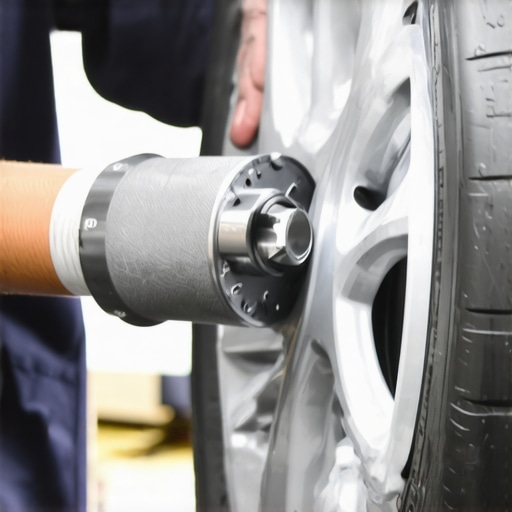
Identify a Failing CV Axle Before it Snaps on the Highway
While hub bearings produce a consistent growl, the constant velocity (CV) axle communicates its failure through rhythmic clicking. These two components live in close proximity, and their symptoms often overlap, leading to misdiagnosis. A torn rubber boot is the first sign of impending doom; once the specialized molybdenum grease escapes and road grit enters the joint, the clock starts ticking. Expert technicians suggest that you should how to identify a bad cv axle before it snaps by inspecting the inner and outer boots during every oil change. A snapped axle at highway speeds can lead to a total loss of power and significant damage to the transmission output seals. Protecting these components also involves managing surrounding hardware, such as ensuring the 7 clip that stops your brake lines from rubbing is properly secured to prevent abrasive damage during suspension travel.
Why is your car clicking like a clock during tight turns?
This specific acoustic signal is the definitive fingerprint of a compromised outer CV joint. When you turn the steering wheel to full lock, the joint is at its most extreme angle. If the internal bearings have developed flat spots or the cage is cracked, the balls will ‘pop’ into place under load, creating that unmistakable metallic click. This is distinct from a wheel bearing roar, which typically remains constant or changes pitch but rarely ‘clicks.’ According to technical data from SAE International (Society of Automotive Engineers), the failure of high-angle joints is significantly accelerated by the entry of particulate matter, which acts as a grinding paste. If you hear this sound, immediate intervention is required before the joint binds and potentially locks the wheel.
Alignment Errors Often Mask Deep-Seated Mechanical Failures
Sometimes, what feels like a mechanical vibration is actually a geometry issue. If your vehicle has recently suffered a curb strike or a deep pothole, the steering geometry might be compromised. You might find why your car drifts right even with brand new tires is not a tire defect but a slightly bent control arm or a shifted subframe. This misalignment puts uneven lateral loads on the wheel hub, forcing the bearing to work at an unintended angle. Over time, this leads to localized heat buildup and premature failure of the hub seal. If you have recently replaced a hub but still feel a pulsation through the pedal, you should investigate why your new brake rotors warped in less than six months, as run-out issues often stem from a mounting surface that was not properly cleaned or a hub flange that is slightly out of true. Have you ever experienced a mystery vibration that stumped your local shop? Join our discussion below and share your diagnostic journey to help fellow drivers solve complex front-end issues.Modern vehicles treat the wheel hub as more than just a spinning point; it’s a critical data node. Many technicians get caught in a diagnostic loop when an ABS or Traction Control light illuminates, assuming a faulty sensor is the culprit. In reality, the magnetic encoder ring embedded within the hub assembly—often a series of alternating magnetic poles—can become contaminated or physically chipped. A mere 0.005 inches of lateral runout in the hub flange can cause the sensor’s air gap to fluctuate, creating a ‘dirty’ signal that the ECU interprets as a component failure. 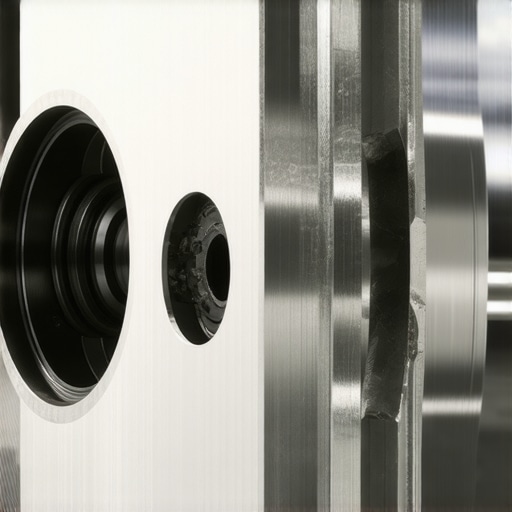 This is where auto repair precision meets data analysis. If you’ve replaced the sensor and the light persists, the issue is likely mechanical runout within the hub itself. Moving into the material science of these components, the quality of the steel used is non-negotiable. While ‘white-box’ budget parts look identical to premium units, the difference lies in the case-hardening depth and the purity of the alloy. According to Timken’s Technical Guide on Bearing Damage Analysis, sub-surface fatigue often originates from microscopic non-metallic inclusions in low-grade steel. These inclusions act as stress concentrators, leading to spalling—the actual flaking away of the metal surface—under the high-load conditions found in modern SUVs. A cheap hub might save you eighty dollars today, but its inability to manage the contact stress of a 5,000-pound vehicle means you’ll be repeating the job within eighteen months.
Can a faulty hub assembly trigger a ‘Check Engine’ light?
Technically, while the hub isn’t directly linked to emissions, the answer is often a nuanced yes. Modern Integrated Chassis Control systems share data across the CAN-bus. A severely failing hub can cause enough erratic wheel speed data that the ECU may disable specific engine torque-management features or throw a generic ‘U’ code (Network Communication) or ‘C’ code (Chassis). This highlights why a mechanic must look at the car as a connected ecosystem rather than a collection of isolated parts. If you’re struggling with a ghost in the machine, it’s worth checking if your essential tools for diagnosing modern car electronics are showing consistent wheel speed data across all four corners. Beyond the electronics and materials, the physical geometry of your suspension setup plays a massive role in how much stress a hub can take. Enthusiasts often install wider wheels or spacers to achieve a more aggressive stance, but this alters the ‘scrub radius’—the distance between the steering axis and the center of the tire’s contact patch. By pushing the wheel further out, you increase the leverage exerted on the bearing races. This turns every small pothole into a high-torque impact event. If you find your front-end components are wearing out prematurely, you should check why your custom wheels are killing your wheel bearings to see if your aesthetic choices are compromising your safety. Maintaining the factory-specified offset is one of the most overlooked mechanic tips for ensuring long-term hub stability. This is particularly true in heavy-duty applications where the hub is already operating near its thermal limit. When the offset is shifted, the load is no longer centered over the large inner bearing, forcing the smaller outer bearing to carry a disproportionate amount of the vehicle’s weight.
The Critical Link Between Control Arm Bushings and Hub Fatigue
A worn-out control arm bushing allows for excessive fore-and-aft movement of the wheel assembly during braking. This oscillation, known as ‘wheel hop’ in its extreme form, sends shockwaves directly through the hub. This is why a comprehensive brake service should always involve a pry-bar test of the suspension bushings. If the rubber is cracked or oil-soaked, the hub is subjected to vibrations that no amount of grease can dampen. To learn more about how these systems interact, you can explore our breakdown of how worn suspension impacts your braking performance. Even the most expensive auto repair won’t last if the underlying structural support is failing. By treating the hub as the heart of the wheel-end system, you can start to see how……even the smallest environmental factor can trigger a cascade of failures.
Road Salt is Quietly Eating Your Hub Seal
Galvanic corrosion acts as a silent saboteur at the interface between the aluminum alloy of the steering knuckle and the steel of the hub assembly. In regions where road salt and liquid de-icers are the norm, these two metals create a localized battery. The resulting oxidation can expand with enough force to seize the hub into the bore, making future auto repair a nightmare involving sledgehammers and torches. Even more insidious is how this corrosion creeps toward the ABS magnetic encoder. This is a primary reason why many ‘clean’ diagnostic scans fail; the physical gap is filled with conductive rust-slurry that muddies the square-wave signal seen on an oscilloscope. 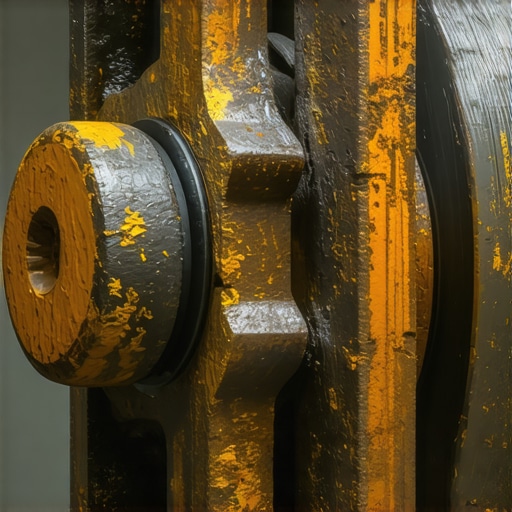 Beyond simple cleaning, professional-grade anti-seize compounds—specifically those rated for high-temperature and high-conductivity environments—must be applied strategically during a tune up of the suspension system.
The Invisible Threat of Lubricant Chemical Shear
The lubrication within a sealed unit isn’t just ‘grease’; it’s a precisely engineered chemical cocktail of base oils and complex thickeners. Many failures attributed to mechanical wear are actually cases of chemical shear. When a vehicle undergoes heavy towing or spirited mountain driving, the localized temperature at the bearing race can exceed the dropping point of standard lithium-based grease. According to technical documentation from the Association for Materials Protection and Performance (AMPP), once the oil separates from the thickener, the bearing effectively runs dry, leading to rapid adhesive wear. This chemical breakdown is irreversible and necessitates a full hub replacement rather than a simple brake service.
Can an unbalanced tire actually shatter your hub assembly?
While an unbalanced tire usually just causes a nuisance vibration, the long-term physics are devastating. A tire that is significantly out of balance creates a ‘hammering’ effect on the bearing races. Instead of a smooth, rotating load, the bearing is subjected to millions of high-frequency micro-impacts. This leads to a failure mode known as brinelling, where the steel balls create permanent indentations in the race. Once these divots form, the bearing will growl regardless of how well it is lubricated. Ensuring your mechanic performs a high-speed road-force balance is as vital to hub health as the initial installation torque.
Stop Hub Seizures with Targeted Chemical Barriers
To prevent the nightmare of a seized hub, advanced technicians use nickel-based anti-seize on the mating surfaces of the knuckle, but never on the mounting threads. This distinction is critical because lubricated threads can lead to over-torquing and bolt stretch, compromising the entire assembly. Integrating these nuanced steps into your vehicle’s maintenance cycle transforms a standard repair into a high-performance restoration. If you are noticing a slight steering wheel shimmy that doesn’t go away with a balance, don’t ignore it. Reach out to our specialist team to discuss your diagnostic data and find the permanent solution for your vehicle’s front-end stability.
Advanced Hub Maintenance and Expert Realities
Watch the Thousandths for Clean ABS Signals
Modern hubs are essentially data nodes. Even a minute amount of lateral runout—often less than 0.005 inches—can disrupt the magnetic encoder signal sent to the ABS module. This leads to phantom traction control activation and “dirty” data that mimics a sensor failure. When performing a tune up of your vehicle’s safety systems, verifying the hub’s physical true-ness with a dial indicator is just as critical as scanning for codes.
Why White-Box Hubs Fail Before Your Next Oil Change
The market is flooded with budget assemblies that look identical to OEM units but use inferior steel alloys. Premium bearings undergo specific case-hardening processes that prevent sub-surface fatigue. A standard mechanic knows that using high-purity steel prevents spalling, the primary cause of that characteristic highway growl. Investing in quality parts is the most effective auto repair strategy for long-term reliability.
Heat Soak is the Real Enemy of Sealed Bearings
Thermal transfer from a neglected brake service is a silent killer. When a caliper slide pin seizes, the constant friction creates a heat sink that cooks the internal bearing grease. Once the lubrication reaches its dropping point and liquefies, the mechanical destruction of the races is inevitable. Regular brake service strategies that save you money always include checking the hub temperature with an infrared thermometer after a test drive. [image_placeholder]
Where the Pros Get Their Technical Data
Timken Technical Guide on Bearing Damage Analysis
This is the industry Bible for identifying why a bearing failed. It provides high-resolution imagery of spalling, brinelling, and etching, allowing you to move beyond guessing and into true mechanical forensics.
SAE International Technical Papers
For those who want to dive into the physics of scrub radius and suspension geometry, SAE offers peer-reviewed data on how wheel offsets impact hub longevity.
ASE Professional Certification Standards
These resources define the gold standard for drivetrain and axle repair, ensuring your maintenance routine aligns with professional-grade requirements from the National Institute for Automotive Service Excellence.
The Road Toward Mechanical Mastery
Navigating the complexities of modern drivetrain health requires a blend of acoustic diagnosis, thermal management, and uncompromising part quality. The most successful auto repair outcomes aren’t born from simply swapping parts, but from identifying the root cause—be it a seized caliper or an incorrect torque spec. By mastering these nuances, you ensure your vehicle remains both quiet and safe at highway speeds. Integrating essential tune-up tips to boost your cars performance in 2025 into your workflow transforms you from a parts-swapper into a diagnostic technician. Do you have a mystery hum that persists despite a recent brake service? Join our technical community or contact our specialist team to help refine your diagnostic approach and get your vehicle back to peak performance.