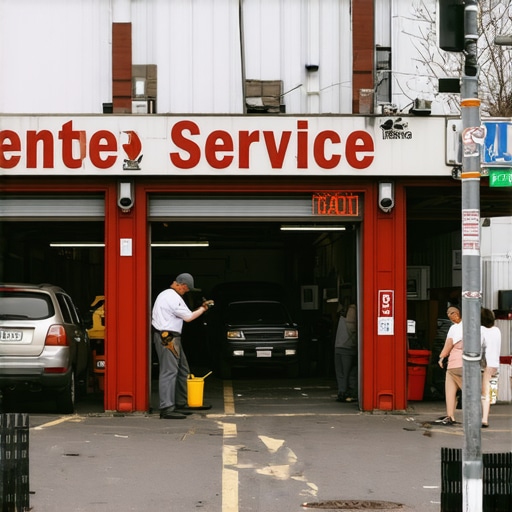
Why Most Hyperlocal SEO Strategies Fail to Generate Real Brake Service Leads
You’ve seen the reports. Your SEO agency sends you a monthly PDF filled with green arrows pointing up. You’re ranking #1 for “auto repair” in your town. Your google business profile seo looks, on paper, like a masterpiece. But then you walk out into your service bays, and what do you see? Crickets. The lifts are empty, and the phone is as silent as a graveyard at midnight.
Welcome to the “Truman Show” of Local SEO. Everything looks perfect. The sun is shining, the rankings are high, and the data suggests you’re the king of the mountain. But just like Truman Burbank, you’re starting to realize it’s all a carefully constructed set. The rankings are real, but the customers aren’t. In the world of automotive repair, and specifically for high-margin services like brake jobs, there is a massive, gaping canyon between “Visibility” and “Intent.”
As we head into 2026, hyperlocal SEO has become the buzzword of choice for every marketing “guru” with a laptop. But here’s the cold, hard truth: most hyperlocal strategies are failing to generate actual brake service leads because they focus on the wrong metrics. According to data from Marketing Eye, while hyperlocal SEO is essential in 2026, the majority of campaigns fail because they lack alignment between the SEO technicalities and the actual sales funnel. If your strategy doesn’t account for the specific way a driver searches for a brake fix, you’re just paying for vanity metrics.
Why General “Auto Repair” Keywords Are Killing Your Brake Leads
Most shop owners think that if they rank for “auto repair [City Name],” the brake leads will naturally follow. That’s like saying if you open a restaurant, people will automatically come in for the lasagna. It’s a fundamental misunderstanding of the “Hyperlocal Intent” gap. When a customer’s brakes start squealing, they aren’t looking for a generalist; they are looking for a solution to a specific, terrifying sound coming from their wheels.
Ranking for broad terms is great for brand awareness, but it’s terrible for immediate conversion. A driver searching for “auto repair” might just be looking for an oil change or a price comparison for a future timing belt job. However, someone searching for “brake squeal fix near me” or “emergency brake pad replacement” has high intent. They have a problem that needs to be solved today.
To capture these leads, your google business profile optimization needs to move beyond the basics. You can’t just list “Auto Repair Shop” as your primary category and hope for the best. You need to dominate the service-level keywords that indicate a customer is ready to book. This is where The Local SEO Strategy That Actually Wins the Google Maps Algorithm comes into play – it’s about matching your profile’s signals to the specific micro-intents of the user.
If you aren’t optimizing for the “symptoms” (squealing, grinding, soft pedal), you are missing the most profitable segment of the market. Research from LinkbuildingHQ suggests that a shop can be highly “visible” but fail miserably if they don’t match “High-Intent Queries.” You don’t want to be the shop that everyone knows; you want to be the shop that everyone calls when their brakes fail.
The 3 Fatal Flaws of Modern Hyperlocal Strategies
If your rankings are high but your leads are low, you are likely suffering from one of these three fatal flaws. These are the “Copper Washer” errors of SEO – the tiny details that, if missed, cause the whole system to leak.
1. The Proximity Paradox
For years, the “Map Pack” was ruled by proximity. If you were the closest shop to the user, you won. In 2026, that is no longer the case. Google has realized that “closest” doesn’t mean “best.” We call this the Proximity Paradox: being the nearest shop isn’t enough if your google maps trust signals are weak. If a user is half a mile from you but your profile lacks service-specific depth, Google will happily show a shop three miles away that has a robust history of “brake repair” mentions in their reviews and posts.
2. Category Confusion
This is the silent killer of brake leads. Many shops set their primary category and then forget about the secondary categories. If you aren’t utilizing “Brake Shop” as a secondary category, you are handicapping your rank google business profile efforts for the very services that keep your lights on. Google uses these categories to understand the breadth of your expertise. Without them, you’re just another generic grease pit in the eyes of the algorithm.
3. The Geo-Page Ghost Town
Many agencies will build “geo-pages” for every surrounding suburb. “Brake Service in Springfield,” “Brake Service in Shelbyville,” and so on. The problem? Most of these pages are ghost towns. They are thin, templated content that provides zero value to the driver. When a page looks like it was written by a robot for a robot, users bounce. And when users bounce, your rankings eventually tank. Using a google business profile audit tool from SEO Viper Tools can help you identify if these pages are actually contributing to your visibility or just taking up space. You might also want to check 3 Ways to Audit Your Local Mechanic After a Recent Brake Service to see how quality service translates to digital authority.
A recent case study by LeadingLocal highlighted a shop that dominated rankings for “wheel alignment” but couldn’t crack the top 10 for “brake repair.” The issue wasn’t their backlink profile; it was a total lack of a specific service strategy. They had no brake-specific content, no brake-specific reviews, and their GBP was a generic mess. They were invisible to the customers they actually wanted.
Technical 2026 Ranking Factors: Beyond the Basics
If you want to win in 2026, you have to stop thinking like a mechanic and start thinking like a data scientist. The “basics” of SEO – putting your city in your title tag – are now the bare minimum. To truly rank google business profile assets in a competitive market, you need to master the technical nuances.
- Local Schema Markup: You need to be using advanced JSON-LD schema to tell Google exactly what services you offer, your price range, and your specific coordinates. This isn’t just about “LocalBusiness” schema; it’s about “Service” schema nested within your entity.
- Google Business Profile Posts: Stop posting “Happy Friday” memes. Use your posts to showcase brake inspections, explain the difference between ceramic and semi-metallic pads, and provide value. This builds topical authority.
- NAP Consistency SEO: Name, Address, and Phone number consistency still matters, but in 2026, it’s about “Entity Consistency.” Your shop’s information needs to be identical across the web, from Apple Maps to local chamber of commerce directories.
To manage this at scale, you should be using professional local seo tools. Modern local seo software allows you to track “hyperlocal” keywords at the neighborhood or even block level. If you only know you’re ranking in “Chicago,” you’re missing the fact that you’re invisible in “Lincoln Park.” Understanding these micro-geographies is the difference between a full bay and an empty one. If you’re struggling with visibility, it’s time to learn How to Fix the Geo-Page Errors That Hide Your Shop From Local Drivers.
Furthermore, don’t ignore the “Copper Washer” level of SEO – the small attributes in your GBP. Do you offer “Appointment Required”? Is there “Identify as Women-Led”? Are you “Wheelchair Accessible”? These attributes are often used as filters in mobile searches. If you haven’t checked those boxes, you’re filtered out before the race even starts.
The “Trust Gap”: Reviews and Reputation Management
Let’s talk about the 4.2-star problem. You might rank #1, but if the shop at #3 has a 4.8-star rating with 500 reviews and you have a 4.2 with 50, you are going to lose the click almost every single time. Ranking gets you seen; reputation gets you the call.
Lead generation in the automotive space requires a relentless google review strategy. But it’s not just about the number of stars. In 2026, Google’s AI (and your customers) are looking at “Review Sentiment” and “Keyword Diversity” within reviews. If your reviews all say “Great service,” that’s fine. But if your reviews say “Best brake repair in town” or “Fixed my squealing brakes in an hour,” you are signaling to Google that you are an authority for those specific searches.
Data from Site-Seeker shows that shops focusing on reputation management and conversion-optimized profiles saw a 46% growth in traffic and significant lead volume increases (195+ reviews in a short period). This isn’t magic; it’s psychology. People trust their neighbors more than they trust your marketing copy. If you want to see how this works in practice, check out 5 Proven Moves to Get More Calls From Google Maps Without Paid Ads.
Beyond reviews, you must address the “Trust Gap” through education. Why do brake pads squeal? Why did that “professional” install fail? Linking to resources like Why Your New Brake Pads Squeal After a ‘Professional’ Local Install or Brake Service Secrets: How to Boost Safety and Longevity on your GBP posts and website shows that you aren’t just looking for a quick buck – you’re an expert who cares about driver safety. According to BeFree Media, local service businesses can generate 200% more qualified leads simply by using conversion-optimized landing pages that bridge this trust gap.
Conclusion & Your Monday Morning Roadmap
The “Rank but No Bank” phenomenon is a choice. You can keep chasing general rankings and wondering why the phone isn’t ringing, or you can pivot to a high-intent, hyperlocal strategy that actually fills your bays. Hyperlocal SEO in 2026 isn’t about being everywhere; it’s about being exactly where the high-intent customer is looking when their brakes fail.
Here is your “Monday Morning” checklist to stop the bleeding and start generating real brake service leads:
- Audit Your Categories: Ensure “Brake Shop” is listed as a secondary category in your Google Business Profile.
- Kill the Ghost Towns: Review your geo-pages. If they are thin and templated, rewrite them to include local landmarks, specific neighborhood advice, and real photos of your work in those areas.
- Identify Gaps: Use a google business profile optimization service or a tool like SEO Viper Tools to see where your competitors are outperforming you on service-specific terms.
- Launch a Service-Specific Review Campaign: Specifically ask your brake customers to mention the service in their review. A simple “Hey, if you liked our brake service, could you mention it in a review?” goes a long way.
- Monitor Hyperlocal Keywords: Stop looking at city-wide rankings. Use local seo software to see how you rank in the 2-mile radius around your shop.
If you’re tired of the “Truman Show” and ready for real results, it’s time to invest in a professional google maps ranking service that understands the automotive industry. Don’t let your shop be the best-kept secret in town. Dominate your micro-market, bridge the trust gap, and turn those rankings into revenue.
About the Author: Greg Gifford is an experienced Local SEO consultant specializing in the automotive industry. An experienced conference speaker, his movie-themed slide decks are legendary in the SEO circuit. He has spent over a decade helping auto repair shops and dealerships dominate Google Maps and turn digital visibility into physical foot traffic.