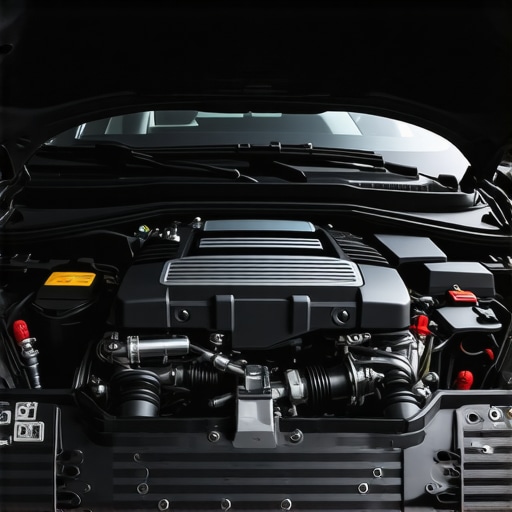
When a vehicle hesitates or stumbles during the transition from a static idle to active acceleration, it indicates a momentary failure in the stoichiometric synchronization between air intake, fuel atomization, and ignition timing. This phenomenon, often termed ‘tip-in hesitation,’ typically occurs when the engine’s volumetric efficiency is compromised by a lag in sensor response or a physical bottleneck in the delivery systems. Addressing this requires more than a simple visual inspection; it demands a forensic look at how the powertrain control module (PCM) manages transient throttle states.
Combat the Lean Condition Killing Your Off-the-Line Performance
In most modern fuel-injected systems, a stumble is the result of a temporary lean condition—where the air-to-fuel ratio exceeds the ideal 14.7:1 balance. This is frequently traced to a contaminated mass airflow (MAF) sensor or a localized vacuum leak downstream of the throttle body. Professional mechanic tips for diagnosing auto problems suggest that even a microscopic tear in an intake boot can bypass the MAF sensor, leading to unmetered air entering the cylinders and causing the engine to gasp before the oxygen sensors can compensate. If your vehicle feels sluggish elsewhere, it might be time for a comprehensive tune up to recalibrate these sensitive components.
Is Your Fuel Pump Losing Pressure Only When You Need It Most?
Fuel delivery issues often masquerade as ignition failures. A fuel pump reaching the end of its service life may maintain adequate pressure at idle but fail to provide the necessary volume during the high-demand surge of acceleration. Expert diagnostic protocols involve measuring fuel rail pressure under load to ensure the regulator isn’t bleeding off pressure prematurely. This is a critical step in auto repair, as it prevents the unnecessary replacement of expensive sensors when the root cause is a mechanical pressure drop. In some cases, the 15 sensor that fixes your rough idle might actually be the culprit behind wider performance gaps.
Restore Ignition Integrity Under High Cylinder Pressure
As the throttle plate opens, cylinder pressure rises sharply, creating a more difficult environment for a spark to jump the gap between electrodes. If your ignition coils are weak or your spark plugs are fouled, the spark will take the path of least resistance, often resulting in a misfire that feels like a violent stumble. According to the Society of Automotive Engineers (SAE), ignition system efficiency is paramount in reducing hydrocarbon emissions during transient throttle movements. Ignoring these signs can lead to long-term catalytic converter damage. Ensuring your engine receives a high-quality tune up including a check for the 8 spark plug gapping error that kills your power is essential for maintaining smooth power delivery. If you are unsure of your vehicle’s current health, consult a specialist who understands how a top-rated mechanic ensures safe auto repairs. While focusing on the engine, do not overlook safety systems like your brakes; if you notice vibrations during stops, consider a professional brake service to complement your engine work.
When the combustion cycle is interrupted by a physical blockage rather than a lack of resources, the resulting stumble can be incredibly difficult to differentiate from a fuel delivery failure. A frequent offender is the Exhaust Gas Recirculation (EGR) system, which is designed to introduce inert gases back into the cylinder to lower combustion temperatures. If the valve sticks open during a transition from idle to part-throttle, it effectively suffocates the engine by displacing the oxygen-rich air required for rapid ignition. Expert technicians often recommend investigating this component early in the diagnostic process, as it is often worth learning how to clean your egr valve without buying a new one before committing to a costly replacement.
Exhaust Gas Recirculation Might Be Suffocating Your Engine
The synergy between vacuum pressure and mechanical movement is the backbone of older EGR designs, while modern units rely on pulse-width modulated (PWM) solenoids. Regardless of the architecture, a carbon-fouled pintle can lead to erratic behavior that mimics a misfire. When the PCM commands the valve to close during acceleration, any delay results in a sudden drop in volumetric efficiency. This is why a vehicle might idle perfectly but ‘gag’ the moment you step on the gas. Identifying these nuances requires a patient approach to troubleshooting, similar to the logic used in mechanic tips for diagnosing common auto problems.
Could a Faulty Ground Wire Be Sabotaging Your Sensor Data?
In the digital realm of modern vehicles, electrical noise is the silent killer of performance. Every sensor—from the throttle position sensor (TPS) to the crankshaft position sensor—relies on a clean, stable ground to communicate with the PCM. If a ground strap is corroded or loose, the reference voltage can fluctuate, causing the computer to ‘see’ a throttle movement that hasn’t occurred or miss a sudden increase in load. This electrical interference frequently manifests as a momentary stumble or a total stall during tip-in. Utilizing the 12 ground wire that fixes stalling issues can often resolve these ‘ghost’ problems that diagnostic scanners fail to capture. Similarly, ensuring your high-voltage components are grounded correctly, as seen with the 14 ground strap that fixes ghost shifting, is a fundamental step in ensuring electronic harmony under the hood.
When the Transmission Mimics a Misfiring Engine
Sometimes, the engine is completely healthy, but the drivetrain fails to manage the transfer of power. A slipping torque converter clutch or a vacuum-modulated transmission that is receiving incorrect signals can create a jerking sensation that feels identical to an engine stumble. For instance, the 5 vacuum leak that makes your transmission shift hard can also trick the engine into a lean condition, creating a double-edged sword of poor drivability. If you notice that your vehicle struggles specifically during gear changes or when cruising at steady speeds, it may not be a fuel issue at all. It is common to see cases why your automatic transmission hunts for gears on the highway, which puts undue stress on the engine’s ability to maintain a steady RPM.
Listen to the Latency in Your Feedback Loops
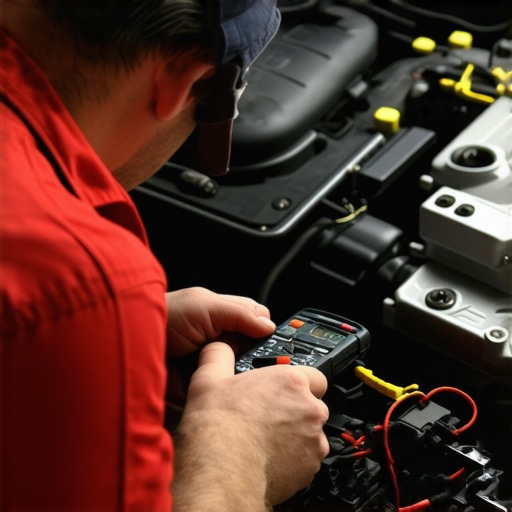
Reference data from the Bosch Automotive Handbook indicates that sensor latency—the delay between a physical change in the exhaust and the sensor’s electrical response—is a primary cause of hesitation during rapid throttle openings. As oxygen sensors age, their ‘switch rate’ slows down. While they may still function well enough to keep the check engine light off, they cannot pivot fast enough to provide the PCM with the data needed for transient fuel enrichment. You can take control of this diagnosis by learning how to test your own o2 sensor using a 15 multimeter to verify the response speed. If you have noticed your car hesitates only during specific weather conditions or after the engine reaches operating temperature, share your experience in the comments below; your specific symptoms might help another driver pinpoint a tricky electrical leak or a failing sensor loop.
Why Your PCM Might Be Learning Bad Habits
The Powertrain Control Module (PCM) is far more than a simple calculator; it is a predictive system that adapts to the gradual aging of your engine. Through a process known as Adaptive Fuel Strategy, the computer monitors the deviation between its factory-programmed maps and the real-world data provided by oxygen sensors. These adjustments, stored as Long-Term Fuel Trims (LTFT), allow the car to mask small vacuum leaks or slightly clogged injectors for years. However, this safety net can become a trap. If you disconnect the battery or clear the KAM (Keep Alive Memory), the PCM reverts to its ‘clean’ factory state. Suddenly, the engine stumbles because it no longer remembers how to compensate for that unmetered air or weak fuel pressure. This ‘memory loss’ is a common reason why a car that seemingly ran fine yesterday becomes a nightmare to drive after a simple battery swap.
Can a faulty coolant temperature sensor cause a stumble if the engine isn’t overheating?
Absolutely, and it is one of the most overlooked diagnostic paths. The Engine Coolant Temperature (ECT) sensor acts as the electronic equivalent of an old-fashioned choke. When the engine is cold, the PCM commands a significantly richer fuel mixture to facilitate combustion in a chilly cylinder. If the ECT sensor is ‘skewed’—meaning it reports a temperature that is within a normal range (e.g., 150°F) but is actually 40 degrees off the true value—the PCM may lean out the mixture prematurely. When you step on the gas, the engine demands a surge of fuel that the computer refuses to provide because it ‘thinks’ the engine is warmer and more efficient than it actually is. This results in a classic lean-misfire stumble that leaves no trouble codes because the sensor is technically still ‘working,’ just incorrectly.
The Invisible Wall Inside Your Intake Manifold
Physical obstructions often manifest as digital-sounding problems. Over tens of thousands of miles, oil vapors from the PCV (Positive Crankcase Ventilation) system mix with dust to create a sticky, black sludge on the edges of the throttle butterfly valve. This carbon ring restricts the precise amount of air that should enter during the first few degrees of throttle opening. As you press the pedal, the valve has to ‘fight’ past the stickiness, leading to a sudden, jerky air intake rather than a smooth transition. 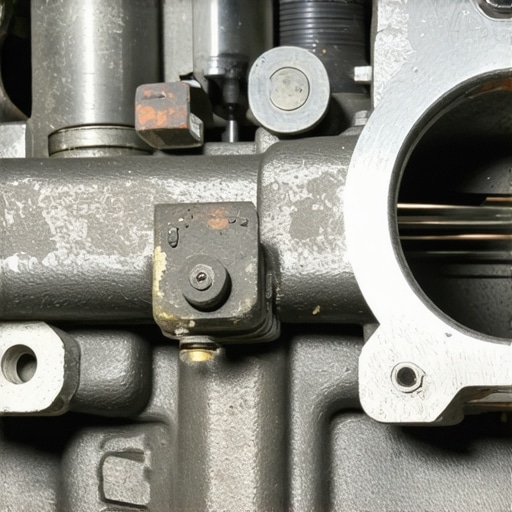 This physical bottleneck can be so severe that it confuses the Throttle Position Sensor (TPS), causing a momentary mismatch between driver intent and engine response. If you suspect your intake is choking, learning mechanic tips for diagnosing auto problems can help you differentiate between a dirty plate and a failing actuator.
How Micro-Deposits Disrupt the Flame Front
Fuel atomization is the cornerstone of a clean ‘tip-in’ transition. According to technical documentation from Denso Auto Parts, even a 5% deviation in fuel injector spray pattern—caused by microscopic deposits—can disrupt the flame front enough to trigger a transient stumble. Instead of a fine mist that evaporates instantly, a dirty injector might “stream” fuel, which takes longer to ignite. When you demand instant power, that delay feels like a momentary engine flat spot. While some drivers turn to expensive additives, the real solution often involves a professional injector pulse test. If you’ve ever wondered why your car feels ‘heavier’ in the morning, share your experience in the comments; identifying the pattern of your stumble—whether it’s worse when cold or only happens under heavy load—is the first step toward a permanent fix.
The delicate dance of Variable Valve Timing (VVT) adds a layer of complexity to the diagnostic process that many DIYers overlook. According to technical bulletins from Delphi Technologies, VVT phasers rely on precise oil pressure to adjust camshaft position in real-time. If you have neglected your oil change intervals, microscopic sludge can restrict the flow to the solenoid, causing a mechanical lag during throttle tip-in. This delay prevents the engine from reaching its optimal volumetric efficiency exactly when the load increases, resulting in a frustrating hesitation that often disappears once the RPMs climb. It is another reason why a high-quality tune up must include a check of your oil’s condition and viscosity.
Scrub Away the Carbon Crust Sabotaging Your GDI Intake Valves
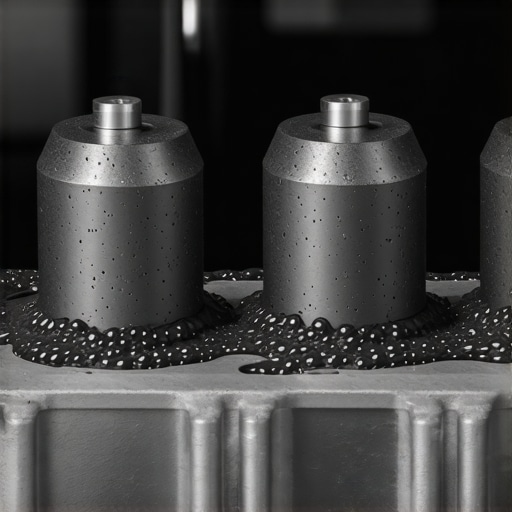
Direct injection technology, while efficient, has introduced a physical vulnerability known as carbon tracking. Because the fuel injectors are located directly inside the combustion chamber, the backside of the intake valves never receives the solvent-cleaning effect of a gasoline spray. Over time, oil mist from the PCV system bakes onto these valves, creating a porous, ‘volcanic’ surface. When you demand a sudden burst of air, this carbon absorbs a fraction of the fuel or disrupts the airflow tumble, leading to a localized lean condition. Cleaning these valves via walnut blasting or specialized chemical induction is a critical part of modern auto repair for GDI engines.
Could a phantom vibration be tricking your knock sensor into pulling timing?
Beyond physical parts, the software logic of the PCM can be its own worst enemy. Knock sensors are tuned to detect specific frequencies associated with pre-detonation, but they cannot always distinguish between a true ‘ping’ and a vibrating heat shield or a failing water pump bearing. If the PCM detects what it perceives as knock during the high-load transition of acceleration, it will instantly retard ignition timing to protect the engine. This ‘timing pull’ feels like a momentary anchor being dropped behind the car. Utilizing mechanic tips for diagnosing auto problems can help you isolate these mechanical noises before you start replacing expensive electronics.
Don’t Overlook the Mechanical Flaps Inside Your Intake Manifold
Variable-length intake manifolds use internal butterflies to optimize air velocity at different engine speeds. If the Intake Manifold Runner Control (IMRC) actuator is sluggish or the linkage is bound by road salt and grime, the transition from ‘long-runner’ to ‘short-runner’ mode will be clunky. This mechanical bottleneck prevents the engine from ‘breathing’ correctly during the precise moment of acceleration. If you are tired of your car gasping for air, consider a deep-dive tune up checklist to ensure every mechanical linkage is moving freely.
Stop Chasing Ghosts and Test the VVT Solenoid Response
If your vehicle seems to hesitate only when the AC compressor kicks in or under heavy electrical load, you might be dealing with an alternator ripple or a failing diode. These electrical ‘noise’ issues can confuse the crankshaft position sensor, leading to a momentary loss of synchronization. For those dealing with shifting issues alongside engine stumbles, checking the 14 ground strap that fixes ghost shifting is an excellent starting point for stabilizing the entire electrical bus. Have you managed to solve a persistent stumble by looking at something other than the spark plugs? Tell us your story in the comments below to help the community broaden their diagnostic horizons.
Expert Insights & Advanced Considerations
Stop Relying on Static Fuel Pressure Tests
Many enthusiasts check fuel pressure at the rail while the car is idling and assume the system is healthy. However, a pump that delivers 45 PSI at idle might drop to 30 PSI under the high-volume demand of wide-open throttle. Professional mechanic tips for diagnosing common auto problems suggest performing a snap-throttle pressure test or monitoring fuel trims during a road test to see if the system leans out when the load increases.
Combat the Invisible Heat Soak in Intake Air Temperature Sensors
The Intake Air Temperature (IAT) sensor is vital for calculating air density. In stop-and-go traffic, the sensor housing can become heat-soaked, reporting air temperatures much higher than the actual intake stream. This causes the PCM to pull timing and lean out the mixture, resulting in a sluggish tip-in. If you have been following a the ultimate tune up checklist for every car owner, ensure your sensor isn’t caked in oil vapor, which acts as an insulator and slows response time.
Audit the Throttle Body Adaptation Values After Every Cleaning
Simply spraying cleaner on the butterfly valve isn’t enough for modern drive-by-wire systems. The PCM learns the position of the carbon-coated valve over time. Once cleaned, the physical gap changes, and the computer may still be applying the old offsets, leading to an erratic idle or stumble. Effective auto repair requires a Throttle Relearn procedure to reset these digital parameters to zero.
#IMAGE_PLACEHOLDER_E#
Curated Expert Resources
SAE International Technical Papers provide deep-dive analytics on stoichiometric control and transient fuel compensation logic used by major manufacturers to prevent stumbling during acceleration.
The Bosch Automotive Handbook remains the gold standard for understanding the physics of fuel injection, spray patterns, and sensor feedback loops.
ALLDATA Repair Solutions offers access to factory-level wiring diagrams and Technical Service Bulletins that identify model-specific software patches for acceleration issues.
Final Expert Perspective
Solving a persistent vehicle stumble is a process of elimination that demands more than just replacing parts; it requires understanding the delicate handshake between physical airflow and digital sensor data. By focusing on electrical ground integrity, such as checking the 12 ground wire that fixes stalling issues, and ensuring your diagnostic data is accurate, you can eliminate hesitation at its source. If you are struggling with a complex drivability issue, consult a specialist who understands how a top-rated mechanic ensures safe auto repairs to verify your findings. Share your specific symptoms in the comments below, as your unique case could provide the missing piece for another driver facing a similar diagnostic puzzle.