
The persistence of a TPMS (Tire Pressure Monitoring System) warning light despite adequate inflation is a frequent diagnostic challenge that bridges the gap between basic maintenance and advanced electronic troubleshooting. While most drivers assume the system is a simple binary pressure switch, modern automotive engineering utilizes complex feedback loops involving either direct radio-frequency sensors or indirect wheel-speed calculations. When that stubborn yellow icon refuses to vanish, it typically indicates a communication latency within the ECU or a physical component reaching its end-of-life cycle rather than a simple lack of air.
Force Your Car to Relearn the Correct Pressure
In many modern vehicles, simply adding air is only half the battle. The Engine Control Unit (ECU) often requires a specific ‘drive cycle’ to verify that the new pressure readings are stable and not a momentary sensor glitch. This recalibration period usually necessitates driving for 10 to 20 minutes at speeds above 20 mph. Professional mechanic tips for diagnosing common auto problems often highlight that the system needs this continuous data stream to clear the hard-coded fault. If your commute involves heavy stop-and-go traffic immediately after a fill-up, the computer may not receive the consistent signal it needs to reset the dashboard light.
Does Your Vehicle Rely on Indirect TPMS Calculations?
It is vital to distinguish between Direct TPMS, which uses physical sensors inside the wheel, and Indirect TPMS. Indirect systems do not measure air pressure at all; instead, they utilize the ABS (Anti-lock Braking System) to measure the rotational speed of each tire. A deflated tire has a smaller diameter and spins faster. If you have recently performed a brake service or replaced tires without resetting the system via the dashboard menu, the computer remains locked onto the old rotational data. This is a nuance often overlooked during a standard auto repair, leading to unnecessary frustration for the vehicle owner.
Physical Failures That Mimic Low Air Pressure
Beyond simple software lag, hardware degradation is a primary culprit for persistent lights. The lithium batteries inside tire sensors have a finite lifespan, typically ranging from five to ten years. According to technical standards maintained by the National Highway Traffic Safety Administration (NHTSA), as these batteries weaken, the signal strength fluctuates, causing the light to illuminate even when the PSI is perfect. Furthermore, if you are struggling with a pressure that seems to drop immediately after filling, you should investigate whether a microscopic puncture is present. Using a spray bottle to find a slow tire leak is an expert-level DIY method to confirm if the sensor is actually telling the truth about a rapid loss of air.
Why Do Temperature Swings Cause Ghost Warnings?
Physics plays a significant role in tire pressure management, specifically Charles’s Law, which dictates that gas volume changes with temperature. A drop of 10 degrees Fahrenheit can result in a 1 PSI loss. If you fill your tires in a heated garage and then drive into freezing temperatures, the air density shifts enough to trigger the sensor again. If your dashboard remains lit after several drive cycles, it may be time for a professional tune up to ensure all electrical systems are communicating correctly. Are you tired of second-guessing your dashboard? Share your experiences with persistent warning lights in our community forum or consult our guide on finding a skilled mechanic you can trust to resolve complex electronic faults.
Radio frequency interference (RFI) represents a growing frontier in modern diagnostic puzzles. Since direct TPMS sensors transmit data on specific frequencies—usually 315MHz in North America or 433MHz in Europe—nearby electronic devices can easily overwhelm the receiver module. If you’ve recently added an aftermarket dash cam, a high-output USB charger, or even a GPS unit, you might have inadvertently created a localized ‘dead zone’ for your car’s antenna. This electronic noise masks the sensor’s signal, leading the computer to believe the sensor has failed or is reporting inaccurate data, which keeps that persistent warning light illuminated even when your physical gauges show a perfect 32 PSI.
Could Your Smartphone Charger Be Triggering Your TPMS Light?
It sounds like a myth, but low-quality power adapters often lack the internal shielding required to prevent electromagnetic leakage. When plugged into a 12V outlet located near the center console—where many TPMS receivers are mounted—these devices can drown out the low-power pulses sent from your wheels. Before you rush to a shop, try unplugging all non-factory accessories and performing a fresh drive cycle. This simple isolation test can save you from an expensive sensor replacement. In some cases, ensuring your vehicle has a strong electrical foundation by checking that a 12-volt ground wire isn’t corroded can also help maintain the integrity of these delicate radio signals.
Don’t Forget the Hidden Sensor in Your Trunk
One of the most elusive causes for a persistent light is the ‘fifth wheel.’ Many full-size SUVs and trucks carry a spare tire equipped with a functional TPMS sensor. While the four active tires on the road are perfectly inflated, the spare tucked under the chassis or hidden in the trunk slowly loses air over months of neglect. The ECU detects this drop and triggers the warning light, but because the spare isn’t moving, the driver often ignores it during a standard inspection. If you have checked your main tires and found nothing wrong, dropping the spare and verifying its pressure is the next logical step in your diagnostic process.
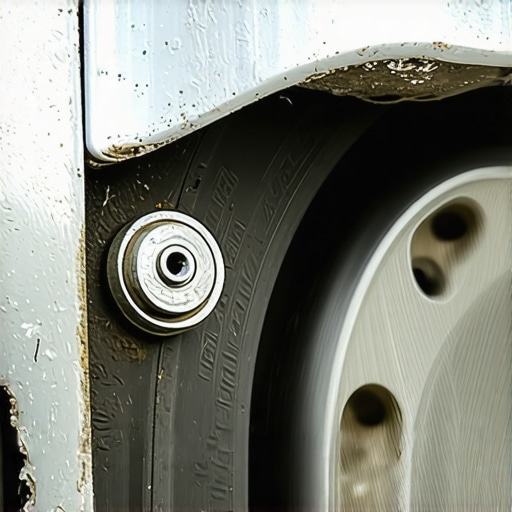
Beyond air pressure, the physical connection to the wheel is a common failure point. Galvanic corrosion occurs when an aluminum valve stem reacts with road salt and moisture, causing the metal to become brittle and porous. This leads to microscopic leaks that are nearly impossible to detect through visual inspection. Experts suggest that if you cannot find a puncture, you should find a slow tire leak using only a spray bottle and soap solution to check the base of the valve stem and the core. If you notice any bubbling around the sensor body, the seal has likely failed. According to technical bulletins from the Tire Industry Association (TIA), service kits—which include a fresh nut, grommet, and valve core—should be replaced every time a tire is serviced to prevent these very issues.
Stop the Slow Leak at the Source
Sometimes the light stays on because the sensor is functioning correctly, but a mechanical issue elsewhere is affecting the tire’s behavior. If you’ve recently noticed a vibration in the steering wheel alongside the TPMS alert, it is worth checking for uneven wear or hub issues. You can check your own brake pads without taking off the wheel to see if a sticking caliper is generating excessive heat. High temperatures from a dragging brake can cause the air inside the tire to expand and contract unnaturally, tripping the sensor’s threshold. Furthermore, if you identify a bad wheel bearing by ear, the resulting play in the wheel can cause the ABS-based indirect TPMS to report a false pressure drop due to the altered rotation. Have you ever discovered a low-pressure sensor in a spare tire you’d forgotten about, or did a simple electronic reset solve your problem? Share your experience in the comments below to help other drivers troubleshoot their dashboard gremlins.
Why Custom Rims Often Break Your Sensor Link
Transitioning from factory-standard wheels to aftermarket rims is a rite of passage for many enthusiasts, but it frequently introduces a frustrating electronic disconnect. The physical geometry of an aftermarket wheel can significantly impact how a Direct TPMS sensor sits within the barrel. If the sensor is not angled correctly or is partially shielded by a thicker alloy composition, the radio frequency signal struggles to reach the vehicle’s receiver. This creates an intermittent ‘System Fault’ rather than a low-pressure warning. When selecting new wheels, it is essential to ensure the valve hole offset is compatible with the physical dimensions of your existing sensors. High-end manufacturers often provide specific fitment guides, but a common oversight during a custom auto repair is failing to verify that the sensor’s hex nut is torqued to exact specifications—usually between 4 and 8 Newton-meters—to prevent both air leaks and vibration-induced signal loss.
Can Nitrogen Finally Kill the Ghost Warning?
For drivers living in climates with extreme seasonal shifts, the constant ‘ping-pong’ of the TPMS light can be mitigated by switching from compressed air to nitrogen. Standard compressed air contains varying levels of moisture, which exacerbates pressure fluctuations as temperatures change. Nitrogen, being an inert, dry gas, exhibits much more stable thermal expansion properties. According to technical research published by SAE International, nitrogen permeates through tire rubber approximately 30% to 40% slower than oxygen, meaning your PSI remains consistent for longer intervals. This stability effectively eliminates the ‘morning ghost light’ that appears when the sun hasn’t yet warmed the pavement. While it isn’t a cure for a broken sensor, it provides a more reliable baseline for your car’s ECU to monitor. 
Will a Faulty Body Control Module (BCM) Mimic a Dead TPMS Sensor?
When you have replaced the sensors and verified the pressures, yet the dashboard still screams for attention, the issue may lie within the Body Control Module or a dedicated TPMS receiver. The BCM acts as the central hub for various peripheral signals, including those from your key fobs and tire sensors. If the module’s internal logic becomes ‘scrambled’ due to a low-voltage event—such as a dying 12V battery—it may stop processing incoming TPMS data altogether. This is a sophisticated diagnostic bridge where basic tools fail. Technicians often use a specialized scan tool to ping the BCM directly to see if it is even ‘listening’ for the 315MHz or 433MHz pulses. If the module is unresponsive, a simple software re-flash or a hard reset of the vehicle’s electrical system might be the only way to restore communication. If you suspect your car’s brain is the culprit, consulting a skilled mechanic you can trust is vital, as they can perform a pinpoint test on the module’s wiring harness.
Go Beyond the Dashboard with a Dedicated Trigger Tool
Relying solely on the car’s dashboard for diagnostics is like trying to solve a puzzle in the dark. A dedicated TPMS activation tool is an indispensable asset for any advanced DIYer or professional. These handheld devices send a 125kHz ‘wake-up’ signal to the sensor, forcing it to transmit its unique ID code, current pressure, temperature, and—most importantly—its remaining battery life. By walking around the vehicle and triggering each wheel, you can instantly identify which sensor has gone dark before you ever break the bead of the tire. This proactive approach prevents the ‘parts cannon’ method of repair where all four sensors are replaced when only one was failing. Furthermore, if you are performing a tune up that involves rotating the tires, these tools allow you to quickly ‘relearn’ the new positions so the dashboard accurately reflects which tire is actually low. Have you ever struggled to get your car into ‘learn mode’ using only the ignition key and brake pedal sequence? Modern vehicles are increasingly moving away from these manual methods, making the digital trigger tool a necessity for maintaining system integrity.
The Critical Role of Data Normalization in Indirect Systems
In vehicles equipped with indirect TPMS, the software doesn’t just look for a fast-spinning wheel; it looks for patterns. Advanced stability control systems now use ‘spectrum analysis’ to monitor the vibration frequency of the tire. As a tire loses pressure, its vertical stiffness changes, which alters the frequency of the vibrations transmitted through the suspension. If you’ve recently installed a different brand of tire with a stiffer sidewall on only one axle, the indirect system may struggle to normalize the data, leading to a persistent error. This highlights the importance of keeping tires consistent across all four corners. If you notice the light returning after a long highway drive, it could be that the ECU has finally gathered enough ‘bad’ data to decide the rotational variance is outside of safe parameters, even if a visual check shows nothing wrong.
Stop Fighting the Seal with Nickel-Plated Valve Cores
The minute details of valve maintenance often escape even seasoned technicians. While many assume any valve core will suffice, using a standard brass core in an aluminum TPMS stem triggers a rapid chemical reaction known as galvanic corrosion. This interaction effectively welds the core to the stem, leading to catastrophic air leaks or a snapped valve during your next pressure check. High-quality mechanic tips for diagnosing common auto problems always emphasize the use of nickel-plated cores to maintain a neutral electrical environment. This simple substitution prevents the slow, agonizing air loss that keeps your warning light active despite frequent top-offs.
Metallic Tints Turn Your Cabin Into a Signal Dead Zone
Beyond physical hardware, the environment inside the cabin can play a surprising role in signal degradation. If you have recently invested in high-performance window tinting, you may have inadvertently compromised your system’s efficacy. Many ceramic or metallic-based tints are designed to reflect heat, but they also act as a rudimentary Faraday cage, blocking the 315MHz or 433MHz signals from reaching the central receiver module usually hidden in the rear pillars or headliner.
Can Metallic Window Tints Block Your TPMS Signal?
The answer is a definitive yes for vehicles where the TPMS receiver is mounted near the glass. According to technical standards from the Federal Communications Commission (FCC), these low-power Part 15 devices are extremely sensitive to conductive obstructions. If your light remains on despite perfect pressure and new sensors, the problem might not be the wheels, but the very film on your windows. Testing this requires a professional-grade scanner that can read “RSSI” (Received Signal Strength Indication) levels while the windows are rolled up versus down to identify if the signal drop correlates with the tint presence.

Master the Multi-Protocol Sensor Handshake
Establishing a digital “handshake” between a new sensor and a stubborn ECU is another common failure point in modern garages. Universal sensors are convenient, but they often require a specific “multi-protocol” flash to mimic the exact pulse width and data packet structure expected by your car’s manufacturer. If the sensor isn’t pre-programmed with the correct protocol before installation, no amount of driving or manual relearning will clear the light. This is why a precise auto repair strategy involves verifying sensor compatibility with a dedicated programming tool before the tire is even mounted on the rim.
The Hidden Complexity of High-Performance Smart Tires
The complexity of modern “Smart Tires” is rapidly increasing as manufacturers push for better efficiency. Some high-end performance vehicles now utilize TPMS sensors that also track tread temperature and internal load, providing a more granular look at vehicle dynamics. If these advanced units are replaced with standard “pressure-only” sensors during a tune up, the ECU will remain in a permanent state of error, searching for additional telemetry data that simply isn’t there. Don’t let a blinking light undermine your confidence on the road. Understanding the interplay between RF interference and physical hardware is the mark of a true automotive expert. If you’re still chasing a phantom warning, take the next step in your diagnostic journey and learn how to choose a skilled mechanic you can trust to decode the most stubborn electronic faults in your vehicle’s communication network.
The persistence of a TPMS (Tire Pressure Monitoring System) warning light despite adequate inflation is a frequent diagnostic challenge that bridges the gap between basic maintenance and advanced electronic troubleshooting. While most drivers assume the system is a simple binary pressure switch, modern automotive engineering utilizes complex feedback loops involving either direct radio-frequency sensors or indirect wheel-speed calculations. When that stubborn yellow icon refuses to vanish, it typically indicates a communication latency within the ECU or a physical component reaching its end-of-life cycle rather than a simple lack of air.
Force Your Car to Relearn the Correct Pressure
In many modern vehicles, simply adding air is only half the battle. The Engine Control Unit (ECU) often requires a specific ‘drive cycle’ to verify that the new pressure readings are stable and not a momentary sensor glitch. This recalibration period usually necessitates driving for 10 to 20 minutes at speeds above 20 mph. Professional mechanic tips for diagnosing common auto problems often highlight that the system needs this continuous data stream to clear the hard-coded fault. If your commute involves heavy stop-and-go traffic immediately after a fill-up, the computer may not receive the consistent signal it needs to reset the dashboard light.
Does Your Vehicle Rely on Indirect TPMS Calculations?
It is vital to distinguish between Direct TPMS, which uses physical sensors inside the wheel, and Indirect TPMS. Indirect systems do not measure air pressure at all; instead, they utilize the ABS (Anti-lock Braking System) to measure the rotational speed of each tire. A deflated tire has a smaller diameter and spins faster. If you have recently performed a brake service or replaced tires without resetting the system via the dashboard menu, the computer remains locked onto the old rotational data. This is a nuance often overlooked during a standard auto repair, leading to unnecessary frustration for the vehicle owner.
Physical Failures That Mimic Low Air Pressure
Beyond simple software lag, hardware degradation is a primary culprit for persistent lights. The lithium batteries inside tire sensors have a finite lifespan, typically ranging from five to ten years. According to technical standards maintained by the National Highway Traffic Safety Administration (NHTSA), as these batteries weaken, the signal strength fluctuates, causing the light to illuminate even when the PSI is perfect. Furthermore, if you are struggling with a pressure that seems to drop immediately after filling, you should investigate whether a microscopic puncture is present. Using a spray bottle to find a slow tire leak is an expert-level DIY method to confirm if the sensor is actually telling the truth about a rapid loss of air.
Why Do Temperature Swings Cause Ghost Warnings?
Physics plays a significant role in tire pressure management, specifically Charles’s Law, which dictates that gas volume changes with temperature. A drop of 10 degrees Fahrenheit can result in a 1 PSI loss. If you fill your tires in a heated garage and then drive into freezing temperatures, the air density shifts enough to trigger the sensor again. If your dashboard remains lit after several drive cycles, it may be time for a professional tune up to ensure all electrical systems are communicating correctly. Are you tired of second-guessing your dashboard? Share your experiences with persistent warning lights in our community forum or consult our guide on finding a skilled mechanic you can trust to resolve complex electronic faults.
Radio frequency interference (RFI) represents a growing frontier in modern diagnostic puzzles. Since direct TPMS sensors transmit data on specific frequencies—usually 315MHz in North America or 433MHz in Europe—nearby electronic devices can easily overwhelm the receiver module. If you’ve recently added an aftermarket dash cam, a high-output USB charger, or even a GPS unit, you might have inadvertently created a localized ‘dead zone’ for your car’s antenna. This electronic noise masks the sensor’s signal, leading the computer to believe the sensor has failed or is reporting inaccurate data, which keeps that persistent warning light illuminated even when your physical gauges show a perfect 32 PSI.
Could Your Smartphone Charger Be Triggering Your TPMS Light?
It sounds like a myth, but low-quality power adapters often lack the internal shielding required to prevent electromagnetic leakage. When plugged into a 12V outlet located near the center console—where many TPMS receivers are mounted—these devices can drown out the low-power pulses sent from your wheels. Before you rush to a shop, try unplugging all non-factory accessories and performing a fresh drive cycle. This simple isolation test can save you from an expensive sensor replacement. In some cases, ensuring your vehicle has a strong electrical foundation by checking that a 12-volt ground wire isn’t corroded can also help maintain the integrity of these delicate radio signals.
Don’t Forget the Hidden Sensor in Your Trunk
One of the most elusive causes for a persistent light is the ‘fifth wheel.’ Many full-size SUVs and trucks carry a spare tire equipped with a functional TPMS sensor. While the four active tires on the road are perfectly inflated, the spare tucked under the chassis or hidden in the trunk slowly loses air over months of neglect. The ECU detects this drop and triggers the warning light, but because the spare isn’t moving, the driver often ignores it during a standard inspection. If you have checked your main tires and found nothing wrong, dropping the spare and verifying its pressure is the next logical step in your diagnostic process.
Beyond air pressure, the physical connection to the wheel is a common failure point. Galvanic corrosion occurs when an aluminum valve stem reacts with road salt and moisture, causing the metal to become brittle and porous. This leads to microscopic leaks that are nearly impossible to detect through visual inspection. Experts suggest that if you cannot find a puncture, you should find a slow tire leak using only a spray bottle and soap solution to check the base of the valve stem and the core. If you notice any bubbling around the sensor body, the seal has likely failed. According to technical bulletins from the Tire Industry Association (TIA), service kits—which include a fresh nut, grommet, and valve core—should be replaced every time a tire is serviced to prevent these very issues.
Stop the Slow Leak at the Source
Sometimes the light stays on because the sensor is functioning correctly, but a mechanical issue elsewhere is affecting the tire’s behavior. If you’ve recently noticed a vibration in the steering wheel alongside the TPMS alert, it is worth checking for uneven wear or hub issues. You can check your own brake pads without taking off the wheel to see if a sticking caliper is generating excessive heat. High temperatures from a dragging brake can cause the air inside the tire to expand and contract unnaturally, tripping the sensor’s threshold. Furthermore, if you identify a bad wheel bearing by ear, the resulting play in the wheel can cause the ABS-based indirect TPMS to report a false pressure drop due to the altered rotation. Have you ever discovered a low-pressure sensor in a spare tire you’d forgotten about, or did a simple electronic reset solve your problem? Share your experience in the comments below to help other drivers troubleshoot their dashboard gremlins.
Why Custom Rims Often Break Your Sensor Link
Transitioning from factory-standard wheels to aftermarket rims is a rite of passage for many enthusiasts, but it frequently introduces a frustrating electronic disconnect. The physical geometry of an aftermarket wheel can significantly impact how a Direct TPMS sensor sits within the barrel. If the sensor is not angled correctly or is partially shielded by a thicker alloy composition, the radio frequency signal struggles to reach the vehicle’s receiver. This creates an intermittent ‘System Fault’ rather than a low-pressure warning. When selecting new wheels, it is essential to ensure the valve hole offset is compatible with the physical dimensions of your existing sensors. High-end manufacturers often provide specific fitment guides, but a common oversight during a custom auto repair is failing to verify that the sensor’s hex nut is torqued to exact specifications—usually between 4 and 8 Newton-meters—to prevent both air leaks and vibration-induced signal loss.
Can Nitrogen Finally Kill the Ghost Warning?
For drivers living in climates with extreme seasonal shifts, the constant ‘ping-pong’ of the TPMS light can be mitigated by switching from compressed air to nitrogen. Standard compressed air contains varying levels of moisture, which exacerbates pressure fluctuations as temperatures change. Nitrogen, being an inert, dry gas, exhibits much more stable thermal expansion properties. According to technical research published by SAE International, nitrogen permeates through tire rubber approximately 30% to 40% slower than oxygen, meaning your PSI remains consistent for longer intervals. This stability effectively eliminates the ‘morning ghost light’ that appears when the sun hasn’t yet warmed the pavement. While it isn’t a cure for a broken sensor, it provides a more reliable baseline for your car’s ECU to monitor.
Will a Faulty Body Control Module (BCM) Mimic a Dead TPMS Sensor?
When you have replaced the sensors and verified the pressures, yet the dashboard still screams for attention, the issue may lie within the Body Control Module or a dedicated TPMS receiver. The BCM acts as the central hub for various peripheral signals, including those from your key fobs and tire sensors. If the module’s internal logic becomes ‘scrambled’ due to a low-voltage event—such as a dying 12V battery—it may stop processing incoming TPMS data altogether. This is a sophisticated diagnostic bridge where basic tools fail. Technicians often use a specialized scan tool to ping the BCM directly to see if it is even ‘listening’ for the 315MHz or 433MHz pulses. If the module is unresponsive, a simple software re-flash or a hard reset of the vehicle’s electrical system might be the only way to restore communication. If you suspect your car’s brain is the culprit, consulting a skilled mechanic you can trust is vital, as they can perform a pinpoint test on the module’s wiring harness.
Go Beyond the Dashboard with a Dedicated Trigger Tool
Relying solely on the car’s dashboard for diagnostics is like trying to solve a puzzle in the dark. A dedicated TPMS activation tool is an indispensable asset for any advanced DIYer or professional. These handheld devices send a 125kHz ‘wake-up’ signal to the sensor, forcing it to transmit its unique ID code, current pressure, temperature, and—most importantly—its remaining battery life. By walking around the vehicle and triggering each wheel, you can instantly identify which sensor has gone dark before you ever break the bead of the tire. This proactive approach prevents the ‘parts cannon’ method of repair where all four sensors are replaced when only one was failing. Furthermore, if you are performing a tune up that involves rotating the tires, these tools allow you to quickly ‘relearn’ the new positions so the dashboard accurately reflects which tire is actually low. Have you ever struggled to get your car into ‘learn mode’ using only the ignition key and brake pedal sequence? Modern vehicles are increasingly moving away from these manual methods, making the digital trigger tool a necessity for maintaining system integrity.
The Critical Role of Data Normalization in Indirect Systems
In vehicles equipped with indirect TPMS, the software doesn’t just look for a fast-spinning wheel; it looks for patterns. Advanced stability control systems now use ‘spectrum analysis’ to monitor the vibration frequency of the tire. As a tire loses pressure, its vertical stiffness changes, which alters the frequency of the vibrations transmitted through the suspension. If you’ve recently installed a different brand of tire with a stiffer sidewall on only one axle, the indirect system may struggle to normalize the data, leading to a persistent error. This highlights the importance of keeping tires consistent across all four corners. If you notice the light returning after a long highway drive, it could be that the ECU has finally gathered enough ‘bad’ data to decide the rotational variance is outside of safe parameters, even if a visual check shows nothing wrong.
Stop Fighting the Seal with Nickel-Plated Valve Cores
The minute details of valve maintenance often escape even seasoned technicians. While many assume any valve core will suffice, using a standard brass core in an aluminum TPMS stem triggers a rapid chemical reaction known as galvanic corrosion. This interaction effectively welds the core to the stem, leading to catastrophic air leaks or a snapped valve during your next pressure check. High-quality mechanic tips for diagnosing common auto problems always emphasize the use of nickel-plated cores to maintain a neutral electrical environment. This simple substitution prevents the slow, agonizing air loss that keeps your warning light active despite frequent top-offs.
Metallic Tints Turn Your Cabin Into a Signal Dead Zone
Beyond physical hardware, the environment inside the cabin can play a surprising role in signal degradation. If you have recently invested in high-performance window tinting, you may have inadvertently compromised your system’s efficacy. Many ceramic or metallic-based tints are designed to reflect heat, but they also act as a rudimentary Faraday cage, blocking the 315MHz or 433MHz signals from reaching the central receiver module usually hidden in the rear pillars or headliner.
Can Metallic Window Tints Block Your TPMS Signal?
The answer is a definitive yes for vehicles where the TPMS receiver is mounted near the glass. According to technical standards from the Federal Communications Commission (FCC), these low-power Part 15 devices are extremely sensitive to conductive obstructions. If your light remains on despite perfect pressure and new sensors, the problem might not be the wheels, but the very film on your windows. Testing this requires a professional-grade scanner that can read “RSSI” (Received Signal Strength Indication) levels while the windows are rolled up versus down to identify if the signal drop correlates with the tint presence.
Master the Multi-Protocol Sensor Handshake
Establishing a digital “handshake” between a new sensor and a stubborn ECU is another common failure point in modern garages. Universal sensors are convenient, but they often require a specific “multi-protocol” flash to mimic the exact pulse width and data packet structure expected by your car’s manufacturer. If the sensor isn’t pre-programmed with the correct protocol before installation, no amount of driving or manual relearning will clear the light. This is why a precise auto repair strategy involves verifying sensor compatibility with a dedicated programming tool before the tire is even mounted on the rim.
The Hidden Complexity of High-Performance Smart Tires
The complexity of modern “Smart Tires” is rapidly increasing as manufacturers push for better efficiency. Some high-end performance vehicles now utilize TPMS sensors that also track tread temperature and internal load, providing a more granular look at vehicle dynamics. If these advanced units are replaced with standard “pressure-only” sensors during a tune up, the ECU will remain in a permanent state of error, searching for additional telemetry data that simply isn’t there. Don’t let a blinking light undermine your confidence on the road. Understanding the interplay between RF interference and physical hardware is the mark of a true automotive expert. If you’re still chasing a phantom warning, take the next step in your diagnostic journey and learn how to choose a skilled mechanic you can trust to decode the most stubborn electronic faults in your vehicle’s communication network.
Expert Insights & Advanced Considerations
ECU Logic Prevents Instant Resets
Many drivers assume the dashboard light should disappear as soon as air enters the valve stem, but the software is designed to prioritize long-term data over instant gratification. By requiring a drive cycle, the ECU ensures the pressure change isn’t a result of thermal expansion or a faulty sensor pulse. Always perform a 12-multi-meter test for your charging system if the light behaves sporadically, as voltage drops during engine start-up can temporarily freeze TPMS data processing.
Stop the Cycle of Low-Quality Sensor Failures
One of the most persistent auto repair myths debunked is that all aftermarket sensors are created equal. In reality, the chipsets in bargain sensors often have a narrower transmission window, making them susceptible to the RFI issues mentioned earlier. Investing in OEM-equivalent sensors is one of many auto repair cost-saving tips from industry experts, as it prevents the labor cost of breaking down a tire twice just to replace a dead-on-arrival component.
Thermal Drift Isn’t Always a Fault
In high-performance settings, sensors might report a higher PSI than your hand-held gauge because they are reading the internal air temperature, which expands the air volume. Recognizing the difference between a mechanical failure and a natural thermal shift is the hallmark of professional-grade diagnostic thinking.
Curated Expert Resources
Tire Industry Association (TIA) Standards
The TIA provides the definitive safety protocols for sensor handling and torque specifications, ensuring that physical installations don’t lead to future air leaks or electronic failures.
SAE International Technical Papers
For those interested in the physics of RF signals and nitrogen stability, SAE research offers high-level data on signal attenuation and gas permeation rates in modern automotive rubber compounds.
NHTSA Safety Bulletins
The National Highway Traffic Safety Administration maintains the regulatory framework for TPMS requirements, offering vehicle owners insights into why these systems are mandated and how they should legally perform.
Final Expert Perspective
Managing a persistent warning light requires a shift from viewing your vehicle as a mechanical machine to understanding it as a networked electronic device. When the standard top-off fails, the path to resolution lies in identifying the interference, the battery life of the internal components, and the software logic of the ECU. By applying these advanced auto repair strategies, you can maintain the integrity of your safety systems without the frustration of ghost warnings. We invite you to share your most difficult TPMS puzzles in our community or reach out for professional diagnostic advice to ensure your car remains a precision-tuned machine.