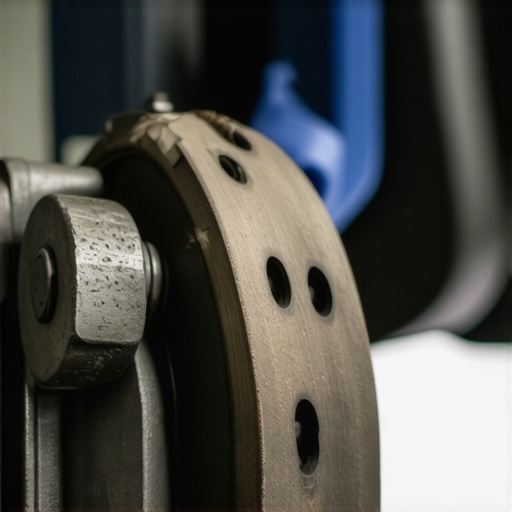
Stop the Harmonic Resonance at the Hub
The installation of brand-new pads is often anticipated as a return to quiet, confident stopping power. However, the reality for many drivers is an immediate, piercing squeal that suggests something is fundamentally wrong. This phenomenon, frequently encountered even after a professional local install, is rarely a defect in the pad material itself. Instead, it is typically the result of high-frequency harmonic resonance—a physical vibration occurring between the pad and the rotor surface. As an expert mechanic will tell you, the secret to silence lies not just in the quality of the components, but in the obsessive preparation of the mating surfaces. When performing a comprehensive brake service, the interaction between the friction material and the rotor must be optimized to allow for a uniform transfer layer. Without this layer, the coefficient of friction varies across the rotor face, creating the ‘slip-stick’ effect that translates into an audible scream.
Why Fresh Friction Material Needs a Transfer Layer
New ceramic or semi-metallic pads require a disciplined ‘bedding-in’ process to deposit a thin, even layer of friction material onto the rotor surface. Without this vital layer, the pads grip the steel unevenly, leading to vibrations that the vehicle’s suspension often amplifies. High-performance brake service secrets involve meticulous cleaning of the rotors to ensure this transfer occurs without chemical interference. For instance, using a simple can of brake cleaner to remove shipping oils can prevent early glazing, which is a primary culprit for the high-pitched noises of new brakes. This glazing happens when the oils burn into the friction material, creating a hard, glass-like surface that lacks the necessary grip for silent operation.
Restore Surface Integrity with a Proper Hub Scrub
One of the most frequently overlooked steps in modern auto repair is the condition of the wheel hub assembly. Even a microscopic amount of rust or scale buildup behind the rotor can cause ‘lateral runout.’ This means the rotor does not spin perfectly true, causing it to wobble and tap the pads as it rotates at high speeds. This is why the 10-minute hub scrub is the ultimate professional trick for a silent job. By ensuring the hub is perfectly clean and flat, you eliminate the source of the oscillation before it ever reaches the braking components. Furthermore, many technicians in a rush make the mistake of discarding essential brake shims, which are specifically engineered to dampen these very vibrations. Professional research from the Society of Automotive Engineers (SAE) confirms that shim integrity and the use of high-viscosity dampening lubricants are critical in isolating the friction assembly from the steering knuckle.
Is a microscopic layer of oxidation ruining your quiet ride?
Many drivers wonder why their brakes only squeal after they’ve sat overnight or during periods of high humidity. Often, this is due to a light layer of surface oxidation—flash rust—forming on the rotor. However, if the squeal persists throughout a long drive on new pads, it is a clear indicator that the pads have not seated correctly against the rotor face or that the caliper pins are binding. In these instances, a standard tune up of the braking hardware—re-cleaning the slides and re-applying high-temperature ceramic grease—is the only way to restore peace. Persistent noise is a communication from your vehicle that the harmonic balance has been disrupted. If you find yourself struggling with noise despite following these professional protocols, it may be time to consult a specialist who understands the nuances of rotor runout. Reach out to our expert team for a diagnostic review of your braking system to ensure your vehicle remains safe, efficient, and silent on every journey.
Kill the Spongy Pedal Feel with Proper Hydraulic Discipline
Even after resolving the harmonic squeal, many drivers find themselves grappling with a brake pedal that feels more like a sponge than a precise control instrument. This lack of firmness is rarely about the pads and almost always about the hydraulic integrity of the system. If you find yourself needing to stop your brakes from sponging after a long drive, the culprit is often microscopic air bubbles trapped within the lines or the master cylinder itself. When a mechanic replaces components, air inevitably enters the system. Traditional gravity bleeding or even the ‘pump and hold’ method sometimes fails to dislodge air trapped in the high points of the master cylinder. In these cases, employing the $11 master cylinder bench bleeding hack is the most efficient way to ensure a rock-solid pedal before the unit even reaches the car. By circulating fluid back into the reservoir, you force every pocket of air out, ensuring that the pressure you apply at the pedal is transferred directly to the calipers without compression loss.
Why is your master cylinder still trapping air after a full bleed?
Modern vehicles equipped with complex Anti-lock Braking Systems (ABS) present a unique challenge for the DIY enthusiast and the professional alike. The internal valves of an ABS modulator can act as traps for air, requiring specific electronic cycling to clear. If the pedal remains soft despite clear fluid at the bleeders, the air is likely sequestered deep within the solenoid valves. This level of auto repair often requires a bi-directional scan tool to open those valves during the bleeding process. Furthermore, the condition of the slide pins cannot be ignored. A brake service is incomplete without checking the movement of these pins; a stuck pin can cause the caliper to flex rather than compress, mimicking the feeling of air in the lines. Utilizing the $12 caliper pin grease tip not only prevents noise but ensures the caliper moves freely, contributing to that desired ‘bite’ at the start of the pedal stroke.
Guard Against the Silent Killer of Internal Corrosion
The chemical composition of your brake fluid is just as vital as the thickness of your pads. Brake fluid is hygroscopic, meaning it actively absorbs moisture from the atmosphere. Over time, this moisture lowers the boiling point of the fluid and causes internal corrosion of steel lines and aluminum pistons. This is why you might notice fresh brake fluid turning black in a surprisingly short timeframe. The dark color is often a mixture of degraded rubber seals and oxidized metal particles suspended in the fluid. According to the National Highway Traffic Safety Administration (NHTSA), brake system failure is a contributing factor in a significant percentage of mechanical-related accidents, often stemming from neglected fluid maintenance that leads to seal failure. To maintain high-level safety, a tune up of the hydraulic system should include a full copper-level test of the fluid. If you encounter a piston that refuses to retract, the simple move that fixes a sticky brake caliper involves a targeted cleaning and seal inspection rather than an immediate, costly replacement. If you’re unsure whether your current technician is following these high-level protocols, learn how to choose a skilled mechanic you can trust to ensure your safety isn’t compromised by shortcutting.
Stop Blaming the Metal for That High-Speed Shudder
When the steering wheel vibrates under heavy braking, the immediate instinct for most is to assume the rotors have ‘warped.’ However, in the world of professional auto repair, true metal warping is an exceedingly rare phenomenon. What is far more common—and far more insidious—is Disc Thickness Variation (DTV). This occurs when the pad material is unevenly transferred to the rotor, often because of a failure to properly clean the hub as discussed previously. This uneven build-up creates high spots that the pads ‘hit’ during every rotation, resulting in that rhythmic pulsing. To accurately diagnose this, an experienced mechanic won’t just look at the rotor; they will use a dial indicator to measure lateral runout. According to technical documentation from Brembo’s engineering labs, even a runout as small as 0.05mm can lead to significant DTV over time, as the pads lighty graze the high spot during non-braking driving, slowly wearing it down or depositing extra material there. This is why a meticulous brake service must include a runout check to ensure the rotor and hub are perfectly concentric.
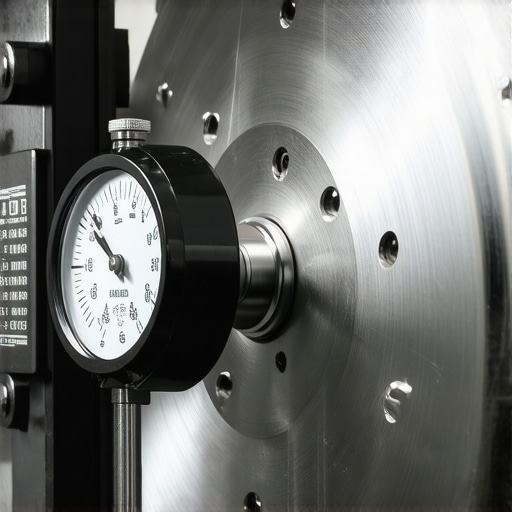
Can a bad wheel bearing mimic a brake pulsation?
It is entirely possible to misdiagnose a failing wheel bearing as a rotor issue. Because the rotor is bolted directly to the hub assembly, any play or ‘slop’ in the bearing allows the rotor to tilt slightly. This misalignment causes the rotor to oscillate between the pads, creating a vibration that mirrors the sensation of a warped disc. During a tune up of the front end, a technician should perform a ‘shake test’ and check for excessive hub play. If the bearing has failed, no amount of new rotors or pads will solve the vibration. In fact, installing new components on a failing hub will often lead to the premature death of the new pads, as the constant wobbling shears away the friction material. If you’re noticing a rhythmic thumping that changes with speed, download our brake pulsation diagnostic checklist to narrow down the cause before you buy unnecessary parts.
Align Your Brackets to Prevent Diagonal Pad Wear
Precision is the enemy of noise and the friend of longevity. One of the most subtle technical errors occurs within the caliper mounting bracket itself. Over years of heat cycles and road salt exposure, the bracket can develop ‘rust jacking’—a buildup of corrosion underneath the stainless steel abutment clips. This corrosion physically pushes the clips against the pads, pinching them and preventing them from sliding squarely against the rotor. When this happens, the pads wear at a diagonal angle, reducing the effective surface area and creating a mechanic’s nightmare of uneven pressure. A high-quality auto repair involves more than just swapping parts; it requires a stainless steel wire brush or a specialized file to strip the bracket down to bare metal before applying a protective layer of Moly-graphite lubricant. This ensures the pads remain floating and perfectly parallel to the rotor face, which is essential for maintaining that crisp, immediate bite.
Keep Friction Consistent Across Extreme Thermal Cycles
Every brake pad has a specific temperature range where it operates most efficiently, known as its friction coefficient curve. When you push your vehicle during spirited driving or heavy towing, the friction material can exceed its thermal threshold. At this point, the resins holding the pad together begin to outgas, creating a microscopic cushion of hot air between the pad and the rotor—a phenomenon known as brake fade. Sophisticated brake service considerations involve choosing the right pad compound for the vehicle’s duty cycle. For instance, while ceramic pads are excellent for a quiet commute, they may glaze over if subjected to the intense heat of downhill mountain hauling. Conversely, semi-metallic pads thrive in high-heat environments but can be noisy when cold. Achieving the perfect balance requires an understanding of how these materials interact with the rotor’s metallurgy under stress. If your brakes feel significantly different after they’ve warmed up, it may be an indication that the current pad compound is a poor match for your driving style or that the rotors lack the necessary vane count for proper cooling.
Don’t Crush Your Actuators: The EPB Service Mode Mandate
As vehicle technology evolves, the traditional mechanical handbrake has largely been replaced by Electronic Parking Brakes (EPB). For a mechanic, this shift changes the fundamental approach to a rear brake service. Attempting to force a rear piston back into the caliper using a standard C-clamp—a move that worked for decades—now risks catastrophic failure of the internal ball-screw mechanism. These units utilize a high-torque servomotor to apply clamping force. To safely retract the piston, the vehicle’s Electronic Control Unit (ECU) must be placed into a specific ‘service’ or ‘maintenance’ mode. This electronic command unwinds the motor internally, allowing the piston to be pushed back without stripping the delicate plastic or metal gears within the actuator. Neglecting this step often results in a ‘parking brake malfunction’ light and a costly replacement of the entire caliper assembly.
#IMAGE_PLACE_HOLDER_D#
Could a software handshake be the missing step in your rear brake job?
Even after physical installation is complete, many modern systems require a calibration procedure, or a ‘software handshake,’ to learn the new ‘zero’ point of the thicker pads. Without this calibration, the EPB may apply too much or too little pressure, leading to accelerated wear or, worse, a vehicle that rolls while parked. Expert technicians often reference the technical archives of Brake & Front End magazine, which highlights how sensitive these systems are to voltage drops during the retraction process. If the battery voltage is too low, the ECU may lose track of the actuator position mid-cycle, necessitating a complex reset. This level of technicality is why a routine tune up on a luxury or late-model vehicle is no longer a simple mechanical task, but a sophisticated integration of hardware and software.
Stop Reusing Tired Clips to Eliminate Mysterious Clicking
While the focus remains on pads and rotors, the small stainless steel abutment clips—the hardware kit—are the unsung heroes of a quiet braking system. Over thousands of heat cycles, the metal in these clips undergoes torsional fatigue, losing its original spring tension. Reusing old hardware is a common shortcut in auto repair that leads to ‘pad slap.’ This occurs when the pad has enough room to physically shift within the bracket, creating a distinct ‘click’ or ‘clunk’ every time you change direction or first apply the brakes. A professional brake service always includes the replacement of these clips and the application of specialized Moly-based lubricant to the contact points. This ensures the pads remain snubbed tightly against the bracket while still being able to slide freely toward the rotor.
Aerodynamic Cooling Ducts and the Myth of Universal Pad Wear
On high-performance and modern SUVs, manufacturers often incorporate dedicated cooling ducts that channel high-pressure air directly to the inner face of the rotor. This can lead to a curious phenomenon where the inner brake pad wears significantly faster than the outer pad, or vice versa, depending on the airflow patterns and heat dissipation. A mechanic must interpret these wear patterns not necessarily as a sign of a sticking caliper, but as a byproduct of the vehicle’s thermal management system. Understanding these nuances prevents the unnecessary replacement of functional calipers. If you are experiencing uneven performance or strange feedback during high-speed deceleration, schedule a consultation with our diagnostic experts today to ensure your braking system is calibrated for both performance and safety.
Expert Insights & Advanced Considerations
The Hub-to-Rotor Interface Is Non-Negotiable
True professionals know that a silent brake job begins long before the pads touch the rotor. If you ignore the mounting surface of the hub, you are inviting lateral runout into your system. Performing the 10-minute hub scrub ensures that the rotor sits perfectly true, preventing the rhythmic oscillations that drivers often misinterpret as warped discs. This meticulous preparation is what separates a standard pad slap from a high-quality auto repair.
Brake Fluid Is a Chemical Component, Not Just a Liquid
Treating brake fluid as a ‘lifetime’ liquid is a recipe for internal hydraulic failure. Because it is hygroscopic, it pulls moisture through rubber hoses and seals, leading to internal corrosion that can seize expensive calipers. If you notice fresh brake fluid turning black shortly after a bleed, it is a signal that your system’s internal seals are degrading. A comprehensive brake service must include a copper-level test to ensure the chemistry of the fluid is still protecting your ABS valves and master cylinder.
#IMAGE_PLACEHOLDER_E#
Stop Throwing Away Your Factory Shims
It is a common mistake among hurried technicians to discard the original stainless steel shims. These components are specifically engineered to dampen the high-frequency vibrations that the human ear perceives as a squeal. Most high-performance brake maintenance hacks prioritize the integrity of these shims and the application of specialized Moly-graphite lubricant. Reclaiming the 8 brake shims most mechanics toss in the trash can be the difference between a silent stop and a persistent, embarrassing noise.
Curated Expert Resources
SAE International Technical Papers: This is the gold standard for understanding the physics of friction and heat dissipation. It provides the empirical data needed to choose between ceramic and semi-metallic compounds for specific vehicle weights.
Brembo Engineering Academy: For those seeking to master thermal management, Brembo offers deep dives into rotor metallurgy and how vane design influences cooling during extreme braking events.
Brake & Front End Magazine: A vital industry publication that helps you maximize your brake service efficiency by staying updated on the latest Electronic Parking Brake (EPB) service modes and calibration requirements.
Final Expert Perspective
Achieving a perfect balance of stopping power and silence requires an obsession with technical detail. From the chemical integrity of the fluid to the mechanical precision of the hub-to-rotor interface, every component must work in harmony. A proper brake service is not merely a replacement of parts, but a restoration of a complex safety system. By focusing on surface preparation and hydraulic discipline, you ensure that your vehicle remains predictable under pressure. If you are experiencing persistent vibrations or noise that defies standard solutions, reach out to our expert team for a precision diagnostic review to get your vehicle back to factory-level performance.