
Modern automotive diagnostics often fall into the trap of over-pathologizing mechanical symptoms, especially when a vehicle suddenly drops into a ‘false neutral’ state. As a veteran in high-end auto repair, I have observed that technicians frequently overlook the intricate dance between electrical grounding and hydraulic pressure regulation. When a Transmission Control Module (TCM) loses its reference ground, even for a millisecond, the resulting logic crash can mimic a catastrophic internal failure. This phenomenon isn’t just a nuisance; it represents a significant safety risk that requires a deep understanding of the vehicle’s electrical architecture rather than just a scan tool readout. Many drivers spend thousands on a full rebuild when the culprit is actually the 18-dollar ground wire fix that stops random transmission slips.
The Voltage Threshold That Decides Your Gear Choice
In the realm of advanced power-train management, the TCM relies on incredibly precise voltage signals to actuate solenoids. If the ground path is compromised by corrosion or a loose bolt, the module encounters electrical noise. This interference often manifests as a ‘false neutral,’ where the engine revs freely but the wheels receive no torque. This happens because the module, unable to verify the position of the shift forks or the pressure in the clutch packs, defaults to a neutral state to prevent hardware damage. From a professional mechanic perspective, diagnosing this requires an oscilloscope rather than a simple code reader. According to technical standards maintained by SAE International, even a 0.5-volt drop in a ground circuit can cause significant CAN-bus communication errors that lead to these phantom gear disengagements.
Locating the Stealth Ground Under Your Battery Tray
Most manufacturers tuck critical grounding points in locations prone to environmental degradation. A common offender is the bolt located directly beneath the battery tray or adjacent to the starter motor. Over time, battery acid vapors and road salt penetrate the threads, creating high resistance. This resistance is heat-sensitive; you might find that your transmission shifts hard only when the engine is cold, or conversely, only after a long highway haul. When this bolt fails to provide a clean path back to the negative terminal, the transmission’s electronic sensors send ‘garbage data’ to the ECU. Before you authorize a teardown, ensure your shop performs a voltage drop test on the transmission-to-chassis ground strap. It is a fundamental step in any legitimate essential guide to auto repair.
How can a loose wire make a car shift into neutral at 60 mph?
This terrifying scenario occurs when the TCM loses its ‘hold’ signal for the current gear solenoid. When the ground is intermittent, the solenoid may de-energize, allowing hydraulic fluid to drain from the clutch pack. The vehicle’s computer detects a mismatch between engine RPM and output shaft speed, and for safety, it disengages the transmission entirely. This ‘false neutral’ is the computer’s way of saying it has lost control. If you encounter this, it is vital to check for broader electrical issues. Often, these gremlins are caught during a routine tune up where battery terminals and primary cables are inspected for integrity.
Recover Factory Performance Without a Full Rebuild
The solution is frequently as simple as removing the offending bolt, cleaning the chassis surface to bare metal with a wire brush, and applying a dielectric grease to prevent future oxidation. This ‘hub scrub’ mentality—similar to how we prevent brake vibrations by cleaning mating surfaces—is what separates parts-changers from true diagnostic experts. If your vehicle is exhibiting erratic shifting behavior, review our ultimate tune-up checklist to ensure your electrical foundations are sound. By addressing these hidden electrical bottlenecks, you can often restore smooth gear transitions and avoid the unnecessary expense of a new transmission unit. Always remember that a $15 sensor or a $1 bolt is more likely to fail than a heavy-duty steel gearset.
When Fluid Chemistry Sabotages Electrical Signals
While we have established that grounding issues are a primary suspect in ‘false neutral’ scenarios, the fluid itself plays a secondary, yet equally critical, role in electronic communication. Transmission fluid is not just a lubricant; it is a hydraulic medium that must maintain specific dielectric properties. As fluid ages, it accumulates microscopic metallic debris. This contamination can create a ‘bridge’ between solenoid terminals, leading to cross-talk that confuses the TCM. If you notice that 3 signs your transmission fluid is actually burning are present, the chemical breakdown has likely already begun to impact your sensor accuracy. Burned fluid loses its ability to dissipate heat, which in turn spikes the resistance in the very ground wires we discussed earlier, creating a feedback loop of mechanical and electrical failure.
The Heat Soak Factor in Ground Wire Integrity
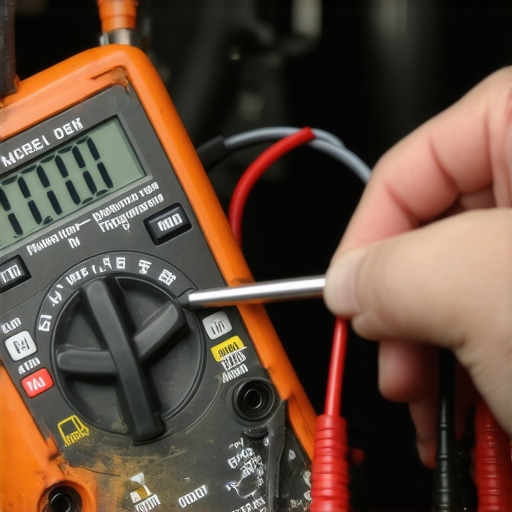
Thermal expansion is the silent enemy of a stable electrical connection. A ground strap that tests fine in the morning can fail after thirty minutes of stop-and-go traffic. This is because heat increases the atomic vibration within the copper or aluminum, making it harder for electrons to flow. When the resistance climbs high enough, the TCM can no longer distinguish between a genuine shift command and background noise. This is often the simple reason your transmission shifts hard when its cold versus when it is hot; the tolerances for electrical resistance are razor-thin. According to safety data from the National Highway Traffic Safety Administration (NHTSA), electronic control malfunctions are increasingly responsible for sudden loss of motive power in late-model vehicles, often traced back to these subtle environmental factors rather than internal gear breakage.
Is your car actually dying, or is it just suffering from a 10-cent ‘logic crash’?
The terrifying sensation of the engine revving while the car slows down is often a ‘logic crash’ rather than a hardware explosion. When the computer receives conflicting data from the input and output speed sensors, it initiates a ‘limp home’ mode or a ‘neutral state’ to protect the planetary gear sets. This software-driven safety net is what many owners mistake for a ‘blown’ transmission. If your vehicle is behaving this way, investigate the 20-dollar fix for a transmission that hunts for gears before committing to a four-figure rebuild. Often, the logic can be stabilized by simply replacing a single faulty sensor or refreshing the software adaptations that have drifted out of range over thousands of miles.
Avoid the Trap of the Low-Cost Visual Inspection
Many drivers seek out quick checks to save money, but there is a dirty secret behind free inspections that applies to transmissions just as much as it does to brakes: a visual check cannot see inside a wire or a solenoid. A tech might look at your ground wire and say it ‘looks fine’ because there is no green crust, but if the internal strands are frayed or the voltage drop is 0.4V higher than spec, the part is functionally dead. To get the most out of your diagnostic time, prioritize shops that use dedicated oscilloscopes. If you have ever experienced a sudden drop into neutral at highway speeds, what was the culprit in your case? Share your diagnostic journey in the comments below or read our other guides to see if your symptoms match a known electrical ghost.
Stop Aftermarket Accessories from Corrupting Your Gear Selection
One of the most elusive causes of a transmission dropping into neutral is electromagnetic interference (EMI) introduced by non-factory electronics. High-intensity discharge (HID) headlight ballasts or poorly shielded dash cams can bleed ‘noise’ into the vehicle’s wiring harness. When this interference reaches the communication lines of the Transmission Control Module, it creates packet loss on the Controller Area Network (CAN). To the computer, a missing packet looks like a lost sensor signal, and its fail-safe is often to disengage the clutch. If you have recently installed new lighting or audio equipment, you might find that LED upgrades and transmission glitches are more than just a coincidence. Professional diagnostic protocols, such as those established by ASE (Automotive Service Excellence), emphasize checking for ripple voltage and signal integrity before condemning heavy mechanical hardware.

Can a failing alternator diode trigger a sudden shift to neutral?
Yes, and this is where many DIYers get stumped. A failing diode in the alternator can leak alternating current (AC) into a system designed strictly for direct current (DC). This ‘AC ripple’ acts as a phantom signal that wreaks havoc on the Hall-effect sensors used to track input and output shaft speeds. When the TCM sees a frequency it doesn’t recognize—effectively ‘hearing’ the alternator’s rotation instead of the transmission’s—it loses its sync. If you suspect your charging system is at fault, performing a quick alternator ripple test can save you from a $4,000 mistake. This type of electrical ghost is precisely why a high-quality mechanic perspective is invaluable; we look for the source of the bad data rather than just the bad data itself.
Flush the Digital Memory Instead of the Fluid
Before you commit to a mechanical overhaul, consider the state of your transmission’s adaptive learning tables. Modern transmissions ‘learn’ how to shift by adjusting solenoid timing and pressure based on the wear of the clutch packs. However, these values can drift into ‘forbidden zones’ due to a temporary battery disconnect or a sensor glitch. When the adaptive values are out of range, the TCM may struggle to complete a shift, resulting in a flare or a sudden drop to neutral. Resetting these values, often called a ‘Quick Learn’ or ‘Adaptive Reset,’ can frequently restore factory-smooth operation. If your car is hunting for gears, checking the 20-dollar fix for a transmission that hunts for gears might reveal that a simple software calibration is all you need. This process realigns the software’s expectations with the actual physical state of the clutches, compensating for the thousands of miles of microscopic wear that have occurred since the vehicle left the factory.
The Critical Role of Clutch Volume Index Readings
For those diving deep into the diagnostic data, the Clutch Volume Index (CVI) is the ultimate truth-teller. The CVI represents the volume of fluid required to apply a clutch pack and is a direct window into its health. If the TCM sees a CVI value that is too high, it knows the friction material is thin; if it is too low, it suggests a hydraulic leak or a sticking solenoid. When the CVI exceeds a pre-set threshold, the computer may refuse to engage that gear to prevent further damage. Monitoring these values in real-time allows a technician to predict a failure before it leaves you stranded. Compare your current readings to our ultimate tune-up checklist to see if your transmission is within its operational window. It is important to note that as the CAN-bus architecture moves toward higher bit-rates in newer vehicles, the sensitivity to even minor delays in these hydraulic responses increases exponentially, making the timing of the data packets as critical as the pressure in the lines themselves.
When the digital architecture of a modern vehicle is compromised, the transmission is often the first major component to suffer. We have previously discussed grounding and fluid chemistry, but we must also address the ‘silent’ data collisions happening on the Controller Area Network (CAN). In high-bitrate environments, the Transmission Control Module (TCM) expects high-priority data packets within millisecond windows. If a peripheral module, such as a failing blind-spot monitor or a malfunctioning sunroof motor, starts ‘spamming’ the bus with error frames, it can cause a priority inversion. During these moments of data congestion, the TCM may miss a critical input shaft speed update. This momentary ‘blindness’ triggers a safety-neutral event, as the computer cannot verify the synchronization of the planetary gear sets.
Stop Data Traffic Jams from Stranding You on the Highway
Data integrity is just as vital as hydraulic pressure. When the CAN-bus is overloaded, the transmission doesn’t just ‘lag’; it enters a defensive posture. This is a common issue in luxury vehicles where dozens of modules share a single twisted-pair network. According to the technical guidelines found in the Bosch Automotive Handbook, the gold standard for automotive engineering, bus load exceeding 80% consistently leads to non-deterministic behavior in real-time control systems. If your car drops into neutral, a technician should not just look for codes, but measure the actual ‘bus load’ using a high-speed logic analyzer. This ensures that a minor fault in the infotainment system isn’t the root cause of your major mechanical headache. Often, disconnecting an auxiliary module can temporarily resolve the issue, proving that the transmission itself is perfectly healthy.
The Invisible Link Between ABS Sensors and Gear Disengagement
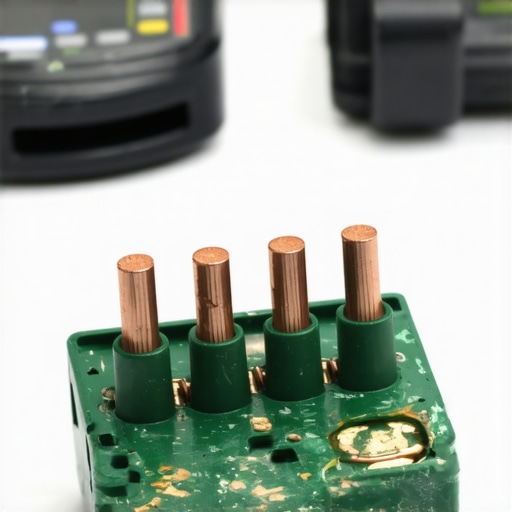
The relationship between the braking system and the transmission is more intimate than most drivers realize. The TCM relies on wheel speed data from the ABS module to calculate shift timing and torque converter lockup. If a wheel speed sensor has a cracked tone ring or a build-up of metallic road debris, the signal can become ‘noisy’ at high speeds. This noise mimics a loss of traction, prompting the TCM to disengage the clutch packs to prevent a perceived drivetrain shock. You might find that cleaning your hubs not only fixes brake vibrations but also stabilizes your transmission logic by providing a cleaner signal to the ABS sensors. It is a classic example of how a problem in one system can manifest as a catastrophic failure in another.
Why does my speedometer flicker right before the transmission slips?
This is the ‘smoking gun’ of an electrical synchronization failure. Since the speedometer and the TCM often share the same vehicle speed sensor (VSS) output, a flickering needle indicates a literal break in the data stream. This is rarely a mechanical slip; it is a loss of electronic signal. In many cases, the culprit is a failing bulkhead connector where the engine harness meets the chassis. Moisture ingress at this point creates a high-resistance bridge that fluctuates with engine vibration. Before you allow a shop to drop your transmission, ensure they have performed a ‘wiggle test’ on the main harness while monitoring the VSS signal on a scope. Refreshing these connections is a key part of any essential guide to auto repair.
Protect Your Bulkhead Connectors from Chemical Creep
Chemical contamination isn’t limited to your fluid. ‘Capillary action’ can actually pull oil or coolant through the inside of a wire’s insulation, eventually reaching the pins of the TCM. This phenomenon, known as ‘wicking,’ can introduce contaminants into a sealed connector, causing erratic shorts that are nearly impossible to see during a standard tune up. If you find oil inside a harness plug, the source must be found—often a leaking pressure switch—before the new harness is installed. Have you ever dealt with a ‘ghost’ in your car that only appeared after a heavy rain or an oil change? Tell us about your diagnostic battles in the comments, and let’s help the community avoid unnecessary rebuilds together.
Expert Insights & Advanced Considerations
Stop Relying Solely on Stored Trouble Codes
Diagnostic trouble codes (DTCs) are often the result, not the cause, of a system failure. When a Transmission Control Module (TCM) experiences a millisecond of voltage drop, it may set a gear ratio error code because it physically lost the ability to command a solenoid, not because the gear is slipping. A true skilled mechanic you can trust will look at signal integrity on a scope rather than just clearing codes.
The Hidden Hazard of Aftermarket LED Driver Noise
Pulse Width Modulation (PWM) used in cheap LED headlight drivers can broadcast radio frequency interference (RFI) that mirrors the frequency of your vehicle speed sensors. This can confuse the logic board into thinking the car is stationary while moving at 70 mph, triggering a fail-safe neutral state. Reviewing mechanic tips diagnosing common auto problems can help identify these non-traditional culprits.
Ground Paths Aren’t Always Just Metal to Metal
Electrical current prefers the path of least resistance, but in a vehicle, that path can change as components heat up. A ground strap that looks clean can have internal electrolysis that only impedes flow at high temperatures. This is why the 18-dollar ground wire fix that stops random transmission slips is such a common solution—it bypasses a compromised factory route with a fresh, low-resistance connection.
Curated Expert Resources
ATSG (Automatic Transmission Service Group) Technical Bulletins: These are the gold standard for specific transmission models, detailing manufacturer-specific ghosts and software updates that local shops use to solve logic crashes.
Bosch Automotive Handbook: This resource provides the engineering foundations for CAN-bus architecture, essential for understanding how data congestion leads to gear disengagement.
SAE International Standards: For those looking to understand the exact voltage tolerances of automotive sensors, SAE J1939 provides the protocol definitions used by heavy-duty and light-duty powertrains.
Final Expert Perspective
Navigating the intersection of hydraulics and high-speed data requires a shift in how we view vehicle maintenance. A blown transmission is often just a confused computer, and the path to restoration begins with verifying your electrical foundations. By implementing the 18-dollar ground wire fix that stops random transmission slips and ensuring your diagnostic tech looks beyond the scanner, you protect both your vehicle’s longevity and your repair budget. If you are struggling with a persistent shifting ghost, consider checking the 20-dollar fix for a transmission that hunts for gears or consulting our essential guide to auto repair for further troubleshooting. We invite you to share your own diagnostic success stories or reach out to us on our contact page for more technical insights.