Modern vehicle diagnostics often lean heavily on high-cost oscilloscopes and digital multimeters, yet a seasoned mechanic knows that fundamental physics often provides the most immediate answers. The electrical system is the nervous system of any car, and the alternator serves as its heart, responsible for converting mechanical energy into the direct current required to power everything from ignition coils to the intricate sensors managing a modern brake service. When a vehicle exhibits symptoms of a failing charging system—such as dimming lights or a sluggish crank—the immediate assumption is a dead battery. However, a deeper analytical approach reveals that the charging circuit’s integrity is often compromised long before a total failure occurs. By applying the principles of electromagnetism, we can perform a triage using nothing more than a common steel screwdriver to determine if the rotor assembly is receiving the necessary excitation to generate power.
The Magnetic Field Trick That Verifies Alternator Health
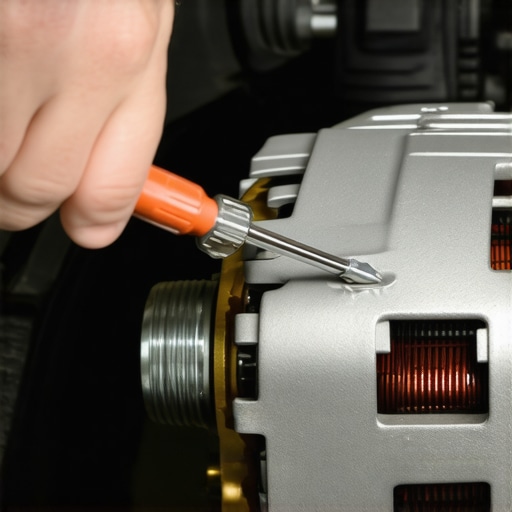
The operational core of an alternator involves a rotating electromagnet (the rotor) spinning inside a stationary set of wire coils (the stator). For electricity to be generated, the rotor must be energized, creating a magnetic field. According to the principles of electromagnetic induction as detailed by the Encyclopædia Britannica, this field is detectable through physical proximity. By turning the ignition to the ‘on’ position without starting the engine, current flows to the alternator’s field coil. If you place a steel screwdriver near the nut on the front of the alternator pulley, a healthy circuit will exhibit a distinct magnetic pull. If the screwdriver is not attracted to the pulley, you have instantly diagnosed a problem in the circuit, brushes, or voltage regulator without ever stripping a wire. This type of field-tested logic is exactly what separates professional auto repair from amateur guesswork.
Is Your Charging System Actually Failing or Just Suffering from High-Resistance Grounds?
Before condemning an alternator that fails the magnetic test, one must analyze the path of least resistance. Often, a perceived alternator failure is actually a symptom of a simple ground wire issue that prevents the field coil from energizing. In the context of a comprehensive tune up, checking the continuity between the engine block and the chassis is paramount. High resistance at the ground strap can mimic a dead alternator by starving the voltage regulator of the reference signal it needs to begin charging. This layered insight is crucial because replacing a functional alternator only to find the same charging deficit is a hallmark of poor diagnostic methodology. Expert technicians prioritize these physical verification steps to ensure every component in the system is operating at peak efficiency before recommending expensive replacements.
Why Electrical Stability Influences Complex Systems Like ABS and Transmission Logic
A fluctuating charging system doesn’t just affect your battery; it creates ‘dirty’ power that can wreak havoc on electronic control units (ECUs). For instance, an alternator with a failing diode might leak AC ripple into the DC system, causing phantom codes in your anti-lock brake service modules or erratic shifts in the transmission. This is why a routine tune up in 2025 must include an electrical system audit. Ensuring a stable 14.2 to 14.7-volt output prevents the micro-surges that lead to premature sensor failure and costly auto repair bills down the line. If you find your electrical system is sound but your car still behaves erratically, consider checking our guide on mechanic tips for diagnosing common auto problems to narrow down the culprit and keep your vehicle running smoothly.
While the electrical output of the alternator is the primary focus of most digital scans, the mechanical delivery system—the serpentine belt and its associated tensioner—is frequently the silent culprit behind intermittent charging issues. A belt that has ‘glazed’ or lost its grip due to age won’t necessarily squeal, but it will slip under heavy electrical loads, such as when the AC compressor engages or the headlights are switched on. This micro-slippage causes a momentary drop in amperage that a standard voltmeter might miss, yet it is enough to trigger a low-voltage fault in the transmission control module. If you suspect your drive system is compromised, learning how to fix a squeaky serpentine belt without using spray is a vital first step in restoring mechanical harmony and ensuring the rotor spins at the required RPM to meet the vehicle’s electrical demand. Beyond simple grip, the harmonic dampening provided by a high-quality tensioner is essential. When the internal spring of a tensioner weakens, it allows for ‘belt slap,’ a condition where the belt oscillates rapidly between pulleys. These vibrations travel through the alternator shaft, prematurely wearing out the bearings and brushes. A seasoned mechanic knows that a vibrating belt isn’t just a noise issue; it is a physical assault on the charging system’s longevity. By maintaining proper tension, you prevent the mechanical fatigue that leads to expensive auto repair bills and ensure that your tune up results in a truly smooth-running engine.
Why Does Your Engine Stumble Only When the Radiator Fan Kicks In?
This specific phenomenon points directly to ‘voltage sag’ caused by high-draw components. When the cooling fan—a high-amperage motor—engages, it creates an instantaneous demand on the electrical system. If the battery’s internal resistance is high or the alternator’s voltage regulator is slow to react, the ignition system experiences a momentary power starvation. This can lead to a rough idle or a ‘stumble’ that feels like a mechanical vacuum leak. In some cases, the 15-dollar sensor that fixes your rough idle in minutes might be the answer for a consistent idle issue, but an intermittent stumble during high-load transitions is almost always an electrical buffer problem. Professional diagnostic strategy involves monitoring the fuel trim during these events to see if the injectors are losing the necessary voltage to open fully and deliver the commanded fuel.
Thermal Resistance and the Invisible Decay of Battery Cables
Heat is the primary enemy of electrical conductivity, and the engine bay is one of the harshest environments for wiring. As an engine reaches its operating temperature, the resistance within the copper wiring naturally increases. Older cables, which may have internal corrosion hidden beneath the insulation, can experience significant voltage drops when hot, a condition known as heat soak. This explains how thermal shifts can impact everything from sensor accuracy to solenoid response, similar to the logic behind why your transmission shifts hard only when the engine is cold or hot. The Society of Automotive Engineers (SAE) has documented that even a 0.5-volt drop across a ground circuit, exacerbated by engine heat, can fundamentally alter the signal-to-noise ratio in high-speed data buses. Addressing these invisible barriers is vital for long-term reliability. If you are struggling with ghost codes that keep appearing and disappearing, investigate the hidden fuse that kills your entire transmission control module before assuming you need a new gearbox. If you’ve encountered a mystery misfire that only happens on hot days, share your story in the comments below or check our expert-led breakdown on auto repair cost-saving tips from industry experts to help navigate these frustrating diagnostic hurdles without overspending on unnecessary parts.
Modern vehicles have evolved far beyond the ‘always-on’ alternator logic that dominated the industry for decades. Today, we deal with Variable Voltage Control (VVC) or Smart Charging Systems, which are managed directly by the Powertrain Control Module (PCM). This shift is primarily driven by federal fuel economy mandates, as reducing the alternator’s mechanical drag on the engine can marginally increase fuel efficiency. For a mechanic, this means that seeing 12.5 volts at the battery with the engine running is no longer an automatic red flag for failure. If the PCM determines the battery is at a high state-of-charge, it may de-excite the alternator field entirely to save fuel. This is where a diagnostic tool that can read live PID data becomes far more valuable than a simple handheld tester during a routine tune up.
Forget the 14-Volt Rule and Embrace Variable Charging Systems
When these complex systems do fail, the symptoms often manifest in ways that confuse a standard brake service diagnostic. For example, a glitch in the Battery Current Sensor—usually located on the negative terminal—can trick the computer into overcharging the battery, leading to premature gassing and a pungent sulfur smell. According to the technical standards outlined in ISO 11898-1, the integrity of the communication bus is the foundation of these smart systems. If the ‘heartbeat’ signal from the alternator to the PCM is interrupted, the system usually defaults to a ‘limp-home’ charging mode of 13.8 volts, which might keep the car running but will slowly degrade a modern AGM battery that requires specific multi-stage charging profiles.
How do modern control modules communicate when the key is out of the ignition?
The secret lies in the ‘Sleep’ and ‘Wake’ states of the Controller Area Network (CAN) bus. Even when you lock your car and walk away, the vehicle’s nervous system remains active for a predetermined period—often up to 45 minutes on luxury German brands. During this time, the Body Control Module (BCM) polls various sensors to ensure everything from the alarm to the cooling fans is in the correct state. If a single module, like a faulty door latch sensor, fails to report ‘closed,’ it can keep the entire communication network awake. This ‘staying awake’ consumes significantly more power than the modules do in their quiescent state, leading to the dreaded ‘dead in the morning’ scenario that keeps many auto repair shops busy on Monday mornings.
Find the Ghost in the Machine and Stop Parasitic Amperage
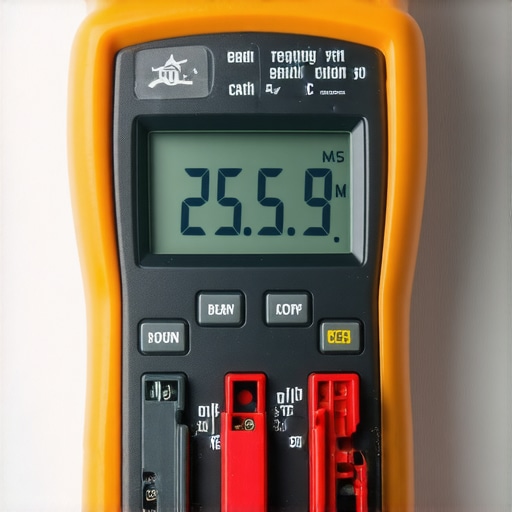
To diagnose these drains without the risk of ‘waking’ the car by opening a door or pulling a fuse, advanced technicians use the ‘voltage drop across the fuse’ technique. By measuring the minute millivolt drop across the back of a plugged-in fuse, we can calculate exactly how many milliamps are flowing through that specific circuit without ever breaking the loop. It is a surgical approach to a phantom problem. If you’ve ever spent hundreds on a new battery only to have it die again three days later, you’ve likely experienced the frustration of an undiagnosed parasitic draw. Have you dealt with a mystery battery drain that took weeks to find? Join the discussion in the comments below; your struggle might save another driver a massive auto repair headache. The chemical side of the equation is equally critical, particularly when we talk about the internal plate morphology of Lead-Acid versus Absorbed Glass Mat (AGM) batteries. While a standard flooded battery can handle a certain amount of ‘sloshing’ and heat, the AGM variant is highly sensitive to charge rates and ambient temperatures. Charging an AGM at the same high voltage used for a flooded battery in summer heat can lead to thermal runaway, essentially cooking the battery from the inside out…
This thermal vulnerability is exactly why modern charging systems employ temperature-compensated charging. By utilizing a thermistor integrated into the battery tray or via an Intelligent Battery Sensor (IBS) on the negative terminal, the Powertrain Control Module (PCM) adjusts its output based on the ambient heat. If you are performing a tune up and notice a battery that feels excessively warm to the touch after a short drive, the charging system may be failing to taper off its amperage, a classic sign of a corrupted sensor input or a failing internal cell. Modern auto repair is now as much about managing chemical equilibrium as it is about mechanical hardware.
Stop Cooking Your AGM with Outdated Charging Logic
In the realm of high-level automotive maintenance, we must respect the physical limits of Absorbed Glass Mat (AGM) technology. Unlike flooded batteries that can tolerate the occasional boil from a high-output alternator, an AGM battery is a sealed system. When charging logic fails, the resulting internal pressure can force the safety valves to open—a process known as outgassing. According to technical documentation from the Battery Council International, once this moisture is lost, the battery internal resistance skyrockets, leading to a permanent loss of capacity. A seasoned mechanic knows that a battery that has vented is often a symptom of a charging system that hasn’t been properly recalibrated to the specific battery chemistry installed in the vehicle.
What happens if you skip the battery registration step on a modern Euro?
Many DIYers and even some shops overlook the critical step of registering or coding a new battery into the vehicle’s computer system. As a battery ages, its internal resistance increases, and the PCM compensates by gradually increasing the charging voltage. If you install a fresh battery but don’t reset the adaptation values, the car will treat the new unit as if it were the old, worn-out one, blasting it with excessive voltage. This oversight can shorten the lifespan of a premium battery by fifty percent or more. Utilizing a high-level scan tool during a routine tune up is the only way to inform the Intelligent Battery Sensor that a new clean slate of capacity is available, ensuring the alternator uses the correct pulse-width modulated (PWM) signal for charging.

Small Voltage Fluctuations Blind Modern Safety Sensors
The implications of a weak or noisy electrical system extend far beyond starting issues; they directly impact the reliability of Advanced Driver Assistance Systems (ADAS). High-speed sensors like radar and LiDAR, which are integral to modern brake service and collision avoidance, require an exceptionally clean power supply to process data in real-time. Electrical noise—minute, rapid fluctuations in voltage—can introduce jitter into the data packets traveling over the CAN bus. When this happens, the ADAS module may temporarily disable itself or, worse, provide ghost alerts. This is why ensuring the alternator’s ripple current remains within a tight tolerance is essential for the safety of any high-tech vehicle. If you have ever had a Blind Spot Monitor Unavailable message that disappears after a restart, you might be looking at an electrical stability issue rather than a sensor failure.
Next time you’re under the hood, take a moment to inspect the health of the Intelligent Battery Sensor’s wiring; a single frayed wire on the LIN-bus line can throw the entire vehicle into a state of confusion. Have you ever encountered a vehicle where a simple battery change solved a seemingly unrelated transmission or sensor glitch? We want to hear about your most challenging diagnostic puzzles in the comments below. Sharing your expertise helps the whole community master the art of modern auto repair and avoid the trap of parts cannon diagnostics. For more advanced tips on keeping your high-voltage systems in check, stay tuned to our ongoing deep-dives into the future of automotive electronics.
Expert Insights & Advanced Considerations
Stop Trusting Your Multi-Meter for AC Ripple Detection
While a standard multimeter can check for basic DC voltage, it often masks the AC ripple current caused by a failing alternator diode. This “dirty” power can scramble the signals in your transmission control module, causing the car to behave as if it has a major mechanical failure. A professional mechanic utilizes an oscilloscope to “see” the voltage rather than just read a number, ensuring that the electrical foundation of the vehicle is stable before moving on to more invasive auto repair. If you are noticing ghost codes, consider mechanic tips for diagnosing common auto problems to see how clean power influences digital communication.
Clean Power is the Foundation of ADAS Calibration
Modern safety systems like lane-keep assist and emergency braking are incredibly sensitive to voltage fluctuations. Even a minor simple ground wire issue can introduce enough noise into the system to disable these critical features. During a standard brake service, we don’t just look at pads and rotors; we must verify that the ABS pump is receiving a steady 14 volts under load. Without this stability, the reaction time of the safety actuators can be compromised, turning a minor electrical glitch into a safety liability.
Why Software Integration is the Final Step of Every Battery Swap
Installing a new battery in a vehicle equipped with an Intelligent Battery Sensor (IBS) without performing a registration is a recipe for premature failure. The computer needs to know it is working with a fresh unit so it can reset its internal charging profile. Skipping this step during your regular tune up means the alternator will likely overcharge the new battery, significantly shortening its lifespan and potentially damaging other sensitive electronics. This is why following auto repair cost-saving tips involves spending a few extra minutes on proper software integration.
#IMAGE_PLACEHOLDER_E#
Curated Expert Resources
- SAE International (Standard J1939): The definitive authority on how heavy-duty and automotive control networks communicate. Studying these standards provides a deeper understanding of why electrical noise is so destructive to modern vehicle logic.
- Battery Council International (BCI): An essential resource for understanding the chemical evolution of AGM and lithium-ion automotive batteries and the charging requirements needed to maintain their longevity.
- The Bosch Automotive Handbook: Often referred to as the bible of automotive engineering, this resource offers deep dives into the physics of electromagnetic induction and the design of modern 12V and 48V charging systems.
Final Expert Perspective
Navigating the transition from simple mechanical repairs to digital systems management is the hallmark of a modern automotive expert. By prioritizing electrical stability and understanding the complex interaction between the alternator and the vehicle’s control modules, you move beyond “parts swapping” and into true diagnostic mastery. Whether you are performing a brake service or a comprehensive tune up, remember that every component is only as reliable as the power it receives. We invite you to share your most difficult electrical diagnostic puzzles in the comments or reach out to explore more advanced diagnostic strategies to keep your vehicle at peak performance.