Why a Simple Pan Drop Leaves 70% of Contaminants Behind
The standard auto repair approach to transmission maintenance often relies on gravity, but gravity is an insufficient ally when dealing with complex modern hydraulic circuits. While many car owners believe a pan drop and filter change constitute a complete service, they are essentially mixing five quarts of fresh fluid with eight quarts of degraded, oxidized ATF trapped deep within the torque converter and cooler lines. This thermal and chemical imbalance leads to premature viscosity breakdown and can actually do more harm than good. Professional mechanics understand that a true exchange requires addressing the entire volume of the system to prevent “fluid shock,” where new detergents in the fresh fluid dislodge stubborn sludge that then migrates to clog the sensitive valve body. This is a critical distinction that separates a basic service from expert-level preventative care.
According to technical standards maintained by SAE International, fluid cleanliness is the primary determinant of transmission longevity, as even microscopic metallic debris can score solenoid bores and lead to pressure losses. If your brake service technician also handles your powertrain, ensure they are looking beyond the obvious drain points. In many cases, diagnostic errors occur because techs focus on the transmission pan while ignoring electrical issues, such as the hidden ground bolt that causes transmission false neutrals, which mimics mechanical failure.
The Torque Converter Trap That Most Techs Ignore
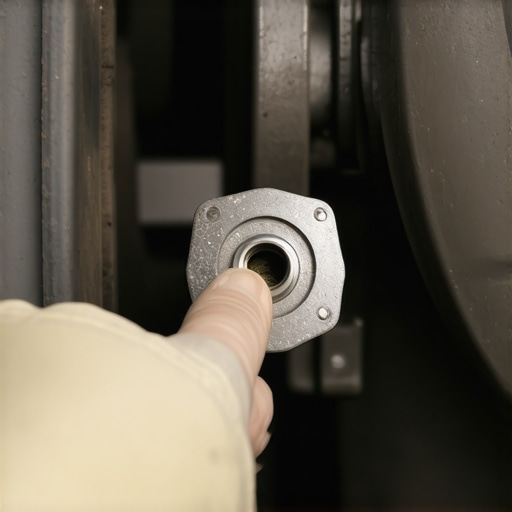
In various classic and specific heavy-duty applications, a dedicated drain plug exists on the torque converter itself, yet it remains the most overlooked component in the shop. To access it, one must often rotate the crankshaft manually until the plug aligns with a small access hole in the bell housing. Skipping this step means leaving behind the hottest, most thermally stressed fluid in the entire vehicle. In modern units where this plug has been engineered out, a mechanic must employ a specialized fluid exchange machine that works in tandem with the vehicle’s internal pump to ensure a total purge. A comprehensive tune up for your engine is virtually wasted if the power it generates is being sheared by burnt, particulate-heavy transmission fluid that should have been evacuated.
Is Your Mechanic Overlooking the Internal Cooler Circuit?
A common failure point during a routine tune up or transmission service is the failure to flush the external cooling lines and the internal heat exchanger. Debris from friction plates often settles in the lowest point of the cooling loop. If these lines are not cleared, this “hidden” reservoir of grit flows straight back into your freshly cleaned transmission the moment the thermostat opens and fluid flow increases. This explains why some drivers notice why your transmission shifts hard only when the engine is cold; the fluid density and flow characteristics are fighting against residual contaminants. Before you book your next appointment, consider getting the most from your mechanic by asking these critical questions about their specific flush procedure and whether they check the torque converter and cooler flow.
Expert-level care means recognizing that every component, from the brake service to the transmission, operates as part of a sensitive, closed-loop system where “good enough” usually leads to catastrophic failure. If you are noticing shifting delays or hunting between gears, do not settle for a simple fluid top-off; investigate the fluid’s health and the thoroughness of your last service immediately to save your transmission from an early grave.
Why Pressure Testing Beats a Standard Code Scan Every Time
In the world of high-stakes auto repair, a Diagnostic Trouble Code (DTC) is merely a starting point, not a verdict. Many mechanics rely solely on electronic scanners, but a code like P0730 (Incorrect Gear Ratio) only tells you that the input and output speeds don’t match; it doesn’t explain why. To find the root cause, an expert technician employs a hydraulic pressure gauge. By tapping into specific test ports on the transmission case, they can observe real-time ‘line pressure’—the hydraulic force that applies the clutches and bands. If the pressure is low, the problem might be a clogged internal filter or a worn pump; if it is high, you might be looking at a stuck regulator valve. Even a minor discrepancy can cause a cascade of failures, often manifesting as the 5-vacuum-leak-that-makes-your-transmission-shift-hard, which mimics a much more expensive internal mechanical failure.
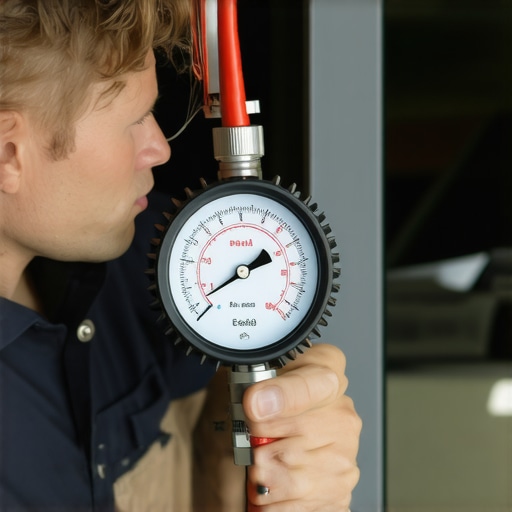
Technical data from the Automatic Transmission Rebuilders Association (ATRA) indicates that a significant percentage of diagnostic errors occur when technicians fail to verify hydraulic integrity before recommending a rebuild. This lack of depth leads to ‘parts cannon’ repairs where components are replaced blindly. A seasoned pro knows that if the line pressure is steady but the shift remains soft, the issue likely resides in the friction material or a leaking piston seal. This level of nuance is what differentiates a standard tune up from an elite powertrain intervention. If your vehicle feels sluggish, don’t just clear the code; demand a pressure test to see what is happening inside the hydraulic brain of your car.
Could Your Battery Be the Real Reason for Harsh Shifts?
Modern Transmission Control Modules (TCMs) are incredibly sensitive to voltage fluctuations. When a battery is nearing the end of its life or an alternator is Ripple-testing poorly, the TCM may struggle to command the solenoids with the necessary precision. This can result in ‘limp mode’ or erratic gear hunting. Before you assume the worst, check the electrical vitals. A simple corroded connection or the hidden fuse that kills your entire transmission control module can create symptoms that feel like a terminal mechanical breakdown. Just as a brake service requires checking the electrical ABS sensors, a transmission check must include a thorough battery and ground strap audit to ensure the computer isn’t ‘hallucinating’ mechanical issues due to poor power quality.
The Hidden Electrical Gremlins in Your Shift Logic
Many drivers are surprised to learn that a failing engine sensor can directly sabotage transmission performance. For instance, a faulty Throttle Position Sensor (TPS) or Mass Air Flow (MAF) sensor provides critical load data to the TCM. If this data is skewed, the transmission won’t know whether to stay in a lower gear for climbing or upshift for economy. This often leads to the frustrating experience of why your transmission shifts hard only when the engine is cold, as the sensors struggle to stabilize during the warmup cycle. Furthermore, if you are hearing a strange noise while driving, do not automatically blame the gearbox; learn how to diagnose a mystery clunk in your front end first, as many suspension or axle issues are frequently misidentified as transmission ‘shudders.’
Ultimately, preventative care is about chemistry as much as mechanics. If you catch a slipping issue early, sometimes the 20-fluid-swap-that-can-save-a-slipping-transmission is enough to restore the friction coefficients required for smooth engagement. Have you ever been told your transmission was ‘totaled’ only to find out it was a simple sensor or a loose wire? Share your experience in the comments below or suggest a topic you would like us to dive into next!
Resetting the Brain and Why Clearing Codes Is Not Enough
Modern auto repair has evolved far beyond the mechanical; it is now a digital discipline. When you perform a comprehensive fluid exchange, you are fundamentally changing the hydraulic environment of the unit. Most mechanics understand that contemporary Transmission Control Modules (TCMs) employ ‘adaptive learning’ logic to compensate for internal wear. Over thousands of miles, as friction plates thin and return springs weaken, the computer gradually increases line pressure and adjusts solenoid timing to maintain shift quality. If you introduce fresh, high-viscosity fluid without resetting these adaptive values, the TCM continues to apply the ‘old’ high-pressure commands to the ‘new’ fluid. This often results in harsh engagement or ‘shift shock’ that can damage the internal planetary gear sets. A professional tune up for a modern powertrain must include a bi-directional scan tool session to force the TCM into a ‘relearn’ mode, ensuring it finds the new optimal touch points for every clutch pack.

Technical bulletins from the Automatic Transmission Service Group (ATSG) highlight that failing to reset adaptives after a service is a leading cause of ‘comebacks’ in professional shops. This isn’t just about comfort; it is about preventing the hydraulic hammering that occurs when the system over-pressurizes a shift. If your technician doesn’t mention a ‘relearn’ or ‘fast-learn’ procedure after your brake service and transmission check, they are only doing half the job. This digital calibration is the bridge between a simple fluid swap and a factory-spec auto repair.
Why Does Your Transmission Shift Perfectly Cold but Flare Once Warm?
This frustrating symptom is often a window into the physical state of your internal seals. When the ATF is cold, its higher viscosity allows it to bridge small gaps in hardened rubber seals. As the vehicle reaches operating temperature, the fluid thins and the ‘O-rings’ and ‘D-rings’—which have lost their elasticity due to years of thermal cycling—can no longer hold back the hydraulic pressure. The fluid ‘bleeds’ past the seal instead of applying the clutch, leading to a ‘flare’ where the engine RPMs spike between gears. This is a nuanced issue that many mechanics misdiagnose as a total mechanical failure. In reality, it may be a case of internal pressure loss that requires a specific additive to swell the seals or, more permanently, a targeted valve body upgrade to compensate for the wear.
The Chemistry of Friction and How Slippery Fluid Kills Clutch Packs
It sounds counterintuitive, but a transmission can actually be ‘too slippery.’ The friction plates inside your gearbox rely on a very specific ‘coefficient of friction’ to grab and hold. Over time, the friction modifiers in the ATF break down, or in some cases, the wrong type of fluid is added during a quick tune up. If the fluid lacks the necessary ‘bite,’ the clutches will slip microscopically during every shift. This generates intense localized heat, glazing the friction material and turning it into a smooth, glass-like surface that can no longer hold torque. Once glazing occurs, no amount of fresh fluid will fix the problem. This is why auto repair experts emphasize using only the exact OEM-specified fluid, as the chemical package is balanced specifically for the metallurgy and friction material of that specific unit. If you’re curious about how your specific driving habits affect this chemical balance, consider asking your mechanic about fluid analysis during your next visit.
Stop Treating Your Transmission Like a Sealed Unit
The marketing term ‘Filled for Life’ has been a disaster for vehicle longevity. Many manufacturers claim their units are sealed and require no maintenance, yet those same manufacturers often provide mechanics with detailed service intervals for ‘severe duty’—which includes stop-and-go traffic, towing, or even driving in hilly terrain. Effectively, almost all real-world driving qualifies as severe duty. By the time a ‘sealed’ unit starts showing symptoms, the internal damage is often irreversible. True preventative care involves ignoring the ‘sealed’ label and performing a fluid and filter health check every 40,000 to 60,000 miles. Think of it as an insurance policy for your most expensive drivetrain component; just as you wouldn’t skip a brake service because the pads ‘look okay,’ you shouldn’t ignore the lifeblood of your transmission just because there is no dipstick.
Stop Guessing and Start Testing for Microscopic Aeration
The subtle physics of cavitation often goes unnoticed during a standard auto repair consultation, yet it remains a primary driver of erratic shift behavior. When fluid levels deviate even slightly from the manufacturer’s tight tolerances, internal rotating components can whip air into the ATF, creating a compressible froth. Because hydraulic systems rely on the absolute incompressibility of liquids, this aerated mixture fails to exert the precise force required to seat clutch pistons firmly. A savvy mechanic knows that a ‘spongy’ shift feel or a delayed engagement isn’t always a sign of mechanical wear; it is often the result of this fluid aeration that prevents the hydraulic ‘brain’ from communicating with the physical gears. 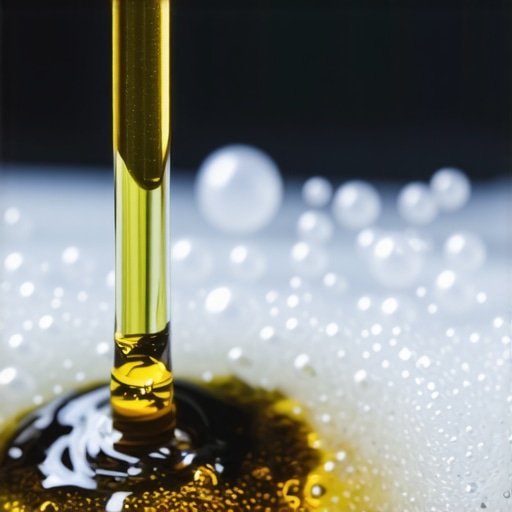
According to technical studies published by Machinery Lubrication, the depletion of anti-foaming agents is a silent killer in high-mileage units, as air bubbles collapse under high pressure, causing micro-pitting on gear surfaces and solenoid bores. If you notice a persistent ‘shudder’ during low-speed acceleration, do not assume the clutch packs are gone. A detailed fluid analysis can reveal if your additives have simply surrendered to thermal stress, allowing cavitation to erode your internal components from the inside out.
How Can You Tell if Your Solenoid Is Mechanically Stuck or Electrically Dead?
This is where the distinction between a basic tune up and elite diagnostics becomes critical for your wallet. A technician might pull a diagnostic trouble code for a ‘Shift Solenoid B Performance’ error and immediately recommend a multi-thousand dollar replacement. However, a master mechanic performs a dual-stage bench test. First, they verify the solenoid’s resistance with a multimeter to ensure the electrical coil hasn’t shorted or opened. If the ohms are within spec, they then apply regulated air pressure to the unit. Often, a solenoid is electrically perfect but mechanically jammed by a single microscopic flake of debris. By isolating the failure mode, you avoid the ‘parts cannon’ approach and ensure the actual root cause—perhaps a deteriorating internal seal shedding debris—is identified before it ruins the replacement parts.
Why High-Temperature Shear Kills Your Gearbox Long Before the Fluid Turns Black
While many drivers wait for their fluid to turn dark or smell burnt before seeking a tune up, the most dangerous type of degradation is chemically invisible. High-shear environments, particularly in modern 8-speed and 10-speed transmissions, physically ‘chop’ the long-chain polymer molecules that give ATF its specific viscosity. This is known as permanent shear thinning. The fluid may still look red and smell fresh, but its ‘film strength’—the ability to keep metal surfaces from touching under load—has been compromised. This is especially critical for vehicles used for towing or frequent mountain driving. Without that microscopic barrier, your planetary gears are essentially grinding against one another during every shift, leading to heat spikes that eventually glaze your friction plates beyond repair.
The Critical Link Between Coolant Health and Transmission Survival
It is easy to compartmentalize a brake service or an engine coolant flush, but in most modern vehicles, the transmission cooler is integrated into the bottom of the engine radiator. If your engine’s cooling system is neglected and starts to corrode, that internal heat exchanger can develop pinhole leaks. This results in the ‘Strawberry Milkshake of Death,’ where pressurized coolant enters the transmission. Ethylene glycol destroys the water-based glues that hold friction material to the clutch plates almost instantly. If you are experiencing cooling system issues, treat it as a transmission emergency. Reach out to a specialist who understands these interconnected dependencies to perform a ‘blacklight’ leak test on your heat exchanger. What was the most surprising ‘hidden’ cause of a vehicle issue you’ve ever encountered? Let us know in the comments below to help our community stay ahead of the curve!
Expert Insights & Advanced Considerations
Stop Damaging New Parts with Old Computer Settings
When you take your vehicle in for a tune up or high-level fluid exchange, the mechanical work is only half the battle. Modern Transmission Control Modules (TCMs) adjust internal line pressure to compensate for thin, degraded fluid. If you swap in fresh fluid but fail to reset the adaptive memory, the computer continues to apply high-pressure commands designed for the old, worn-out fluid. This mismatch often causes harsh shifts that damage the planetary gears. It is essential to ensure your technician uses a bi-directional scan tool to perform a ‘fast-learn’ procedure after any major auto repair to sync the digital brain with the new hydraulic reality.
Look Beyond the Code with Real-Time Pressure Gauges
A computer scan is a diagnostic guide, not a final answer. Many mechanics replace expensive solenoids based on a performance code, only to find the problem persists because the issue was actually a physical blockage in the valve body or a worn pump. Expert-level care involves tapping into physical test ports with a hydraulic gauge to verify line pressure. This hands-on approach is the only way to differentiate between an electrical failure and a mechanical pressure loss, ensuring you do not waste money on unnecessary parts during your next tune up.
Prevent the Strawberry Milkshake of Death
Your transmission longevity is directly tied to your engine cooling system health. In many vehicles, the transmission fluid is cooled by a heat exchanger inside the radiator. If the coolant is neglected and becomes acidic, it can eat through the internal lines, allowing engine coolant to mix with ATF. This creates a pink, frothy mixture that destroys clutch adhesives instantly. Integrating a cooling system check into your regular brake service or maintenance routine is a high-level strategy that prevents total powertrain destruction. If you suspect a leak, getting the most from your mechanic starts by asking for a pressure test of the cooling loop.
Curated Expert Resources
ATRA Technical Service Bulletins
The Automatic Transmission Rebuilders Association provides the gold standard for diagnostic flowcharts. These resources help specialists identify specific failure patterns that generic scanners often miss.
SAE International Lubricant Research
For those who want to understand the molecular limits of their gearbox, SAE research papers offer deep dives into fluid shear rates and the chemistry of friction modifiers in modern 10-speed units.
Blackstone Laboratories Fluid Analysis
This is a favorite tool for high-performance owners. By sending a fluid sample for lab analysis, you can identify microscopic traces of copper, steel, or aluminum, allowing you to catch internal wear before it results in a breakdown.
Final Expert Perspective
True transmission mastery requires moving beyond the myth of ‘sealed for life’ units and recognizing the complex interplay between hydraulic pressure, digital logic, and fluid chemistry. Whether you are performing a basic tune up or navigating a complex auto repair, the goal should always be the restoration of the system’s original engineering tolerances. By prioritizing hydraulic testing over simple code clearing and maintaining the integrity of your cooling circuits, you can extend the life of your vehicle far beyond the manufacturer’s expectations. If you are dealing with erratic shifting or suspect a mechanic has missed a subtle clue, we invite you to explore our guide on diagnosing common auto problems or leave a comment below with your specific diagnostic challenges to join our community of technical experts.