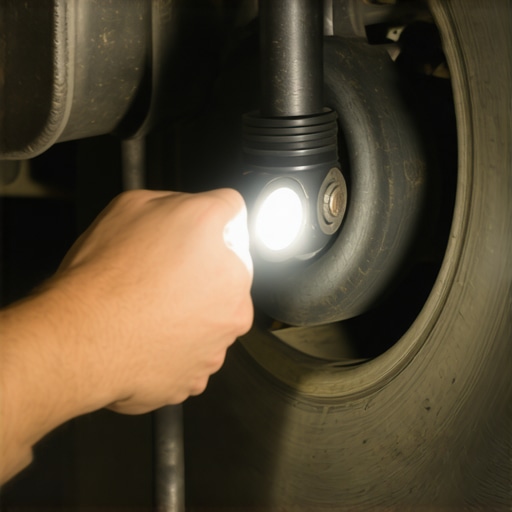
A mystery clunk in the front end is more than an auditory annoyance; it is a manifestation of mechanical fatigue within the vehicle’s kinetic chain. Identifying the root cause requires a transition from basic observation to systematic analysis, focusing on the interplay between load-bearing components and the steering rack. Experienced professionals recognize that front-end geometry relies on strict tolerances; even a millimeter of unexpected movement in a control arm bushing can translate into a jarring sound under load. Before committing to a comprehensive auto repair, one must differentiate between rotational, directional, and weight-dependent noises. This high-level audit ensures that the subsequent tune up or component replacement addresses the underlying failure rather than just the symptom.
Trace the Kinetic Energy to Silence the Front-End Noise
The first step in any expert-level mechanic investigation is the ‘bounce test’—but not in the traditional sense. While many use it to diagnose shot shocks, a technician uses it to observe the lateral movement of the sway bar links. Often, a clunk that sounds like a failing strut is actually a dry ball-and-socket joint in the stabilizer link. According to research by SAE International on suspension kinematics, localized friction in these links can produce high-frequency vibrations that mimic larger component failures. If the noise occurs specifically when traversing uneven surfaces but disappears on flat highways, the stabilizer system is the primary suspect. However, if your steering wheel shakes at exactly 55 mph alongside the clunk, the issue likely migrates toward the rotational assembly or the tie rod ends.
Is the Clunk Weight-Dependent or Directional?
Answering this question narrows the field of inquiry significantly. A weight-dependent clunk, occurring when the vehicle’s nose dives during a brake service or hard stop, typically points toward lower control arm bushings or subframe mounts. Conversely, a directional clunk—one that triggers specifically when the wheels are turned at low speeds—suggests a failing constant velocity (CV) joint. It is critical to identify a bad CV axle before it snaps, as a total failure can lead to a loss of propulsion and potential damage to the transmission housing. Analyzing the noise during weight transfer provides a clear roadmap for whether the technician should focus on the dampening system or the steering linkage.
Verify Component Integrity Beyond Visual Inspections
Visual inspections are frequently deceptive in modern multi-link suspensions. A bushing may appear intact while the rubber has internally delaminated from its metal sleeve. To truly validate the integrity of the front end, a professional uses a pry bar to simulate road forces while the vehicle is on a lift. This reveals axial play that is invisible to the naked eye. This level of scrutiny is what defines a quality brake service and suspension audit. If the complexity of these multi-link systems exceeds your current toolset, we recommend you learn how to choose a skilled mechanic you can trust to perform a professional-grade shakedown. Proper diagnosis prevents the ‘parts cannon’ approach, saving time and resources while ensuring the vehicle returns to its factory-specified handling characteristics.
Look Beyond the Wheel Well for Hidden Vibrations
When the usual suspects like ball joints and struts pass inspection, a seasoned technician shifts focus toward the powertrain’s anchoring points. The engine and transmission are not static components; they are isolated from the chassis by heavy-duty rubber or hydraulic mounts designed to absorb kinetic energy. If these isolators fail, the resulting metal-on-metal contact creates a thud that resonates through the floorboards, often mimicking a subframe issue. This is especially prevalent when the transmission shifts hard when it is cold, as the increased viscosity of the fluid places higher initial torque on the mounts. Diagnosing this requires a power stall test—holding the brake while gently loading the engine in gear—to observe excessive powertrain pitch and verify if the clunk is coming from the driveline rather than the suspension.
Could Your Engine Mounts Be Masquerading as a Bad Strut?
Distinguishing between a strut tower failure and a collapsed engine mount requires a keen ear for frequency. A bad strut typically exhibits a sharper, metallic clack during high-speed compression, whereas a mount failure results in a low-frequency boom during gear transitions or sudden deceleration. The National Highway Traffic Safety Administration (NHTSA) frequently notes that structural failures in mounting hardware can compromise steering precision, leading to erratic handling under heavy load. If you notice that your steering feels heavy only after the car warms up, you may be dealing with a compound issue where heat-soaked mounts have lost their damping capacity, indirectly affecting the alignment of the steering column or stressing the hydraulic lines.
Stop Fighting the Steering Wheel After the Repair
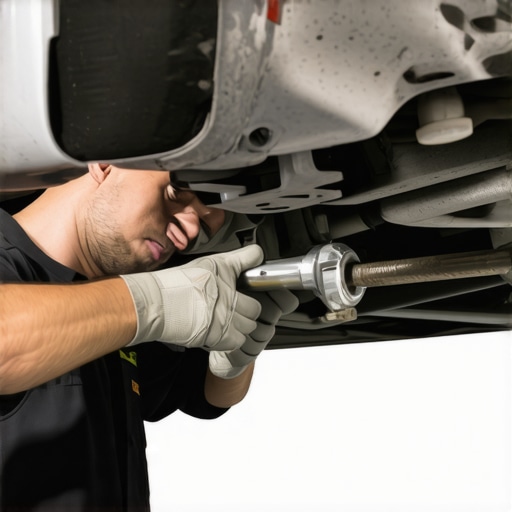
Replacing a control arm or tie rod is only half the battle; the final stage involves recalibrating the vehicle’s geometry to ensure the new components work in harmony. Many DIYers and budget shops skip the necessary precision, leading to a scenario where your steering wheel isn’t straight after an alignment. This is often caused by failing to reset the Steering Angle Sensor (SAS) or ignoring the secondary angles like caster and SAI (Steering Axis Inclination) that dictate how the car tracks. A clunk that persists after parts replacement might actually be a memory steer issue, where a binding joint prevents the suspension from returning to center properly. For those troubleshooting electrical gremlins alongside mechanical noise, checking the hidden ground bolt that causes transmission false neutrals can resolve intermittent sensor data that confuses the electronic power steering rack. Have you encountered a mystery noise that defied standard logic? Share your diagnostic journey in the comments below to help our community of enthusiasts master the art of the vehicle shakedown.
The Steering Rack Guide May Be Your Ghost in the Machine
Sometimes the clunk isn’t external to the steering gear; it lives inside the housing itself. When a vehicle racks up significant mileage, the rack-and-pinion assembly develops internal lash between the teeth of the rack bar and the pinion gear. This typically manifests as a ‘hollow’ clunking sound when rocking the steering wheel back and forth while stationary. While many mechanics might jump to replace the entire unit, seasoned specialists look at the rack guide tension. This spring-loaded plunger maintains constant pressure on the rack bar, but as the friction material wears down, a gap forms that allows the bar to rattle within the aluminum housing. Adjusting this requires a specialized hex tool and an extremely delicate touch to find the ‘zero-play’ threshold without inducing drag.
Can a Loose Steering Rack Preload Adjustment Cause a Hollow Clunk?
Absolutely, and it is a common point of failure in high-performance or heavy-duty steering systems. The preload adjustment is a high-stakes calibration. If it is too loose, the rack bar vibrates against the pinion under load; if it is too tight, the steering won’t self-center, leading to a dangerous ‘heavy’ feeling and increased wear on the power steering pump. According to technical documentation from the National Institute for Automotive Service Excellence (ASE), improper lash in the steering gearbox can accelerate gear tooth wear and eventually lead to catastrophic mechanical binding. Professionals often perform this adjustment with the front wheels off the ground to feel for any binding throughout the full sweep of the steering rack’s travel.
The Often-Overlooked Steering Shaft Coupler
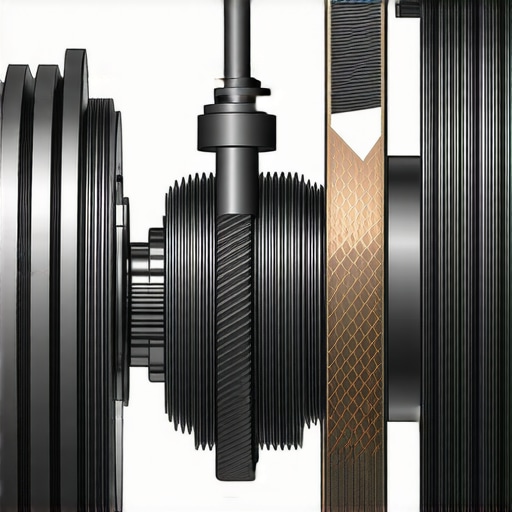
Not every vibration originates at the road surface or the wheels. The intermediate steering shaft, which connects the steering column to the rack, contains universal joints designed to accommodate the angle between the cabin and the engine bay. These joints are exposed to extreme heat cycles and road grime, which eventually dries out the factory grease. When the needle bearings within these U-joints seize or develop play, you will feel a distinct ‘click’ or ‘clunk’ that seems to travel directly through the steering wheel into your palms. This is frequently misdiagnosed as a bad wheel bearing or a steering column failure. To verify this, one person should rotate the wheel slightly while another physically grips the intermediate shaft; any independent movement between the upper and lower sections confirms the diagnosis. For those performing this fix themselves, remember that many modern shafts are ‘telescoping’ for crash safety—never weld or permanently fix a shaft that has lost its slip-joint fluidity.
Why Does My Steering Wheel Click Only During Low-Speed Maneuvers?
This specific symptom often points toward the ‘clock spring’ or the upper column bearings, but in the context of hydraulic systems, it can also signify air cavitation in the power steering pump. If air bubbles are trapped in the high-pressure lines, the sudden change in fluid resistance as the valving opens can create a mechanical-sounding snap. Before you tear down your front end, check the reservoir for foaming. If you are seeing tiny bubbles in the fluid, you likely have a pinhole leak on the suction side of the pump, often at the O-ring where the return line enters the housing. High-performance setups or vehicles used for heavy towing should consider an auxiliary cooler to prevent fluid thinning, which is a common culprit for ‘phantom’ steering noises during peak summer temperatures. Beyond the mechanical linkages, the role of the electronic power steering (EPS) motor cannot be ignored in contemporary builds. In systems where the motor is mounted directly to the rack, the internal dampening couplers—often made of a high-density polymer—can disintegrate over time. This leads to a ‘clunk-clunk’ sensation whenever the motor reverses direction to assist the driver. Replacing this small plastic ‘star’ coupler is a tedious but inexpensive fix compared to replacing the entire rack assembly. However, diagnosing an EPS-related noise requires an advanced scan tool to monitor torque sensor outputs in real-time, ensuring that the noise isn’t a byproduct of an electrical lag or a failing sensor recalibration. If you’ve ever felt a ‘notchy’ sensation in your steering that comes and goes with the weather, you’re likely dealing with
While many enthusiasts obsess over the struts and control arms, the structural interface between the engine cradle and the unibody—the subframe—is often the silent culprit behind a persistent floorboard vibration. This structural backbone is isolated by heavy-duty rubber bushings that are designed to mitigate harmonic resonance from the powertrain and road surface. Over time, these isolators suffer from compression set, allowing the entire subframe to shift slightly under heavy torque or lateral load. A mechanic who ignores these bushings during a standard tune up might spend hours replacing perfectly functional suspension components while the root cause remains bolted to the chassis. Identifying this requires a ‘loaded’ inspection where the vehicle is on a drive-on lift, allowing the technician to observe the subframe’s movement while a second person cycles the transmission between drive and reverse.
Subframe Bolts Often Hold the Secret to a Quiet Ride
Structural shifting doesn’t just cause noise; it alters the fundamental suspension geometry. If the subframe moves even a fraction of an inch, your toe and camber settings are essentially dynamic, fluctuating as you drive. This is why a precision auto repair often involves replacing the torque-to-yield fasteners that secure the subframe. These bolts are designed to stretch once and provide a specific clamping force; reusing them after they have been loosened for other services can lead to a ‘walking’ subframe. Professionals look for ‘witness marks’—shiny areas on the metal where the subframe has been rubbing against the body—to confirm that the mounting points have lost their integrity. Addressing this structural play is the only way to restore the vehicle’s original ‘on-center’ feel and steering response.
How Does a Strut Mount Bearing Affect Your Steering Precision?
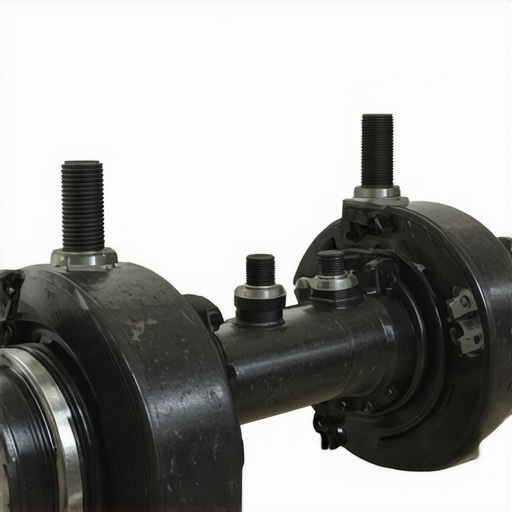
A common mistake during a brake service or suspension overhaul is failing to distinguish between a bad ball joint and a binding strut mount bearing. When you turn the steering wheel, the entire strut assembly must rotate. If the bearing at the top of the tower is seized or contaminated with road grit, the coil spring will ‘wind up’ like a torsion bar until the friction is overcome, resulting in a distinct metallic ‘ping’ or ‘boing.’ This binding also creates a memory steer effect, where the car pulls toward the direction of the last turn. According to technical insights from Motor Age, ignoring the upper mount during a strut replacement is the leading cause of post-repair noise complaints. A simple way to test this is to have an assistant turn the wheel while you safely feel the coil spring; if you feel a rhythmic vibration or jumping sensation, the bearing is the definitive failure point.
Identify the Harmonic Rattles Hidden Behind Plastic Shields
Sometimes, the most alarming ‘mechanical’ noises are nothing more than aerodynamic interference. Modern vehicles are encased in plastic underbody shields designed to improve fuel efficiency and protect sensitive electronics. When the plastic clips or ‘push pins’ that hold these shields in place become brittle and snap, the shield can catch the wind at highway speeds, flapping against the subframe or oil pan. This creates a rapid-fire tapping or thudding sound that mimics a failing wheel bearing or a loose sway bar. A seasoned technician knows to physically tug on every piece of plastic cladding before diving into a more invasive auto repair. These ghost noises can be particularly frustrating because they often disappear when the vehicle is on a lift and the airflow is removed. Ensuring every fastener is present and secure is a low-cost, high-impact step in any comprehensive vehicle shakedown. Have you ever been convinced a major part was failing only to find a loose piece of plastic was the culprit? Re-examine your underbody shields and see if a five-cent clip can solve your thousand-dollar headache.
Expert Insights & Advanced Considerations
Heat Cycles Can Turn Soft Bushings into Rock Hard Clunks
Thermal degradation is the silent enemy of suspension rubber. After a long highway run, components that felt compliant at cold start can stiffen or exhibit stiction, leading to phantom noises. When scheduling an auto repair, always mention if the sound changes based on operating temperature. These mechanic tips for diagnosing common auto problems emphasize that temperature-sensitive rubber often masks internal delamination that a cold inspection will miss.
Don’t Ignore the Micro-Bubbles in Your Reservoir
A mechanical click is often actually hydraulic. Air ingestion in the power steering loop creates tiny cavitation bursts that resonate through the rack. This is a common mechanic oversight where a simple O-ring swap is bypassed for a whole rack replacement. Implementing brake maintenance hacks to prevent costly failures can often be applied to steering systems—checking fluid health is the first line of defense against high-pressure noise.
Reusing One-Time Bolts Is a Recipe for Future Rattles
Many subframe and suspension fasteners are torque-to-yield. Once stretched to their elastic limit, they lose clamping force if reused. Professional tune up procedures on the chassis must include fresh hardware to prevent the subframe from walking under load. This attention to detail is why regular tune ups are key to car longevity; it ensures the structural backbone of your vehicle remains rigid.
Use a Chassis Ear to Stop Guessing
When visual and pry-bar tests fail, electronic chassis ears are the gold standard. Pinpointing the exact frequency of a clunk during a brake service road test saves hours of labor and avoids the parts cannon approach. #IMAGE_PLACEHOLDER_E#
Curated Expert Resources
ASE (National Institute for Automotive Service Excellence): The definitive resource for verifying technician credentials and diagnostic standards across the industry. SAE International: An essential archive for in-depth engineering papers on suspension kinematics and the material science of rubber bushings. NHTSA Recall Database: A critical tool for identifying pattern failures or structural weaknesses specific to your vehicle make and model.
Precision Diagnosis Saves More Than Just Money
Resolving a front-end clunk requires a shift from superficial observation to a deep understanding of kinetic energy and material science. Whether you are performing a routine tune up or an advanced auto repair, the difference between a temporary fix and a permanent solution lies in the details—the torque settings, the bearing health, and the structural integrity of the mounts. Don’t let a mystery noise compromise your safety. If your DIY efforts have hit a wall, it is time to choose a skilled mechanic you can trust who prioritizes data over guesswork. Reach out through our contact us page if you need specific guidance on your diagnostic journey.