
Stop Treating the Symptom and Start Finding the Root Cause
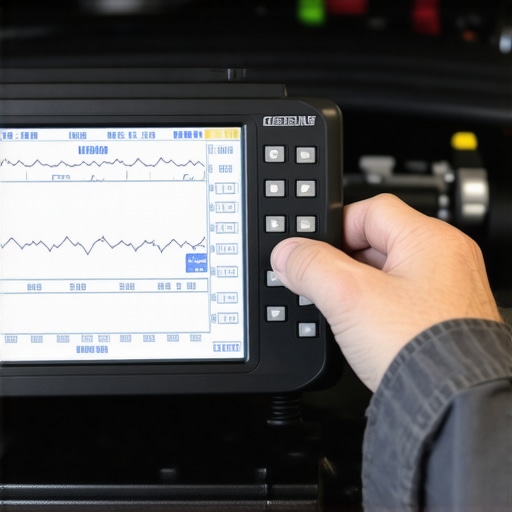
The Malfunction Indicator Lamp (MIL) is often the most misunderstood interface between a modern vehicle’s Electronic Control Unit (ECU) and the driver. In the world of professional auto repair, we treat a P-code not as a definitive diagnosis, but as a starting point for a deeper investigation. When your dashboard illuminates, the onboard computer is merely reporting that a specific parameter—such as fuel trim or ignition timing—has exceeded its programmed threshold. A frequent error in novice mechanic practices is ‘parts-cannon’ repair, where a sensor is replaced simply because it was named in the fault code. However, the true culprit often lies upstream, where mechanical wear mimics sensor failure. For instance, a recurring lean code might actually stem from a hairline crack in a vacuum hose rather than a faulty O2 sensor. To truly master the health of your vehicle, you must look at the holistic data provided by live telemetry.
Why does that light return after you’ve already swapped the sensor?
Persistence in check engine warnings usually indicates a failure to address the underlying environment that the sensor monitors. If you have replaced an oxygen sensor only to see the light return within forty miles, the ECU is likely detecting an unmetered air leak or a fuel delivery discrepancy that the new sensor is correctly—but frustratingly—reporting. In some cases, the light might even reset itself temporarily as the vehicle cycles through different operating temperatures. Advanced diagnostics involve checking ‘freeze frame’ data, which captures the exact engine conditions at the moment the fault occurred. This is why professional mechanic tips for diagnosing common auto problems emphasize verifying the integrity of the entire circuit, including grounding points and the wiring harness, before concluding a component is dead.
[image placeholder]
How a Precise Tune Up Prevents Costly ECU False Positives
Many drivers overlook the relationship between a comprehensive tune up and the elimination of phantom engine codes. Carbon buildup on intake valves or aged spark plugs can cause subtle misfires that don’t always trigger a specific cylinder code but do destabilize the emissions system enough to trip the MIL. A precision adjustment of spark plug gaps and a thorough throttle body cleaning can often resolve ‘ghost’ codes that have plagued a vehicle for months. According to technical standards published by SAE International regarding onboard diagnostics, even minor fluctuations in electrical resistance can lead to erroneous data reporting. This makes regular maintenance not just a luxury, but a requirement for accurate electronic monitoring. If you’re seeing ghost codes, it might be time to ask your technician about deeper system telemetry to ensure your auto repair plan is actually targeting the source of the problem.
The Critical Interplay Between Braking Systems and Engine Vacuum
It may surprise some car owners to learn that a specialized brake service can sometimes resolve engine performance issues. Most modern vehicles utilize a vacuum-assisted power brake booster that draws its vacuum directly from the engine’s intake manifold. A internal leak within the brake booster can act as a massive vacuum leak, causing a lean condition that triggers a check engine light during deceleration. This is why an expert-level auto repair approach looks at the vehicle as an interconnected system rather than isolated parts. If your engine idles roughly only when your foot is on the brake, the issue isn’t your fuel injectors; it’s a failure in the braking vacuum seal. Understanding these nuances is what separates a high-level diagnostic professional from someone who simply clears codes and hopes for the best.
Don’t Let Water Poison Your Hydraulic Safety Net
While most drivers focus on pad thickness during a brake service, the chemical integrity of the brake fluid is often the more critical failure point. Brake fluid is hygroscopic, meaning it actively absorbs moisture from the atmosphere through microscopic pores in rubber hoses and the reservoir cap. Once water content exceeds 3%, the boiling point of the fluid drops significantly, leading to a dangerous condition known as vapor lock. During heavy braking, the heat generated can actually boil the water within the lines, turning a non-compressible liquid into a compressible gas. If you have ever felt your pedal sink toward the floor during a mountain descent, you have experienced this firsthand. To avoid this, savvy owners should learn how to test your brake fluid for water content at home before a minor maintenance oversight turns into a mechanical emergency.
Why does your pedal feel soft only after the brakes get hot?
This phenomenon, often called brake fade, is a classic diagnostic puzzle that separates a great mechanic from an average one. When the system is cold, the fluid remains liquid and the pedal feels firm. However, as the calipers heat up, any internal moisture or air bubbles expand. This is frequently misdiagnosed as a failing master cylinder, leading to expensive and unnecessary auto repair bills. Professional standards from the National Institute for Automotive Service Excellence (ASE) emphasize that fluid flushing is a mandatory part of hydraulic system health, yet it remains one of the most neglected services in the industry. If you notice a change in pedal feel after twenty minutes of driving, it is highly likely that the hidden reason your brake fluid is failing is thermal degradation rather than a physical leak.

Stop Blaming the Transmission for a Five Dollar Rubber Hose
Few things cause more anxiety than a transmission that jerks or hunts for gears, but the root cause is frequently found under the hood rather than inside the gearbox. In many vehicle architectures, the engine and transmission share a vacuum network that regulates shift points and timing. A tiny, perished vacuum line can confuse the transmission’s pressure regulator, causing aggressive or ‘hard’ shifts that feel like a total mechanical collapse. We often find that a simple five-dollar vacuum leak is the actual culprit behind a thousand-dollar repair estimate. This is particularly common in older vehicles where rubber components have heat-cycled into a brittle state. If you find that your transmission shifts hard only when the engine is cold, it is a strong indicator that a seal or hose is shrinking in the low temperature, creating a temporary leak that vanishes once the engine expands with heat.
The Invisible Link Between Your Battery and Your Gas Mileage
In the era of high-tech sensors, a weak battery does more than just prevent the car from starting; it can actually degrade your engine’s efficiency. Modern fuel injectors and ignition coils require precise voltage to operate at peak performance. When a battery begins to fail, the alternator works overtime to compensate, placing a heavy mechanical load on the engine through the serpentine belt. This ‘parasitic loss’ can noticeably drop your MPG and cause a rough idle that mimics a spark plug issue. A comprehensive tune up in 2025 must include a conductance test of the battery and a check of the grounding straps to ensure the auto repair isn’t fighting against a poor electrical foundation. Have you ever solved a major engine mystery with a simple battery swap? Share your diagnostic wins in the comments below or let us know which ‘ghost’ symptom you are currently chasing.
Why 180 Degrees is the Magic Number for Your Engine’s Computer
The cooling system is often reduced to a simple safeguard against a catastrophic meltdown, but its role in modern fuel mapping is far more nuanced than most drivers realize. When you first turn the key, the ECU operates in a ‘cold start’ or ‘open-loop’ mode, which ignores certain sensor inputs to enrich the fuel mixture and stabilize the combustion chamber until it reaches a specific thermal threshold. If a thermostat is stuck partially open, the engine may reach 160 degrees—hot enough to blow warm air from the vents, but not quite hot enough for the computer to transition into ‘closed-loop’ efficiency. This results in a permanent rich condition that carbon-fouls your brand-new spark plugs and prematurely destroys the expensive substrate of your catalytic converter. Professional auto repair isn’t just about fixing what is physically broken; it is about ensuring the engine reaches the exact operating window envisioned by the original engineers. Data provided by FuelEconomy.gov, managed by the U.S. Department of Energy, highlights that a malfunctioning cooling system or a lazy sensor can drop your overall efficiency by up to 10% without ever tripping a traditional ‘overheat’ light on the dashboard.
Can a failing coolant temperature sensor trick you into buying a new fuel pump?
Absolutely. If a sensor reports a temperature of -40 degrees due to high internal resistance or a wiring break, the ECU will flood the cylinders with fuel to compensate for a ‘frozen’ environment that does not actually exist. This leads to hard starts, heavy black smoke, and engine stalling that many amateur mechanic enthusiasts mistake for a failing fuel pump or a clogged filter. Before you drop the fuel tank and spend hundreds on parts, a high-level diagnostic scan should verify that the live data stream for coolant temperature matches the ambient reality of the shop floor.
Stop Chasing Engine Misfires That Are Actually Drivetrain Shudders
One of the most frequent and expensive misdiagnoses in the shop involves the elusive ‘torque converter shudder.’ At speeds between 35 and 50 MPH, many drivers feel a rhythmic vibration that feels remarkably like an engine misfire or a lack of power. They might bring the car in for a tune up, expecting new ignition coils to solve the issue, only to find the vibration persists long after the service is complete. This ‘chatter’ is often caused by the torque converter clutch struggling to maintain engagement due to degraded transmission fluid or a failing electronic pressure solenoid.  Distinguishing between a legitimate engine misfire and a transmission shudder requires a simple ‘power brake’ test or monitoring the TCC (Torque Converter Clutch) slip percentage on a professional-grade scan tool. If the shudder vanishes the moment you lightly touch the brake pedal while maintaining your speed, you have just proven the issue is hydraulic, not an ignition failure. This occurs because the brake signal tells the ECU to disengage the converter clutch immediately, removing the mechanical link that was causing the vibration. If you find yourself in this situation, it is best to reach out to a specialist to perform a dedicated transmission flush before the internal friction material is permanently glazed.
The Hidden Complexity of the Modern ABS Ring
When you bring a car in for a brake service, the technician is doing much more than checking the friction material on your pads. In many modern vehicle architectures, the wheel speed sensors act as the primary data source for a dozen different systems, including the speedometer, the odometer, the traction control, and even the electric power steering’s variable weight. A cracked reluctor ring—a small, notched metal ring hidden behind the hub assembly—can create a ‘ghost’ signal that makes the computer think one wheel is locking up during standard deceleration. This can cause the ABS to activate prematurely during a normal stop, creating a terrifying pedal kickback and increased stopping distances. The interplay here is so tight that a bad wheel bearing, by allowing a few millimeters of unintended play, can move the reluctor ring out of the sensor’s magnetic range. This triggers a cascade of dashboard warnings that seem entirely unrelated to the subtle mechanical hum of a hub that is just beginning to fail.
Why Your Oil Choice Controls Your Ignition Timing
Modern vehicles operate on a logic that transcends simple mechanics, where a failure in one subsystem often manifests as a ghost in another. This is most evident in the complex interplay of Variable Valve Timing (VVT). While many owners view a tune up as a basic maintenance item, the chemical stability of your engine oil functions as the primary hydraulic fluid for your engine’s timing actuators. If the oil is allowed to shear or accumulate carbon, the VVT solenoids lose the ability to phase the camshafts precisely. This creates a ‘hunting’ idle or a loss of top-end power that many drivers mistake for a fuel delivery issue. Furthermore, the timing chain tensioners often rely on this same oil pressure; a slight drop in pressure due to a low-quality oil filter can cause the chain to slap against the guides, creating a mechanical rattle that sounds like a catastrophic failure but is actually a solvable maintenance issue. High-level auto repair involves monitoring the ‘desired versus actual’ camshaft angles in real-time to see if the engine is physically capable of meeting the computer’s demands.
Can a blown tail light really disable your cruise control?
In many modern European and domestic architectures, the answer is a resounding yes. The cruise control module monitors the resistance in the brake light circuit as a safety redundancy. If a bulb burns out or an incorrect LED replacement is installed without a load resistor, the module detects a circuit abnormality and disables the cruise function as a failsafe. A novice mechanic might spend hours searching for a faulty steering wheel switch or a vacuum leak, while an expert recognizes the electrical signature of a simple bulb failure. This demonstrates why a comprehensive brake service must extend to the verification of all signaling circuits, ensuring the vehicle’s ‘safety handshake’ is completed every time you hit the road.
Network Overload
The true frontier of professional diagnostics is the Controller Area Network (CAN-bus), the digital backbone that allows your engine, transmission, and body controllers to share data. When this network is compromised by a frayed wire or a corroded connector, the resulting ‘bus noise’ can trigger a cascade of false error codes across multiple systems. This digital interference is why we often see ‘U-codes’ appearing alongside powertrain faults. These codes do not mean a part is broken; they mean the computers are no longer on speaking terms. Relying solely on a code reader in this scenario is a recipe for disaster. Expert technicians use an oscilloscope to ‘see’ the communication, identifying tiny voltage spikes that indicate a failing module is polluting the entire network. According to data and service standards found in the NHTSA Technical Service Bulletin (TSB) database, many recurring dashboard warnings are actually solved through software recalibrations rather than physical component replacement.
Avoid the Electronic Parking Brake Trap
The evolution of the brake service has shifted from simple mechanical labor to high-stakes electronic configuration. Vehicles equipped with Electronic Parking Brakes (EPB) require a specialized command to retract the calipers before the pads can be changed. Forcing these pistons back manually, as one might on an older car, can shatter the internal drive motor or corrupt the calibration data in the ABS module. This leads to a ‘soft’ pedal or a parking brake that fails to release, requiring expensive module replacement. By integrating these digital considerations into your maintenance routine, you protect yourself from the ‘induced failures’ that plague amateur repairs. If your vehicle is exhibiting strange electrical behavior or inconsistent performance, don’t just clear the codes—demand a full network health report to see what your car is really trying to tell you.
Expert Insights & Advanced Considerations
Look Beyond the P-Code with Oscilloscope Analysis
While a standard OBD-II scanner can point you toward a failing circuit, it often lacks the resolution to capture transient electrical noise that triggers false positives. Advanced diagnostics require an oscilloscope to visualize the square-wave signals of crank sensors or the PWM duty cycles of solenoids. This level of detail is what separates a guessing game from a precision auto repair, allowing you to see the exact moment a sensor signal drops out due to heat soak or electrical interference.
The Grounding Strap is Your Engine’s Best Friend
Never underestimate the impact of a corroded ground strap on sensor accuracy. Because modern ECUs rely on minute voltage changes to interpret data, a resistance of just 0.5 ohms in a ground circuit can skew temperature or pressure readings enough to cause a rich-running condition. Before authorizing a complex tune up or replacing injectors, verify that the engine block to chassis ground is clean and tight; it is the most overlooked ‘fix’ in the industry.
Software Recalibrations Often Outperform Hardware Swaps
In the age of digital vehicle control, many persistent drivability issues are resolved through a ‘reflash’ rather than a wrench. Manufacturers frequently release software updates to adjust fuel maps or transmission shift logic based on real-world data. If your vehicle feels slightly ‘off’ despite having perfect mechanical compression and fuel pressure, choosing a skilled mechanic you can trust ensures you are checking for updated TSBs and calibration IDs before tearing into the hardware.
[image placeholder]
Curated Expert Resources
National Institute for Automotive Service Excellence (ASE)
This is the gold standard for credentialing in North America. Their study guides and certification paths provide the technical framework necessary to move from a hobbyist level to a professional mechanic who understands the intricate physics behind every system.
NHTSA Technical Service Bulletin Database
The National Highway Traffic Safety Administration maintains a comprehensive list of TSBs which are essential for identifying known manufacturing defects. Accessing this database allows you to see if your ‘mystery’ symptom is a common pattern recognized by the manufacturer, potentially saving hours of diagnostic labor.
SAE International Technical Papers
For those who want to understand the ‘why’ behind automotive engineering, the Society of Automotive Engineers offers deep-dive papers on everything from hydraulic fluid chemistry to the protocols of the CAN-bus network. It is an invaluable resource for deepening your expertise in complex auto repair scenarios.
Final Expert Perspective
Mastering modern vehicle maintenance requires shifting your mindset from isolated part replacement to holistic system management. Whether you are following essential tune-up tips to boost performance or conducting a high-level brake service, success depends on interpreting the data the vehicle provides. The most effective auto repair strategies always begin with a thorough interrogation of the electrical foundations. By prioritizing regular brake service for longevity and performing tasks like the hub scrub to stop vibrations, you ensure your vehicle remains a reliable asset. Use the essential guide to auto repair to keep your knowledge current and your engine running smooth. We invite you to share your most challenging ‘ghost code’ stories or diagnostic wins as we push the boundaries of automotive excellence.