Pinpointing the Rhythmic Thumping of Polymer Memory
Automotive vibration diagnostics often feel like chasing ghosts within the chassis. However, for the seasoned mechanic, the distinction between a drivetrain shudder and a tire-related harmonic is usually found in the cadence of the disturbance. Flat spotting occurs when the internal structure of the tire—specifically the nylon and polyester cords—takes a ‘set’ in a flattened position due to prolonged inactivity or extreme thermal cycles. Unlike a traditional balance issue, which creates a constant oscillation at specific speeds, a flat spot often manifests as a rhythmic thumping that changes in intensity as the tire carcass reaches its optimal operating temperature. Identifying this early can prevent unnecessary auto repair costs and keep your vehicle’s suspension components from premature wear.
Thermal Cycles and the Cure for Temporary Deformation
Most flat spotting is categorized as ‘temporary’ or ‘morning sickness.’ This phenomenon occurs when a vehicle sits overnight in cold weather, causing the polymers to stiffen. As you begin your drive, you may notice that your steering wheel shakes at exactly 55 mph, only to vanish after five or ten miles. This is because the internal friction of the tire generates heat, allowing the rubber and internal belts to regain their intended radial shape. According to the Tire Industry Association (TIA), this temporary deformation is a byproduct of modern high-performance tire compounds designed for grip rather than long-term stasis. If the vibration does not dissipate after the tires have warmed up, you are likely dealing with permanent flat spotting, often caused by a locked-brake skid or extended storage without proper inflation.
Why does the vibration disappear after twenty minutes of highway driving?
The disappearance of the vibration is a classic sign of ‘viscoelasticity’ in the tire’s rubber compound. When a tire is stationary, the weight of the vehicle forces the contact patch to flatten. On a cold morning, the rubber lacks the elasticity to immediately rebound. As the tire rotates, the mechanical flexing of the sidewalls generates internal heat. Once the tire reaches its glass transition temperature, the rubber becomes pliable enough to return to its original round mold, effectively ‘healing’ the flat spot. If you find your vehicle continues to vibrate, it is essential to test if your tires are actually balanced correctly, as mechanical imbalances will never smooth out with heat.
Critical Indicators of Permanent Radial Distortion
Permanent flat spotting is an entirely different beast and typically requires a comprehensive brake service evaluation and tire replacement. This occurs during a ‘panic stop’ where the wheels lock up, literally grinding a flat surface into the tread. In modern vehicles equipped with ABS, this is rare, but system malfunctions can still lead to localized tread wear. A permanent flat spot will produce a consistent, high-frequency vibration that correlates directly with vehicle speed and may even cause a humming noise on the highway that mimics a failing wheel bearing. Professional auto repair shops utilize road-force balancing to detect these structural irregularities that a standard spin balancer might miss. If your vibration persists despite warming up the tires, it is time to consult a skilled diagnostic technician to rule out suspension or drivetrain failure. Regular vehicle tune ups and maintaining proper PSI are your best defenses against these annoying and potentially dangerous harmonic distortions.
Under-Inflation is the Silent Architect of Tire Distortion
The primary catalyst for structural tire deformation isn’t just time; it is the relationship between ambient temperature and pneumatic pressure. When a vehicle sits, the air inside the tires contracts as it cools, leading to a significant drop in PSI. This reduced pressure increases the flexibility of the sidewalls and expands the contact patch, allowing the internal belts to settle more aggressively into a flattened state. For anyone following the ultimate tune-up checklist for every car owner, checking tire pressure is more than a fuel-economy measure—it is a preventative step against radial memory. If the tire is under-inflated by even 20%, the ‘set’ taken by the nylon overlays becomes much harder to reverse through standard driving, potentially leading to a permanent vibration that no amount of heat can dissipate.
Can a simple tire rotation hide a structural flat spot?
Many drivers attempt to mask vibrations by rotating the affected tires to the rear axle, but this often serves to obscure a deeper mechanical issue. While moving a flat-spotted tire to the rear may reduce the feedback felt through the steering rack, the harmonic disturbance continues to assault the wheel bearings and suspension bushings. In fact, a flat spot can sometimes be misdiagnosed as uneven tread wear, especially if you notice why your tires are wearing on the inside edge only. An expert technician will look for ‘scalloping’ or ‘cupping’ that mirrors the pattern of the flat spot. Rotating the tires without addressing the underlying deformation simply spreads the vibration-induced wear across the entire chassis, making it harder to pinpoint the original culprit during a future auto repair session.
Professional Strategies for Long-Term Vehicle Hibernation
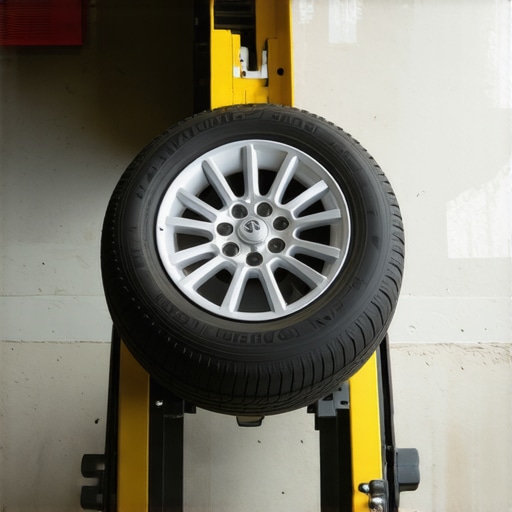
For collectors or seasonal drivers, preventing flat spotting requires a proactive approach that goes beyond simply parking in a garage. The U.S. Tire Manufacturers Association (USTMA) emphasizes that tires should be stored at a slightly higher pressure than normal operating levels—typically an extra 5 to 10 PSI—to maintain their radial tension. This counteracts the tendency of the polymers to relax and flatten under the vehicle’s weight. Additionally, utilizing ‘tire cradles’ or curved ramps can distribute the load across a larger surface area of the tread. If you are prepping a car for more than thirty days of inactivity, removing the weight of the car entirely by using jack stands is the gold standard, though you must ensure the suspension is properly supported to avoid damaging the bushings or causing a scenario where how to tell if your shocks are shot without a mechanics help becomes your next urgent search query.
Distinguishing Drivetrain Shudders from Radial Irregularities
It is vital to distinguish between a tire-specific flat spot and a vibration originating from the braking or drivetrain systems. A warped rotor or a sticking caliper can create a rhythmic thumping that mimics a flat spot, especially if the sensation occurs primarily during deceleration. Implementing effective brake service strategies that save you money and extend brake life can help you rule out these variables. Furthermore, a tire that has developed a flat spot from a skid will often cause the car to exhibit strange behaviors, such as why your car pulls under braking but not while coasting. If the vibration is felt only in the seat and not the steering wheel, focus your inspection on the rear tires and the driveshaft balance. If you have ever fought a mystery vibration that refused to go away after a long winter, share your experience in the comments or suggest a topic you would like us to dive into next to help the community keep their rides smooth.
Beyond the Spin: Why Road Force Measurement Trumps Traditional Balancing
When a standard mechanic mounts your tires on a traditional spin balancer, they are only measuring the distribution of mass. However, a tire can be perfectly balanced in terms of weight and still cause a violent cabin shudder if the internal carcass has varying levels of structural stiffness. This is where road force balancing becomes indispensable for a high-end auto repair. By applying a large roller to the tread during the spin cycle—simulating the weight of the car—the machine can detect ‘hard spots’ or internal belt irregularities that mimic the sensation of a flat spot. If you find your steering wheel oscillating even after a fresh balance, it is often due to ‘force variation,’ a metric that standard equipment simply cannot see. Addressing this ensures your tune ups result in the buttery-smooth ride quality expected of modern luxury and performance vehicles.
Sticky Summer Rubber and the High Price of Performance
Owners of sports cars often face a frustrating paradox: the better the tire grip, the worse the flat spotting. High-performance tires utilize specialized high-silica compounds designed to optimize the contact patch at high temperatures. However, these same materials have a high ‘glass transition temperature,’ meaning they become incredibly rigid as ambient temperatures drop. When you park a warm, soft tire on a cold concrete garage floor, the rubber cools in a deformed state, locking in that flat spot. 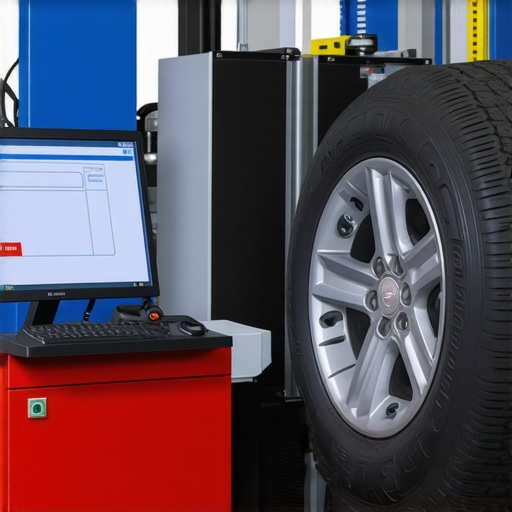 This is particularly prevalent in tires with nylon cap plies, which shrink slightly as they cool, further pulling the tire out of its radial roundness. While this usually resolves once the rubber reaches its operating temperature, consistent cycles of this deformation can eventually lead to micro-cracking in the tread blocks.
Does nitrogen inflation actually stop tires from flattening overnight?
While nitrogen is often marketed as a miracle fix, its primary benefit in preventing flat spots lies in pressure stability rather than rubber chemistry. Nitrogen molecules are larger and move slower than oxygen, and more importantly, nitrogen is typically ‘dry.’ Standard compressed air contains moisture that expands and contracts significantly with temperature changes, leading to the dramatic PSI drops that cause a tire to ‘settle’ and flatten. According to technical documentation from the American Chemical Society (ACS), maintaining a stable internal environment prevents the structural tension loss that allows the internal polymers to take a permanent set. If you are struggling with recurring morning vibrations, switching to a nitrogen fill during your next brake service or tire inspection can provide the consistent inflation needed to maintain radial integrity.
Spotting Lateral Runout Before It Ruins Your Suspension
Expert diagnostic work often requires moving beyond the tire itself to the mounting surface of the vehicle. Lateral runout—the side-to-side ‘wobble’ of a wheel—can often be misdiagnosed as a flat spot or a balance issue. A technician will use a dial indicator to measure the deviation of the rim and the tire sidewall in thousandths of an inch. If a hub has even a tiny amount of corrosion or if a brake service was performed without cleaning the mating surfaces, the tire will not sit true. This ‘crooked’ rotation creates a harmonic frequency that vibrates the entire chassis. Have you ever felt a vibration that seems to come and go depending on whether you are turning or driving straight? This is a classic indicator that the issue is geometric rather than a temporary flat spot, requiring a deep dive into the wheel hub assembly. To learn more about precision diagnostics, check out our latest guides or drop a question in the community forum below.
Why Your Garage Floor Might Be Ruining Your Tires
The physical surface beneath your vehicle dictates how the rubber reacts during months of inactivity. Bare concrete is porous and can leach oils or wick essential moisture away from the tire tread, leading to localized hardening. This chemical interaction creates a form of ‘chemical flat spotting’ that is often irreversible. For the meticulous mechanic, diagnosing a vibration starts with examining the storage environment. Expert collectors often utilize heavy-duty rubber tiles or specialized tire-saver ramps to decouple the tire from the thermal sink of the floor. This preventative measure is a critical step in any long-term tune up strategy for seasonal vehicles, ensuring the internal polymers don’t lose their elasticity due to moisture migration or chemical leaching from raw cement.
Does the massive weight of an EV accelerate radial flattening?
The rise of heavy electric vehicles (EVs) has introduced a new variable into the vibration diagnostic equation. With curb weights often exceeding 5,000 lbs due to dense battery packs, the static load on the tire carcass is immense. High-load capacity tires—often marked with ‘HL’ or ‘XL’—are specifically engineered to handle this stress, but the polymers still yield to the relentless downward force during storage. According to technical papers from SAE International (Society of Automotive Engineers), the rate of viscoelastic creep in tire sidewalls is directly proportional to the static load applied over time. For EV owners, a weekend of inactivity can lead to more pronounced ‘morning sickness’ than a lighter internal combustion vehicle would experience. If you are noticing persistent thumping in your Tesla or Rivian, it may be time for a specialized auto repair consultation to evaluate whether your current tire rating is sufficient for your vehicle’s true operating weight.
Stop Chasing Ghost Vibrations with Laser Alignment
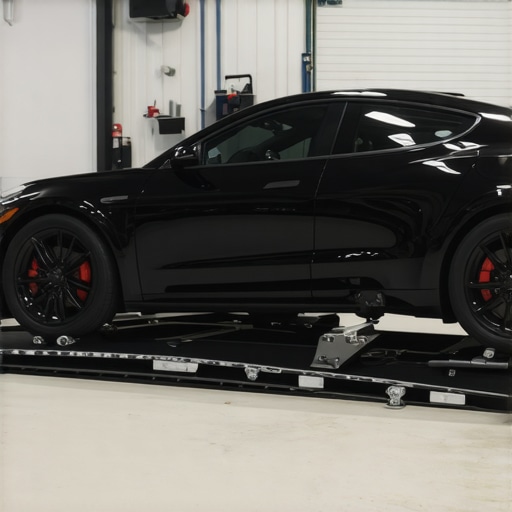
Sometimes, what feels like a tire flat spot is actually a resonance issue amplified by the vehicle’s own suspension geometry. When a car has a slight alignment deviation, the tires are essentially ‘scrubbing’ against the road rather than rolling freely. This creates heat patterns that can exacerbate the tendency of the rubber to take a set. If your vehicle’s toe-in or camber is out of spec, the vibration caused by a minor flat spot will be felt much more acutely through the steering rack. A comprehensive brake service and alignment check should always accompany any investigation into tire-related harmonics. By ensuring the mechanical components are in perfect sync, you remove the ‘amplifiers’ that turn a small flat spot into a bone-shaking cabin shudder.
The Hidden Impact of Chemical Degradation During Stasis
Beyond the physical flattening of the tire, we must consider the oxidative aging that occurs when a car sits. Tires contain anti-ozonants that are designed to be ‘worked’ to the surface through the heat and flexing of regular driving. When a tire is stationary, these protective chemicals remain trapped inside the compound, leaving the outer tread vulnerable to micro-cracking and dry rot. This degradation changes the ‘spring rate’ of the tire, meaning even if the flat spot eventually rounds out, the tire may still feel ‘dead’ or unresponsive. If your tires are over six years old, no amount of heat or auto repair magic will restore their original performance characteristics. Have you encountered a vibration that only appears after a long winter storage? Tell us about your diagnostic process in the comments below or share your best tips for keeping your rubber fresh during the off-season.
Expert Insights & Advanced Considerations
Larger Rims Heighten Structural Sensitivity
Low-profile tires on 19-inch or 20-inch wheels have significantly less sidewall to absorb internal deformation. A minor flat spot that would go unnoticed on a standard sedan can feel like a jackhammer in a high-performance chassis. When utilizing mechanic tips diagnosing common auto problems, always account for the wheel-to-sidewall ratio before condemning expensive suspension components.
Heat Maps Reveal Hidden Internal Damage
Professional diagnostic technicians often utilize infrared thermography to identify “cold spots” in the tread. If a specific area remains cool after a vigorous drive, it indicates a structural failure where the polymers are no longer flexing and generating heat. This diagnostic approach saves hours during a complex brake service or mystery vibration hunt.
Stop Thermal Leaching with Barrier Mats
Cold concrete garage floors act as a massive thermal sink, pulling heat from the tire and accelerating the “set” of the rubber polymers. Placing plywood, heavy-duty rubber, or specialized foam mats under the tires prevents this rapid thermal leaching. Integrating this simple step into your ultimate tune-up checklist for every car owner is essential for maintaining seasonal vehicle health.#IMAGE_PLACEHOLDER_E#
Curated Expert Resources
Tire Rack Research Center: An unparalleled database providing comparative real-world data on “morning sickness” and vibration across hundreds of modern tire compounds.
SAE International Technical Papers: The definitive source for peer-reviewed research on the viscoelastic properties of synthetic rubbers and high-load bearing dynamics.
Tire Industry Association (TIA): The primary authority for safety protocols and advanced how to tell if your tires are actually balanced correctly procedures.
Final Expert Perspective
Mastering the nuances of tire flat spotting requires moving beyond simple observations and into the technical physics of polymer memory. Whether you are battling temporary morning vibrations or permanent radial distortion from a skid, the key to a smooth ride lies in proactive maintenance and precision diagnostics. By utilizing road force measurements and maintaining stable internal pressures, you can bypass the cycle of trial-and-error often found in standard auto repair. If you are struggling with a persistent chassis shudder that resists a standard balance, we encourage you to explore our advanced tune-up strategies to save money on auto repairs or share your diagnostic success story in our professional forum below.