Hydraulic Imbalance and the Mechanics of Lateral Drift
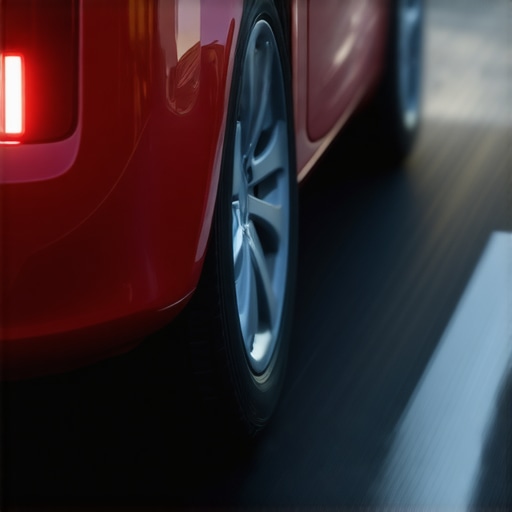
When a vehicle tracks perfectly straight while coasting but immediately veers to one side upon pedal application, it signals a dynamic failure that transcends basic wheel alignment. In the world of professional auto repair, we distinguish between static alignment issues and load-induced pulling. A car that pulls only when braking is almost always suffering from an uneven distribution of friction or a failure in suspension geometry that only manifests under the high torque of deceleration. This phenomenon occurs because the braking system is failing to exert equal clamping force on both sides of the axle, or the suspension is allowing one wheel to shift its position more than the other when stressed.
The most common culprit is a restricted or seized brake caliper. If a piston within the caliper is frozen due to corrosion or debris, it cannot press the pads against the rotor with the same intensity as its counterpart on the opposite side. This creates a torque steer effect where the side with the functional brake service capability effectively ‘anchors’ that side of the vehicle, while the weaker side continues to roll forward, causing a sharp pull. To address this, many enthusiasts look for the simple move that fixes a sticky brake caliper before committing to a full component replacement. It is also worth noting that a collapsed internal liner of a brake hose can act as a one-way check valve, holding pressure in the caliper even after the pedal is released, though this often results in a pull that lingers after the braking event has ended.
Why Does the Steering Wheel Only Jerk During Deceleration?
This specific symptom points toward a critical failure in the ‘compliance’ of your front-end components. When you apply the brakes, several hundred pounds of force are transferred through the control arms to the vehicle’s frame. If a control arm bushing is torn or soft, that force will physically pull the wheel backward within the wheel well, momentarily changing the toe-in or caster angle of that specific wheel. This creates a steering input that isn’t coming from the driver, but from the road itself. Professional mechanic tips diagnosing common auto problems often suggest checking for ‘fore-aft’ movement in the lower control arms during a simulated brake test on a lift.
Suspension Compliance and the Illusion of Brake Failure
While the immediate instinct is to blame the pads or rotors, the seasoned mechanic knows that the suspension is the foundation of every stop. A worn-out ball joint or a failing strut mount can allow the spindle to tilt under load, drastically altering the contact patch of the tire. If your tires show uneven wear, it might be time to investigate 3 tire wear patterns that prove your alignment shop is lazy, as these visual cues often precede the physical pull during braking. Furthermore, according to technical standards published by SAE International, even a minor variance in the coefficient of friction between left and right brake pads—often caused by grease contamination or ‘glazing’—can result in a measurable lateral deviation at highway speeds.
If you are experiencing these symptoms, it is vital to perform a systematic inspection of the hydraulic system and the bushings. If you’re noticing these symptoms, don’t wait for a total failure; explore our brake service strategies that save you money and extend brake life to stay ahead of costly repairs and ensure your vehicle remains predictable during emergency maneuvers. A precise tune up of the braking system involves more than just swapping parts; it requires verifying that the slide pins are lubricated and the hydraulic pressure is equalized across the entire circuit.
Hidden Blockages Inside the ABS Control Unit
Modern auto repair has moved beyond simple mechanical linkages. When you depress the pedal, the fluid doesn’t just travel from the master cylinder to the caliper; it passes through a complex labyrinth of solenoid valves within the ABS/ESC module. If a single valve is partially obstructed by sludge—often a result of moisture-laden fluid—it creates a micro-second delay in pressure reaching one wheel. This imbalance is frequently misdiagnosed as a bad caliper. If you have recently noticed a change in fluid color, you should investigate 3 reasons your fresh brake fluid turned black in less than a month to determine if internal degradation is shedding debris into these sensitive valves.
Can a Malfunctioning Steering Angle Sensor Mimic a Mechanical Pull?
In vehicles equipped with Electronic Stability Control, the computer constantly monitors the steering angle to ensure the car is heading where the driver intends. A sensor that is slightly out of calibration may trick the ABS system into applying ‘corrective’ braking to one wheel during a stop, thinking the car is skidding when it isn’t. This creates a ghost pull that no physical brake service will ever fix without a digital reset. Professionals often use high-end scanners to verify that the ‘zero-point’ calibration of the steering column matches the physical position of the wheels.
Stop Blaming the Pads and Check the Hub Surface
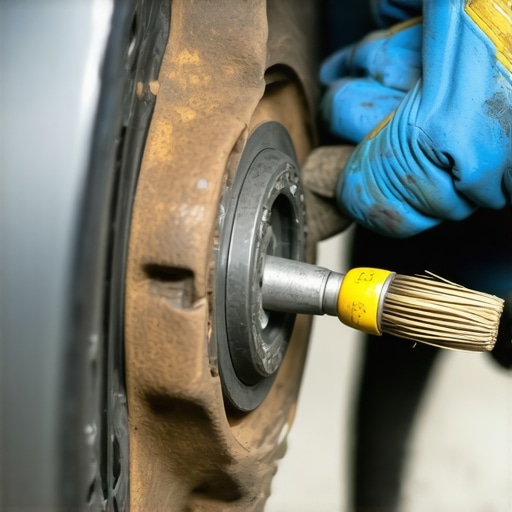
One of the most overlooked factors in lateral drift is lateral runout caused by poor mating surfaces. Even a microscopic layer of rust between the wheel hub and the brake rotor can cause the rotor to sit at a slight angle. As the rotor spins, this ‘wobble’ pushes the brake pads back into the caliper further than they should be. When you hit the brakes, the caliper must first take up that extra gap on one side, leading to a momentary pull as the other side engages first. Implementing the 10 hub scrub that stops brake vibrations is a mandatory step for any high-quality tune up or rotor replacement to ensure the friction surfaces are perfectly parallel.
The Tire Conicity Trap
Sometimes the culprit isn’t the brakes at all, but the rubber meeting the road. Radial pull, or conicity, occurs when the belts inside a tire are not perfectly centered, causing the tire to take on a subtle cone shape. While this might not be noticeable at constant speeds, the weight transfer during braking exaggerates the tire’s tendency to roll toward its smaller diameter. If you’ve recently had work done, consider why your new tires still vibrate after a high-speed shop balance, as these manufacturing defects often manifest during high-load scenarios. According to data from the National Highway Traffic Safety Administration (NHTSA), tire-related issues account for a significant percentage of ‘undetermined’ steering pulls reported by consumers.
To differentiate between a brake pull and a tire pull, a seasoned mechanic will often swap the front tires from left to right. If the direction of the pull reverses, the problem is in the tires; if it stays the same, the braking system is the definite source. For those looking to master their own maintenance, understanding mechanic tips diagnosing common auto problems can save hours of trial and error in the garage. Have you ever experienced a pull that vanished after a simple tire rotation? Share your experience in the comments or suggest a topic you’d like us to deconstruct next.
Rear Axle Instability and the Pivot Effect
Many technicians focus exclusively on the front end because it handles the lion’s share of braking force, but the rear axle acts as the vehicle’s directional anchor. When a rear brake component fails—such as a seized star adjuster in a drum system or a corroded slide pin on a rear caliper—it creates a ‘yaw moment.’ This isn’t just a theoretical concept; it’s a physical rotation of the chassis around its center of gravity. If the rear right brake provides significantly less drag than the rear left, the car will naturally want to pivot to the left, mimicking a front-end alignment issue. This is especially prevalent in vehicles with a shorter wheelbase where the lever arm of the rear wheels has a more pronounced effect on the steering rack’s feedback during a brake service.
Does an Improperly Bled Master Cylinder Create Diagonal Pulling?
In modern split-diagonal hydraulic systems, a tiny air bubble trapped in one primary circuit doesn’t just weaken the brakes; it unbalances the entire car. Because the master cylinder serves the front-left and rear-right wheels on one circuit, air in that line causes those two wheels to engage later than the front-right and rear-left. This results in a diagonal imbalance that feels like a rhythmic tugging rather than a steady pull. Achieving a rock-solid pedal requires a pressure bleeder to force those micro-bubbles through the complex valving of the ABS pump. If your pedal still feels spongy after a standard bleed, explore our brake service strategies that save you money and extend brake life to refine your technique and eliminate hydraulic lag.
#IMAGE_PLACE_HOLDER_C#
Thermal Gradients and the Science of Friction Fade
Friction isn’t a static number; it’s a variable that shifts with every degree of temperature. When one brake assembly runs hotter than its counterpart—perhaps due to a pad that isn’t fully retracting—the coefficient of friction on that side can actually drop as the material reaches its ‘outgassing’ point. This creates a paradoxical situation where the car pulls toward the side with the sticking brake when cold, but then pulls away from that side once the brakes are hot and suffering from fade. According to technical documentation from Akebono Brake Corporation, the transfer layer of friction material on the rotor must be uniform within microns to maintain consistent bite across the axle. Any thermal distortion of the rotor during these high-heat cycles will only exacerbate the lateral drift and complicate your auto repair efforts.
Verify the Proportioning Valve’s Hidden Bias
In older vehicles or heavy-duty trucks without sophisticated EBD, the proportioning valve is the ‘brain’ that regulates pressure between the front and rear. If this valve becomes partially stuck or the internal spring weakens, it can send inconsistent pressure to one side of a split system. This is a common hurdle in professional auto repair because the calipers and pads might look brand new upon visual inspection. A mechanic must often use dual pressure gauges at the calipers to confirm that the PSI being delivered is identical across the axle. If you are struggling with a persistent drift after replacing hardware, a deeper dive into your tune up manual might reveal a specific calibration procedure for the load-sensing proportioning valve that has been overlooked.
The Interaction of Bushing Memory and Torque
Sometimes the pull is caused by ‘bushing memory,’ where a rubber component has hardened in a slightly twisted position. Under the high torque of deceleration, these bushings deflect unevenly, causing a momentary shift in the vehicle’s thrust angle. This mechanical ‘ghost in the machine’ often disappears as soon as you let off the pedal, making it one of the most difficult symptoms to replicate on a static alignment rack. Understanding how these forces interact is the key to mastering high-level vehicle dynamics and ensures your next brake job results in a perfectly straight stop.
Subframe Migration Destroys Your Thrust Angle
While most enthusiasts focus on the moving parts of the suspension, the seasoned auto repair expert looks at what holds those parts in place. The subframe—a massive steel or aluminum cradle that carries the engine, transmission, and lower control arms—is isolated from the chassis by high-durometer rubber bushings. Over time, these bushings can soften or tear. Under the massive longitudinal stress of a panic stop, the entire subframe can shift forward or laterally if the mounting bolts have lost their factory torque or the rubber has compressed. This shift fundamentally alters the thrust angle and caster of both front wheels simultaneously. If the subframe shifts asymmetrically, the vehicle will lurch toward the side with the greatest compliance, regardless of how new your pads and rotors are.
Could Your Traction Control Be Secretly Sabotaging Your Straight-Line Stopping?
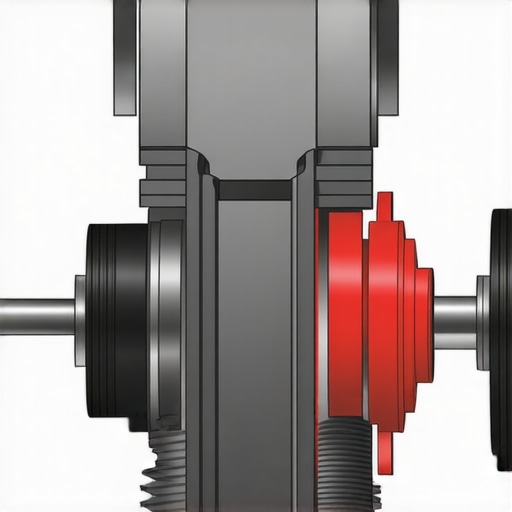
In the era of ‘brake-by-wire’ and integrated stability systems, the pull you feel might be an intentional—though incorrect—input from the vehicle’s computer. Modern Electronic Stability Control (ESC) systems rely on a suite of sensors, including wheel speed sensors, yaw rate sensors, and lateral accelerometers. If a wheel speed sensor is sending a ‘noisy’ signal due to a cracked tone ring or magnetic debris, the ABS module may interpret this as an impending lock-up. In response, it will rapidly pulse the solenoid for that wheel to reduce pressure. This creates a noticeable tug toward the opposite side, as the healthy wheel continues to receive full hydraulic force. This is a common ghost in the machine that often requires an oscilloscope to detect, as it may not always trigger a permanent dashboard warning light.
Why Electronic Brake Force Distribution Fails Without a Warning Light
Electronic Brake Force Distribution (EBD) has largely replaced the mechanical proportioning valves found in older systems, using software to modulate the rear-to-front bias. However, if the vehicle’s pitch or yaw sensors are slightly miscalibrated, the EBD logic might apply an asymmetric pressure bias during deceleration. This is particularly prevalent in performance vehicles or heavy SUVs where the weight transfer is significant. A mechanic must verify that the sensor data remains linear during a test drive; otherwise, the car might ‘correct’ a non-existent skid by applying more force to the left-rear or right-rear, causing a pivot effect that feels like a front-end pull. Sophisticated tune up procedures now include a full reset of the inertial measurement unit (IMU) to ensure the computer’s ‘inner ear’ is perfectly level with the horizon.
Stop Guessing and Measure the Pressure Differential
When visual inspections and component swaps fail to yield a solution, the final frontier of brake service is manual pressure testing. This involves installing high-pressure hydraulic gauges directly into the bleeder ports of the left and right calipers. By applying a constant force to the pedal using a depressor tool, you can see if the PSI is identical across the axle. A variance of as little as 50 PSI can cause a significant drift at 60 MPH. According to technical bulletins from StopTech, internal master cylinder bypass—where fluid leaks past one of the primary seals—can cause a pressure drop in one circuit that is invisible to the eye but catastrophic for directional stability. If your hydraulic pressures don’t match, you aren’t looking for a mechanical friction issue; you are looking for a structural failure within the hydraulic circuit itself. Don’t let a steering pull compromise your safety or ruin your tires. Ready to stop the drift? Dive into our comprehensive guide on professional-grade diagnostic tools to pin down your vehicle’s exact failure point before your next track day or road trip. Your journey to a perfectly balanced tune up starts with precision, not guesswork.
Expert Insights and Advanced Considerations
#IMAGE_PLACEHOLDER_E#
Why Residual Pressure Traps Destroy Your Fuel Economy
Beyond the immediate danger of a lateral pull, a sticking caliper or a collapsed hose creates constant parasitic drag. This isn’t just about safety; it’s a silent killer of your gas mileage. Even when you aren’t touching the pedal, that slight imbalance creates heat, which eventually glazes the pads. If you’ve noticed your car lacks coasting distance, check for a car that drifts right even with brand new tires as a potential indicator of dragging friction. This is why a professional auto repair must include a hydraulic pressure test, not just a visual check.
Stop Swapping Pads Until You Check the Transfer Layer
If you’ve replaced the hardware and the pull remains, the issue is likely chemical. High-performance braking relies on a uniform layer of friction material transferred onto the rotor. If this layer is patchy, the coefficient of friction varies as the rotor spins, creating a rhythmic tug. To prevent this, ensure you know how to test your brake fluid for water content at home to avoid internal corrosion that disrupts pressure delivery. A meticulous brake service always involves proper bedding of new components.
The Critical Influence of Thrust Angle on Deceleration
A vehicle’s straight-line stability during a stop is heavily dictated by its thrust angle. If the rear subframe has shifted, the car will crab walk, and weight transfer to the front unloads the rear, making this misalignment much more pronounced. Modern tune up protocols should include a rear suspension inspection to ensure the directional anchor of the car is secure. You might find that the hidden brake line error that makes bleeding impossible is actually contributing to a diagonal imbalance that feels like a steering pull.
Curated Expert Resources
SAE International Technical Standards
This resource provides the global benchmarks for automotive friction materials and hydraulic system design. It is essential for understanding the tolerances required for professional-grade auto repair and diagnostic accuracy.
NHTSA Safety Research Portal
The National Highway Traffic Safety Administration offers comprehensive data on mechanical failures and steering instability. It is a vital tool for identifying known defects in specific suspension and braking systems.
Akebono Friction Materials Lab
As a leader in ceramic brake technology, Akebono provides deep dives into thermal gradients and the science of pad-to-rotor material transfer, which is critical for solving persistent lateral drift issues.
Final Expert Perspective
Identifying why a vehicle pulls during braking requires moving beyond the pads and rotors mentality. It is a detective’s task that involves analyzing hydraulic pressure, suspension compliance, and even electronic sensor calibration. A successful brake service isn’t just about stopping the car; it’s about maintaining the vehicle’s composure under stress. By performing a systematic tune up of both the mechanical and hydraulic systems, you ensure a safe, predictable driving experience. We invite you to share your most difficult diagnostic challenges in the comments below or reach out to our team for advanced troubleshooting tips on your next high-ticket auto repair project.