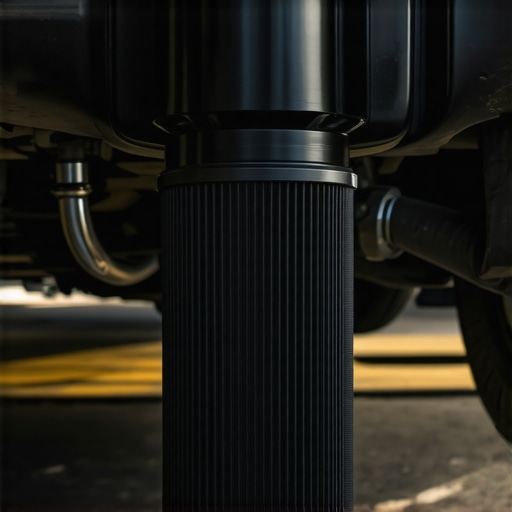
Professional automotive diagnostics often begin with the senses, and few signals are as alarming—or as frequently misunderstood—as the pungent scent of raw gasoline permeating the cabin. While most drivers immediately fear a ruptured fuel line or a leaking injector, seasoned technicians look deeper into the vehicle’s atmospheric management. The culprit is often a neglected component within the Evaporative Emission (EVAP) control system. This system is designed to trap fuel vapors before they escape into the atmosphere, but when its filtration stages fail, those same vapors bypass their intended route and infiltrate the HVAC intake. Identifying the source requires more than just a quick glance; it demands a technical understanding of how your vehicle breathes.
The EVAP System Breach That Mimics a Fuel Leak
In modern automotive engineering, the charcoal canister serves as the primary defense against hydrocarbon pollution. This container, filled with activated carbon, adsorbs fuel vapors from the gas tank until they can be purged and burned in the engine. However, when this component becomes saturated—often due to the common habit of topping off the gas tank—the liquid fuel enters the charcoal bed, effectively destroying its ability to filter. When this happens, a skilled mechanic will often find that the system is venting raw fumes directly through the vent solenoid, which often sits near the air intake for the cabin.
According to research published by the Environmental Protection Agency (EPA), evaporative emissions can account for a significant portion of a vehicle’s total hydrocarbon output if the charcoal filtration is compromised. This isn’t just an environmental concern; it is a diagnostic red flag. If you are noticing this scent during your commute, it is essential to integrate a system check into your next tune up to prevent further degradation of the fuel system.
Why is the fuel odor stronger after a long highway drive?
Many drivers report that the smell of gasoline intensifies significantly after the vehicle has reached operating temperature and has been driven at sustained speeds. This phenomenon occurs because the purge valve, which manages the flow of vapors from the canister to the intake manifold, is most active during cruise conditions. If the purge valve is sticking or if the lines are cracked, the pressure differential forces vapors out of the easiest exit, often the fresh air vents. This is a critical moment for auto repair professionals to utilize smoke machines to trace microscopic leaks that a visual inspection would miss.
The Danger of Ignoring Vapor Saturation
Ignoring a gas smell can lead to more than just a headache. A saturated EVAP system often triggers a Check Engine Light with codes like P0442 or P0455, indicating a leak. More importantly, it can affect your engine’s idle quality and fuel economy. If the charcoal canister is compromised, it may begin to shed carbon particles into the vacuum lines, potentially clogging the purge solenoid or even reaching the engine’s intake. While you might be focused on your next brake service for safety, the integrity of your fuel vapor system is equally vital for vehicle longevity. If your car smells like a gas station, don’t wait for the problem to escalate; contact a specialist today to perform a professional EVAP pressure test and restore your cabin’s air quality.
Beyond the EVAP system, another common yet overlooked source of persistent fuel odors is a compromised fuel pressure regulator diaphragm. This mechanical component uses a spring-loaded rubber membrane to maintain constant pressure across the fuel rail. When this diaphragm develops even a microscopic tear, the vacuum line—intended only to sense engine load—becomes a straw, siphoning raw gasoline straight into the intake manifold. This creates an ‘over-rich’ condition that often results in the 12-sensor that fixes your rough idle becoming fouled with heavy carbon deposits, further degrading performance.

Why does your car struggle to start only when the engine is warm?
This specific symptom, frequently referred to in technical circles as a ‘hot soak’ restart issue, is a hallmark of fuel system depressurization. When the ignition is turned off, the fuel system should ideally remain pressurized. However, if a fuel injector is leaking internally or the check valve in the regulator is failing, the fuel inside the rail can boil from residual engine heat. This leads to vapor lock or a flooded engine state, which explains why your engine won’t turn over when hot despite a strong battery. To accurately verify this, a technician will perform a ‘leak-down test’ using a dedicated pressure gauge to monitor how quickly the system loses its prime after the pump stops.
Understanding these subtle shifts in pressure is key to avoiding unnecessary parts replacement. For instance, a vehicle that stumbles during acceleration might not need a new pump immediately; sometimes, the electronics governing the mixture are simply reacting to the wrong data. Learning how to test your own o2 sensor using a 15-multimeter can provide invaluable insight into whether your engine is actually running rich due to a mechanical leak or if a sensor is simply providing false readings to the ECU.
External Injector Seepage and the Risk of Thermal Events
While internal leaks affect drivability, external leaks represent a primary safety hazard that demands immediate attention. Fuel injectors are seated into the fuel rail and the intake manifold via small rubber O-rings. Over years of intense heat cycles, these rings become brittle and ‘square off,’ losing their elasticity and their ability to maintain a seal under pressure. This often results in a high-pressure fuel misting over the top of a hot engine block. According to technical documentation from SAE International, maintaining the integrity of secondary seals is vital for preventing engine bay fires, as gasoline has a relatively low auto-ignition temperature when misted.
If you notice any dampness or ‘staining’ around the fuel rail area, it is critical to address it before it escalates. This is one of those instances where auto repair cost saving tips from industry experts truly shine: replacing a set of O-rings costs less than twenty dollars in parts but can save an entire vehicle from a catastrophic thermal event. Furthermore, knowing how to diagnose a bad fuel pump before it strands you involves checking these peripheral seals just as much as the pump’s electrical draw. If you’ve ever had to track down a mystery scent under your hood, share your findings in the comments—your specific symptoms might be the exact clue another driver needs to stay safe on the road.
While we often look under the hood first, the integrity of the fuel tank’s secondary plumbing—specifically the filler neck—is a frequent point of failure in regions prone to road salt and high humidity. These metal tubes are exposed to the elements and often harbor moisture behind plastic shields. Over time, pinhole leaks develop that are nearly invisible to the naked eye. Unlike a ruptured line, these leaks may only manifest as a faint scent after a trip to the gas station or when the tank is more than half full. A technician specializing in auto repair will often check the junction where the rubber hose meets the metal neck, as the hose clamps can cause the metal to crush and corrode prematurely.
Can a damaged gas cap seal cause an interior fuel smell?
While a loose gas cap is the most common reason for a Check Engine light, it rarely causes a heavy interior scent unless the vehicle is stationary in an enclosed space. However, a degraded rubber seal allows vapors to escape directly into the atmosphere near the rear quarter panel. If your vehicle’s cabin air intake is positioned near a window that isn’t fully sealed, or if the trunk seal is compromised, those vapors can be drawn forward by the aerodynamic vacuum created while driving. Replacing the cap is a simple first step, but it is rarely the silver bullet for a pungent cabin odor. Beyond physical leaks, we must consider the digital evidence of a fuel system malfunction. Modern Powertrain Control Modules (PCMs) are incredibly adept at hiding problems by adjusting fuel trims in real-time. When an injector begins to leak or a pressure regulator fails, the PCM detects a rich condition via the oxygen sensors and compensates by shortening the injector pulse width. This adjustment, known as Long Term Fuel Trim (LTFT), can reach levels of negative twenty percent or more before the driver ever feels a stumble. According to technical training modules from Delphi Technologies, monitoring these percentage-based trims is the only way to catch a silent leak before it causes catalytic converter overheating. If you own a basic OBD-II scanner, you can perform your own preliminary check to see how the engine is coping. Look for negative fuel trim values while the engine is at idle; if the numbers move significantly closer to zero as you increase the engine speed to 2,500 RPM, you are likely dealing with a vacuum-related fuel draw, such as a leaking regulator diaphragm. This level of professional diagnostics allows you to pinpoint the specific subsystem without throwing expensive parts at the problem. The relationship between fuel pressure and temperature also introduces the risk of fuel boiling in the rail, particularly in older return-style systems. When the fuel pump’s check valve fails, the pressure drops instantly upon shutdown. Without that constant pressure, the boiling point of the gasoline drops, leading to the formation of vapor pockets. This not only makes the car difficult to start but also forces fumes through any micro-crevice in the intake gaskets.
In Gasoline Direct Injection (GDI) systems, the complexity of diagnostics increases exponentially due to the presence of a mechanical high-pressure fuel pump (HPFP) usually mounted on the cylinder head. Unlike traditional low-pressure systems, the HPFP is driven directly by the camshaft, separated only by a specialized internal seal. When this seal breaches, raw fuel isn’t sprayed into the air but is instead dumped directly into the crankcase. This silent leak is particularly dangerous because it dilutes the engine oil, stripping away the lubricating film from the cylinder walls and bearings. Seasoned technicians look for a rising oil level on the dipstick as a primary indicator of this failure mode. According to technical bulletins from Robert Bosch GmbH, even a 5% dilution of oil with gasoline can drastically reduce the load-carrying capacity of the lubricant, leading to premature catastrophic engine failure.
Why does the dipstick smell like a service station pump?
If you pull your oil dipstick and are met with a sharp, overwhelming odor of gasoline, you are likely witnessing the aftermath of high-pressure seal failure or severely leaking injectors. In these scenarios, the gas smell doesn’t enter the cabin through the vents initially; rather, it is released through the Positive Crankcase Ventilation (PCV) system. As the engine warms up, the volatile fuel vapors in the oil pan are pulled back into the intake manifold to be burned. If the concentration is high enough, the smell will permeate the engine bay and eventually the HVAC intake. This isn’t just an auto repair puzzle; it is an emergency that requires immediate oil replacement and pump inspection to save the engine’s rotating assembly.
How Temperature Swings Bamboozle Your Fuel Tank Sensors
The Fuel Tank Pressure (FTP) sensor serves as the primary intelligence source for the entire EVAP diagnostic strategy. This sensor monitors the minute changes in vacuum and pressure within the fuel tank to ensure the system is airtight. A malfunctioning FTP sensor can provide false data to the PCM, leading to an aggressive purge cycle that overwhelms the engine at idle or fails to detect a genuine leak. In high-humidity environments, corrosion at the sensor connector can introduce resistance, skewing the voltage signal just enough to mask a failing charcoal canister. If you suspect your fuel management is off, integrating a sensor sweep into your regular tune up can prevent the cascading failures that lead to expensive catalytic converter damage.
Stop Ignoring the Warning Signs Under Your Hood
The interplay between fuel pressure and ambient temperature often creates a perfect storm for vapor leaks in older vehicles. As the fuel in the tank warms up throughout a day of driving, it expands, creating positive pressure. If the vent solenoid is stuck closed, this pressure has nowhere to go but out through the weakest point in the system, often the filler neck seal or an aged injector O-ring. This explains why a car might smell fine in the morning but reek of gas by mid-afternoon. Professionals use bi-directional scan tools to manually cycle these solenoids, verifying their mechanical movement against the digital command. If you’ve ever dealt with a mystery fuel smell that only appeared after a long drive, don’t ignore the digital health of your pressure sensors. Schedule a diagnostic session with a master technician to interpret your vehicle’s live data stream before a small vapor leak becomes a major mechanical liability.
Expert Insights & Advanced Considerations
Watch Out for the Silent Dipstick Warning
In the world of high-pressure direct injection, a gas smell is sometimes internal rather than atmospheric. If you notice your oil level is mysteriously rising, it isn’t a miracle; it is likely fuel dilution. This scenario often points toward a failing high-pressure fuel pump seal, a defect that can destroy your engine’s bearings in a matter of miles. Combining this observation with the 14-pcv-valve-fix that stops engine oil consumption research can help you differentiate between oil being burned and oil being diluted by raw gasoline.
Trust the Digital Trims Over Your Nose
Relying solely on your sense of smell often leads to replacing the wrong parts. A skilled technician uses Long Term Fuel Trims to see exactly how the ECU is compensating for a rich or lean condition. If your trims are buried in the negatives, the engine is fighting an over-fueling issue, possibly from a leaking regulator. Learning how to test your own o2 sensor using a 15-multimeter provides a window into this data without needing a four-figure scan tool. #IMAGE_PLACEHOLDER_E#
Why Humidity Is the Enemy of Your FTP Sensor
Corrosion at the Fuel Tank Pressure sensor connector is a frequent ‘ghost’ in the machine for vehicles in coastal or salt-belt regions. A slight increase in resistance can trick the PCM into thinking the tank is under high pressure, leading to erratic purge cycles. Before you commit to a major auto repair, inspect the wiring harness for green corrosion; often, a simple cleaning of the electrical contact restores the entire EVAP strategy.
Curated Expert Resources
SAE International Technical Papers
For those who want to understand the fluid dynamics of fuel atomization and vapor recovery, SAE papers offer the most rigorous peer-reviewed data available to the industry regarding evaporative emissions control.
Bosch Mobility Solutions Training
As the primary developer of GDI technology, Bosch provides the definitive guides on high-pressure pump diagnostics and seal failure modes essential for modern European and Domestic vehicles.
IATN (International Automotive Technicians Network)
This resource allows you to see real-world ‘fix-it’ databases where master technicians share the unique, one-off failure patterns that even factory service manuals might miss.
Final Expert Perspective
Navigating the complexities of fuel vapor management requires a shift from visual inspections to data-driven diagnostics. Whether it is a saturated charcoal canister or a subtle O-ring failure, the goal is to prevent a minor nuisance from becoming a safety hazard. Every tune up should be viewed as an opportunity to audit these atmospheric systems before they trigger a limp-mode event or compromise engine lubrication. If you are unsure of the source, consulting a top-rated mechanic ensures that you are treating the root cause, not just the symptom. We invite you to share your diagnostic wins or weird scent stories in the comments below—your experience might be the breakthrough another driver needs today.