The Subtle Mechanics of Steering Geometry and Inner Tie Rod Integrity
Professional automotive diagnostics often hinge on the subtle interplay between mechanical feedback and suspension geometry. The inner tie rod serves as the vital pivot point between the steering rack and the outer tie rod, acting as the primary conduit for directional intent. While a standard tune up typically focuses on the powertrain and ignition systems, a seasoned mechanic understands that steering precision is a non-negotiable safety metric. When this component begins to degrade, the communication between the driver’s hands and the road surface becomes muddied, leading to a cascade of handling issues that can compromise the vehicle’s structural stability during high-speed maneuvers.
Stop the Lane Drift Before Your Tires Pay the Price
One of the most profound symptoms of an inner tie rod reaching the end of its service life is a phenomenon often described as ‘steering wander.’ This occurs when the ball socket within the inner tie rod develops excessive play, allowing the wheel to deviate from its intended path without corresponding input from the steering wheel. This lack of tension means you may find yourself constantly correcting the wheel just to maintain a straight line. If you notice that your car wanders across the lane at high speeds, it is rarely a simple alignment issue; it is frequently a mechanical failure within the steering linkage that requires immediate auto repair to prevent a total loss of directional control.
Metal-on-Metal Percussion in the Suspension Assembly
Acoustic feedback is often the first warning sign of mechanical fatigue. As the lubrication within the tie rod housing dissipates or the internal bushing wears down, the component will begin to clunk or click, particularly when navigating uneven surfaces or during low-speed parking maneuvers. This isn’t just an annoyance; it is the sound of metal-on-metal impact that can eventually lead to the tie rod snapping. While some drivers might mistake this for a simple bushing issue, such as the 8 dollar rubber bushing that ends your steering column clunk, an expert diagnostic will usually reveal that the inner tie rod joint is the true culprit. Addressing these sounds early is a form of preventative maintenance that is just as vital as a routine brake service.
Can a Failing Tie Rod Mimic the Symptoms of a Dying Power Steering Pump?
It is a common point of confusion in expert forums: does the ‘heavy’ feeling in the wheel stem from hydraulic failure or mechanical binding? While a dying pump often whines, a seized or severely worn inner tie rod can create localized resistance that feels like a loss of power assist. According to technical bulletins from the National Highway Traffic Safety Administration, steering system integrity is fundamental to crash avoidance. Distinguishing between a hydraulic leak and a mechanical linkage failure is essential for any high-quality auto repair strategy, as misdiagnosing the root cause can lead to unnecessary expenses and persistent safety risks.
Uneven Tread Patterns That Signal Geometry Collapse
The inner tie rod is the gatekeeper of your vehicle’s toe alignment. When the joint loses its structural rigidity, the tire is no longer held at the precise angle required for optimal contact with the pavement. This results in ‘feathering’ or ‘cupping’ of the tire tread, specifically on the inner or outer edges. If you have noticed why your tires are wearing faster on the inside edge, you are seeing the physical manifestation of tie rod failure. Ignoring this doesn’t just necessitate a premature tire replacement; it drastically reduces your braking efficiency. If your steering feels ‘numb’ or imprecise, it is time to consult an expert for a comprehensive audit to ensure every component meets factory specifications. Don’t wait for a total failure; contribute your own professional insights or seek a second opinion if your car’s handling feels anything less than surgical.
High-Speed Feedback That Screams for Attention
When an inner tie rod loses its tight tolerances, the steering wheel becomes a communication device for the vehicle’s distress. This is most apparent at highway speeds where centrifugal forces amplify even a millimeter of play within the ball socket. You might experience a rhythmic shimmy that feels remarkably similar to an unbalanced wheel. However, unlike a simple tire issue, this vibration often intensifies during slight steering adjustments or light deceleration. If you have noticed why your steering wheel shakes when you brake at high speeds, it is a clear indicator that the lateral stability of your front end is compromised. A failing tie rod allows the wheel to oscillate independently of the steering rack, creating a dangerous feedback loop that can eventually fatigue other suspension components like your ball joints and control arm bushings.
The Hidden Vulnerability of the Inner Bellows Boot
The longevity of an inner tie rod is almost entirely dependent on the integrity of its protective bellows boot. This rubber or thermoplastic accordion-style seal keeps road grime, moisture, and salt away from the precision-machined ball joint while retaining the specialized grease. Once this boot tears—often due to age or heat cycles—catastrophic wear begins almost immediately. Grit acts as an abrasive paste, grinding down the metal surfaces until the joint becomes dangerously loose. While most owners focus on visible leaks, such as learning how to spot a leaky shock before it ruins your tires, checking the condition of your steering boots is a high-level mechanic move that can save you the cost of a full steering rack replacement. A ruptured boot is a ticking clock for auto repair, and catching it early during a routine tune up is the hallmark of a proactive car owner.
Is Your Steering Rack Failing or Are You Just Dealing with Tie Rod Slack?
One of the most expensive mistakes in modern automotive maintenance is misdiagnosing a simple inner tie rod failure as a total steering rack collapse. Because the inner tie rod is threaded directly into the end of the steering rack, the ‘play’ felt in the steering can often be mistaken for internal gear failure within the rack itself. Experts from the National Institute for Automotive Service Excellence (ASE) emphasize that a systematic ‘shake test’ is required to isolate these components. If there is lateral movement but the rack mounting bolts are secure and there is no hydraulic fluid leaking from the seals, the culprit is almost certainly the inner tie rod. Replacing just the rod is a fraction of the cost of a new rack, making it one of the most effective auto repair cost-saving tips for those who understand the mechanical nuances of their vehicle.
The Dry Park Test: A Pro-Level Diagnostic for Every Owner
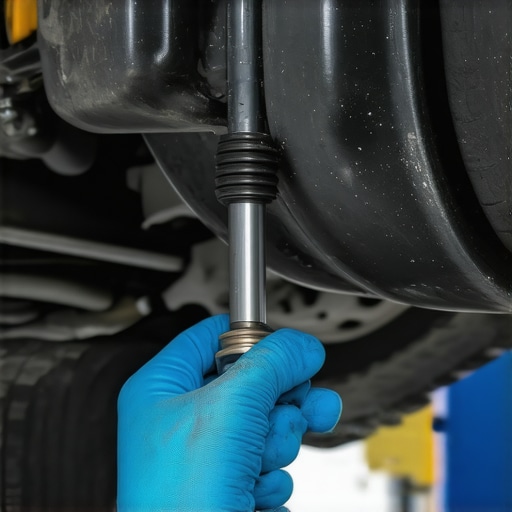
To truly verify the health of your steering linkage without expensive shop equipment, you can perform what professionals call the ‘dry park’ test. This involves having an assistant rock the steering wheel back and forth rapidly while the vehicle is on the ground and the engine is off. By placing your hand directly on the inner tie rod (reaching through the wheel well or from under the front bumper), you can feel for any clunking or ‘pop’ as the directional force changes. This is often more effective than testing the wheel while it is suspended in the air, as the weight of the vehicle provides the necessary resistance to reveal minute gaps in the joint. It is a similar logic to how to diagnose a bad cv axle by driving in circles; you are using the car’s own physics to expose mechanical weaknesses. Have you ever encountered a mystery vibration that felt like a tire issue but turned out to be a steering component? Share your diagnostic stories in the comments below or let us know if you have a trick for catching these failures before they get expensive.
Beyond the Shake Test: Precision Measurement of Axial Play
While the ‘dry park’ test is an excellent field diagnostic, professional-grade verification often requires the use of a dial indicator to quantify axial movement. When a mechanic measures the lash at the inner tie rod, even a movement as small as 0.5 millimeters can signify that the internal spring and ball seat have lost their pre-load tension. This precise measurement is what separates a guess from a definitive auto repair plan. In performance-oriented vehicles, where steering ratios are tighter, this microscopic play is magnified through the steering rack, resulting in a disconnected feel that can significantly lower a driver’s confidence during spirited cornering or evasive maneuvers.
How Much Inner Tie Rod Play Is Considered Within Factory Tolerance?
In the world of precision engineering, ‘zero’ is often the only acceptable number for steering play, but reality often dictates a more nuanced approach. According to technical specifications found in the Society of Automotive Engineers (SAE) standards for steering system durability, any discernible axial movement that bypasses the internal dampening mechanism is a failure state. While a car might technically pass a cursory inspection with minor play, the dynamic load of a 4,000-pound vehicle hitting a pothole will turn that ‘minor’ gap into a high-impact collision within the joint, rapidly accelerating wear on the rack’s internal seals and the outer tie rod ends.
The Critical Role of Locking Plates and Proper Torqueing
Replacing an inner tie rod is not just about threading a new part into the rack; it’s about ensuring it stays there under extreme vibration. Many modern steering systems utilize one-time-use locking plates or specific ‘stake’ points on the rack to prevent the rod from backing out. A common mistake during a DIY tune up or low-quality repair is reusing these locking components. If the inner tie rod loses its torque, the result is a catastrophic loss of steering control. High-level auto repair protocols dictate that the threads must be cleaned and often treated with a specific grade of thread-locker, followed by a torque sequence that accounts for the thermal expansion of the aluminum rack housing.
The Ripple Effect on Advanced Driver Assistance Systems (ADAS)
In the era of smart cars, a failing inner tie rod is more than a mechanical nuisance; it is a digital nightmare. Modern Lane Keep Assist (LKA) and Electronic Stability Control (ESC) systems rely on the Steering Angle Sensor (SAS) to be perfectly synchronized with the physical position of the wheels. When an inner tie rod allows the toe angle to fluctuate, the sensor might report the wheels are straight while the car is actually drifting. This discrepancy can trigger ghost braking or erroneous steering interventions as the computer attempts to correct a ‘drift’ that is actually a mechanical failure. Maintaining steering hardware is now a prerequisite for keeping your vehicle’s safety software functional and reliable. Have you ever noticed your lane-keep assist acting erratically after hitting a curb? It might be the mechanical ‘toe’ fighting the digital sensors.
Why Every Alignment Must Start with a Component Audit
Trying to align a vehicle with a worn inner tie rod is an exercise in futility. The technician might get the numbers ‘in the green’ on the alignment machine, but as soon as the car moves, the play in the joint allows the geometry to shift again. A true brake service or suspension overhaul should always begin with a rigorous check of the inner pivots to ensure the alignment settings actually hold under load. If your car won’t stay in alignment despite multiple trips to the shop, the issue is almost certainly a component that has been overlooked during the initial inspection. We are currently looking at how this mechanical instability affects the wear rates of modern electric power steering (EPS) motors, which often work overtime to compensate for the slack in the system…
This parasitic drag forces the EPS motor to work in a constant state of micro-correction, drawing excessive current that eventually degrades the motor’s internal windings. While many drivers overlook these electronic symptoms, a seasoned mechanic recognizes that the motor is fighting the mechanical ‘slop’ caused by a worn inner tie rod. This isn’t a scenario a basic tune up typically uncovers, but it is a critical factor in preventing the premature death of expensive electronic steering components. When the steering rack’s internal computer detects this resistance, it may even enter a ‘limp mode,’ reducing power assist to protect the circuitry from overheating.
Electronic Power Steering Motors Suffer When Mechanical Play Goes Ignored
The feedback loop between the steering angle sensor and the rack-mounted motor depends on a zero-tolerance connection. If the inner tie rod has even a fraction of an inch of play, the sensor may report a straight-ahead position while the road forces push the wheels into a slight ‘toe-out’ state. This discrepancy causes the EPS motor to hunt for a center point that is constantly shifting. The result is a subtle vibration or ‘hum’ through the steering column that many owners confuse with road noise or a tire balance issue. High-level auto repair requires isolating these electronic anomalies from the physical wear of the linkage to ensure the entire system operates in harmony.
Thermal Stress is the Silent Killer of Steering Rack Lubrication
In many modern engine bays, the proximity of the steering rack to the exhaust manifold or turbocharger creates a high-temperature micro-climate. This heat can eventually bake the specialized synthetic grease within the inner tie rod socket, turning it into a hardened, abrasive paste. Once the lubrication loses its viscosity, the ball joint enters a state of ‘dry friction,’ which significantly increases the effort required to turn the wheels. Interestingly, this increased resistance can mimic the symptoms of a sticking caliper or a failing master cylinder, leading some owners to waste money on a brake service when the friction is actually localized within the steering pivot.
Does a Failed Inner Tie Rod Compromise Your Vehicle’s Dynamic Stability Control?
Beyond the mechanical feel, the integrity of the inner tie rod is essential for the safety logic of Electronic Stability Control (ESC). If the car hits a slick patch and the ESC tries to pulse individual brakes to straighten the vehicle, it relies on the steering linkage to hold the tires at a specific, predictable angle. A loose tie rod introduces an element of chaos into these calculations. According to technical research from the Hunter Engineering Company, even minor steering lash can lead to significant alignment deviations under dynamic load, which directly compromises the effectiveness of active safety systems. This is why precision in steering components is non-negotiable for modern vehicle safety.
Why Cheap Aftermarket Replacements Often Sabotage Your Steering Feel
When it comes to auto repair, the allure of ‘budget’ parts can be tempting, but the inner tie rod is a component where material science matters. Low-cost replacements often use inferior alloys or less durable boot materials that fail within a single season of winter salt and road debris. A high-quality inner tie rod is engineered to maintain a specific torque resistance throughout its life, providing that ‘heavy’ and premium steering feel associated with luxury brands. Reverting to subpar hardware can turn a precision machine into one that feels loose and disconnected. Have you noticed a change in your car’s ‘on-center’ feel after a recent repair? We’d love to hear your experiences with different component brands—share your thoughts in the comments so we can help others avoid the ‘budget part’ trap. Don’t let a small saving lead to a massive headache down the road.
The Subtle Mechanics of Steering Geometry and Inner Tie Rod Integrity
Professional automotive diagnostics often hinge on the subtle interplay between mechanical feedback and suspension geometry. The inner tie rod serves as the vital pivot point between the steering rack and the outer tie rod, acting as the primary conduit for directional intent. While a standard tune up typically focuses on the powertrain and ignition systems, a seasoned mechanic understands that steering precision is a non-negotiable safety metric. When this component begins to degrade, the communication between the driver’s hands and the road surface becomes muddied, leading to a cascade of handling issues that can compromise the vehicle’s structural stability during high-speed maneuvers.
Stop the Lane Drift Before Your Tires Pay the Price
One of the most profound symptoms of an inner tie rod reaching the end of its service life is a phenomenon often described as ‘steering wander.’ This occurs when the ball socket within the inner tie rod develops excessive play, allowing the wheel to deviate from its intended path without corresponding input from the steering wheel. This lack of tension means you may find yourself constantly correcting the wheel just to maintain a straight line. If you notice that your car wanders across the lane at high speeds, it is rarely a simple alignment issue; it is frequently a mechanical failure within the steering linkage that requires immediate auto repair to prevent a total loss of directional control.
Metal-on-Metal Percussion in the Suspension Assembly
Acoustic feedback is often the first warning sign of mechanical fatigue. As the lubrication within the tie rod housing dissipates or the internal bushing wears down, the component will begin to clunk or click, particularly when navigating uneven surfaces or during low-speed parking maneuvers. This isn’t just an annoyance; it is the sound of metal-on-metal impact that can eventually lead to the tie rod snapping. While some drivers might mistake this for a simple bushing issue, such as the 8 dollar rubber bushing that ends your steering column clunk, an expert diagnostic will usually reveal that the inner tie rod joint is the true culprit. Addressing these sounds early is a form of preventative maintenance that is just as vital as a routine brake service.
Can a Failing Tie Rod Mimic the Symptoms of a Dying Power Steering Pump?
It is a common point of confusion in expert forums: does the ‘heavy’ feeling in the wheel stem from hydraulic failure or mechanical binding? While a dying pump often whines, a seized or severely worn inner tie rod can create localized resistance that feels like a loss of power assist. According to technical bulletins from the National Highway Traffic Safety Administration, steering system integrity is fundamental to crash avoidance. Distinguishing between a hydraulic leak and a mechanical linkage failure is essential for any high-quality auto repair strategy, as misdiagnosing the root cause can lead to unnecessary expenses and persistent safety risks.
Uneven Tread Patterns That Signal Geometry Collapse
The inner tie rod is the gatekeeper of your vehicle’s toe alignment. When the joint loses its structural rigidity, the tire is no longer held at the precise angle required for optimal contact with the pavement. This results in ‘feathering’ or ‘cupping’ of the tire tread, specifically on the inner or outer edges. If you have noticed why your tires are wearing faster on the inside edge, you are seeing the physical manifestation of tie rod failure. Ignoring this doesn’t just necessitate a premature tire replacement; it drastically reduces your braking efficiency. If your steering feels ‘numb’ or imprecise, it is time to consult an expert for a comprehensive audit to ensure every component meets factory specifications. Don’t wait for a total failure; contribute your own professional insights or seek a second opinion if your car’s handling feels anything less than surgical.
High-Speed Feedback That Screams for Attention
When an inner tie rod loses its tight tolerances, the steering wheel becomes a communication device for the vehicle’s distress. This is most apparent at highway speeds where centrifugal forces amplify even a millimeter of play within the ball socket. You might experience a rhythmic shimmy that feels remarkably similar to an unbalanced wheel. However, unlike a simple tire issue, this vibration often intensifies during slight steering adjustments or light deceleration. If you have noticed why your steering wheel shakes when you brake at high speeds, it is a clear indicator that the lateral stability of your front end is compromised. A failing tie rod allows the wheel to oscillate independently of the steering rack, creating a dangerous feedback loop that can eventually fatigue other suspension components like your ball joints and control arm bushings.
The Hidden Vulnerability of the Inner Bellows Boot
The longevity of an inner tie rod is almost entirely dependent on the integrity of its protective bellows boot. This rubber or thermoplastic accordion-style seal keeps road grime, moisture, and salt away from the precision-machined ball joint while retaining the specialized grease. Once this boot tears—often due to age or heat cycles—catastrophic wear begins almost immediately. Grit acts as an abrasive paste, grinding down the metal surfaces until the joint becomes dangerously loose. While most owners focus on visible leaks, such as learning how to spot a leaky shock before it ruins your tires, checking the condition of your steering boots is a high-level mechanic move that can save you the cost of a full steering rack replacement. A ruptured boot is a ticking clock for auto repair, and catching it early during a routine tune up is the hallmark of a proactive car owner.
Is Your Steering Rack Failing or Are You Just Dealing with Tie Rod Slack?
One of the most expensive mistakes in modern automotive maintenance is misdiagnosing a simple inner tie rod failure as a total steering rack collapse. Because the inner tie rod is threaded directly into the end of the steering rack, the ‘play’ felt in the steering can often be mistaken for internal gear failure within the rack itself. Experts from the National Institute for Automotive Service Excellence (ASE) emphasize that a systematic ‘shake test’ is required to isolate these components. If there is lateral movement but the rack mounting bolts are secure and there is no hydraulic fluid leaking from the seals, the culprit is almost certainly the inner tie rod. Replacing just the rod is a fraction of the cost of a new rack, making it one of the most effective auto repair cost-saving tips for those who understand the mechanical nuances of their vehicle.
The Dry Park Test: A Pro-Level Diagnostic for Every Owner
To truly verify the health of your steering linkage without expensive shop equipment, you can perform what professionals call the ‘dry park’ test. This involves having an assistant rock the steering wheel back and forth rapidly while the vehicle is on the ground and the engine is off. By placing your hand directly on the inner tie rod (reaching through the wheel well or from under the front bumper), you can feel for any clunking or ‘pop’ as the directional force changes. This is often more effective than testing the wheel while it is suspended in the air, as the weight of the vehicle provides the necessary resistance to reveal minute gaps in the joint. It is a similar logic to how to diagnose a bad cv axle by driving in circles; you are using the car’s own physics to expose mechanical weaknesses. Have you ever encountered a mystery vibration that felt like a tire issue but turned out to be a steering component? Share your diagnostic stories in the comments below or let us know if you have a trick for catching these failures before they get expensive.
Beyond the Shake Test: Precision Measurement of Axial Play
While the ‘dry park’ test is an excellent field diagnostic, professional-grade verification often requires the use of a dial indicator to quantify axial movement. When a mechanic measures the lash at the inner tie rod, even a movement as small as 0.5 millimeters can signify that the internal spring and ball seat have lost their pre-load tension. This precise measurement is what separates a guess from a definitive auto repair plan. In performance-oriented vehicles, where steering ratios are tighter, this microscopic play is magnified through the steering rack, resulting in a disconnected feel that can significantly lower a driver’s confidence during spirited cornering or evasive maneuvers.
How Much Inner Tie Rod Play Is Considered Within Factory Tolerance?
In the world of precision engineering, ‘zero’ is often the only acceptable number for steering play, but reality often dictates a more nuanced approach. According to technical specifications found in the Society of Automotive Engineers (SAE) standards for steering system durability, any discernible axial movement that bypasses the internal dampening mechanism is a failure state. While a car might technically pass a cursory inspection with minor play, the dynamic load of a 4,000-pound vehicle hitting a pothole will turn that ‘minor’ gap into a high-impact collision within the joint, rapidly accelerating wear on the rack’s internal seals and the outer tie rod ends.
The Critical Role of Locking Plates and Proper Torqueing
Replacing an inner tie rod is not just about threading a new part into the rack; it’s about ensuring it stays there under extreme vibration. Many modern steering systems utilize one-time-use locking plates or specific ‘stake’ points on the rack to prevent the rod from backing out. A common mistake during a DIY tune up or low-quality repair is reusing these locking components. If the inner tie rod loses its torque, the result is a catastrophic loss of steering control. High-level auto repair protocols dictate that the threads must be cleaned and often treated with a specific grade of thread-locker, followed by a torque sequence that accounts for the thermal expansion of the aluminum rack housing.
The Ripple Effect on Advanced Driver Assistance Systems (ADAS)
In the era of smart cars, a failing inner tie rod is more than a mechanical nuisance; it is a digital nightmare. Modern Lane Keep Assist (LKA) and Electronic Stability Control (ESC) systems rely on the Steering Angle Sensor (SAS) to be perfectly synchronized with the physical position of the wheels. When an inner tie rod allows the toe angle to fluctuate, the sensor might report the wheels are straight while the car is actually drifting. This discrepancy can trigger ghost braking or erroneous steering interventions as the computer attempts to correct a ‘drift’ that is actually a mechanical failure. Maintaining steering hardware is now a prerequisite for keeping your vehicle’s safety software functional and reliable. Have you ever noticed your lane-keep assist acting erratically after hitting a curb? It might be the mechanical ‘toe’ fighting the digital sensors.
Why Every Alignment Must Start with a Component Audit
Trying to align a vehicle with a worn inner tie rod is an exercise in futility. The technician might get the numbers ‘in the green’ on the alignment machine, but as soon as the car moves, the play in the joint allows the geometry to shift again. A true brake service or suspension overhaul should always begin with a rigorous check of the inner pivots to ensure the alignment settings actually hold under load. If your car won’t stay in alignment despite multiple trips to the shop, the issue is almost certainly a component that has been overlooked during the initial inspection. We are currently looking at how this mechanical instability affects the wear rates of modern electric power steering (EPS) motors, which often work overtime to compensate for the slack in the system…
This parasitic drag forces the EPS motor to work in a constant state of micro-correction, drawing excessive current that eventually degrades the motor’s internal windings. While many drivers overlook these electronic symptoms, a seasoned mechanic recognizes that the motor is fighting the mechanical ‘slop’ caused by a worn inner tie rod. This isn’t a scenario a basic tune up typically uncovers, but it is a critical factor in preventing the premature death of expensive electronic steering components. When the steering rack’s internal computer detects this resistance, it may even enter a ‘limp mode,’ reducing power assist to protect the circuitry from overheating.
Electronic Power Steering Motors Suffer When Mechanical Play Goes Ignored
The feedback loop between the steering angle sensor and the rack-mounted motor depends on a zero-tolerance connection. If the inner tie rod has even a fraction of an inch of play, the sensor may report a straight-ahead position while the road forces push the wheels into a slight ‘toe-out’ state. This discrepancy causes the EPS motor to hunt for a center point that is constantly shifting. The result is a subtle vibration or ‘hum’ through the steering column that many owners confuse with road noise or a tire balance issue. High-level auto repair requires isolating these electronic anomalies from the physical wear of the linkage to ensure the entire system operates in harmony.
Thermal Stress is the Silent Killer of Steering Rack Lubrication
In many modern engine bays, the proximity of the steering rack to the exhaust manifold or turbocharger creates a high-temperature micro-climate. This heat can eventually bake the specialized synthetic grease within the inner tie rod socket, turning it into a hardened, abrasive paste. Once the lubrication loses its viscosity, the ball joint enters a state of ‘dry friction,’ which significantly increases the effort required to turn the wheels. Interestingly, this increased resistance can mimic the symptoms of a sticking caliper or a failing master cylinder, leading some owners to waste money on a brake service when the friction is actually localized within the steering pivot.
Does a Failed Inner Tie Rod Compromise Your Vehicle’s Dynamic Stability Control?
Beyond the mechanical feel, the integrity of the inner tie rod is essential for the safety logic of Electronic Stability Control (ESC). If the car hits a slick patch and the ESC tries to pulse individual brakes to straighten the vehicle, it relies on the steering linkage to hold the tires at a specific, predictable angle. A loose tie rod introduces an element of chaos into these calculations. According to technical research from the Hunter Engineering Company, even minor steering lash can lead to significant alignment deviations under dynamic load, which directly compromises the effectiveness of active safety systems. This is why precision in steering components is non-negotiable for modern vehicle safety.
Why Cheap Aftermarket Replacements Often Sabotage Your Steering Feel
When it comes to auto repair, the allure of ‘budget’ parts can be tempting, but the inner tie rod is a component where material science matters. Low-cost replacements often use inferior alloys or less durable boot materials that fail within a single season of winter salt and road debris. A high-quality inner tie rod is engineered to maintain a specific torque resistance throughout its life, providing that ‘heavy’ and premium steering feel associated with luxury brands. Reverting to subpar hardware can turn a precision machine into one that feels loose and disconnected. Have you noticed a change in your car’s ‘on-center’ feel after a recent repair? We’d love to hear your experiences with different component brands—share your thoughts in the comments so we can help others avoid the ‘budget part’ trap. Don’t let a small saving lead to a massive headache down the road.
Advanced Technical Insights for Precision Steering
Why Steering Pre-load Tension Determines Your Safety
In high-performance steering assemblies, the pre-load tension within the inner tie rod’s ball-and-socket joint is what prevents dead zones at center. Even if a joint isn’t clunking, a loss of this tension results in a vague feeling that makes the car feel disconnected from the asphalt. Addressing 3 steering noises that mean your car is unsafe is just the baseline; identifying a loss of pre-load is what separates a standard technician from a precision specialist.
Don’t Let Exhaust Heat Cook Your Steering Rack Grease
Many rear-wheel-drive vehicles place the steering rack dangerously close to the exhaust headers. Over time, the thermal load can liquefy the grease inside the inner tie rod boot, leading to premature metal-on-metal wear. This friction can even increase steering effort to the point where it feels like a hydraulic failure, much like why your brake pedal goes to the floor after a long drive due to fluid boil. Protecting these components with heat shields is a pro-level preventative step often omitted in a basic tune up.
Fix the Linkage Before Re-Calibrating Your Steering Sensors
Modern vehicles often require a zero-point calibration for the steering angle sensor after an alignment. However, performing this calibration on a system with inner tie rod slack is a waste of time. The mechanical play will constantly introduce error codes into the stability control system. Always ensure your steering linkage is included in the ultimate tune-up checklist for every car owner before diving into software-based fixes.
Curated Resources for Technical Deep-Dives
SAE International (Steering Systems Standards): This resource provides the engineering benchmarks for axial play and material durability that OEM manufacturers must follow. It is the gold standard for understanding the physics of steering geometry.
p>ASE (National Institute for Automotive Service Excellence): The ASE certification guides for Suspension and Steering (A4) offer a comprehensive breakdown of diagnostic procedures, including the specific shake tests used to isolate inner tie rod movement.
Hunter Engineering Technical Library: As leaders in alignment technology, Hunter provides detailed white papers on how minute steering component wear affects dynamic toe angles and tire longevity.
Final Perspective on Steering System Health
Maintaining the integrity of your steering linkage is about more than just comfort; it is a fundamental pillar of modern vehicle safety. A worn inner tie rod can trigger a chain reaction that compromises your tires, your electronic stability systems, and even your electronic power steering motor. By prioritizing high-quality components and rigorous diagnostic standards, you ensure that every auto repair investment yields long-term reliability. We invite you to utilize auto repair cost-saving tips from industry experts to navigate your next service appointment with confidence. Have you ever felt a subtle shimmy that your local shop couldn’t find? Reach out to our community of specialists or share your own diagnostic success stories as we continue to push the boundaries of automotive maintenance excellence.