The High-Stakes Interplay Between Damping and Tire Longevity
The modern automotive suspension system is an intricate dance of physics where the shock absorber acts as the primary mediator between road irregularities and the vehicle’s chassis. Beyond mere passenger comfort, the integrity of a shock or strut is fundamental to maintaining a consistent tire contact patch. When a seal fails, the resulting loss of hydraulic pressure—often subtle at first—triggers a cascade of mechanical degradation that extends far beyond a bumpy ride. Expert-level auto repair requires a keen eye for these early warning signs to prevent the irreversible scalloping of high-performance rubber.
[image_placeholder_1]
Spot the Difference Between Normal Misting and a Catastrophic Leak
In professional workshops, seasoned mechanics often debate the threshold between ‘misting’ and a true leak. Misting is a thin film of oil that attracts dust, which is considered a normal byproduct of the piston rod’s lubrication process over thousands of cycles. However, when you observe wet, dripping fluid migrating down the shock body or onto the lower mounting bracket, you are witnessing a catastrophic breach of the internal seals. This loss of hydraulic fluid means the component can no longer effectively dissipate kinetic energy as heat, leading to uncontrolled spring oscillations. If you are unsure of the severity, utilizing mechanic tips for diagnosing problems can help you differentiate between a simple cleanup and a mandatory replacement.
How Does Dampener Degradation Compromise Your Stopping Distance?
A primary function of the shock absorber is to control weight transfer during deceleration. When shocks are worn out, the front end of the vehicle ‘dives’ excessively under braking, which unloads the rear tires and significantly reduces their available traction. This imbalance can confuse modern ABS systems and increase stopping distances by up to 20% in critical scenarios. This is why a comprehensive brake service should always include a visual inspection of the suspension components to ensure the vehicle remains stable under hydraulic pressure. Maintaining this balance is a core part of any professional tune up protocol.
The Hidden Physics of Tire Cupping and Premature Tread Wear
Perhaps the most expensive consequence of ignored shock failure is tire cupping, also known as scalloping. Without proper damping, the tire doesn’t roll smoothly across the asphalt; it literally bounces. Each time the tire slams back into the pavement, it creates a flat spot or a ‘cup’ in the tread. According to technical standards established by the Society of Automotive Engineers (SAE), even a 50% reduction in damping efficiency can lead to accelerated tread wear patterns that necessitate premature tire replacement. To avoid this, savvy owners incorporate suspension checks into their ultimate tune-up checklist before embarking on long-distance travel.
Ditch the Bounce Test for Professional Inspection Standards
While the ‘bounce test’—pushing down on a corner of the car to see if it stabilizes in one or two cycles—is a classic DIY method, it is often insufficient for modern, high-pressure gas shocks that may feel firm even when internally compromised. Instead, look for ‘cupping’ wear on the inner or outer tread blocks, which feels like a series of rhythmic hills and valleys. If you detect these irregularities early, you may be able to save your tires by replacing the shocks and performing a four-wheel alignment. If you are currently shopping for replacements, ensure you follow the 3-step checklist for buying tires that last. If these symptoms sound familiar, don’t wait for a total failure; reach out to a skilled mechanic you can trust to restore your vehicle’s factory-spec handling and safety.
Stop Blaming the Alignment for Your Vehicle’s Rightward Drift
When a vehicle consistently pulls to one side, most drivers immediately schedule a wheel alignment. However, if your suspension geometry is being compromised by a sagging strut or a collapsed internal spring, no amount of adjustment at the tie rods will permanently fix the issue. A weak shock fails to maintain the correct ride height, which in turn alters the camber and toe angles of that specific corner. If you notice why your car drifts right even with brand new tires, the culprit might be the uneven damping pressure between the left and right struts rather than the steering rack itself. This imbalance creates a weight-jacking effect that forces the vehicle off-center during steady-state cruising.
How Does Thermal Degradation Secretly Kill Your Handling Mid-Drive?
Many drivers notice that their vehicle feels nimble during the first ten minutes of a commute, only to become sluggish or ‘floaty’ as the trip progresses. This phenomenon is often linked to the aeration and thinning of hydraulic fluid within the shock body as it heats up. High-mileage shocks lose their ability to resist this thermal breakdown, causing the steering to feel disconnected or artificially weighted. Getting to the bottom of why your steering feels heavy only after the car warms up is crucial for diagnosing whether the issue lies in your power steering pump or the thermal fatigue of your suspension components. Modern mono-tube shocks are designed to mitigate this, but even they have a finite lifespan before the gas charge leaks into the oil.
Track Down the Mystery Clunk Before It Ends Your Drive
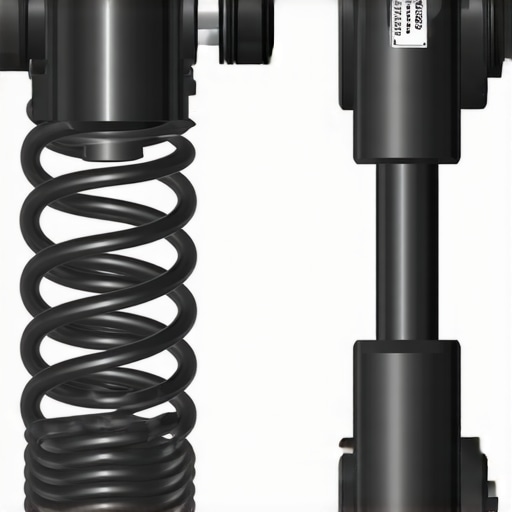
Suspension noises are the vehicle’s way of communicating mechanical stress under load. A sharp metallic ‘clack’ when hitting a pothole often points to a failed upper strut mount or a disintegrated jounce bumper. These components are designed to provide a secondary layer of damping; when they fail, the shock absorber is forced to take the full brunt of the impact, leading to rapid internal damage. If you are trying to learn how to diagnose a mystery clunk in your front end, start by inspecting the rubber bushings for tears or dry rot. A simple 8-dollar rubber bushing can often be the difference between a silent cabin and a nerve-wracking rattle. You can often learn how to tell if your shocks are shot without a mechanics help simply by listening for these rhythmic thuds on uneven pavement.
The Critical Role of Damping in High-Speed Stability and Braking Systems
It is a common misconception that high-speed vibrations are strictly a tire balance issue. While out-of-round rubber is frequently to blame, worn shocks exacerbate even the slightest imbalance. A healthy shock absorber dampens the natural resonance of the wheel assembly; without that resistance, a minor vibration can escalate into a violent shake at highway speeds. Before paying for another balancing service, you should verify how to tell if your tires are actually balanced correctly and check if your shocks are still providing the necessary counter-force. Research from the American Automobile Association (AAA) suggests that even marginally worn shocks can interfere with the rapid-response pulses of modern Electronic Stability Control (ESC) systems, making high-speed maneuvers significantly more dangerous. This latency in wheel-speed sensor data can trick the computer into applying the brakes unevenly, creating a feedback loop that degrades control. To keep your system in peak condition, always look for ways to maximize your brake service efficiency by checking the surrounding suspension hardware. Have you ever experienced a vibration that disappeared after replacing your shocks? Let us know in the comments or share this guide with a friend who is currently chasing a mystery rattle.
Why Your Safety Tech Depends on Healthy Struts
Modern Advanced Driver Assistance Systems (ADAS) are only as effective as the mechanical components they control. When a strut loses its ability to dampen vertical acceleration, the camera and radar-based systems often struggle to interpret the erratic chassis movement. This can lead to phantom braking or delayed lane-correction responses. In professional auto repair, calibrating these systems without first verifying the structural integrity of the suspension is a recipe for recurring safety faults. The precise millisecond timing of these electronic interventions assumes a stable mechanical platform that only high-quality dampeners can provide.
Can a single blown strut trigger a false ABS warning?
The answer is a resounding yes. If a shock absorber is so worn that it allows the wheel to ‘hop’ over small ripples in the pavement, the wheel speed sensor detects rapid, micro-adjustments in rotational velocity. To the ABS control module, this erratic data looks like a wheel about to lock up, potentially triggering a trouble code or pulsing the pedal when no actual slip is occurring. This is a classic example of why a diagnostic tune up must extend into the wheel wells to ensure the sensors are receiving clean, consistent data from the road surface.
Stop the Chain Reaction of Driveline Damage
Excessive vibration from unmanaged wheel oscillations doesn’t just destroy tires; it hammers the CV joints and transmission seals. When the wheel moves vertically without resistance, the axle must extend and retract at much more aggressive angles and frequencies than it was designed to handle. Over time, this tears the rubber boots and flings lubrication grease, leading to a much more expensive mechanic-led repair than a simple shock replacement. 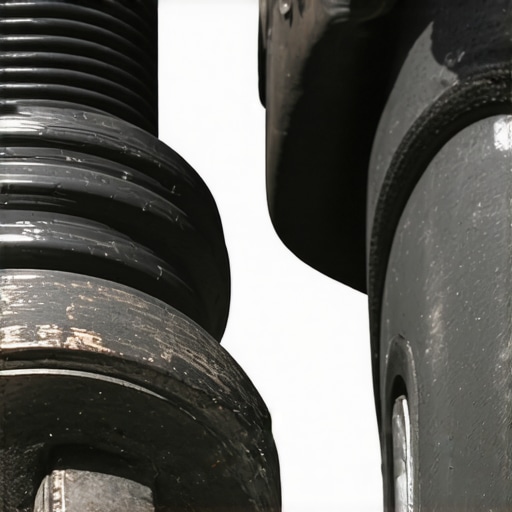 According to technical data from the National Highway Traffic Safety Administration (NHTSA), steering and suspension-related failures are contributing factors in thousands of loss-of-control accidents annually, often because a primary failure like a dead shock went ignored until it caused a secondary component to snap. To stay ahead of these risks, you should consult a skilled mechanic you can trust at the first sign of unusual chassis vibration.
The Art of Evaluating Bushing Compliance
A seasoned pro knows that a visual inspection of the strut is only half the battle. You must also evaluate the compliance of the control arm bushings under load. Using a pry bar to check for excessive deflection can reveal hidden play that mimics the symptoms of a dead shock. If your steering feels vague or lacks a defined ‘center’ feel, you might be dealing with bushing compression set, where the rubber has permanently deformed. Integrating these checks into your ultimate tune-up checklist ensures that you aren’t just replacing parts, but restoring the actual geometry of the vehicle. Have you noticed your car feeling ‘loose’ over speed bumps? This loss of tension often starts in the rubber before the shock ever leaks.
Balance Your Load Without Killing Your Coil Springs
Frequent hauling or towing places an enormous thermal and physical load on rear shock absorbers. When shocks fail under these conditions, the coil springs are forced to support the entire weight of the vehicle without the benefit of hydraulic assistance. This leads to ‘spring sag,’ where the metal actually loses its tempered memory and the vehicle’s rear end begins to droop permanently. Before this happens, consider upgrading to heavy-duty variants or checking your shocks for failure signs to protect your expensive springs. If you find yourself frequently bottoming out, it is a clear indicator that your suspension’s kinetic energy management is completely compromised, requiring immediate intervention to prevent frame damage.
How Modern Electronic Steering Masks Sudden Strut Decay
Many automotive enthusiasts are surprised to learn that modern Electronic Power Steering (EPS) can actually hide the tactile feedback of a failing shock absorber. Unlike older hydraulic systems that transmitted every shimmy and shake directly to the driver’s palms, EPS uses sophisticated torque sensors and software to filter out ‘noise’ from the road. While this makes for a smoother driving experience, it creates a dangerous buffer that obscures the micro-vibrations associated with early-stage valve failure. By the time you feel the instability through the steering wheel, the internal damping degradation is likely advanced, meaning your tires have already begun to bear the brunt of the unmanaged energy.
Is Your Failing Suspension Secretly Dragging Down Your Fuel Economy?
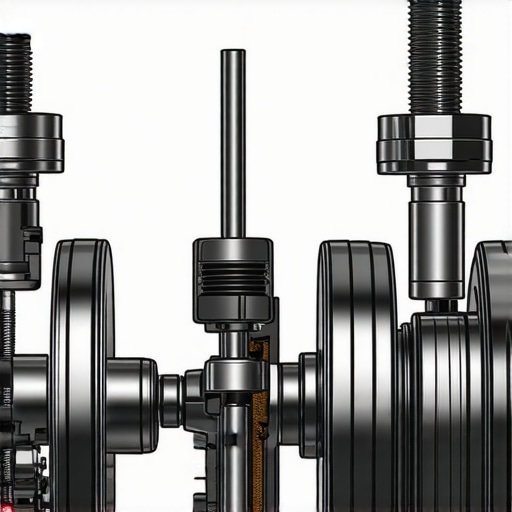
It sounds like a stretch, but there is a direct correlation between suspension health and at-the-pump costs. When struts fail to control the vertical movement of the chassis, the vehicle’s aerodynamic profile fluctuates constantly. This ‘porpoising’ effect increases wind resistance and forces the engine to work harder to maintain a constant speed. Furthermore, the increased rolling resistance from uneven tire contact patches—caused by that rhythmic bouncing we discussed earlier—can shave 2-3% off your total fuel efficiency. Professional technicians certified by the National Institute for Automotive Service Excellence (ASE) emphasize that a vehicle’s alignment and ride height are the cornerstones of its efficiency; a sagging strut ruins both.
Why Cheap Replacement Assemblies Often Kill Your Cornering Precision
In the world of high-level auto repair, not all ‘quick-struts’ are created equal. Many aftermarket options use generic valving that prioritizes a soft ride over the specific compression and rebound rates required by your vehicle’s weight distribution. This mismatch creates a ‘nose-heavy’ feel during aggressive turn-ins, as the dampener fails to resist the initial roll. Using mechanic tips for diagnosing problems, you can often identify these cheap replacements by their lack of digressive valving—the technology that allows a shock to be firm during low-speed movements (like cornering) but soft over high-speed impacts (like potholes). To ensure you are getting the right components, always consult a skilled mechanic you can trust who understands the nuance of unsprung mass.
Avoid the Snap by Monitoring Seized Strut Bearings
An often-overlooked component of the front suspension is the upper strut bearing. This small but vital part allows the entire strut assembly to rotate as you turn the steering wheel. If the bearing seizes due to road salt or grit, it creates ‘memory steer,’ where the car wants to keep turning even after you’ve straightened the wheel. This puts immense lateral stress on the coil spring, which can eventually snap under the torsional load. Incorporating a bearing check into your ultimate tune-up checklist is a pro-level move that prevents catastrophic spring failure. If you are already checking how to tell if your shocks are shot without a mechanics help, try turning the steering wheel while the car is stationary; a popping or groaning sound from the towers is a definitive red flag. Have you ever noticed your steering wheel failing to return to center after a turn? Let us know your experience in the comments or share this guide to help others catch these issues early.
Expert Insights and Advanced Considerations
Why Unsprung Mass Dictates Your Ride Quality
True suspension mastery involves more than swapping parts; it requires accounting for unsprung mass—the weight of wheels, tires, and brakes not supported by the springs. When you install heavier aftermarket wheels without upgrading your shocks, the increased inertia overwhelms factory damping rates, leading to that characteristic skipping feel over mid-corner bumps. For those looking for mechanic tips for diagnosing problems, checking for premature seal wear on heavy-wheel setups is a must. Proper auto repair strategies should always consider the weight of the rotating assembly before finalizing a damping solution.
Stop Tightening Control Arm Bolts While the Car is in the Air
One of the most common errors in suspension maintenance is torquing down bushings with the wheels hanging. This locks the rubber in a droop position, causing it to tear as soon as the vehicle is lowered to its natural ride height. Always tighten these components at ride height or under load. This simple adjustment is a cornerstone of essential tune-up tips to boost performance, ensuring your bushings last decades rather than months. If you notice why your car drifts right even with brand new tires, a pre-loaded, torn bushing is often the invisible culprit.
Why Your Lane-Keep Assist Fails on Bumpy Roads
As chassis technology evolves, the mechanical health of your struts now directly impacts software performance. Excessive vertical oscillation confuses the accelerometer data used by ADAS (Advanced Driver Assistance Systems). If your car struggles to stay centered during highway drives on uneven pavement, it might not be a camera calibration issue but a damping failure. Integrating a physical suspension check into your ultimate tune-up checklist is the only way to guarantee your safety tech functions as intended. [image_placeholder_expert_5]
Curated Expert Resources
To further your technical knowledge, consider these authoritative benchmarks for suspension and chassis dynamics:
- SAE International Technical Library: The gold standard for researching the physics of vehicle dynamics and the math behind damping coefficients.
- ASE Training Guides: Essential for mastering the diagnostic flowcharts used by master technicians to isolate phantom noises in high-performance chassis.
- NHTSA Safety Bulletins: Crucial for identifying recalls and statistical failure trends related to specific suspension and steering designs.
- Manufacturer-Specific TSBs: These Technical Service Bulletins provide the factory-authorized fixes for common suspension engineering oversights and noise complaints.
Final Expert Perspective
Maintaining a vehicle’s suspension is not merely about comfort; it is a critical component of professional auto repair that safeguards your tires, your fuel budget, and your electronic safety systems. By moving beyond the simple bounce test and adopting a more analytical approach to damping health, you can prevent the cascade of mechanical failures that often follow a neglected strut. Whether you are performing a routine tune up or diagnosing a specific handling issue, remember that the smallest rubber bushing can have a massive impact on your road safety. Have you checked your wheel wells for signs of oil misting lately? Share your diagnostic breakthroughs or questions with our community of experts below.