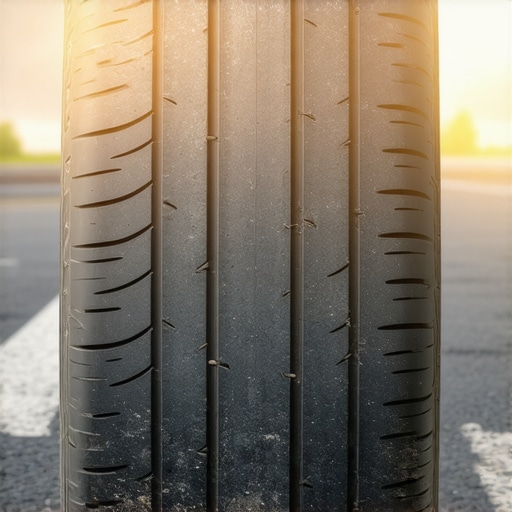
Negative Camber Destroys Your Inner Tread Faster Than You Think
Inside edge tire wear is rarely a singular fault; it is the physical manifestation of a compromised suspension geometry that demands a methodical diagnostic approach. In the realm of professional auto repair, we often identify this pattern as a symptom of excessive negative camber. This occurs when the top of the wheel tilts inward toward the center of the vehicle, shifting the entire weight of the car onto the inner shoulder of the tire. While some performance vehicles utilize slight negative camber for better cornering, extreme angles lead to rapid degradation. When you consult a skilled mechanic, they will likely look for spring sag or worn struts that have altered the vehicle’s ride height, subsequently pulling the camber out of its specified range.
Is Your Car Fighting a Hidden Toe-Out Problem?
Another common culprit for inner-edge devastation is ‘toe-out.’ This technical term describes a scenario where the front of the tires point away from each other, rather than being parallel. Even a fraction of an inch of toe-out can cause the tires to ‘scrub’ across the pavement as you drive, effectively sanding down the inner tread. This isn’t just about tire longevity; it affects your steering response and fuel efficiency. If you’ve noticed your car pulling or if your steering wheel isn’t centered, you may need more than a simple tune up; you need a precise laser alignment. According to technical standards maintained by the National Highway Traffic Safety Administration (NHTSA), maintaining proper alignment is critical for both safety and the structural integrity of the tire carcass.
Worn Suspension Parts That Trick Your Alignment Sensors
Sometimes the alignment machine says everything is fine, yet the tires continue to disappear. This is the hallmark of ‘dynamic’ alignment changes caused by worn components. Professional mechanics understand that ball joints, control arm bushings, and tie rod ends hold the wheel in place against the massive forces of braking and acceleration. When these rubber or metal joints fail, the wheel can shift into a toe-out or negative camber position only while the car is in motion. This makes it crucial to differentiate between a static alignment issue and a mechanical failure. In many cases, addressing these issues early is one of the best cost-saving tips from industry experts, as it prevents the premature replacement of expensive performance tires. Furthermore, these mechanical shifts can impact your brake service needs, as uneven load distribution puts disproportionate stress on braking components.
The Crucial Connection Between Alignment and Your Safety
Why do we treat inner-edge wear with such urgency? Because the inner shoulder is the most vulnerable part of the tire structure. By the time you notice the wear while standing next to the car, the tire may already be down to the internal cords, risking a high-speed blowout. Expert-level auto repair requires looking beyond the rubber to the bushings and linkages that govern movement. If you suspect your vehicle is fighting against its own geometry, don’t wait for a failure. Explore our ultimate tune-up checklist to ensure every component of your chassis is performing at its peak. Understanding why your tires are wearing on the inside edge only is the first step toward a safer and more efficient driving experience. Always ensure your technician checks for ‘play’ in the steering rack before finalizing any alignment adjustments.
Don’t Ignore the Bounce That Ruins Your Belts
When the dampers—your shocks and struts—lose their ability to control spring oscillation, the tire begins to bounce. This isn’t just a comfort issue; it’s a tire-killer. In the world of high-end auto repair, we call this ‘cupping’ or ‘scalloping.’ If your shocks are worn, the inner edge of the tire will show high and low spots rather than smooth, even wear. You can often learn how to tell if your shocks are shot without a mechanics help by performing a simple bounce test or inspecting the strut body for hydraulic leaks. If the fluid has escaped, the internal valves can no longer provide the resistance needed to keep the tire tread flat against the asphalt during weight transfer. This constant vibration not only eats the rubber but also fatigues the suspension mounts and steering rack.
Can a Failing Wheel Bearing Mimic an Alignment Issue?
It is a common mistake to assume that a pull or uneven wear always stems from the tie rods or control arms. A hub assembly with excessive internal clearance allows the entire wheel to tilt under load, creating a temporary negative camber situation that disappears as soon as the car is on a lift. This ‘phantom’ alignment issue is notoriously difficult to catch during a static inspection. However, you can utilize the $10 tool that diagnoses a bad wheel bearing at home—a simple dial indicator—to measure the lateral runout of the hub. When the bearing is failing, the inner edge of the tire bears the brunt of the heat and friction, often leading to a distinct humming noise that accompanies the visual tread loss. Maintaining these components is part of the essential tune-up tips to boost your cars performance in 2025.

How Heavy Braking Exposes Hidden Chassis Weakness
Your vehicle’s geometry is most stressed during deceleration. If you have worn control arm bushings, the force of the brake calipers grabbing the rotors will actually pull the wheels into a ‘toe-out’ position. This is why some drivers notice why your car pulls under braking but not while coasting. This momentary shift in alignment is enough to shave thousands of miles off your tire life if you frequently drive in stop-and-go traffic. Integrating high-quality parts during your next brake service is vital; if the bushings are soft, even the most expensive brake pads cannot compensate for the unstable contact patch. According to the Tire Industry Association (TIA), improper tire maintenance and neglected mechanical repairs are the leading contributors to premature casing failure and ‘run-flat’ damage caused by internal heat buildup.
Experienced owners know that mechanic tips diagnosing common auto problems often involve looking for the ‘witness marks’ left on the hardware. Shiny spots on a bolt or a clean patch on a greasy control arm indicate that parts are shifting under load. If you are seeing strange wear patterns, we want to hear about it—have you ever had an alignment shop tell you everything was ‘green’ while your tires were still screaming for help? Leave a comment below or share this guide with a friend who is tired of buying new rubber every six months. For those looking to go deeper into DIY diagnostics, check out our latest mechanic tips for diagnosing common auto problems to stay ahead of the curve and keep your vehicle on the road longer.
Stop Your Cargo from Killing Your Contact Patch
Many drivers overlook how temporary weight distribution drastically alters static alignment settings. When you load a vehicle with heavy equipment or several passengers, the rear suspension compresses, often inducing a ‘squat’ that pivots the front geometry. This shift can push the front tires into a temporary toe-out position, grinding away the inner tread during a single long-distance trip. In professional auto repair, we refer to this as ‘laden’ alignment. If you frequently haul heavy loads, a standard alignment performed on an empty car won’t suffice. Expert mechanics recommend performing a specialized alignment with a simulated load to ensure the tires remain flat against the road under real-world conditions. This proactive approach is a cornerstone of essential tune-up tips to boost your cars performance in 2025, preventing the expensive cycle of premature tire replacement.
The Invisible Link Between Rear Alignment and Front End Damage
It is a mistake to focus solely on the front wheels when the inner edge of your front tires is disappearing. The ‘thrust angle’—the direction the rear wheels are pointing relative to the center of the vehicle—dictates how the front wheels must turn to keep the car traveling straight. If the rear axle is crooked, you have to turn the steering wheel slightly to compensate, which perpetually drags one front tire sideways. This ‘dog-tracking’ effect is a silent killer of inner treads. According to technical documentation from Hunter Engineering Company, a leading authority on wheel service technology, even a minor rear-end misalignment can lead to significant ‘scrub’ at the front, effectively sanding down your tires while you think you are driving straight. Ensuring a full four-wheel alignment, rather than just a front-end adjustment, is critical for total chassis health.
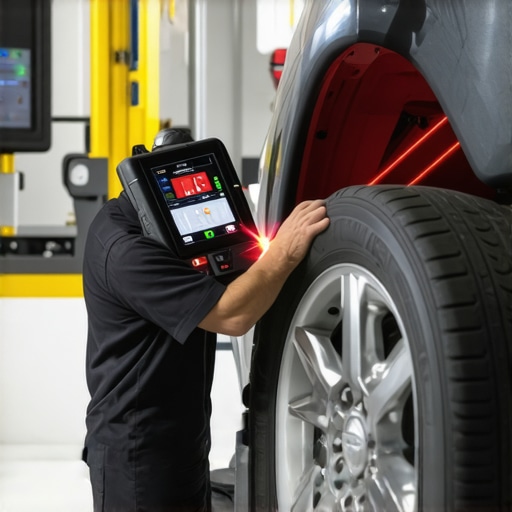
Can a misaligned steering angle sensor cause premature tire wear?
In modern vehicles equipped with Electronic Power Steering (EPS) and Electronic Stability Control (ESC), a misaligned steering angle sensor (SAS) can be as damaging as a bent tie rod. If the computer thinks the steering wheel is off-center, it may apply minute, pulsed braking forces to individual wheels to ‘correct’ what it perceives as a skid. This constant electronic interference creates heat and friction on the inner tire edges. During a high-quality brake service, a technician should always check for SAS calibration. If you’ve recently had an alignment but the car still feels ‘nervous’ or the steering wheel is slightly tilted, the software might be fighting the hardware. Integrating a digital recalibration into your ultimate tune-up checklist ensures that the mechanical and electronic systems are in perfect harmony.
Recovering From Chassis Fatigue with Aftermarket Alignment Kits
As a vehicle ages, the structural metal of the control arms and the subframe can suffer from ‘micro-stretching’ or fatigue. This often means that even with brand-new factory parts, the vehicle cannot be brought back into its original specifications. This is where advanced mechanic tips for diagnosing common auto problems transition into performance solutions. When factory adjustments are ‘maxed out,’ we turn to aftermarket camber bolts, adjustable control arms, or offset bushings. These components provide the extra range of motion needed to compensate for a tired chassis. If you find yourself frequently asking why your tires are wearing on the inside edge only despite regular service, it might be time to move beyond standard OEM parts and look into specialized geometry correction kits. These kits allow for a level of precision that factory hardware simply cannot match, especially on vehicles that have been lowered or have high mileage. Have you ever encountered a car that just ‘wouldn’t stay in alignment’ no matter how many times it was adjusted? The answer often lies in the hidden limits of the factory hardware rather than the skill of the technician.
Why Soft Bushings Sabotage Your Straight-Line Stability
Precision in auto repair involves more than matching numbers on a laser alignment screen; it requires an intimate knowledge of material science, specifically regarding bushing ‘compliance.’ Most factory-spec rubber bushings are designed for NVH (Noise, Vibration, and Harshness) dampening rather than rigid geometry retention. Over time, these elastomer components soften, allowing the control arm to deflect significantly under the massive torque of acceleration or the drag of cruising speeds. A seasoned mechanic knows that while the car looks perfect on a static alignment rack, the inner tread is being dragged across the pavement the moment you hit the gas. This dynamic deflection is why high-torque vehicles often suffer from ‘inner-edge feathered’ wear patterns that defy standard adjustments. This friction generates localized heat that softens the vulcanized rubber compounds, making them even more susceptible to the ‘scuffing’ effect of the road surface, eventually leading to structural failure of the tire carcass.
Does Your Scrub Radius Change When You Swap Wheels?
When you upgrade to wider wheels or use spacers to achieve a ‘flush’ stance, you are fundamentally altering the scrub radius—the distance between the steering axis intersection and the center of the tire’s contact patch. This change creates a massive lever arm that translates every road irregularity directly into steering forces. If the scrub radius becomes excessively positive or negative, it forces the tire to pivot on its inner or outer edge rather than its center during every turn. Even a perfect tune up of the steering rack and tie rod ends won’t fix the inherent physics of a poorly matched wheel offset. This structural mismatch is a primary reason why aftermarket modifications often lead to premature tire failure and a ‘nervous’ feeling at highway speeds. 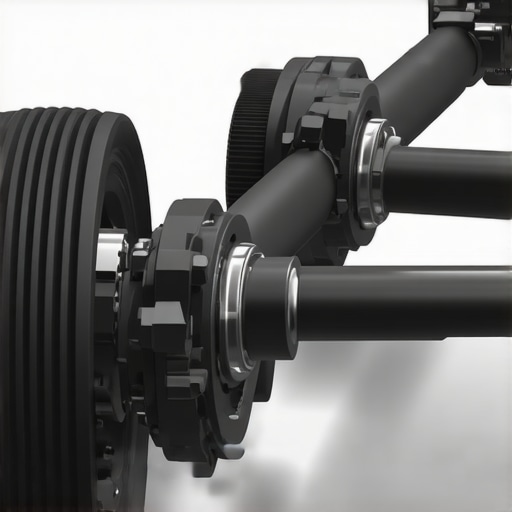
How Road Crown and Cross-Camber Mask Uneven Wear
Civil engineers design highways with a ‘crown’—a slight slope toward the shoulder to facilitate water drainage. To prevent a vehicle from constantly drifting toward the ditch, alignment technicians often set ‘cross-camber,’ where one side of the vehicle has a slightly different angle than the other. If this compensation is overdone, or if your local roads are unusually flat, that intentional bias becomes a liability. According to technical papers from SAE International, improper compensation for road crown can lead to localized heat buildup on the inner tread of the ‘high’ side tire. This subtle imbalance often goes unnoticed by the driver until the tire reaches its wear bars prematurely, usually appearing as a mystery to those who do not understand the interplay between civil engineering and automotive chassis setup.
Stop Chasing Ghosts and Test Your Suspension Under Load
The most advanced mechanic tips for diagnosing common auto problems always emphasize the ‘loaded’ test. A suspension hanging in the air on a lift tells a vastly different story than a suspension compressed by 4,000 pounds of vehicle weight. During a comprehensive brake service, it is vital to inspect the trailing arm bushings, which are responsible for maintaining the longitudinal position of the wheel. If these are failing, the wheel moves backward during braking, creating a momentary toe-out condition that chews the inner rubber. Don’t let your tires be the ‘fuse’ for your suspension’s weak links; proactive replacement of aging rubber with polyurethane or heavy-duty alternatives can save you thousands in rubber over the life of the car. Have you ever felt a ‘shudder’ in the floorboards that your shop couldn’t find? It might be time to stop guessing and start measuring with a professional chassis ear or a dial indicator. Share your most frustrating alignment stories in the comments below, and let’s help each other keep our cars tracking true.
Expert Insights for the High-Mileage Chassis
Thermal Degradation Starts Long Before the Cord Shows
Internal friction in rubber, technically known as hysteresis, is significantly magnified when load is concentrated on a single shoulder. When you are dealing with excessive negative camber, the inner edge of the tire doesn’t just wear down—it cooks. This localized heat weakens the internal adhesives between the structural belts and the tread, which is why a tire can look fine one day and delaminate the next. Integrating proactive checks into your essential guide to auto repair prevents these thermal failures before they become high-speed highway emergencies.
Stop Trusting the Green Screen on Your Alignment Report
Just because a technician hands you a report filled with green boxes doesn’t mean your vehicle is truly optimized for your driving style. Alignment specifications are often broad ranges, and a vehicle at the absolute limit of acceptable toe-out will still aggressively eat tires. A truly skilled mechanic will aim for the preferred center-point rather than just settling for anything within the margin. If you want to get more life out of your rubber, getting the most from your mechanic involves asking for the specific numerical values of your thrust angle and cross-camber, not just the colors on the page.
Why Polyurethane Bushings Aren’t Always the Answer
Many performance enthusiasts swap soft factory rubber for polyurethane to lock in their alignment settings. While this effectively stops dynamic toe-change, it can lead to bushing bind, where the suspension cannot move through its arc smoothly. This lack of compliance can actually increase the shock load on your steering rack and ball joints. For most daily drivers, utilizing the high-quality OEM-style components found in tune up strategies to save money on auto repairs is the more sustainable path to preserving both your tire life and overall ride quality.
#IMAGE_PLACE_HOLDER_E#
Resources Every Informed Driver Should Bookmark
To deepen your technical understanding of vehicle geometry, I recommend exploring the Hunter Engineering Technical Library, which serves as a masterclass in how laser alignment systems interact with modern chassis systems. For a better understanding of tire construction and safety limits, the Tire Industry Association (TIA) provides invaluable bulletins on casing integrity and repair standards. Finally, for those who want to see where maintenance is heading, keep an eye on top auto repair trends to watch in 2025 to see how digital-twin technology is being used to predict suspension failure before it starts.
Maintaining Your Vehicle’s Geometry Beyond the Shop Floor
Solving the mystery of why your tires are wearing on the inside edge only requires a holistic view of the vehicle’s mechanical health. It is never just about one bolt or one single setting; it is about the harmony between the rubber, the metal components, and the electronic sensors that guide them. Whether you are performing brake maintenance hacks to prevent costly failures or inspecting your own struts for leaks, remember that your tires are the most honest diagnostic tool in your garage. If they are wearing unevenly, the car is telling you exactly where the geometry is failing. We invite you to join the conversation—have you ever struggled with a persistent alignment issue that simple parts replacement couldn’t fix? Share your professional insights or reach out to us via our contact page to explore more advanced chassis solutions for your vehicle.